
54 items
54 items
img
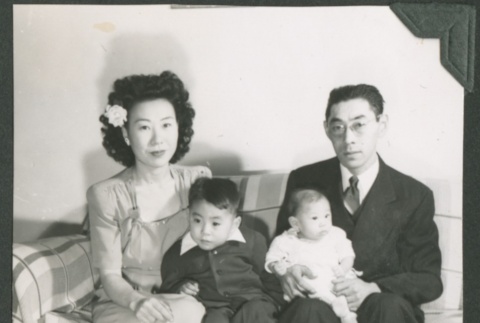
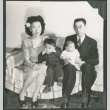
The Tanigawa Family (ddr-densho-328-274)
Caption in album: "Mr. & Mrs. Frank Tanigawa / and / Rickie - Shirley / 1947."
img
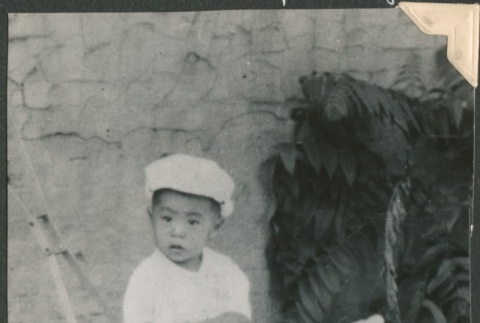
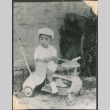
A toddler sitting in a push bike (ddr-densho-328-39)
Caption in album: "1944 / Detroit, Michigan / Kolin [?] Tanigawa."
img
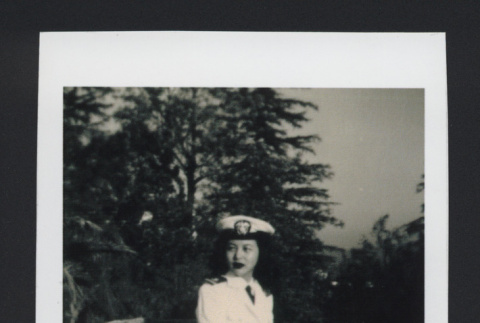
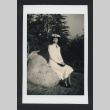
Ensign Yoshiko Grace Tanigawa (ddr-csujad-55-2607)
A photograph of Ensign Yoshiko Grace Tanigawa in her Navy military uniform. See this object in the California State Universities Japanese American Digitization project site: sac_jaac_2771
vh
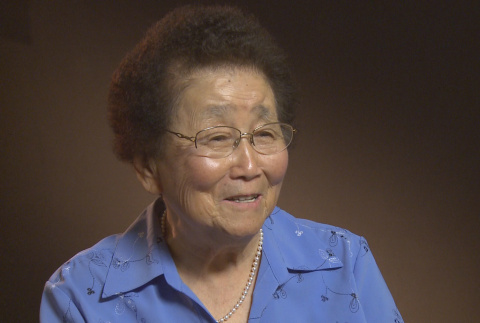
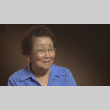
Helen Tanigawa Tsuchiya Interview (ddr-densho-1014-2)
Nisei female. Born December 25, 1924, in Selma, California. Grew up in Parlier, Californa, where family worked on a farm. After the bombing of Pearl Harbor, removed to the Gila River concentration camp, Arizona. Left camp to work in Indianapolis, Indiana, before settling permanently in Minneapolis, Minnesota.
doc
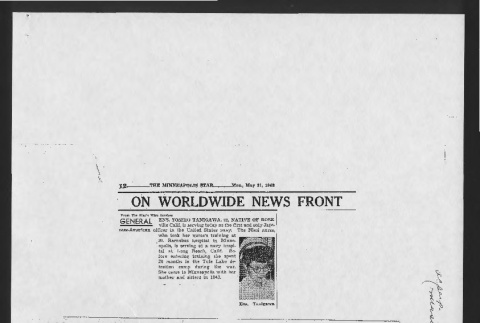
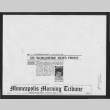
Newspaper clippings regarding Ensign Yoshio Tanigawa (ddr-csujad-55-2606)
Newspaper clippings regarding Ensign Yoshiko Tanigawa, 22, a native of Roseville, the first and only Japanese American commissioned officer in the United States Navy. See this object in the California State Universities Japanese American Digitization project site: sac_jaac_2770
img
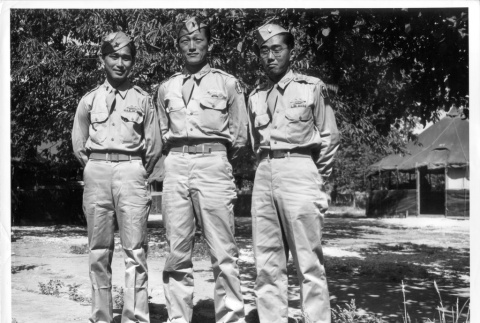
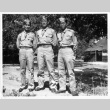
Three nisei soldiers (ddr-densho-114-29)
Original caption: S. Agata Di Goti, Italy. 2nd Lt. Hideo Kaichi, 2nd Lt. Yutaka K. Yoshida, and 2nd Lt. Bouo F. Tanigawa, all from the Hawaiian Islands and veterans of the 442nd Regimental Combat Team, just after they received their bars after completing the twelve-week course at the Leadership and Battle School. 14 July 1945.
vh
Helen Tanigawa Tsuchiya Interview Segment 18 (ddr-densho-1014-2-18)
Working for a doctor after the war
vh
Helen Tanigawa Tsuchiya Interview Segment 3 (ddr-densho-1014-2-3)
Helping on family farm: everyday chores
vh
Helen Tanigawa Tsuchiya Interview Segment 17 (ddr-densho-1014-2-17)
The Japanese American community in Minneapolis
vh
Helen Tanigawa Tsuchiya Interview Segment 14 (ddr-densho-1014-2-14)
Leaving camp and moving to Indianapolis
vh
Helen Tanigawa Tsuchiya Interview Segment 21 (ddr-densho-1014-2-21)
Raising children, losing daughter to cancer
vh
Helen Tanigawa Tsuchiya Interview Segment 2 (ddr-densho-1014-2-2)
Growing up in Parlier, California, where parents worked for a Nisei farmer
vh
Helen Tanigawa Tsuchiya Interview Segment 13 (ddr-densho-1014-2-13)
Being allowed to take photographs in camp for the school yearbook
vh
Helen Tanigawa Tsuchiya Interview Segment 20 (ddr-densho-1014-2-20)
Comparing West Coast and Midwest Japanese American communities
vh
Helen Tanigawa Tsuchiya Interview Segment 11 (ddr-densho-1014-2-11)
Working as a secretary for camp's high school principal
vh
Helen Tanigawa Tsuchiya Interview Segment 4 (ddr-densho-1014-2-4)
Growing up in the small town of Parlier, California
vh
Helen Tanigawa Tsuchiya Interview Segment 10 (ddr-densho-1014-2-10)
Difficult living conditions in camp
vh
Helen Tanigawa Tsuchiya Interview Segment 15 (ddr-densho-1014-2-15)
Family's experiences during the war
vh
Helen Tanigawa Tsuchiya Interview Segment 8 (ddr-densho-1014-2-8)
Coping with hearing about the bombing of Pearl Harbor
vh
Helen Tanigawa Tsuchiya Interview Segment 7 (ddr-densho-1014-2-7)
Social activities in high school
vh
Helen Tanigawa Tsuchiya Interview Segment 9 (ddr-densho-1014-2-9)
Memories of mass removal: originally exempt from moving
vh
Helen Tanigawa Tsuchiya Interview Segment 12 (ddr-densho-1014-2-12)
Living in Gila River, which was built on a Native American reservation
vh
Helen Tanigawa Tsuchiya Interview Segment 5 (ddr-densho-1014-2-5)
Attending church and Japanese language school