
988 items

988 items
doc
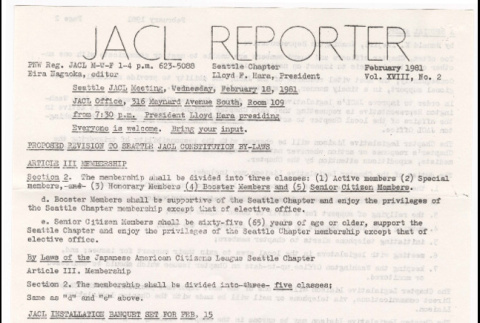
Seattle Chapter, JACL Reporter, Vol. XVIII, No. 2, February 1981 (ddr-sjacl-1-221)
Newsletter covering the following topics: Installation Banquet, February 15, Butcher Restaurant, NW Design Center, $15.00, Keynote- Cong Mike Lowry, Lori Matsukawa MC; fundraiser for Min Masuda Memorial Fund (Died June 1980); summary of article in Seattle Sun on Gordon Hirabayashi; Review of first full length feature film JAs produced by JAs, Hito Hata; Lake Washington JACL …
doc
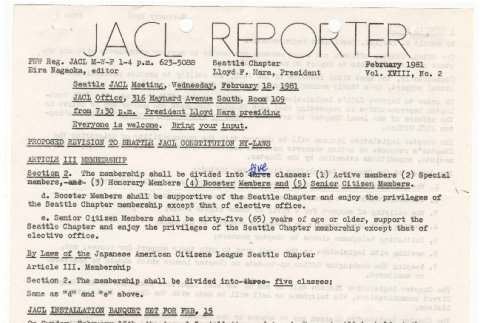
Seattle Chapter, JACL Reporter, Vol. XVIII, No. 2, February 1981 (ddr-sjacl-1-292)
Newsletter covering the following topics: Installation Banquet, February 15, Butcher Restaurant, NW Design Center, $15.00, Keynote- Cong Mike Lowry, Lori Matsukawa MC; fundraiser for Min Masuda Memorial Fund (Died June 1980); summary of article in Seattle Sun on Gordon Hirabayashi; Review of first full length feature film JAs produced by JAs, Hito Hata; Lake Washington JACL …
doc
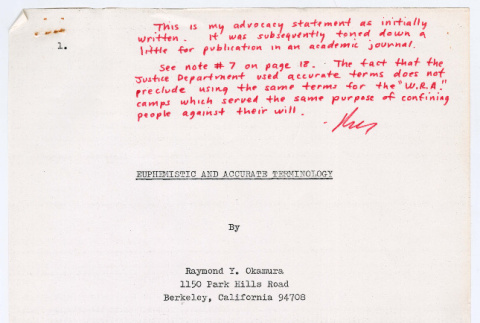
Euphemistic and Accurate Terminology (ddr-densho-1007-1814)
Raymond Y. Okamura's testimony to the Commission on Wartime Relocation and Internment of Civilians in Seattle Washington on September 11, 1981 describing policies and terminology used by the U.S. government to enforce wartime incarceration of Japanese Americans. He compares the American government's misleading terminology to that of Nazi propaganda. It was later published by the Journal …
Collection
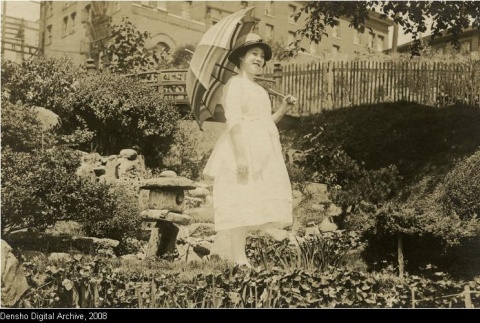
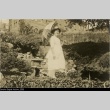
Mayeno Family Collection (ddr-densho-166)
This collection consists of photographs and documents from the Mayeno family, relatives of the owners of the Maneki Restaurant in Seattle, Washington. The collection contains photographs of the restaurant's Japanese garden prior to World War II, as well as materials from the internment camps in Santa Fe and Lordsburg, New Mexico.
vh
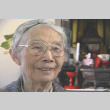
Asano Terao Interview II Segment 8 (ddr-densho-1000-109-8)
Comparison of the discrimination in Salt Lake City, Utah and Seattle, Washington (Japanese language)
This interview was conducted in Japanese and was translated so as to convey Mrs. Terao's way of speaking as closely as possible. For example, there are instances in which she makes some grammatical errors. These mistakes are conveyed through similar grammatical errors …
vh
Asano Terao Interview II Segment 27 (ddr-densho-1000-109-27)
Returning to job making necklaces after moving back to Seattle, Washington (Japanese language)
This interview was conducted in Japanese and was translated so as to convey Mrs. Terao's way of speaking as closely as possible. For example, there are instances in which she makes some grammatical errors. These mistakes are conveyed through similar grammatical errors in …
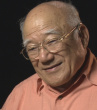
Narrator Eiichi Yamashita
Nisei male. Born January 27, 1923, in Seattle, Washington. Grew up in Seattle, Washington. Finished high school in Bellingham, Washington, where family moved for father's oyster business. During World War II, removed to the Tule Lake concentration camp, California. Left camp and lived in Chicago briefly before returning to the Samish Bay area near Bellingham to …
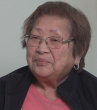
Narrator Jan Kumasaka
Sansei female. Born August 12, 1937, in Seattle, Washington. During World War II, family removed to the Puyallup Assembly Center, Washington, and the Minidoka concentration camp, Idaho. Lived in Minidoka for only four months before leaving camp to live and farm in Great Falls, Montana. After a few years, returned to Seattle. Attended the University of …
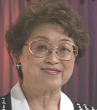
Narrator Louise Kashino
Nisei female. Born April 25, 1926, in Seattle, Washington. Incarcerated at the Puyallup Assembly Center, Washington, and Minidoka concentration camp, Idaho. Resettled during the war in Chicago, Illinois, and returned to Seattle after the war. Member of the Seattle Nisei Veterans Committee Women's Auxiliary. In her interview, talks about her efforts to successfully get her husband's …
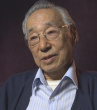
Narrator Hiro Nishimura
Nisei male. Born August 8, 1919, in Seattle, Washington. Grew up in Seattle, and was attending the University of Washington when Japan bombed Pearl Harbor on December 7, 1941. Drafted into the military a few months after the bombing, and then transferred to the Military Intelligence Service. Served as a linguist in Burma and India during …
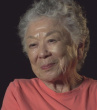
Narrator Patricia Kiwa Koyamatsu
Sansei female. Born in 1933 in Seattle, Washington. Grew up in Seattle where father ran a tailor shop. After the bombing of Pearl Harbor, removed with family to the Puyallup Assembly Center, Washington, and the Minidoka concentration camp, Idaho. After leaving camp, resettled in Denver, Colorado, for several years before moving to Los Angeles. Returned to …
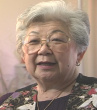
Narrator Mary Hirata
'Nisei female. Born November 27, 1926, in Wenatchee, Washington. Grew up in Wenatchee and moved to Seattle with family in 1938. Incarcerated at the Puyallup Assembly Center, Washington, and Minidoka concentration camp, Idaho. Resettled during World War II in Pocatello, Idaho. Returned to Seattle after World War II.
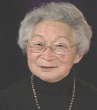
Narrator Ruby Inouye
Nisei female. Born November 17, 1920, in Seattle, Washington. Grew up in Seattle, and graduated salutatorian from Broadway High School. Was enrolled in the pre-medical program at the University of Washington on December 7, 1941. During the war, removed to the Puyallup Assembly Center, Washington, and the Minidoka concentration camp, Idaho. Left camp to attend the …
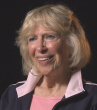
Narrator Margie Nahmias Angel
White female. Born June 1, 1924, in Seattle, Washington. Grew up in the Central District of Seattle where mother ran a boarding house. Discusses her reaction when her Japanese American peers had to leave Seattle during World War II.
Collection
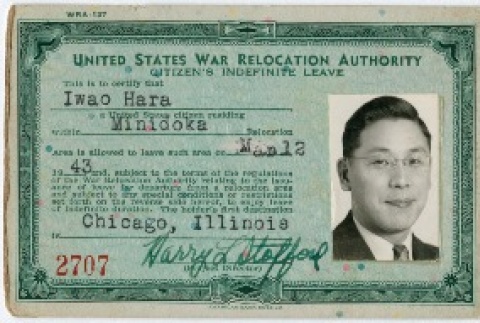
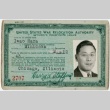
Mae Hara Collection (ddr-densho-308)
The Mae Hara Collection is comprised of photographs and documents from the personal family collection of Mae Hara, a Japanese American who was interview by Densho in 2004. The photos depict Mae's prewar life in Seattle, Washington. The documents concern her family's Oyster business pre-war, relocation to Minidoka, and post war life.

Narrator Sharon Yuen
Sansei female. Born July 1945 in Seattle, Washington. Daughter of Gordon Hirabayashi.
Narrator Misa (Oiye) Mihara
Sansei female. Born November 20, 1941, in Tacoma, Washington, where parents ran a restaurant. Spent early years at the Tule Lake concentration camp, California, where family was held. After leaving camp, moved to Seattle, Washington. Became an accomplished violinist, performing at an early age. Studied music at the University of Washington, then went on to become …
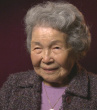
Narrator Bernadette Suda Horiuchi
Nisei female. Born February 11, 1913, in Seattle, Washington. Grew up in the Seattle and Bellevue, Washington, areas. In 1928, was involved in a serious ferry accident in which five of her family members, including both of her parents, perished. Married renowned artist Paul Horiuchi and lived in Rock Springs, Wyoming, where Paul worked for a …
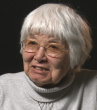
Narrator Takeko Yokoyama Todo
Nisei female. Born April 3, 1927, in Seattle, Washington. Grew up in Seattle, where father was a truck driver and mother was a Japanese language school teacher. During World War II, removed to the Puyallup Assembly Center, Washington, and the Minidoka concentration camp, Idaho. Left camp to finish high school in Ohio and work as a …
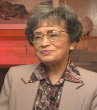
Narrator Cherry Kinoshita
Nisei female. Born October 13, 1923, in Seattle, Washington, and grew up in the Green Lake area. Incarcerated at the Puyallup Assembly Center, Washington, and Minidoka concentration camp, Idaho. Active in National and Seattle Chapter Japanese American Citizens League politics, especially during the drive for redress in the 1970s and 1980s.
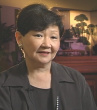
Narrator May K. Sasaki
Nisei female. Born May 31, 1935, in Seattle, Washington. Spent prewar years in Seattle's Nihonmachi, or Japantown. Incarcerated as child at Puyallup Assembly Center, Washington, and Minidoka concentration camp, Idaho. Resettled in Seattle. In her interview, discusses issues of shame and loss of Japanese American identity as a result of incarceration.
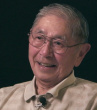
Narrator Katsumi Okamoto
Nisei male. Born July 5, 1926, in Seattle, Washington. Grew up in Seattle, where parents owned and operated a grocery store. Following the bombing of Pearl Harbor, removed to Puyallup Assembly Center, Washington, and Minidoka concentration camp, Idaho. Served in Japan with the Military Intelligence Service following World War II.
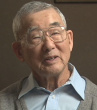
Narrator Nob Koura
Nisei male. Born April 10, 1920, in Seattle, Washington. Moved from Seattle to Bainbridge Island, Washington, at age five. During World War II, removed to the Manzanar concentration camp, California. Volunteered for the military and served in Europe. After the war, eventually returned to Bainbridge Island and reestablished family's farm.
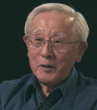
Narrator Shig Kaseguma
Nisei male. Born June 4, 1921, in Seattle, Washington. Following the bombing of Pearl Harbor, removed to the Puyallup Assembly Center, Washington, and the Minidoka concentration camp, Idaho. Left camp to attend college in Cincinnati before being drafted. Served in Japan with the Military Intelligence Service, and eventually returned to Seattle.
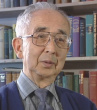
Narrator Shosuke Sasaki
Issei male. Born March 26, 1912, in Yamaguchi-ken, Japan. Immigrated to United States in 1919. Lived in Pomeroy, Washington, and Seattle, Washington, before World War II. Incarcerated at the Puyallup Assembly Center, Washington and the Minidoka concentration camp, Idaho. Resettled in New York. As a member of the Newspaper Guild, led effort to eliminate pejorative use …