
5070 items

5070 items
img
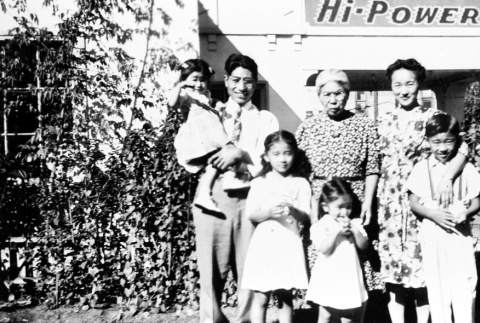
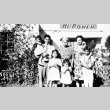
Family standing outside a gas station (ddr-densho-5-18)
The Fukuda family was originally from Seattle and voluntarily relocated to Nampa, Idaho, during World War II. After the war, the family moved to Spokane, Washington. Front (left to right): Janet, Lillian, and Alan Fukuda. Back: Jim Fukuda holding his daughter Mitsue, Mrs. Fukuda, and Rina Fukuda.
img
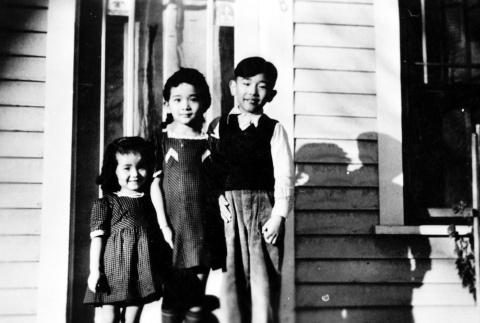
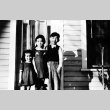
Three children on a porch (ddr-densho-5-7)
Left to right: Lillian, Janet, and Alan Fukuda on their porch. The Fukuda family was originally from Seattle and voluntarily relocated to Nampa, Idaho, during World War II. After the war, they moved to Spokane, Washington, where their father, Dr. Susumu Fukuda, opened a dental practice.
doc
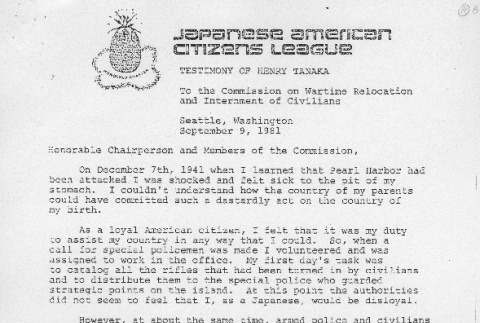
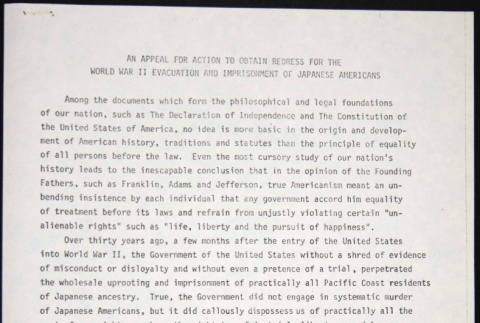
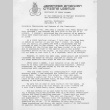
Testimony of Henry Tanaka (ddr-densho-67-143)
Written testimony of Henry Tanaka, from Hawaii. He was incarcerated at Sand Island and Honouliuli internment camps, Hawaii. This testimony was presented at the CWRIC hearing in Seattle, Washington, on Wednesday, September 9, 1981, in the section titled "The Hawaiian Experience." Personal information excised by Densho.
doc
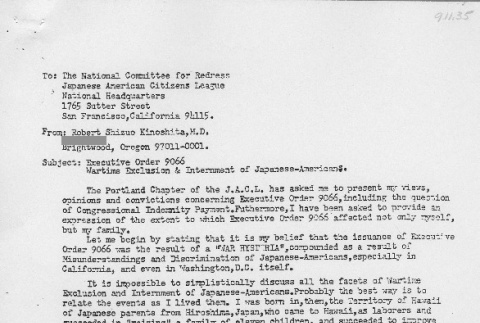
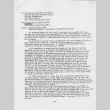
Testimony of Robert Shizuo Kinoshita (ddr-densho-67-238)
Written testimony of Robert Shizuo Kinoshita of Brightwood, Oregon. Incarcerated in the North Portland Assembly Center, Oregon, and the Heart Mountain concentration camp, Wyoming. This testimony was presented at the CWRIC hearing in Seattle, Washington, on Friday, September 11, 1981, in the section titled "Multiple Impact."
doc
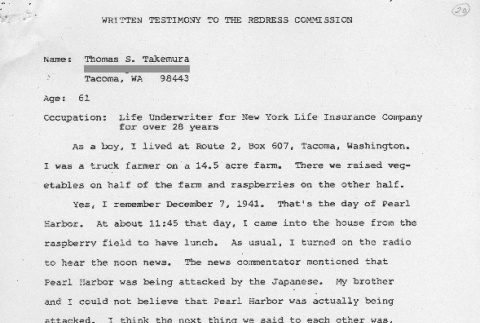
Testimony of Thomas S. Takemura (ddr-densho-67-153)
Written testimony of Thomas S. Takemura of Tacoma, Washington. Incarcerated at the Puyallup Assembly Center, Washington, and then moved to Illinois. This testimony was presented at the CWRIC hearing in Seattle, Washington, on Wednesday, September 9, 1981, in the section titled "Veterans." Personal information excised by Densho.
doc
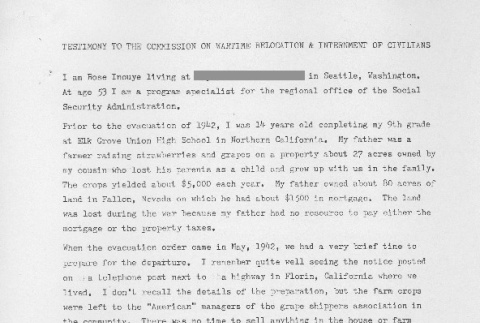
Testimony of Rose Inouye (ddr-densho-67-271)
Written testimony of Rose Inouye, born in Florin, California. Incarcerated in the Fresno Assembly Center, California, the Jerome concentration camp, Arkansas, and the Granada concentration camp, Colorado. This testimony was submitted for the CWRIC hearings in Seattle, Washington, September 9-11, 1981. Personal information excised by Densho.
doc
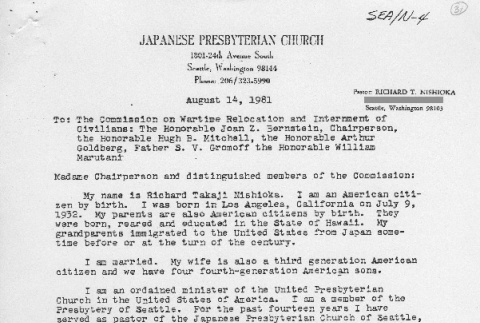
Testimony of Richard Takaji Nishioka (ddr-densho-67-163)
Written testimony of Richard Takaji Nishioka, born in Los Angeles, California. Incarcerated in Poston concentration camp, Arizona. This testimony was presented at the CWRIC hearing in Seattle, Washington, on Wednesday, September 9, 1981, in the section titled "Discrimination and Psychological Impact." Personal information excised by Densho.
doc
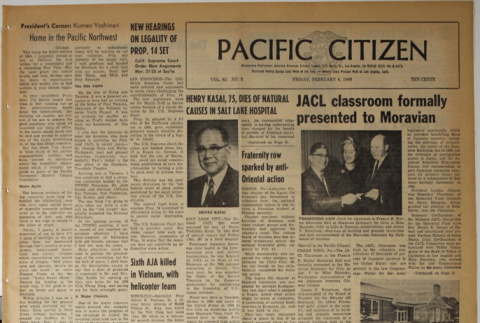
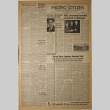
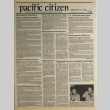
Pacific Citizen, Vol. 62, No. 5 (February 4, 1966) (ddr-pc-38-5)
Select article titles: "Success Story: Japanese American Style" (p.1); "Sixth AJA killed in Vietnam, with helicopter team" (p.1); "Henry Kasai, 75, dies of Natural causes in Salt Lake Hospital" (p.1);"Appreciation banquet to three elders of Seattle community draws 300 Issei" (p.5).
doc
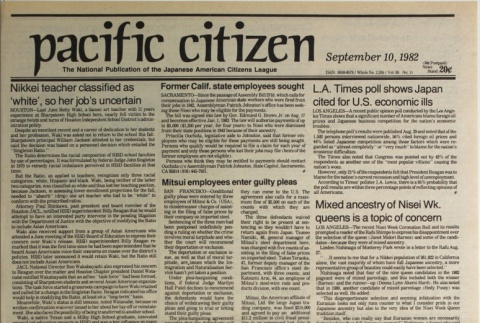
Pacific Citizen, Vol. 95, No. 11 (September 10, 1982) (ddr-pc-54-36)
Selected article titles: "Mixed Ancestry of Nisei Wk. Queens Is a Topic of Concern" (pp. 1, 3, 8), "Seattle JAs Riled by Column Espousing Anti-Japan Ideas" (pp. 1, 6), "Nagasaki Survivor Seeking Last Hope" (p. 1), and "East Wind: Pacific Citizen: A Free Press" (p. 5).
doc
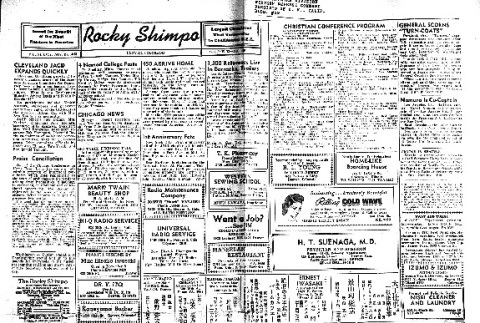
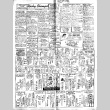
Rocky Shimpo Vol. 12, No. 139 (November 21, 1945) (ddr-densho-148-225)
Selected article titles: "Cleveland JACD Expands Quickly"; "Praise Conciliation"; "Praise Conciliation"; "Chicago News"; "Oki Takes Deciding Fall"; "450 Arrive Home"; "1st Anniversary Fete"; "1,300 Returnees Live in Barracks, Trailers"; "Christian Conference Program"; "General Scorns 'Turn-Coats'"; "Nomura is Co-Captain"; "Visitor in Seattle"; "Want Ads Today."
img
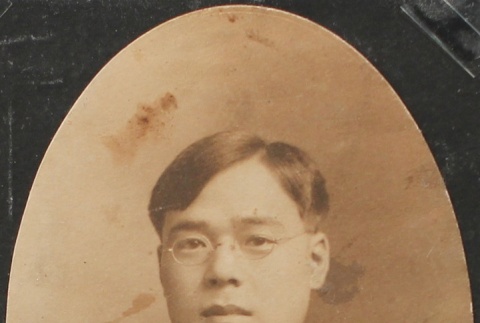
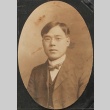
Portrait of an Issei man in Western clothing (ddr-densho-259-57)
Portrait of Masuo Yasui as a young man wearing Western clothing. Caption by Homer Yasui: "Masuo Yasui came to the United States alone, departing from Yokohama, Japan on the Ryojun Maru, at the age of 16-1/2 years. He arrived in Seattle on June 4, 1903."
img
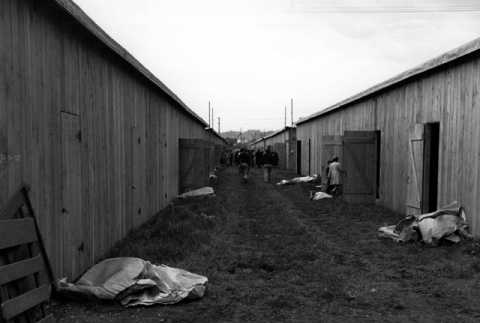
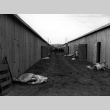
Japanese Americans walking between barracks (ddr-densho-36-40)
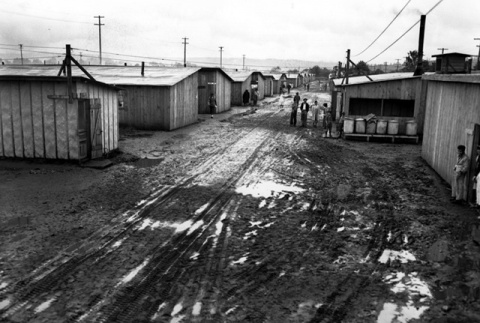
The Puyallup Assembly Center, also known as "Camp Harmony," was on the racetrack of the Puyallup fairgrounds. The center was open from April 28, 1942, through September 23, 1942. Most camp inmates were from Seattle, Washington. This is a view of the barracks that housed them.
img
Puyallup Assembly Center (ddr-densho-36-43)
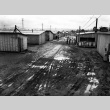
The Puyallup Assembly Center, also known as "Camp Harmony," was on the racetrack of the Puyallup fairgrounds. The center was open from April 28, 1942, through September 23, 1942. Most camp inmates came from Seattle, Washington. This is a view of the barracks that housed them.
img
Four-star mother (ddr-densho-35-51)
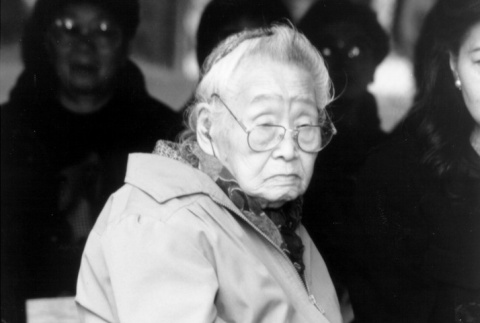
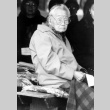
This four-star mother is at the annual Nisei Veteran Memorial Day service. The service takes place at the Lakeview Cemetery in Seattle, Washington. This woman received her United States citizenship on March 21, 1997 at the age of 100 years. She died on June 29, 1998.
doc
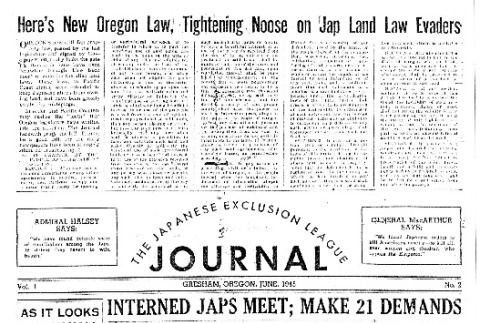
Japanese Exclusion League Journal (ddr-densho-35-368)
Selected article titles: "Teamsters Want Japanese Kept Off Coast Area" (p. 1), "Japs 'Bleed' Leased Farms, Says Bainbridge Economist" (p. 1), "If They Are Really Loyal" (p. 2), "DeWitt Tells How Organizations Here Aided Japs" (p. 3), "Seattle Produce Dealers Oppose WRA Aid to Japs" (p. 4).
img
Mass removal (ddr-densho-34-147)
These Japanese Americans are waiting for army trucks to take them to the Eagledale ferry dock on Bainbridge Island, Washington. From there, a special ferry will take them to Seattle, where they will be transferred to a train bound for the Manzanar concentration camp in California.
vh
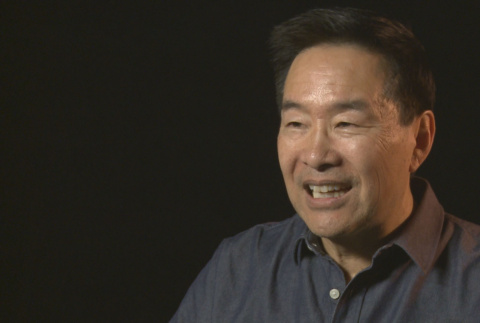
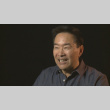
Tom Ikeda Interview (ddr-densho-1000-484)
Sansei male. Born January 22, 1956, in Seattle, Washington. During World War II, parents were incarcerated at the Puyallup Assembly Center, Washington, and Minidoka concentration camp, Idaho. Was General Manager at Microsoft Corporation in the Multimedia Publishing Group before becoming the Founding Executive Director of Densho.

vh
Ken Roger Inagaki Interview (ddr-phljacl-1-17)
Sansei male. Born January 3, 1940, in Seattle, Washington. During World War II, removed with family to the Puyallup Assembly Center, Washington, and the Minidoka concentration camp, Idaho. Left camp and resettled in New York and New Jersey. Established a career in safety and health consulting.
img
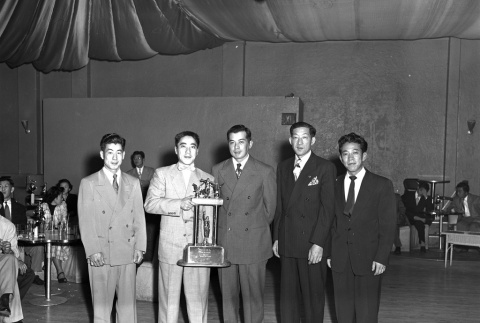
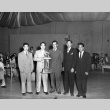
Third Annual Oregon Nisei Bowling League Tournament Dance- First Place Men's Team (ddr-one-1-115)
Black and white photographic negative of the first place men's team at the Third Annual Oregon Nisei Bowling League Tournament Dance at McElroy's Ballroom in Portland, Oregon. Man holding trophy identified as John Asahara from Tacoma; it is possible that the winning team was from Seattle-Tacoma.
img
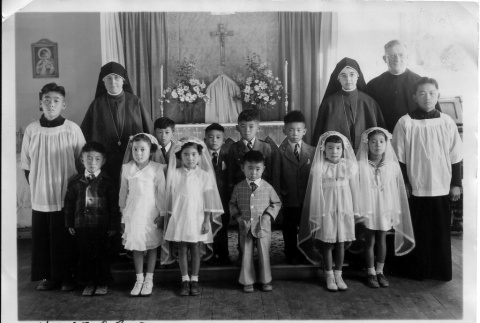
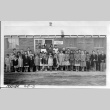
First Communion class (ddr-densho-37-684)
Original WRA caption: First Communion class of Catholic Church at Minidoka Relocation Center, Hunt, Idaho. The Rev. L.H. Tibesar, Maryknoll Missionary, is pastor. The nuns are Maryknoll sisters from the Maryknoll Mission in Seattle where the Maryknoll group numbered 1000 Japanese Catholics and non-Catholics before evacuation.
img
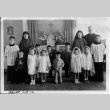
First Communion class (ddr-densho-37-683)
Original WRA caption: First Communion class of Catholic Church at Minidoka Relocation Center, Hunt, Idaho. The Rev. L.H. Tibesar, Maryknoll Missionary, is pastor. The nuns are Maryknoll sisters from the Maryknoll Mission in Seattle where the Maryknoll group numbered 1000 Japanese Catholics and non-Catholics before evacuation.
img
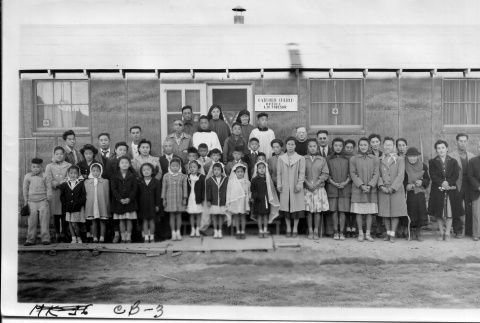
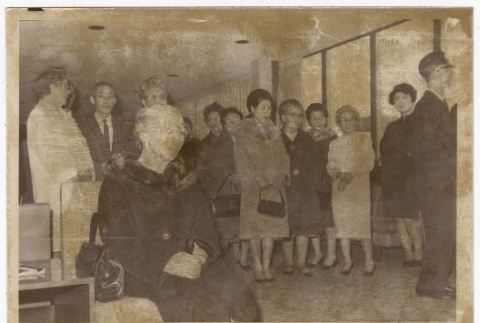
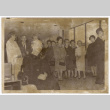
Men and women wait in their winter coats (ddr-sbbt-6-48)
Men and women wait in their winter coats, likely before an event for the Lord Abbot Ohtani's visit. Written on verso: woman seated - Fusana Tsubota (Min's mother) 2. Mr. Tsuyoshi Horike 3. Mrs. Hashiguchi 4. [unidentified] 5. Mrs. Kihara 6. Mrs. Yoshitake 7. [unidentified] 8. Mrs. Fukuda 9. 10. Rev. Iwai.
doc
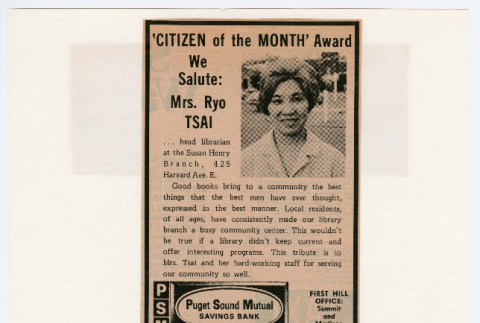
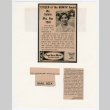
Capitol Hill Times: 'Citizen of the Month' Award: We Salute: Mrs. Ryo Tsai (ddr-densho-446-446)
Ryo Tsai received the "Citizen of the Month" Award. Her letter of thanks to the Editor on 4/21/71 is also included.
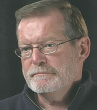
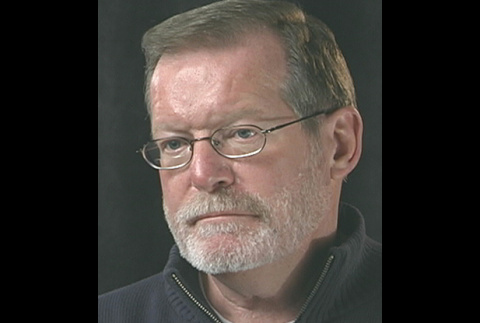
Narrator Emery Brooks Andrews
White male. Born November 14, 1937, in Seattle, Washington. Son of Reverend Emery Andrews, the Japanese Baptist Church minister in Seattle for many years. After the Japanese Americans in Seattle were removed to Minidoka concentration camp, Idaho, Emery Brooks moved with family to Twin Falls, Idaho, to minister to Nikkei in camp. Visited Japanese American friends …