
1008 items



1008 items
vh
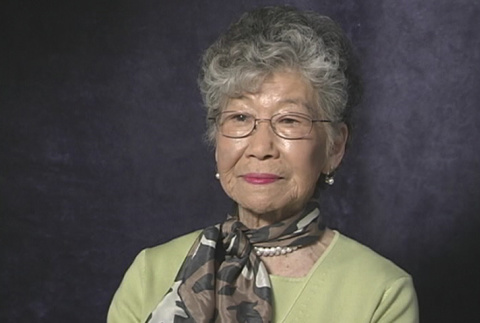
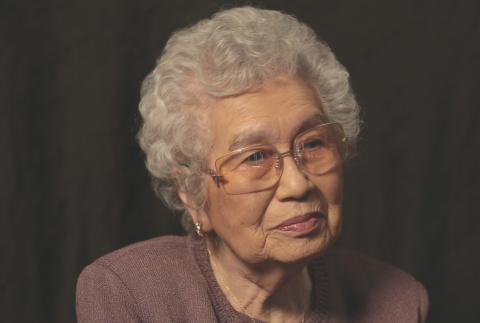
Sumi Okamoto Interview (ddr-densho-1000-192)
Nisei female. Born January 7, 1920, in Seattle, Washington. Spent childhood in Spokane, Washington, where father worked for the Alaska Junk Company. Attended Irving Grade School and Lewis & Clark High School. Wedding took place on December 7, 1941, the day of Japan's attack on Pearl Harbor. Husband passed away in 1946, and Ms. Okamoto worked …
vh
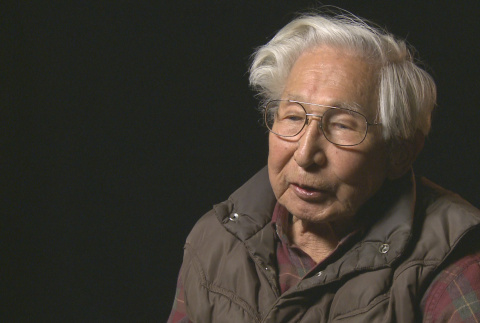
Warren Koichi Suzuki Interview (ddr-densho-1000-410)
Nisei male. Born February 27, 1921, in Seattle, Washington. At age ten, was sent to Japan to live and attend school. Returned to Seattle prior to World War II. During the war, was removed to the Puyallup Assembly Center, Washington, and the Minidoka concentration camp, Idaho. Answered "no-no" on the so-called "loyalty questionnaire" and was transferred …
vh
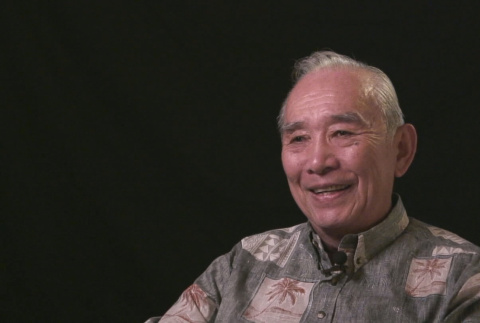
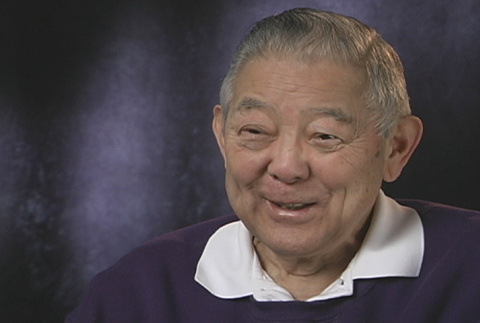
Victor Ikeda Interview (ddr-manz-1-23)
Nisei male. Born February 4, 1927, in Seattle, Washington. Grew up in Seattle's Japantown area, where parents operated a hotel. After the bombing of Pearl Harbor, removed to the Puyallup Assembly Center, Washington, and the Minidoka concentration camp, Idaho. Left camp to attend school in Minnesota, was drafted, and trained in the Military Intelligence Service Language …
vh
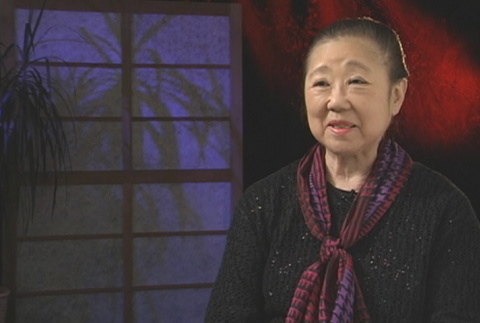
Martha Nishitani Interview (ddr-densho-1000-71)
Nisei female. Born February 27, 1920, in Seattle, Washington. Family owned and operated the Oriental Gardens, the first nursery in Lake City. Incarcerated at Puyallup Assembly Center, Washington, and Minidoka concentration camp, Idaho. An award-winning modern dancer who established the Martha Nishitani Modern Dance School and Martha Nishitani Modern Dance Company, she also choreographs for modern …
vh
Victor Ikeda Interview (ddr-densho-1000-487)
Nisei male. Born February 4, 1927, in Seattle, Washington. Grew up in Seattle's Japantown area, where parents operated a hotel. After the bombing of Pearl Harbor, removed to the Puyallup Assembly Center, Washington, and the Minidoka concentration camp, Idaho. Left camp to attend school in Minnesota, was drafted, and trained in the Military Intelligence Service Language …
img
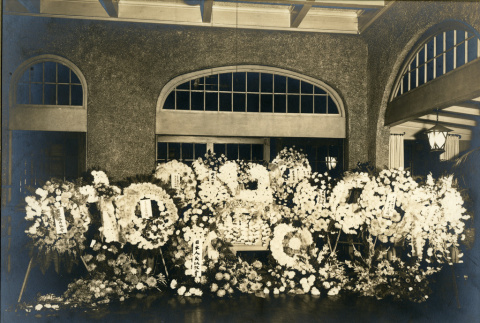
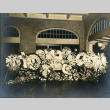
Funeral (ddr-csujad-25-344)
A photograph of a funeral taken by the "Takano Studio," a photo studio in Seattle, Washington probably in the early 1900s. Funeral flowers offered by: Japanese Methodist Church, Japan Tennis Club, Issaku Okamoto, Seattle Japanese Language School, and others. See this object in the California State Universities Japanese American Digitization project site: jia_12_006

img
Seattle Judo championship (ddr-csujad-25-334)
A group photograph of Judo competitors with a championship flag. The fist Judo tournament was held by the Seattle Judo Association in December 1936. The photograph is taken by "Takano Studio," a photo studio in Seattle, Washington. See this object in the California State Universities Japanese American Digitization project site: jia_11_01_004
doc
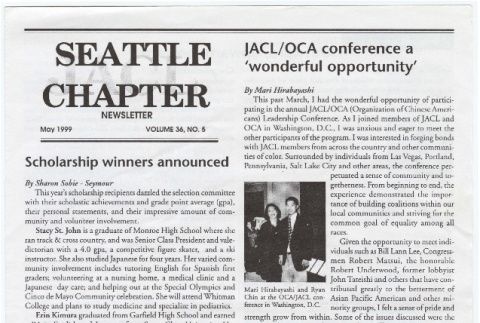
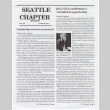
Seattle Chapter, JACL Reporter, Vol. 36, No. 5, May 1999 (ddr-sjacl-1-462)
Newsletter covering the following topics: Scholarship winners Stacy St. John, Erin Kimura, Junko Nishimura, and Christine Beppu; Mari Hirabayashi attends JACL/OCA Leadership Conference in Washington DC; Seattle JACL receives the Samuel McKinney Racial Justice and Reconciliation Award from the Church Council of Greater Seattle for the leadership in the I-200 campaign. Elaine Akagi, Jeffrey Hattori, Janice …

img
Buddhist Convention (ddr-one-1-332)
Black and white photographic negative of large crowd of Buddhists gathered outside Collin's Field House in Seattle, Washington for a Buddhist convention. Seated in front row from left to right: Yasashi Ichikawa, Reverend Seiji Kobara from Seattle, Reverend Shoko Masunaga, Reverend Akira Jotetsu Ono, Reverend Tatsuya Ichikawa, Reverend Bishop Kenryu Tsuji, Reverend Eiyu Terao from Spokane, …
img
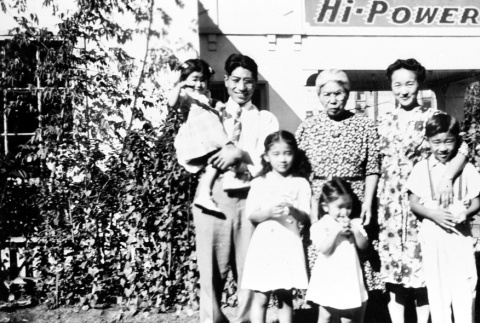
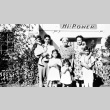
Family standing outside a gas station (ddr-densho-5-18)
The Fukuda family was originally from Seattle and voluntarily relocated to Nampa, Idaho, during World War II. After the war, the family moved to Spokane, Washington. Front (left to right): Janet, Lillian, and Alan Fukuda. Back: Jim Fukuda holding his daughter Mitsue, Mrs. Fukuda, and Rina Fukuda.
img
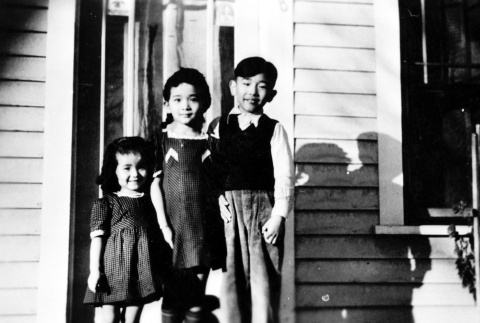
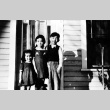
Three children on a porch (ddr-densho-5-7)
Left to right: Lillian, Janet, and Alan Fukuda on their porch. The Fukuda family was originally from Seattle and voluntarily relocated to Nampa, Idaho, during World War II. After the war, they moved to Spokane, Washington, where their father, Dr. Susumu Fukuda, opened a dental practice.
doc
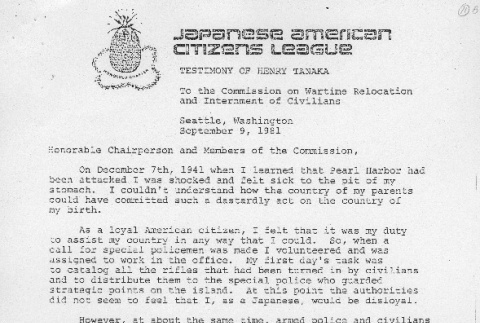
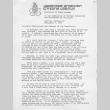
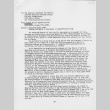
Testimony of Henry Tanaka (ddr-densho-67-143)
Written testimony of Henry Tanaka, from Hawaii. He was incarcerated at Sand Island and Honouliuli internment camps, Hawaii. This testimony was presented at the CWRIC hearing in Seattle, Washington, on Wednesday, September 9, 1981, in the section titled "The Hawaiian Experience." Personal information excised by Densho.
doc
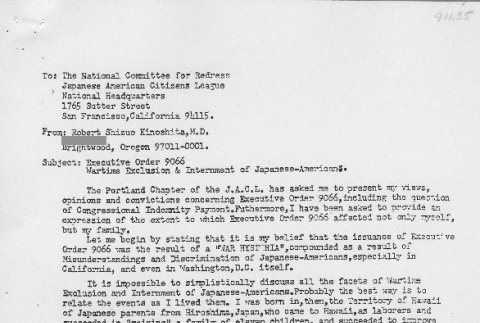
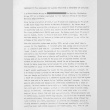
Testimony of Robert Shizuo Kinoshita (ddr-densho-67-238)
Written testimony of Robert Shizuo Kinoshita of Brightwood, Oregon. Incarcerated in the North Portland Assembly Center, Oregon, and the Heart Mountain concentration camp, Wyoming. This testimony was presented at the CWRIC hearing in Seattle, Washington, on Friday, September 11, 1981, in the section titled "Multiple Impact."
doc
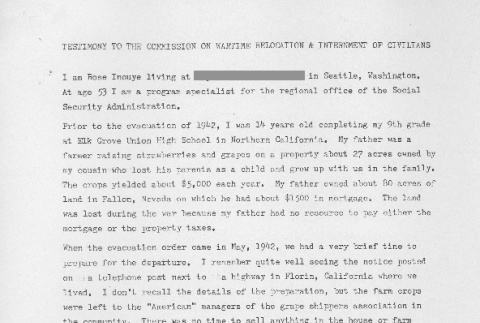
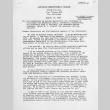
Testimony of Rose Inouye (ddr-densho-67-271)
Written testimony of Rose Inouye, born in Florin, California. Incarcerated in the Fresno Assembly Center, California, the Jerome concentration camp, Arkansas, and the Granada concentration camp, Colorado. This testimony was submitted for the CWRIC hearings in Seattle, Washington, September 9-11, 1981. Personal information excised by Densho.
doc
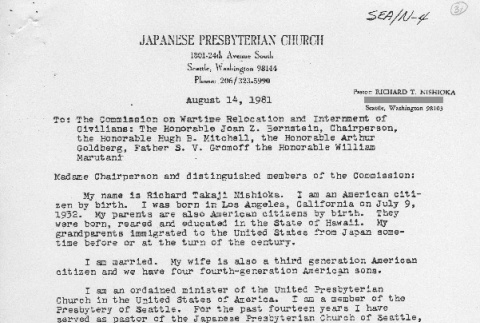
Testimony of Richard Takaji Nishioka (ddr-densho-67-163)
Written testimony of Richard Takaji Nishioka, born in Los Angeles, California. Incarcerated in Poston concentration camp, Arizona. This testimony was presented at the CWRIC hearing in Seattle, Washington, on Wednesday, September 9, 1981, in the section titled "Discrimination and Psychological Impact." Personal information excised by Densho.
img
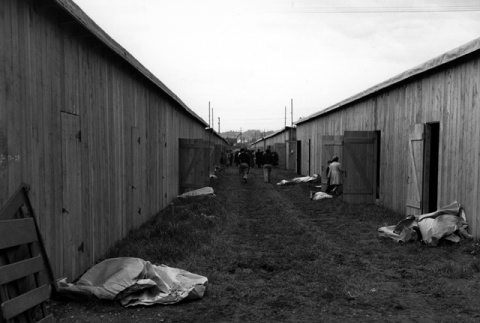
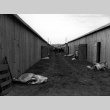
Japanese Americans walking between barracks (ddr-densho-36-40)
The Puyallup Assembly Center, also known as "Camp Harmony," was on the racetrack of the Puyallup fairgrounds. The center was open from April 28, 1942, through September 23, 1942. Most camp inmates were from Seattle, Washington. This is a view of the barracks that housed them.
img
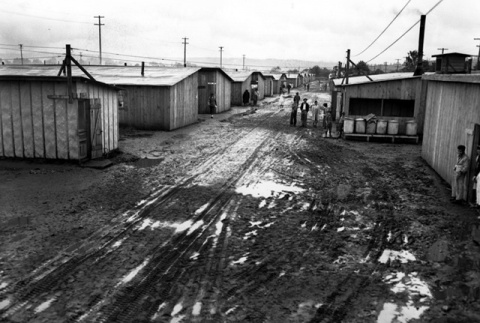
Puyallup Assembly Center (ddr-densho-36-43)
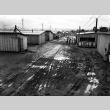
The Puyallup Assembly Center, also known as "Camp Harmony," was on the racetrack of the Puyallup fairgrounds. The center was open from April 28, 1942, through September 23, 1942. Most camp inmates came from Seattle, Washington. This is a view of the barracks that housed them.
img
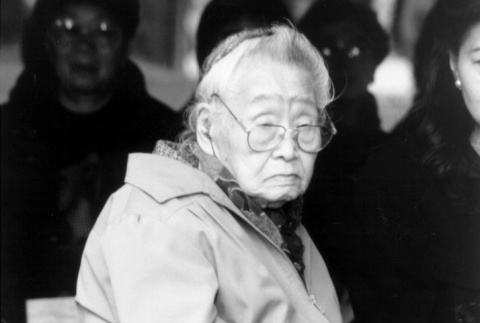
Four-star mother (ddr-densho-35-51)
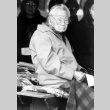
This four-star mother is at the annual Nisei Veteran Memorial Day service. The service takes place at the Lakeview Cemetery in Seattle, Washington. This woman received her United States citizenship on March 21, 1997 at the age of 100 years. She died on June 29, 1998.
doc
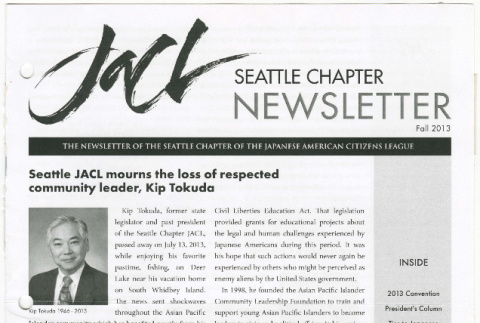
Seattle Chapter, JACL Reporter, Fall 2013 (ddr-sjacl-1-596)
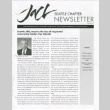
Selected article titles: "Seattle JACL Mourns the Loss of Respected Community Leader, Kip Tokuda" (p. 1-2), "Commemorating Redress at the 2013 Convention" (p. 4-5), "Youth Impressions from the 2013 Convention" (p. 5), "Why Sister Cities? Washington Boasts Numerous Ties to Japanese Cities" (p. 7).
doc
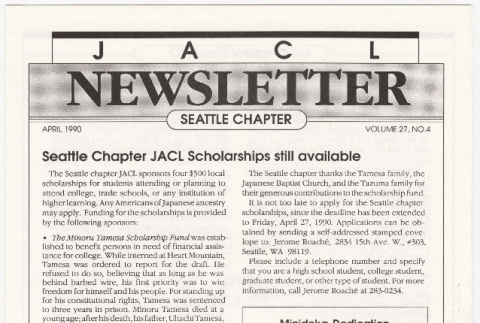
Seattle Chapter, JACL Reporter, Vol. 27, No. 4, April 1990 (ddr-sjacl-1-386)
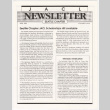
Newsletter covering the following topics: Scholarships include Tamesa, Andrews, and Bunshiro Tazuma; Doshi Kai report; Board Profiles: Wayne Kimura, Bruce Echigoshima, Massie Tomita, May Sasaki; April 21, 1990-Redress Workshop, Blaine, Bob Bratt speaker (WA Coalition for Redress-Seattle, Lake Washington, Puyallup Valley, and White River JACL.
img
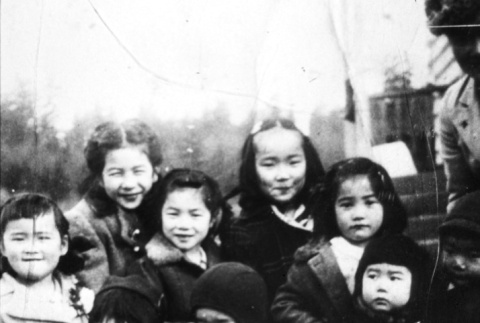
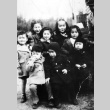
Mass removal (ddr-densho-34-147)
These Japanese Americans are waiting for army trucks to take them to the Eagledale ferry dock on Bainbridge Island, Washington. From there, a special ferry will take them to Seattle, where they will be transferred to a train bound for the Manzanar concentration camp in California.
doc
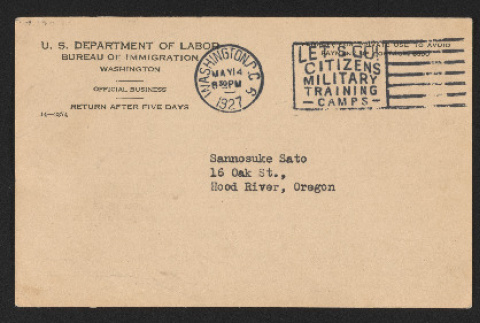
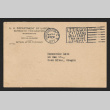
Notification card from U.S. Department of Labor, Bureau of Immigration, to Sannosuke Sato, 14 May 1927 (ddr-ohs-2-125)
A postcard from the U.S. Department of Labor, Bureau of Immigration to Sannosuke Sato, postmarked May 14, 1927. The postcard has text printed on the back indicating that a return permit has been issued for Sato and mailed to the U.S. Immigration officer in Seattle, Washington.
vh
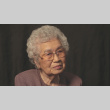
Dorothy H. Sato Interview (ddr-one-7-50)
Nisei female. Born May 24, 1923, in Carlisle, Washington. Grew up in Seattle, Washington, where parents ran a hotel. During World War II, removed to the Puyallup Assembly Center, Washington, and the Minidoka concentration camp, Idaho. After leaving camp, lived for a time in Chicago, Illinois, before returning to Oregon.
(This material is based upon work …
vh
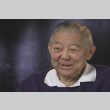
George Morihiro Interview (ddr-densho-1000-182)
Nisei male. Born September 19, 1924, in Tacoma, Washington, and spent childhood in Fife, Washington. Following the bombing of Pearl Harbor, removed to the Puyallup Assembly Center and Minidoka concentration camp, Idaho. Drafted into the army in 1944 and joined the 442nd Regimental Combat Team in Europe. Awarded the Purple Heart for actions in the Battle …

vh
Etsuko Ichikawa Osaki Interview (ddr-one-7-56)
Nisei female. Born February 19, 1931, in Fresno, California. Family moved to Seattle, Washington, where father became minister of the Seattle Buddhist Temple. During the war, removed to the Puyallup Assembly Center, Washington, and Minidoka concentration camp, Idaho. Transferred to the Crystal City internment camp, Texas, to be reunited with father, who was arrested by the …