
4410 items
4410 items
doc
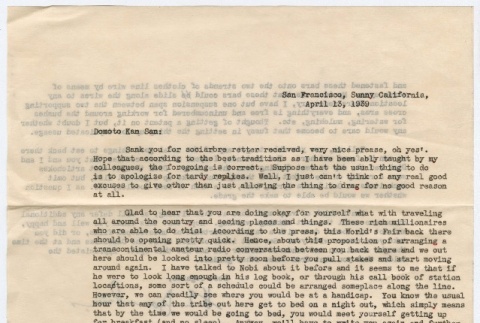
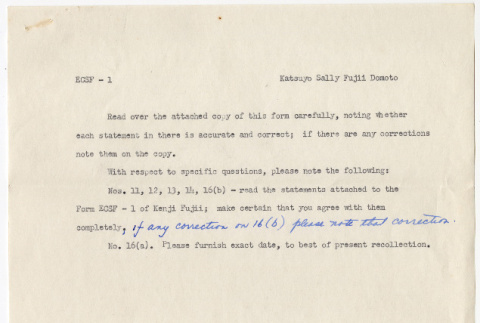
Letter to Sally Domoto from John Gorfinkel (ddr-densho-329-1241)
Including affidavit for filing Evacuation Claim
img
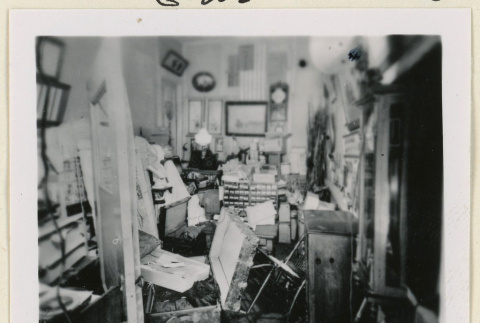
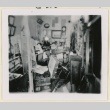
Disarrayed room in Sugiyama Sporting Co. (ddr-densho-37-1773)
Included annotation: G-803, Sugiyama Sporting co in San Francisco.
doc
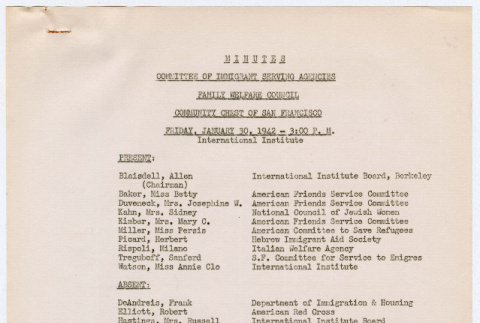
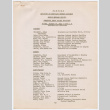
Meeting Minutes from Committee of Immigrant Serving Agencies meeting on January 30, 1942 (ddr-densho-356-763)
Meeting Minutes from Committee of Immigrant Serving Agencies meeting on January 30, 1942. Topics covered in the meeting include: ideas to support the Japanese American community as it faces discrimination, how to use media to lessen confusion between state and federal orders, working with California's Norther Civil Rights Committee, and questions about who would assist the …
doc
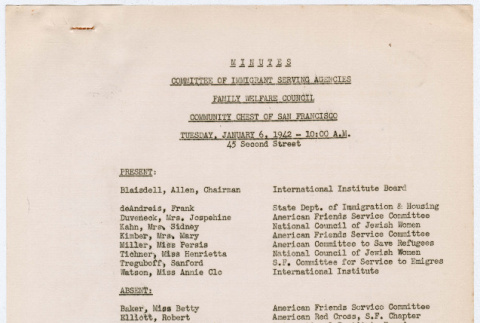
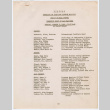
Meeting Minutes from Committee of Immigrant Serving Agencies meeting on January 6, 1942 (ddr-densho-356-761)
Meeting Minutes from Committee of Immigrant Serving Agencies meeting on January 6, 1942. Topics covered in the meeting include: reading of correspondence regarding Issei being detained by authorities, relief funds frozen as some of the account holders were Issei, Japanese American Citizens' League seeking advise, and violence by Filipino Americans against Japanese Americans.
doc
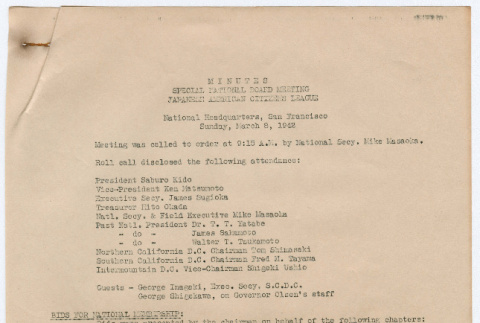
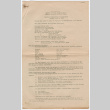
Meeting Minutes from the Special National Board Meeting of the Japanese American Citizens League on March 8, 1942 (ddr-densho-356-768)
Meeting minutes from the JACL Special Nation Board Meeting. Topics include bids for national membership, future organization and activities, Appointment of national committee chairmen, nomination of officers, Washington representative, Special report on evacuation, and discussion on general evacuation principles.
doc
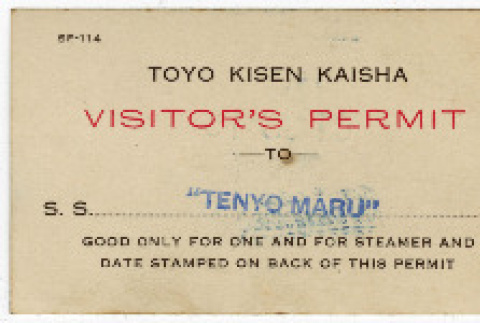
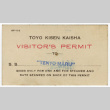
Visitor permit (ddr-densho-356-179)
Visitor's permit to visit the Tenyo Maru on October 23, 1915 while docked in San Francisco.
doc
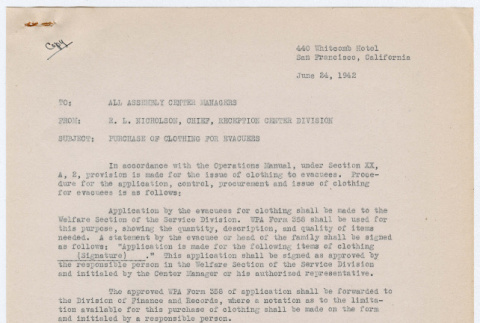
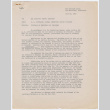
Memo to assembly center managers on clothing allotment procedure (ddr-densho-356-781)
Memo to all Assembly Center Mangers from R. L. Nicholson, Chief, Reception Center on the procedure for the purchasing of clothing for evacuees.
doc
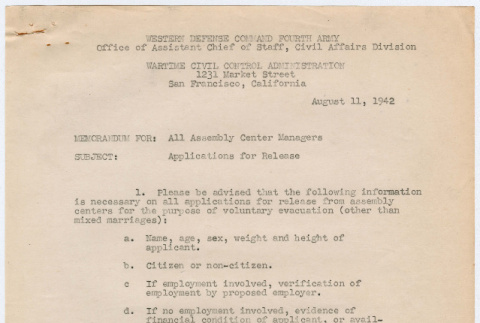
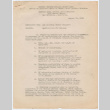
Memo to assembly center managers about applications for release (ddr-densho-356-788)
Memo to all Assembly Center Managers from Wartime Civil Control Administration regarding policy and procedure for internee's applications for release.
doc
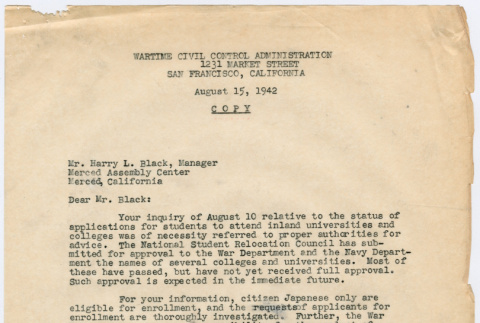
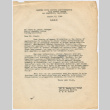
Letter to Harry L. Black from E. Sandquist regarding status of students requesting to attending inland universities (ddr-densho-356-789)
Letter to Harry L. Black, Merced Assembly Center Manager from E. Sandquist, Chief Operations Section Wartime Civil Control Administration. Sandquist informs that the inland universities have been submitted for approval to the War Department and Navy Department and are pending formal approval.
doc
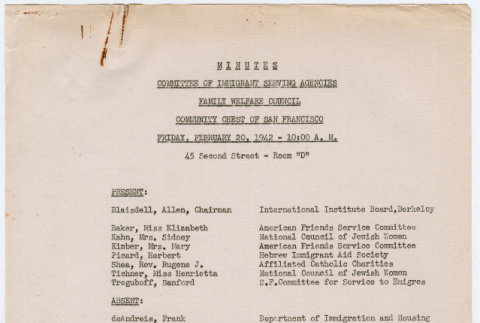
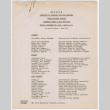
Meeting Minutes from Committee of Immigrant Serving Agencies meeting on February 20, 1942 (ddr-densho-356-767)
Meeting Minutes from Committee of Immigrant Serving Agencies meeting on February 20, 1942. Topics covered in the meeting include: reading correspondence regarding Japanese Americans, summery of recent board meeting, planned community outreach regarding public sentiment towards Japanese Americans, and planning financial assistance for Japanese Americans.
doc
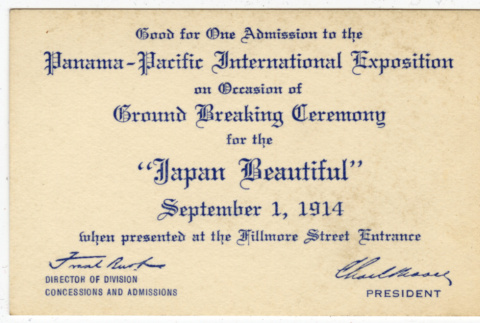
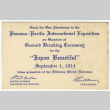
Admission ticket (ddr-densho-356-178)
Admission ticket for Panama-Pacific International Exposition Ground Breaking Ceremony for the Japan Beautiful exhibit.
doc
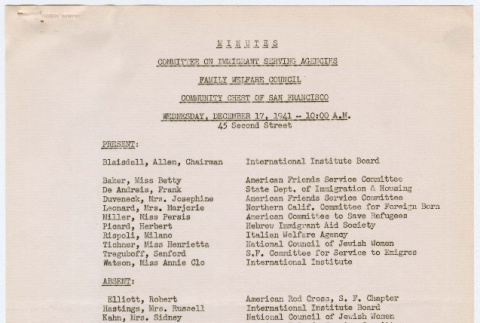
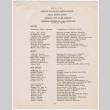
Meeting Minutes from Committee of Immigrant Serving Agencies meeting on December 17, 1941 (ddr-densho-356-759)
Meeting Minutes from Committee of Immigrant Serving Agencies meeting on December 17, 1941. Topics covered in the meeting include: Japanese travel restrictions, public school reactions, summary of conference with State Employment Department on employment of Japanese Americans, financial issues facing Japanese nationals due to the war, situation facing Italian and German immigrants, and community responses to …
doc
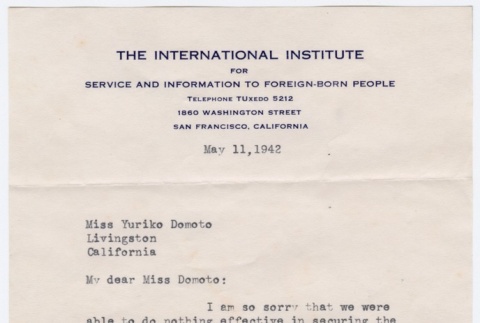
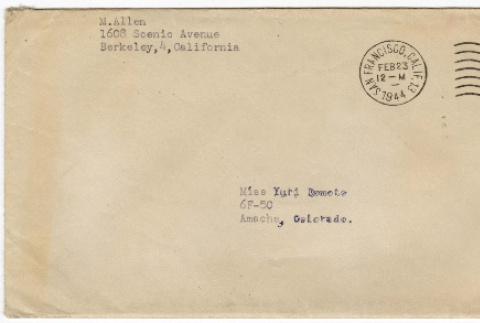
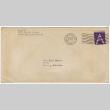
Letter to Yuri Domoto from Mildred Allen (ddr-densho-356-542)
Letter to Yuriko Domoto Tsukada from Mildred Allen. Mildred provides a list of contacts in New York City that may be able to help Yuri find a job on the East Coast. Additionally she writes about press about the war, her thoughts about Japanese Americans being released from camps and her observations of others reactions to …
doc
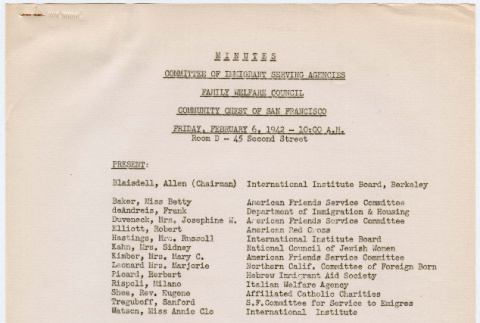
Meeting Minutes from Committee of Immigrant Serving Agencies meeting on February 6, 1942 (ddr-densho-356-765)
Meeting Minutes from Committee of Immigrant Serving Agencies meeting on February 6, 1942. Topics covered in the meeting include: public support for German immigrants, and updates to restrictions on Japanese Americans in California, plans to help effected Japanese Americans.
img
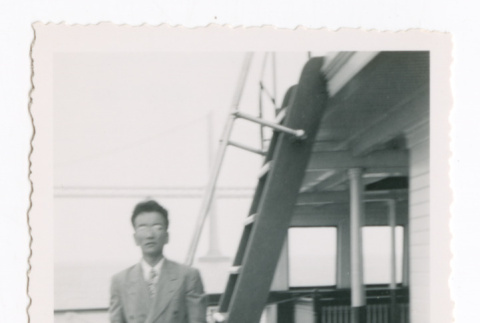
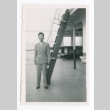
Hiroshi Komai on ferry deck (ddr-densho-562-65)
Caption on back: on Berkeley ferry boat, San Francisco 2/27/50
img
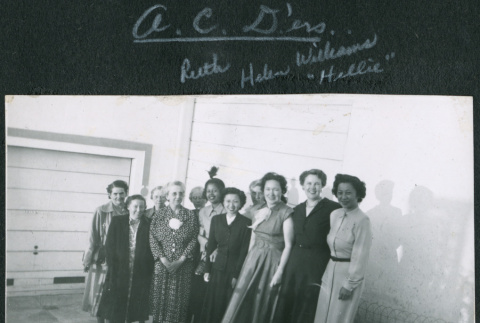
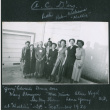
A.C.D.'ers (ddr-densho-443-24)
Group photo of 11 women standing together. Back row identified left to right: Gerry Edwards, Ruth, Helen Williams, and Hallie. Front row identified left to right: Florence Amce, Mary Flanagan, Mae (Miwa) Higaki, Alice Vegel, Ida May Stevens, Lena Young and W.D. Written above the image on the album page is " A.C.D'ers / Ruth Helen …
img
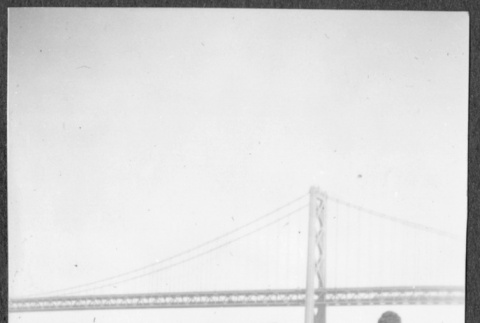
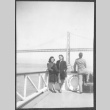
Wakako Domoto and Jean Kohatsu on a ferry (ddr-densho-443-58)
Photograph of Jean Kohatsu (left) and Wakako Domoto (right) aboard a ferry boat passing by the Golden Gate Bridge. Written at top of album page is "Autumn 1947" in white pencil.
img
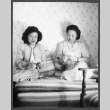
Wakako Domoto and Jean Kohatsu (ddr-densho-443-44)
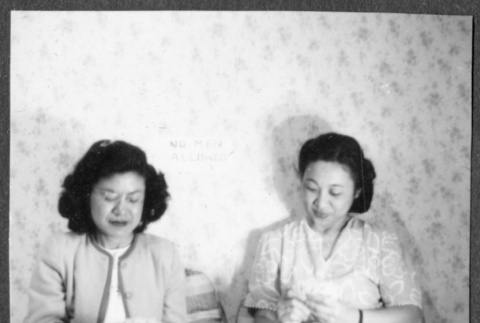
Photograph of Jean Kohatsu (left) and Wakako "Wak" Domoto (right" playing cards. Written above the image on the album page is "Roommate Jean Kohatsu / Glendale, Arizona / A Swell Gal!" in white pencil. Written on the top of the album page is "314 Walnut St / San Francisco / Nov. 1946 - Mrs. MacLeod - …
img
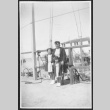
Kishi family at Fisherman's Wharf (ddr-densho-443-98)
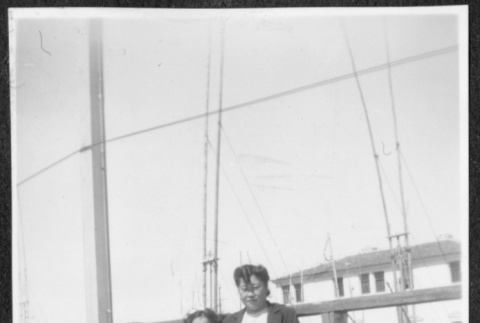
Photograph of the Kishi family at Fisherman's Wharf. From left to right is Kiyoko Thais Kishi, Tokuko (Domoto) Kishi behind Mitsuko Donna Kishi. Written above the image on the album page is "Kishi" in white pencil. Written below the image on the album page is "Fisherman's Wharf" in white pencil.
img
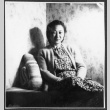
Wakako Domoto (ddr-densho-443-47)
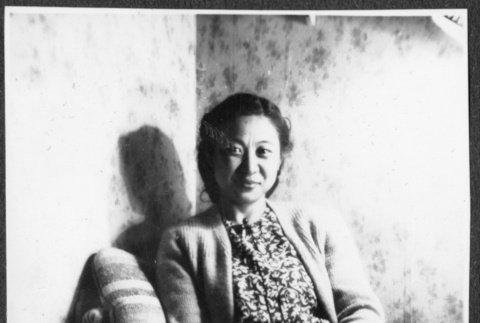
Photograph of Wakako "Wak" Domoto sitting in a corner. Written below the image on the album page is "My Corner! / Oh oh! These blankets / (did "Mac" see this?)" in white pencil. Written on the top of the album page is "314 Walnut St / San Francisco / Nov. 1946 - Mrs. MacLeod - 1949 …
img
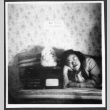
Jean Kohatsu and her record player (ddr-densho-443-45)
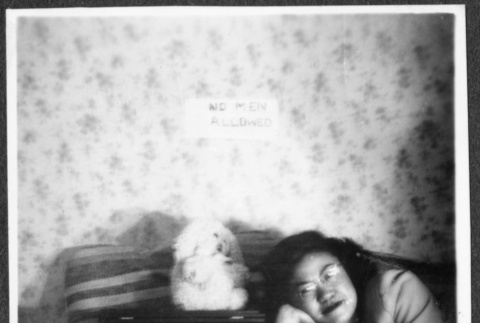
Photograph of Jean Kohatsu with her record player. Written below the image on the album page is "J.K. & Her New / Packard Bell / those f. Carle / Records!" in white pencil. Written on the top of the album page is "314 Walnut St / San Francisco / Nov. 1946 - Mrs. MacLeod - 1949 …
img
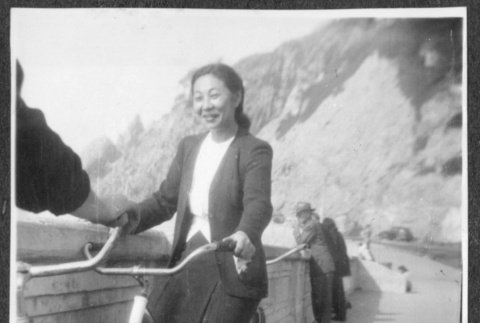
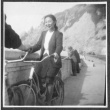
Wakako learning to ride a bicycle (ddr-densho-443-49)
Photograph of Wakako "Wak" Domoto sitting on a bicycle. Written below the image on the album page is "1st Lesson- / Teacher- Jean K. / Cliff House- S.F. / early Sat. Morns. / Aug 1947" in white pencil. Written at top of album page is "Autumn 1947" in white pencil.