Topics
Facilities
Format
Genre
Usage

Use <Ctrl> or (⌘) keys to select multiple terms

30 items
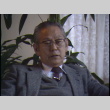
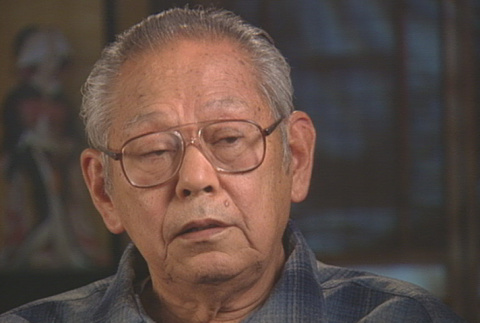
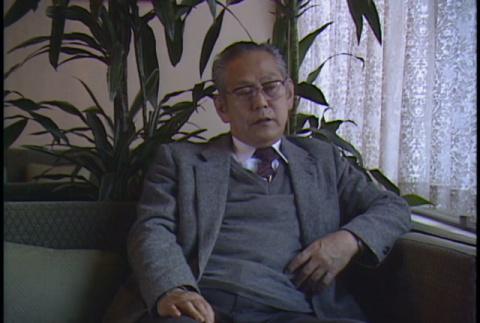
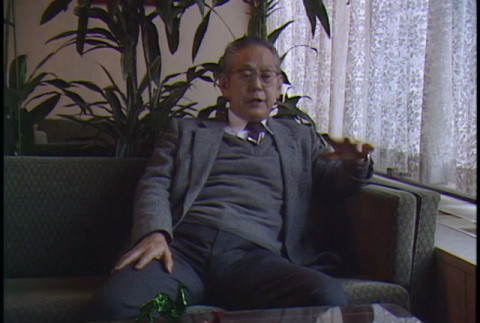
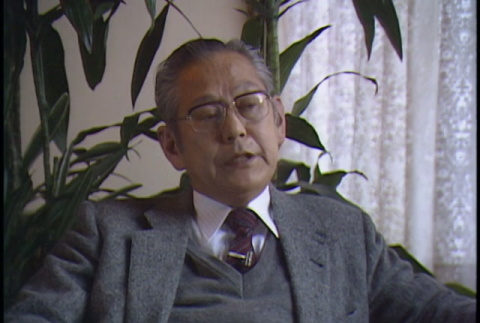
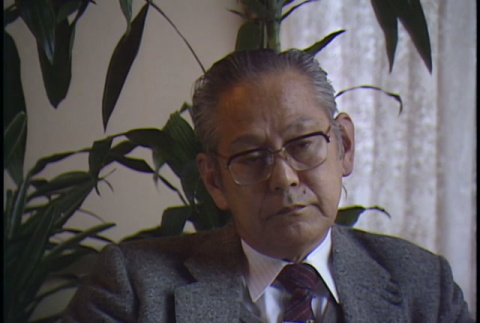
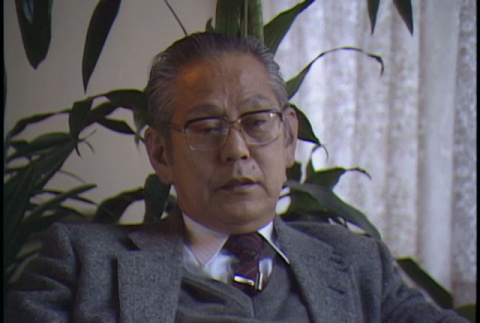
Barry Saiki Interview (ddr-densho-1004-4)
vh Barry Saiki Interview (ddr-densho-1004-4)
Nisei male. Born June 21, 1919, in Stockton, California. During World War II, served with the Military Intelligence Service in Japan.

(This material is based upon work assisted by a grant from the Department of the Interior, National Park Service. Any opinions, finding, and conclusions or recommendations expressed in this material are those of the author(s) …
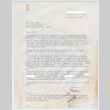
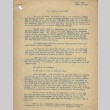
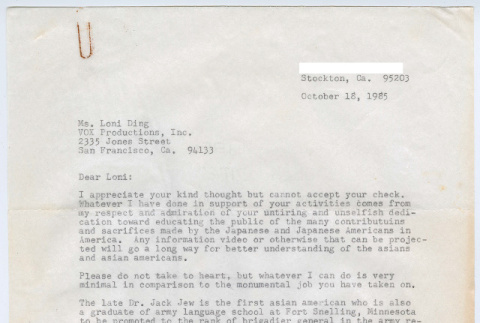
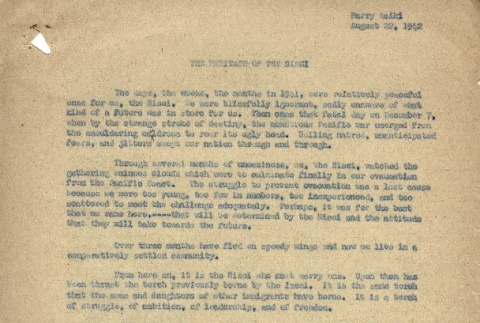
Letter from Dick Hayashi to Loni Ding (ddr-densho-1007-1025)
doc Letter from Dick Hayashi to Loni Ding (ddr-densho-1007-1025)
Mentions Barry Saiki, who would become a key part of The Color of Honor.
Interview with Barry Saiki, part 1 of 5 (ddr-densho-1007-1702)
av Interview with Barry Saiki, part 1 of 5 (ddr-densho-1007-1702)
Saiki discusses growing up in Stockton, CA, attending UC Berkeley, Pearl Harbor, the start of evacuation and negative press about Nisei during that time, graduating from Berkeley in 1942, entering Stockton Assembly Center, and the arrest and incarceration of his father. Loni Ding can be heard asking questions behind the camera. Original title: II JA #41, …
Interview with Barry Saiki, part 3 of 5 (ddr-densho-1007-1704)
av Interview with Barry Saiki, part 3 of 5 (ddr-densho-1007-1704)
Saiki discusses being relocated to the Rohwer camp, working as editor for the Rohwer Outpost newspaper, the social stigma around his Caucasian friends visiting in camp, his friend Elizabeth Homberger (sp?) and the work she did for the Nisei during the war, the reactions to military recruiters at Rohwer, and his reasons for not volunteering for …
Interview with Barry Saiki, part 5 of 5 (ddr-densho-1007-1706)
av Interview with Barry Saiki, part 5 of 5 (ddr-densho-1007-1706)
Saiki discusses what he wants Sansei and Americans in general to know about internment and the importance of being "bicultural". Loni Ding can be heard asking questions behind the camera. Original title: 219, II JA #45, Barry Saiki, Sun. Feb. 2
Interview with Barry Saiki, part 2 of 5 (ddr-densho-1007-1703)
av Interview with Barry Saiki, part 2 of 5 (ddr-densho-1007-1703)
Saiki discusses his mother's reaction to his father's arrest and imprisonment, his time at Stockton Assembly Center, the attitudes of incarcerees at Stockton, the difficulty Nisei faced trying to find jobs at the time, and being relocated to the Rohwer camp. Loni Ding can be heard asking questions behind the camera. Original title: II JA #42, …
Interview with Barry Saiki, part 4 of 5 (ddr-densho-1007-1705)
av Interview with Barry Saiki, part 4 of 5 (ddr-densho-1007-1705)
Saiki discusses the loyalty questionnaire given to Nisei in camp, visiting his father in New Mexico, being drafted, being recruited for intelligence work, moving to Japan in 1967, his work in international business, and the formation of the Military Intelligence Service Language School Association and other such organizations. Loni Ding can be heard asking questions behind …
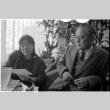
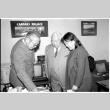
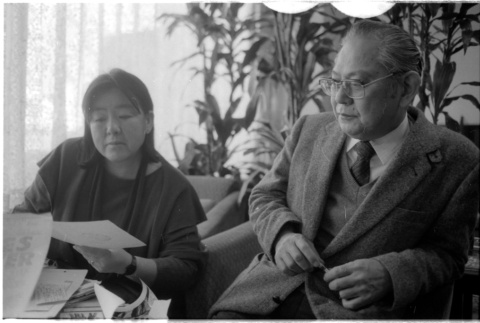
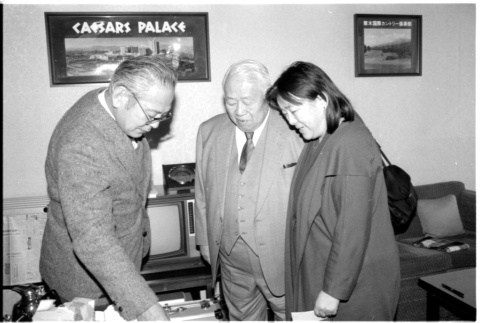
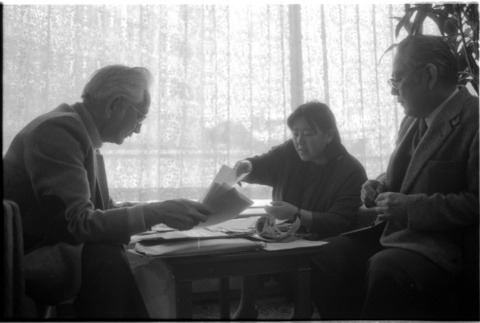
Loni Ding and Barry Saiki (ddr-densho-1007-1169)
img Loni Ding and Barry Saiki (ddr-densho-1007-1169)
Negative. An interview with Barry Saiki, which was presumably filmed during this meeting, appears in Color of Honor.
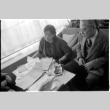
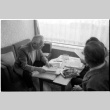
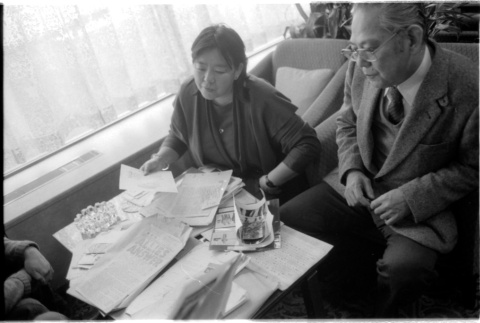
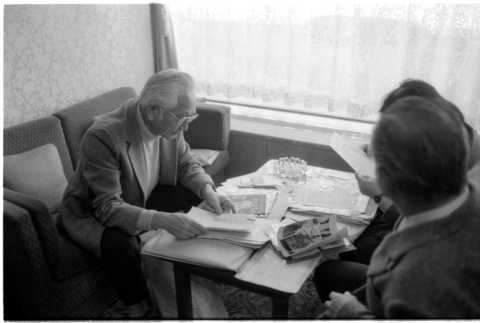
Loni Ding, Barry Saiki and one other looking through clippings (ddr-densho-1007-1171)
img Loni Ding, Barry Saiki and one other looking through clippings (ddr-densho-1007-1171)
Negative. An interview with Barry Saiki, which was presumably filmed during this meeting, appears in Color of Honor.
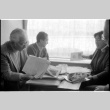
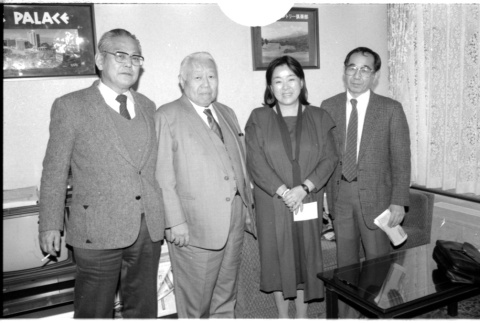
Loni Ding, Barry Saiki and Harry Fukuhara looking through clippings (ddr-densho-1007-1166)
img Loni Ding, Barry Saiki and Harry Fukuhara looking through clippings (ddr-densho-1007-1166)
Negative. Interviews with Fukuhara and Saiki, the latter of which was presumably filmed during this meeting, appear in Color of Honor.
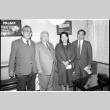
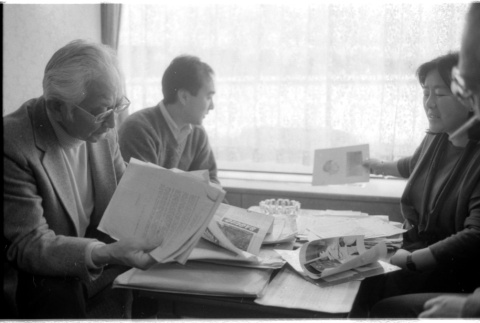
Loni Ding, Barry Saiki, Harry Fukuhara and one other looking through clippings (ddr-densho-1007-1170)
img Loni Ding, Barry Saiki, Harry Fukuhara and one other looking through clippings (ddr-densho-1007-1170)
Negative. Interviews with Fukuhara and Saiki, the latter of which was presumably filmed during this meeting, appear in Color of Honor.
Loni Ding, Barry Saiki and Harry Fukuhara looking through clippings (ddr-densho-1007-1168)
img Loni Ding, Barry Saiki and Harry Fukuhara looking through clippings (ddr-densho-1007-1168)
Negative. Interviews with Fukuhara and Saiki, the latter of which was presumably filmed during this meeting, appear in Color of Honor.
Barry Saiki Interview Segment 3 (ddr-densho-1004-4-3)
vh Barry Saiki Interview Segment 3 (ddr-densho-1004-4-3)
First seeing the poverty in Japan on a train ride through the country

This material is based upon work assisted by a grant from the Department of the Interior, National Park Service. Any opinions, finding, and conclusions or recommendations expressed in this material are those of the author(s) and do not necessarily reflect the views of …

Barry Saiki Interview Segment 7 (ddr-densho-1004-4-7)
vh Barry Saiki Interview Segment 7 (ddr-densho-1004-4-7)
Watching the beginnings of Japan's rebuilding period

This material is based upon work assisted by a grant from the Department of the Interior, National Park Service. Any opinions, finding, and conclusions or recommendations expressed in this material are those of the author(s) and do not necessarily reflect the views of the Department of the Interior.

Barry Saiki Interview Segment 4 (ddr-densho-1004-4-4)
vh Barry Saiki Interview Segment 4 (ddr-densho-1004-4-4)
Observing the poverty and devastation in Japan after the war

This material is based upon work assisted by a grant from the Department of the Interior, National Park Service. Any opinions, finding, and conclusions or recommendations expressed in this material are those of the author(s) and do not necessarily reflect the views of the Department of …

Barry Saiki Interview Segment 2 (ddr-densho-1004-4-2)
vh Barry Saiki Interview Segment 2 (ddr-densho-1004-4-2)
First impressions of Japan during the U.S. occupation

This material is based upon work assisted by a grant from the Department of the Interior, National Park Service. Any opinions, finding, and conclusions or recommendations expressed in this material are those of the author(s) and do not necessarily reflect the views of the Department of the Interior.

Barry Saiki Interview Segment 1 (ddr-densho-1004-4-1)
vh Barry Saiki Interview Segment 1 (ddr-densho-1004-4-1)
Influence of Japanese language, culture and values on military service

This material is based upon work assisted by a grant from the Department of the Interior, National Park Service. Any opinions, finding, and conclusions or recommendations expressed in this material are those of the author(s) and do not necessarily reflect the views of the Department of …

Barry Saiki Interview Segment 6 (ddr-densho-1004-4-6)
vh Barry Saiki Interview Segment 6 (ddr-densho-1004-4-6)
Adjusting to serving in Japan as a Japanese American

This material is based upon work assisted by a grant from the Department of the Interior, National Park Service. Any opinions, finding, and conclusions or recommendations expressed in this material are those of the author(s) and do not necessarily reflect the views of the Department of the …

Barry Saiki Interview Segment 8 (ddr-densho-1004-4-8)
vh Barry Saiki Interview Segment 8 (ddr-densho-1004-4-8)
Niseis' role in the reconstruction of Japan

This material is based upon work assisted by a grant from the Department of the Interior, National Park Service. Any opinions, finding, and conclusions or recommendations expressed in this material are those of the author(s) and do not necessarily reflect the views of the Department of the Interior.

Barry Saiki Interview Segment 5 (ddr-densho-1004-4-5)
vh Barry Saiki Interview Segment 5 (ddr-densho-1004-4-5)
The important role of the Nisei in the Military Intelligence Service

This material is based upon work assisted by a grant from the Department of the Interior, National Park Service. Any opinions, finding, and conclusions or recommendations expressed in this material are those of the author(s) and do not necessarily reflect the views of the Department …
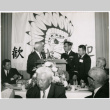
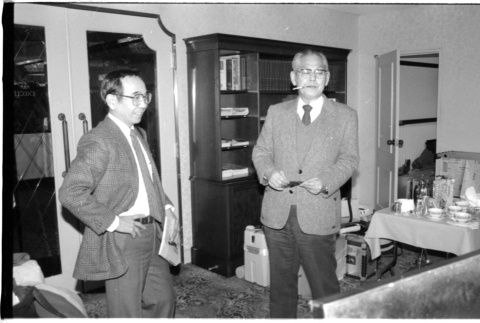
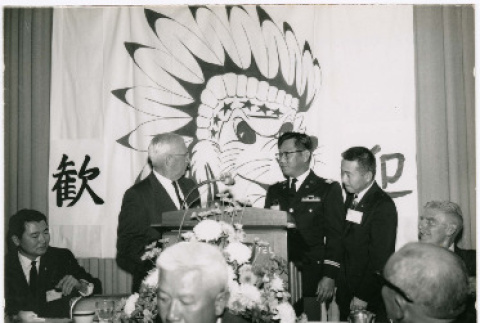
Group of men around speakers table with banner in background (ddr-ajah-2-17)
img Group of men around speakers table with banner in background (ddr-ajah-2-17)
Written on back: 25th Anniv. MIS Reunion, Jack Tar Hotel S.F. / Nov. 11-13, 1966 / Col. K. Rasmussen, Col. Sydney Mashbir, Gene Uratsu, Lt. Col. Barry Saiki, and Aki Yoshimura
API