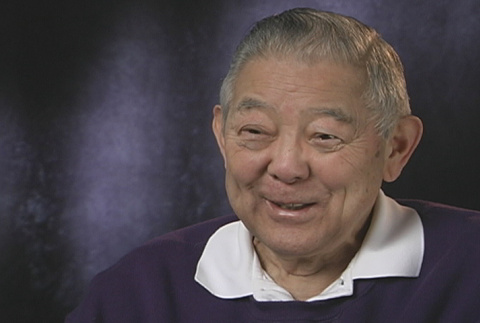
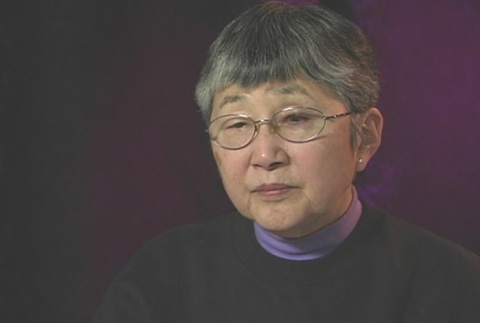
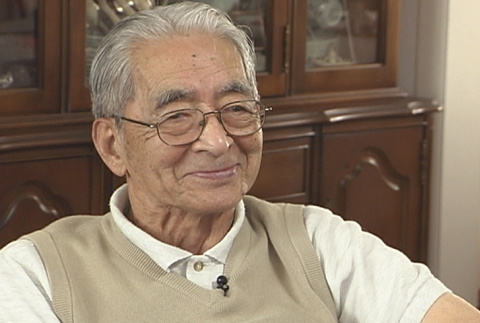
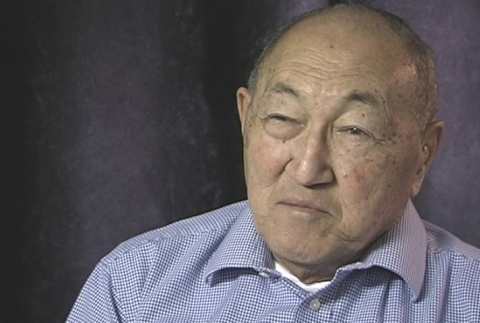
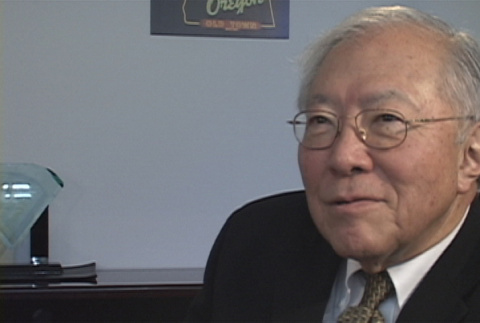
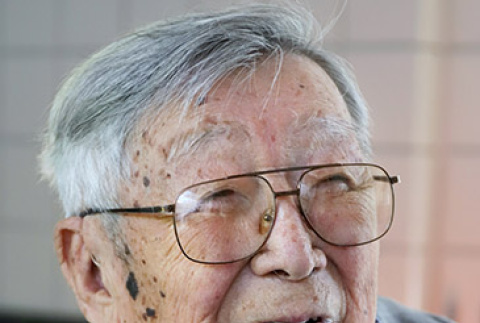
Nisei male. Born September 19, 1924, in Tacoma, Washington, and spent childhood in Fife, Washington. Following the bombing of Pearl Harbor, removed to the Puyallup Assembly Center and Minidoka concentration camp, Idaho. Drafted into the army in 1944 and joined the 442nd Regimental Combat Team in Europe. Awarded the Purple Heart for actions in the Battle …
White male. Born August 30, 1926, in Mountain Home, Idaho. An enterprising child, took a job selling newspapers at age nine. High school age during the bombing of Pearl Harbor on December 7, 1941, remembers reading about anti-Japanese sentiment in Boise, Idaho. Attended the University of Idaho and taught in Orofino, Idaho, for three years before …
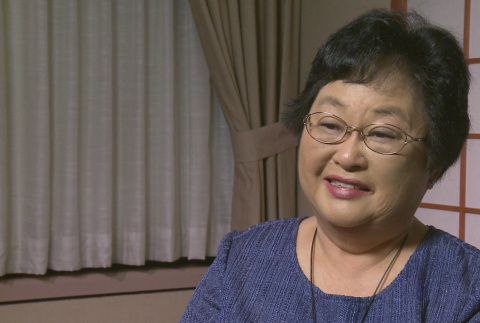
Nisei female. Born June 23, 1936, in Hilo, Hawaii. After Japan bombed Pearl Harbor on December 7, 1941, father was picked up by the FBI and detained at Sand Island internment camp, Hawaii. The rest of the family was removed to the Jerome concentration camp, Arkansas, to be reunited with him. After Jerome closed, transferred to …
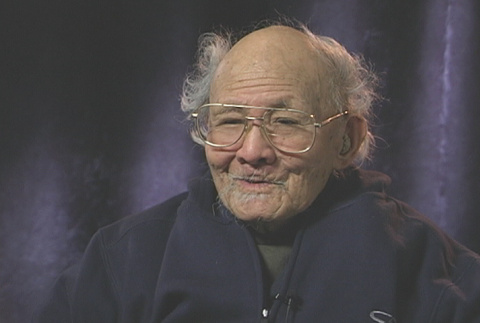
Nisei male. Born November 7, 1920, in Mountain View, Hawaii. Grew up in Hawaii, where parents ran a sugar cane plantation. Was working hauling lumber when Japan attacked Pearl Harbor on December 7, 1941. Was not dismissed from work like other Japanese Americans, and was required to clean up the aftermath of the bombing. Volunteered for …
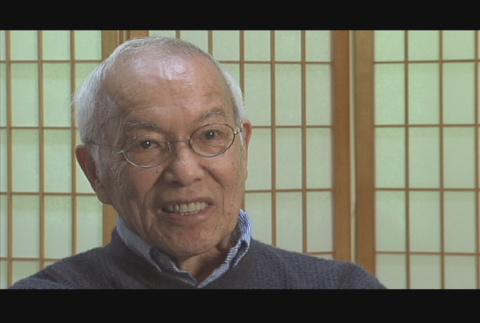
Nisei male. Born October 5, 1922, in Bainbridge Island, Washington. Was attending the University of Washington when Japan bombed Pearl Harbor on December 7, 1941. During World War II, was removed to the Manzanar concentration camp, California. Was drafted into the military and served with the Military Intelligence Service.
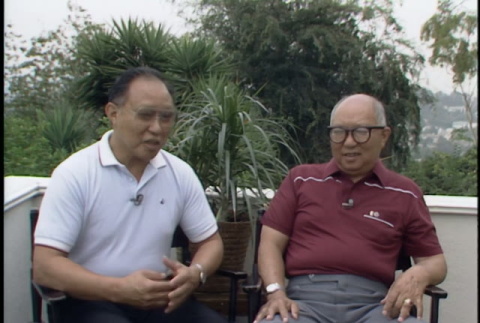
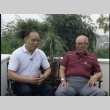
Ken is on the left, Harry on the right. The two discuss growing up as Nisei, anti-Japanese sentiment in the US, their relationship with their mother, the difference between Japanese nationals and Japanese Americans, Pearl Harbor, their time in internment at Merced and Amache, and their decision to volunteer for the military. Video starts at 0:28. …
Gosho discusses returning to Seattle from Japan before the war, his brothers being conscripted into the Japanese army, Pearl Harbor, his father's arrest by the FBI, assuming the Nisei wouldn't be evacuated, being relocated to Puyallup/Camp Harmony, realizing that he was a prisoner, his time at Minidoka, deciding early on to join the military, and the …
Footage of the Kanegai family eating in their backyard. Unscripted. The younger mustached man is Bruce Kanegai; the older man to his right is his father George. Video starts at 0:29. Interview with Fujikawa starts at 10:44. Fujikawa talks about his childhood in LA, his decision not to go to college, his reaction to Pearl Harbor, …
Conversation continued from ddr.densho.org/ddr-densho-1007-1654/. Burden and Kihara discuss Burden and his wife predicting that Japan would fight the US before Pearl Harbor, the story of Admiral Chester Nimitz, and the founding of the Military Intelligence Service Language School. Around 6 minutes, tape shifts to b-roll shots of the two walking around and their surroundings. Video …
Father's loss of a friend and mentor after the bombing of Pearl Harbor
This interview was conducted as part of a project to capture stories of the Japanese American community of Spokane, Washington. Densho worked in collaboration with the Northwest Museum of Arts and Culture.
Feelings after hearing of the bombing of Pearl Harbor: "that was a shocker"
This interview was conducted as part of a project to capture stories of the Japanese American community of Spokane, Washington. Densho worked in collaboration with the Northwest Museum of Arts and Culture.
Hearing rumors after the bombing of Pearl Harbor; destroying so-called 'contraband' items
This interview was conducted as part of a project to capture stories of the Japanese American community of Spokane, Washington. Densho worked in collaboration with the Northwest Museum of Arts and Culture.
Reaction to bombing of Pearl Harbor: a racist encounter at a movie theater
This interview was conducted as part of a project to capture stories of the Japanese American community of Spokane, Washington. Densho worked in collaboration with the Northwest Museum of Arts and Culture.
Recalling the period following Pearl Harbor: barred from taking photos as editor of school annual
This interview was conducted as part of a project to capture stories of the Japanese American community of Spokane, Washington. Densho worked in collaboration with the Northwest Museum of Arts and Culture.
The bombing of Pearl Harbor: remembering parents' reactions
This interview was conducted by the Japanese American Museum of San Jose, and is part of a project entitled "Lasting Stories: The Resettlement of San Jose Japantown," a collaborative project between the Japanese American Museum of San Jose and Densho.
Family's difficulties following the bombing of Pearl Harbor
This interview was conducted by the Japanese American Museum of San Jose, and is part of a project entitled "Lasting Stories: The Resettlement of San Jose Japantown," a collaborative project between the Japanese American Museum of San Jose and Densho.
The aftermath of Pearl Harbor: "everything was turmoil"
This interview was conducted by the Japanese American Museum of San Jose, and is part of a project entitled "Lasting Stories: The Resettlement of San Jose Japantown," a collaborative project between the Japanese American Museum of San Jose and Densho.
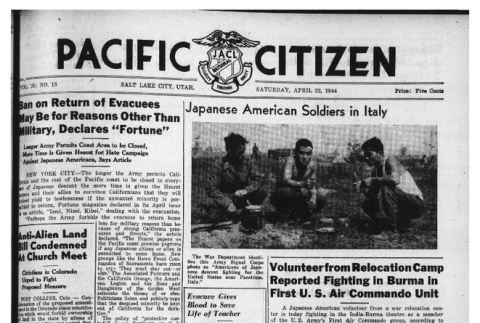
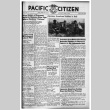
Selected article titles: "Ban on Return of Evacuees May Be for Reasons Other Than Military, Declares 'Fortune'" (p. 1), "Nine Soldiers Sentenced at Courts-Martial. 28 on Trial for Refusal to Accept Military Training" (p. 2), "Sentinel Calls On Center to Save Youths" (p. 2), "Draft Delinquents Placed in Jail in Four Wyoming Cities" (p. 2), "Five …
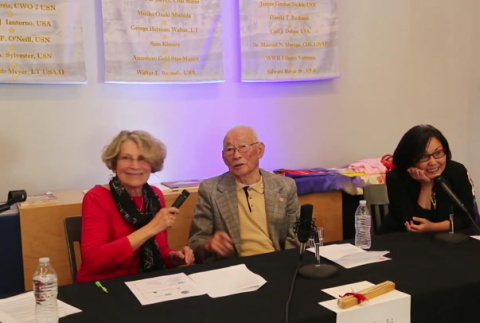
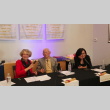
A discussion panel recorded at the Historical Society of Long Beach gallery during the "Long Beach Remembers Pearl Harbor" exhibition. Panel members included Joe Ozaki and Naomi Hirahara with moderator Karen Harper. Guests told their stories of life in Long Beach and Terminal Island before, during, and after World War II. The Speaker Series was a …
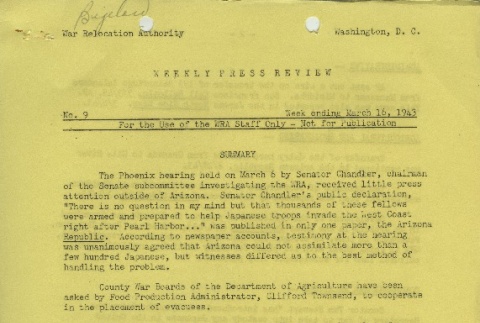
Original summary excerpt: The Phoenix hearing held on March 6 by Senator Chandler, chairman of the Senate subcommittee investigating the WRA, received little press attention outside of Arizona. Senator Chandler's public declaration, "There is no question in my mind but that thousands of these fellows were armed and prepared to help Japanese troops invade the West …
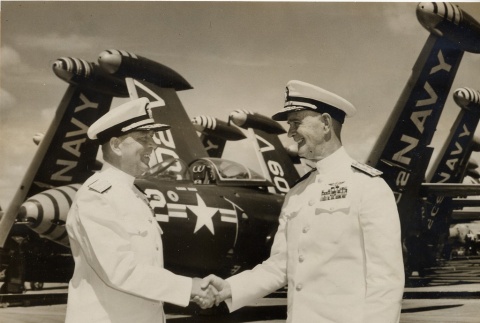
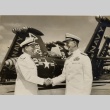
Caption on reverse: "TOP MILITARY COMMANDER IN PACIFIC CHANGES: Admiral Arthur W. Radford, left, is shown shaking hands with his successor, Admiral Felix B. Stump, after being relieved of his duties as commander-in-chief, Pacific and U.S. Pacific Fleet, at colorful and impressive change-of-command ceremonies aboard the aircraft carrier USS Kearsarge at Pearl Harbor this morning. After …
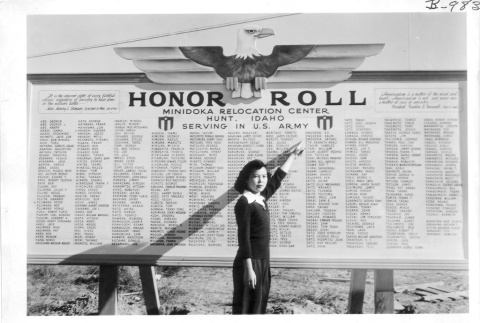
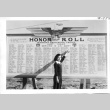
Original WRA caption: Fumi Onodera, 20, proudly points at the names of her 3 brothers, Kid, 26; Kaun, 24; and Satoru, 22, on the Honor Roll of Japanese-Americans serving in the U. S. Army from the Minidoka Relocation Center, Hunt, Idaho. The 3 brothers are training in a combat team at Camp Shelby, Mississippi with other …
Nisei male. Born January 25, 1912, in San Jose, California. Grew up in San Jose, working on family's extensive farmholdings, and graduating from San Jose Teachers College. After the bombing of Pearl Harbor, was removed to Santa Anita Assembly Center, California, and Heart Mountain concentration camp, Wyoming. While at Heart Mountain, became the agriculture superintendent, and …
Nisei male. Born December 10, 1921, in Portland, Oregon. Grew up in Portland where father ran a store. After the bombing of Pearl Harbor, family took advantage of the "voluntary evacuation" period and moved to Salt Lake City. Mr. Naito attended the Utah and served in Military Intelligence during the war. Returned to Portland and established …
Nisei male. Born August 25, 1924, in Alameda, California. Grew up in Alameda, where father ran a food wholesaling business. Was in high school when Japan bombed Pearl Harbor on December 7, 1941. Removed to the Tanforan Assembly Center, California, and the Topaz concentration camp, Utah. Left Topaz on student leave to attend the University of …