
1379 items


1379 items
doc
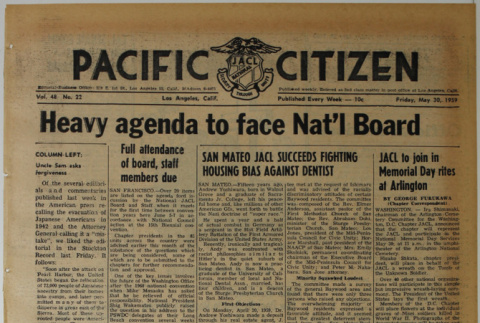
Pacific Citizen, Vol. 48, No. 22 (May 30, 1959) (ddr-pc-31-22)
Selected article titles: "Heavy agenda to face Nat'l Board; San Mateo JACL succeeds fighting housing bias against dentist" (p. 1), "Unruh civil rights bill passes assembly" (p. 1), "Cal. Senate comm. Oks anti-bias housing measure" (p. 2), "Colorado newsman recalls own paper's support of evacuees after Pearl Harbor" (p. 2), "Use of vested property to pay …
img
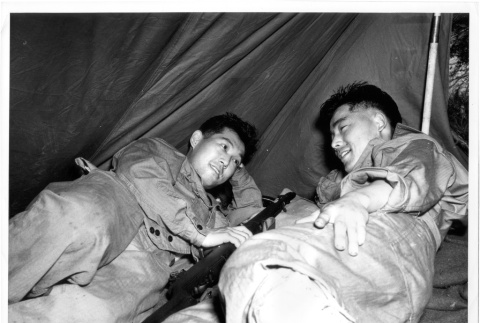
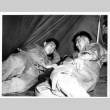
Nisei soldiers resting in a tent (ddr-densho-114-105)
Original caption: Japanese Americans in Army Train to Avenge Pearl Harbor: 100th Infantry Battalion Officers and some of the enlisted men are of Japanese ancestry. American citizens, born in the Hawaiian Islands of unquestioned loyalty and patriotism. Formerly part of the Hawaiian National Guard: As it must to all men, rest comes in a pup tent …
img
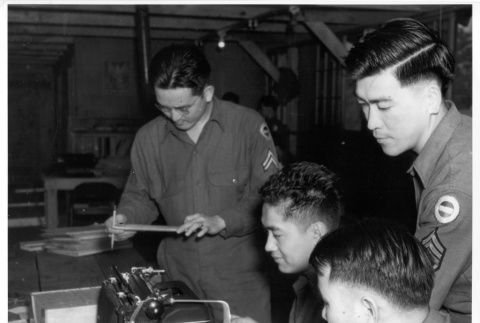
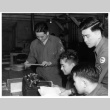
100th Infantry Battalion training (ddr-densho-114-103)
Original caption: Japanese Americans in Army Train to Avenge Pearl Harbor; 100th Infantry Battalion officers and some of the enlisted men are of Japanese ancestry. American citizens, born in the Hawaiian Islands of unquestioned loyalty and patriotism. Formerly part of the Hawaiian National Guard: Sgt. Hideo Kajikawa, right, supervises the work of, L to R, Cpls. …
doc
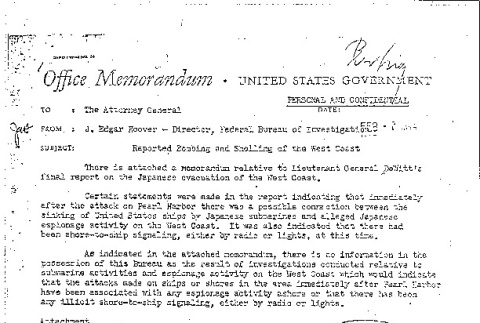
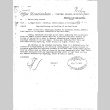
Coram Nobis Exhibit W (ddr-densho-405-25)
Correspondence from J. Edgar Hoover to Francis Biddle denying any evidence in the FBI of espionage activities on the West Coast after Pearl Harbor.
This document was Exhibit W in the coram nobis litigation. This document was available in conjunction with "Race, Rights and Reparation: Law and the Japanese American Internment" by Eric K. Yamamoto, Margaret …
vh
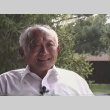
Noboru Richard Horikawa Interview (ddr-phljacl-1-3)
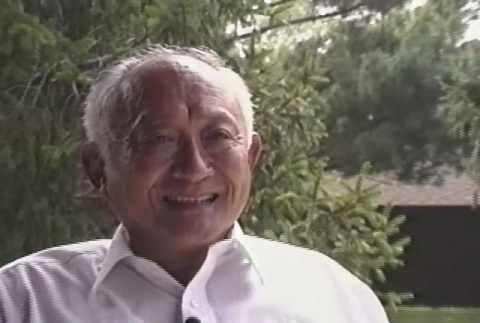
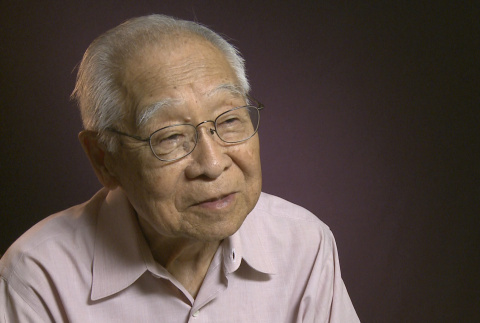
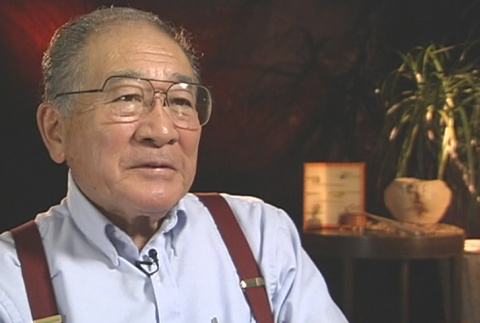
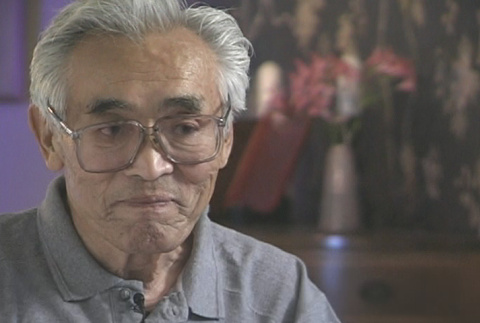
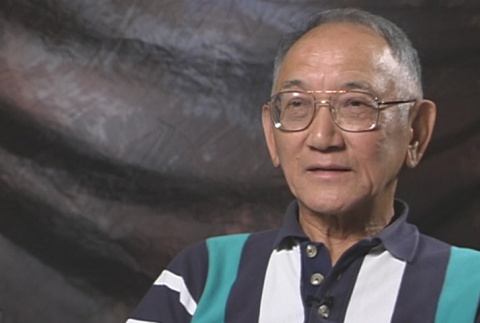
Nisei male. Born August 18, 1926, in San Francisco, California. After the bombing of Pearl Harbor, moved with family to stay with relatives in Watsonville, California. During World War II, removed to the Salinas Assembly Center, California, then to the Poston concentration camp, Arizona. Left camp early to attend school in Philadelphia, Pennsylvania. Drafted into the …
vh
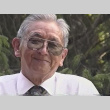
George Kazuo Ikeda Interview (ddr-phljacl-1-4)
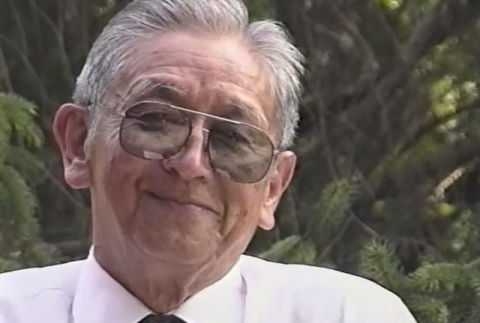
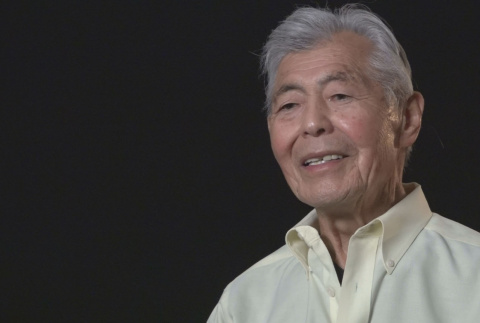
Nisei male. Born August 18, 1926, in San Francisco, California. After the bombing of Pearl Harbor, moved with family to stay with relatives in Watsonville, California. During World War II, removed to the Salinas Assembly Center, California, then to the Poston concentration camp, Arizona. Left camp early to attend school in Philadelphia, Pennsylvania. Drafted into the …
doc
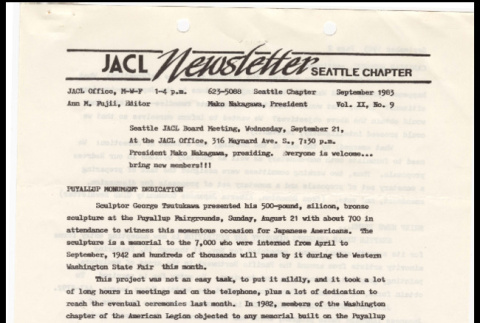
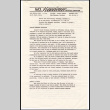
Seattle Chapter, JACL Reporter, Vol. XX, No. 9, September 1983 (ddr-sjacl-1-325)
Newsletter covering the following topics: Nice article on the Puyallup Memorial Ceremony. Gov Spellman, a big supporter of the Monument and Redress, ?Every week I receive letters asking if I remember Pearl Harbor,?All these letters reflect a common confusion, confusing the was between out country and Japan with the national deprivation of civil rights. The internment …
vh
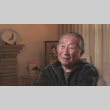
Takeshi Minato Interview (ddr-manz-1-57)
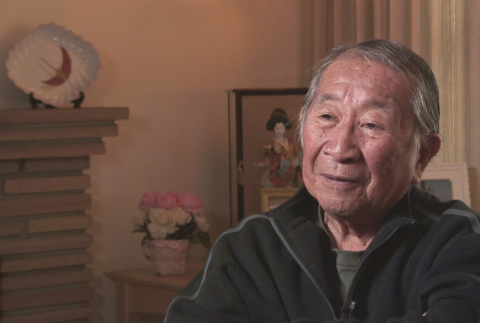
Nisei male. Born July 13, 1922, in Park City, Utah. Family moved several times prior to World War II, and was living in Terminal Island, California, when Japan bombed Pearl Harbor on December 7, 1941. Removed to the Manzanar concentration camp, California, during the war. After the war, lived and worked in Chicago, Illinois, and Seabrook, …
vh
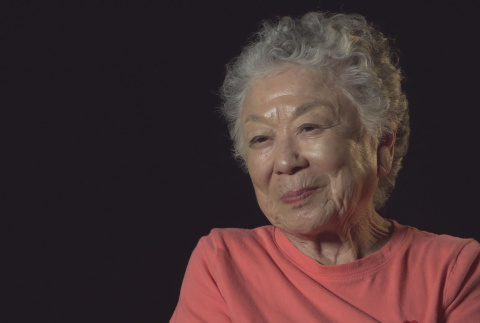
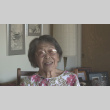
Masako Yoshida Interview (ddr-manz-1-153)
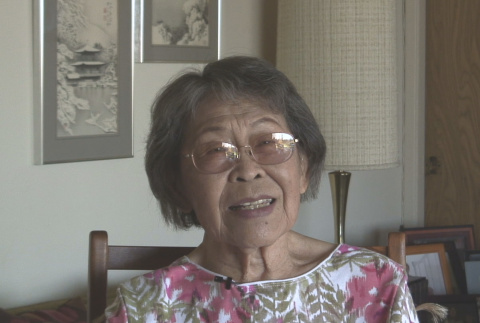
Nisei female. Born July 14, 1924, in Seattle, Washington. Spent early years in Seattle before family moved to the Boyle Heights neighborhood of Los Angeles, California, where father worked as a janitor at a wholesale produce market. After the bombing of Pearl Harbor, removed to the Poston concentration camp, Arizona. Left camp to work in Detroit, …
vh
Joe Seto Interview (ddr-manz-1-141)
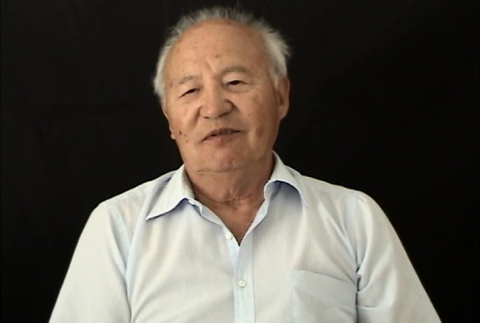
Nisei male. Born 1924 in Tacoma, Washington. Grew up in Tacoma, where father worked for a produce business. After the bombing of Pearl Harbor, removed to the Pinedale Assembly Center, California, and the Tule Lake concentration camp, California. Left camp temporarily to work harvesting sugar beets for a sugar company. Drafted into the army in 1945. …
vh
Harry Umeda Interview (ddr-densho-1014-10)
Nisei male. Born May 12, 1915, in Sacramento, California. Grew up in Sacramento, where parents ran a successful farm. Drafted into the military in 1941, prior to the bombing of Pearl Harbor. Served in the Military Intelligence Service, interrogating Japanese prisoners of war in New Guinea and the Philippines. After returning to the U.S., settled in …
vh
Mas Takano Interview (ddr-ajah-1-5)
Nisei male. Born June 15, 1932, in Alameda, California. Grew up in Alameda, where father was a gardener. After the bombing of Pearl Harbor, moved to Cortez, California, for a few months before being removed to the Merced Assembly Center, California, and the Amache concentration camp, Colorado. After leaving camp, returned to California. Drafted into the …
vh
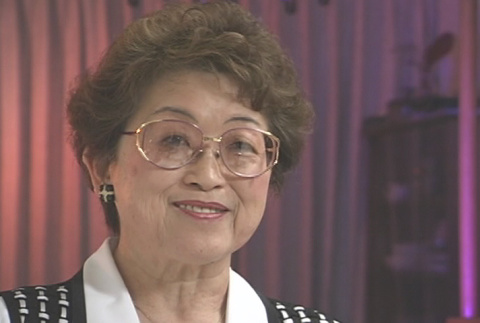
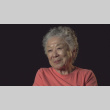
Hiro Nishimura Interview (ddr-densho-1000-237)
Nisei male. Born August 8, 1919, in Seattle, Washington. Grew up in Seattle, and was attending the University of Washington when Japan bombed Pearl Harbor on December 7, 1941. Drafted into the military a few months after the bombing, and then transferred to the Military Intelligence Service. Served as a linguist in Burma and India during …
vh
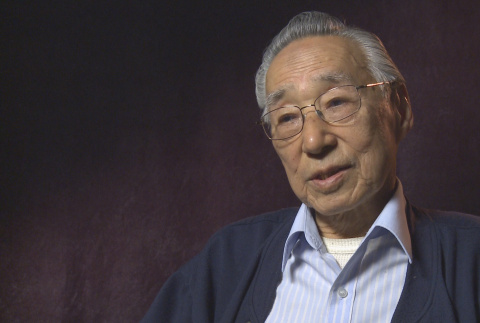
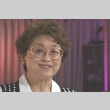
Patricia Kiwa Koyamatsu Interview (ddr-densho-1000-550)
Sansei female. Born in 1933 in Seattle, Washington. Grew up in Seattle where father ran a tailor shop. After the bombing of Pearl Harbor, removed with family to the Puyallup Assembly Center, Washington, and the Minidoka concentration camp, Idaho. After leaving camp, resettled in Denver, Colorado, for several years before moving to Los Angeles. Returned to …
vh
Louise Kashino Segment 10 (ddr-densho-1000-31-10)
Pearl Harbor: "We were Americans, like everyone else..."
For the first hour of this interview, an additional camera crew from KCTS Television was also present.
Collection
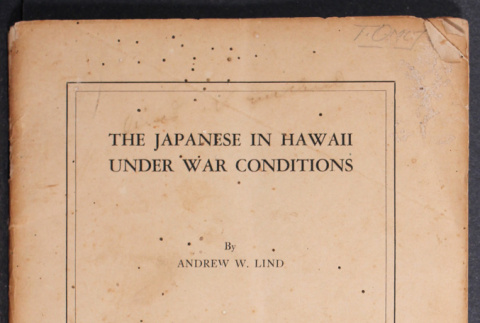
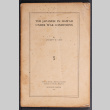
The Japanese in Hawaii under War Conditions (ddr-densho-547)
In 1942, at the request of the Institute of Pacific Relations, Andrew Lind created the report, "The Japanese in Hawaii under War Conditions." In it, Lind noted that despite the attack on Pearl Harbor and the institution of martial law in Hawai'i, Japanese Americans had been largely spared official repression and discrimination. This was not only …
vh
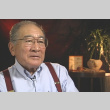
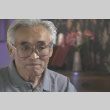
Harvey Watanabe Interview Segment 6 (ddr-densho-1008-5-6)
FBI visit following bombing of Pearl Harbor
Members of the National Japanese American Historical Society (NJAHS) arranged for and conducted this interview in conjunction with Densho.
vh
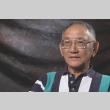
Masao Watanabe Segment 11 (ddr-densho-1000-103-11)
Bombing of Pearl Harbor disrupts plan to attend university
At the time this interview was taped, Mr. Watanabe was recovering from a recent series of cancer treatments.
vh
Tad Sato Segment 12 (ddr-densho-1000-82-12)
Hearing about the bombing of Pearl Harbor while working for the Great Northern Railway
Due to technical difficulties, this interview has audio problems in its second half.
doc
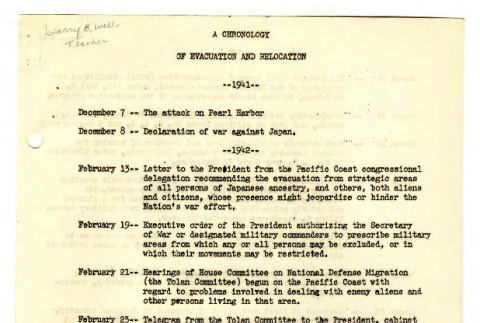
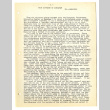
Chronology of evacuation and relocation (ddr-csujad-48-109)
Title: "A Chronology of Evacuation and Relocation." This document describes in detail the chronology of "evacuation and relocation" after Japan attacked Pearl Harbor on December 7, 1941. Report No. 6-1879-BU-COS-WP. Transcription is found in item: ecm_wells_9918. See this object in the California State Universities Japanese American Digitization project site: ecm_wells_0918
doc
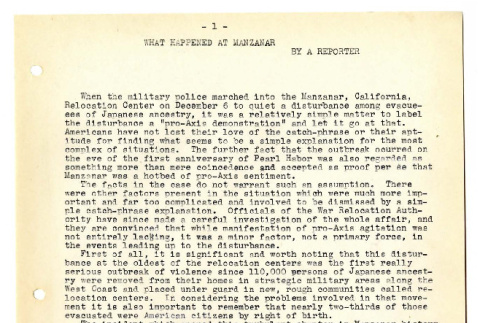
What happened at Manzanar (ddr-csujad-19-70)
This is an article from the magazine "Common Ground," volume III, no. 3, spring 1943, which discusses about the first violent outbreak at the Manzanar incarceration camp on the eve of the first anniversary of the Pearl Harbor attack. See this object in the California State Universities Japanese American Digitization project site: WRA_02-22_01
doc
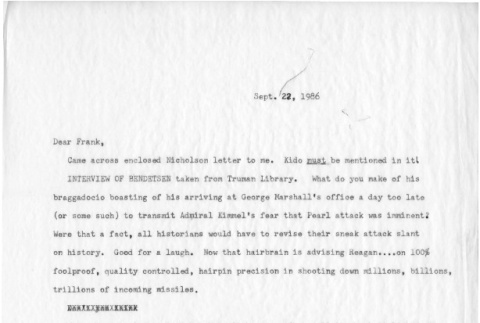
Letter from Michi Weglyn to Frank Chin, September 22, 1986 (ddr-csujad-24-7)
In a letter to Frank Chin, Michi Weglyn describes an "Interview with Bendetsen" from the Truman library that discusses an unsuccessful effort to let George Marshall know of Admiral Kimmel's fear that Pearl harbor was going to be attacked. See this object in the California State Universities Japanese American Digitization project site: chi_01_007
img
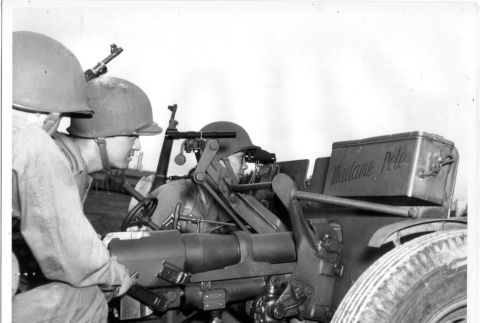
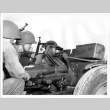
Nisei radio operators (ddr-densho-114-101)
Original caption: Japanese Americans in Army train to Avenge Pearl Harbor; 100th Infantry Battalion Officers and some of the enlisted men are of Japanese ancestry. American citizens, born in the Hawaiian Island of unquestioned loyalty and patriotism. Formerly part of the Hawaiian National Guard. This antitank gun, nicknamed "Madame Pele" after a famous Hawaiian Island Volcano, …

av
Oral history with Richard Matsunaga (ddr-csujad-29-75)
An oral interview with Richard Matsunaga, resident living in Hawaii during the attack on Pearl Harbor. The interview was conducted for the Japanese American Oral History Project by California State University, Fullerton. Transcript is found in item: csufccop_jaoh_0186. See this object in the California State Universities Japanese American Digitization project site: 1428.3_T01

av
Oral history with Jean Yamaguchi (ddr-csujad-29-80)
An oral interview with Jean Yamaguchi, resident living in Hawaii during the attack on Pearl Harbor. The interview was conducted for the Japanese American Oral History Project by California State University, Fullerton. Transcript is found in item: csufccop_jaoh_0196. See this object in the California State Universities Japanese American Digitization project site: 2377_T01