
1379 items

1379 items
vh
Michiko Amatatsu Noritake Interview (ddr-densho-1001-4)
Nisei female. Born December 6, 1919, in Winslow, Washington. Was fired from job as a domestic following the bombing of Pearl Harbor. Removed to Manzanar concentration camp, California, and later transferred to Minidoka concentration camp, Idaho. Following World War II, returned to Bainbridge Island, Washington.
vh
Spady Koyama Interview I Segment 17 (ddr-densho-1000-38-17)
Reaction to bombing of Pearl Harbor, "This is your country no matter who says what"
vh
Misa Taketa Interview Segment 7 (ddr-densho-1000-436-7)
Hearing about the bombing of Pearl Harbor, a search of home by the county sheriff
vh
Grace Watanabe Kimura Interview Segment 11 (ddr-densho-1000-249-11)
Hearing about the bombing of Pearl Harbor; preparing for removal while father is very ill
vh
Satoru Ichikawa Interview Segment 10 (ddr-densho-1000-236-10)
Father expecting to be picked up by the FBI following the bombing of Pearl Harbor
vh
Ben Uyeno Segment 19 (ddr-densho-1000-100-19)
Reaction of non-Japanese Americans to the bombing of Pearl Harbor: refused service at restaurant
vh
Betty Morita Shibayama Interview Segment 14 (ddr-densho-1000-152-14)
Family reactions in the months following the bombing of Pearl Harbor; sister hastily getting married
vh
Marion Tsutakawa Kanemoto Interview Segment 15 (ddr-densho-1000-148-15)
Little awareness of the war in Europe and Asia before the bombing of Pearl Harbor
vh
Mits Takahashi Interview Segment 9 (ddr-densho-1000-207-9)
Hearing about the bombing of Pearl Harbor: "We were really bewildered more than anything else"
vh
Setsu Tsuboi Tanemura Interview Segment 13 (ddr-densho-1000-266-13)
School principal writes a supportive letter for Japanese Americans following the bombing of Pearl Harbor
vh
Jim M. Tanimoto Interview Segment 9 (ddr-densho-1000-270-9)
Feeling a difference in the community after the bombing of Pearl Harbor: "basically everything changed"
vh
Miyoko Uzaki Interview Segment 11 (ddr-manz-1-156-11)
Remembering the time after the bombing of Pearl Harbor: "it was a very unsettled period"
vh
Gladys Koshio Konishi Interview Segment 13 (ddr-manz-1-26-13)
Memories of the bombing of Pearl Harbor: dreading going back to school the following day
vh
Sumiko Yamauchi Interview Segment 6 (ddr-manz-1-135-6)
Hearing about the bombing of Pearl Harbor and feeling isolated the next day at school
vh
Kenneth Narahara Interview Segment 4 (ddr-ajah-1-2-4)
Family split up after the bombing of Pearl Harbor; memories of the Tanforan Assembly Center
vh
George M. Yoshino Interview Segment 7 (ddr-densho-1014-8-7)
Father's involvement in community activities, arrest by the FBI following the bombing of Pearl Harbor
vh
Norman I. Hirose Interview Segment 11 (ddr-densho-1013-7-11)
Going to school the day after the bombing of Pearl Harbor: students were unusually serious
vh
Lily C. Hioki Interview Segment 12 (ddr-jamsj-2-10-12)
Parents decide to join a caravan to "voluntarily evacuate" after the bombing of Pearl Harbor

vh
Ron Magden Interview Segment 9 (ddr-densho-1000-162-9)
Memories of the bombing of Pearl Harbor: hearing rumors, watching people enlist in military service
vh
Helene J. Minehira Interview (ddr-densho-1000-319)
Nisei female. Born April 30, 1925, in Waipahu, Hawaii. Just before World War II, moved with family to the Ewa Beach area of Oahu, near Pearl Harbor. Witnessed the Japanese attack on Pearl Harbor on December 7, 1941. Because of proximity to the harbor, family was forced to evacuate their home in Ewa Beach and had …
doc
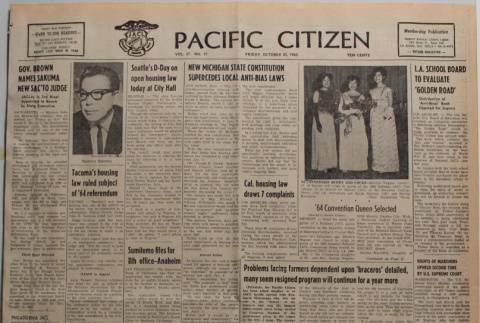
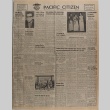
Pacific Citizen, Vol. 58, No. 17 (October 25, 1963) (ddr-pc-35-43)
Selected article titles: "Problems Facing Farmers Dependent upon 'Braceros' Detailed, Many Seem Resigned Program Will Continue for a Year More" (pp. 1-2), "Washington Newsletter: Civil Rights Battle" (p. 2), and "U.S. Gov't Will Pay for Property Claims Rising Out of Bombing on Pearl Harbor" (p. 3).
doc
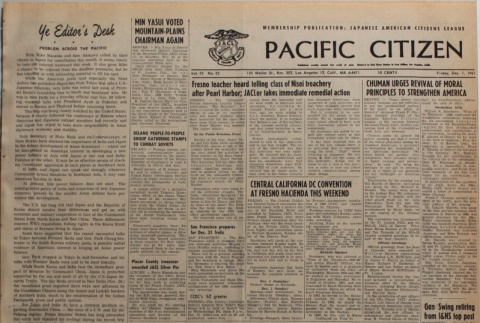
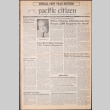
Pacific Citizen, Vol. 53, No. 22 (December 1, 1961) (ddr-pc-33-48)
Selected article titles: "Fresno Teacher Heard Telling Class of Nisei Treachery After Pearl Harbor; JACLer Takes Immediate Remedial Action" (p. 1), "Chuman Urges Revival of Moral Principles to Strengthen America" (p. 1), and "Nisei-Sansei Juvenile Arrests in Southland Mount to Shocking Proportions, Says JAY" (p. 3).
doc
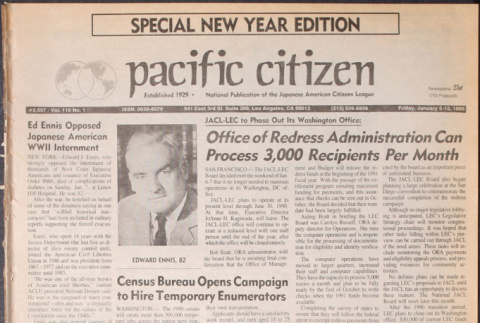
Pacific Citizen, Vol. 110, No. 1 (January 5-12, 1990) (ddr-pc-62-1)
Select article titles: "Office of Redress Administration Can Process 3,000 Recipients Per Month"(p.1);"Census Bureau Opens Campaign to Hire Temporary Enumerators"(p.1);"After 40 Years, Rohwer Camp Memorials in Need of Repair"(p.3);"Remembrances from Pearl Harbor Sunday to Poston"(p.10).
img
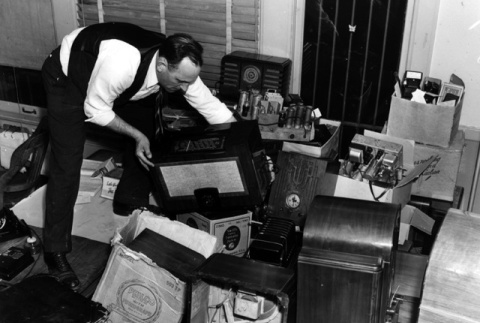
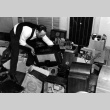
Man stacking confiscated radios (ddr-densho-36-31)
Shortly after the bombing of Pearl Harbor, Japanese Americans were ordered by government officials to surrender their cameras and radios, ostensibly to prevent their use in treasonable activities. It is important to note that there are no documented cases of Japanese Americans taking part in such activities.
vh
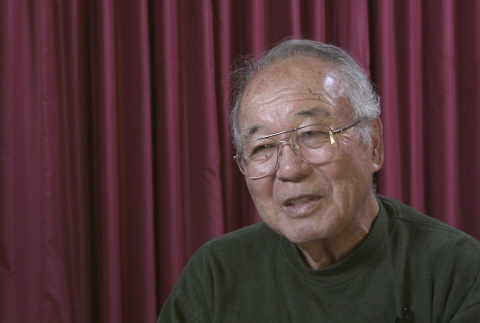
Henry Nakano Interview (ddr-manz-1-58)
Nisei male. Born May 11, 1927, in Los Angeles, California. Grew up in Los Angeles, where father ran a grocery store and then a small farm. After the bombing of Pearl Harbor, removed to the Manzanar concentration camp, California. Trained in the Military Intelligence Service Language School.