Topics
Facilities
Format
Genre
Usage

Use <Ctrl> or (⌘) keys to select multiple terms

241 items
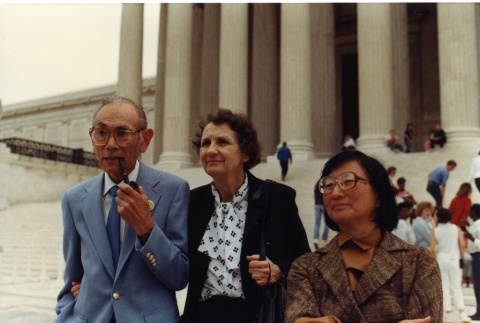
Fred and Kathryn Korematsu and Chizu Omori (ddr-csujad-29-299)
img Fred and Kathryn Korematsu and Chizu Omori (ddr-csujad-29-299)
The Korematsu and Chizu Omori at the Supreme Court. Photograph titled: "Fred and Kathryn Korematsu and Chizu Omori." See this object in the California State Universities Japanese American Digitization project site: P242
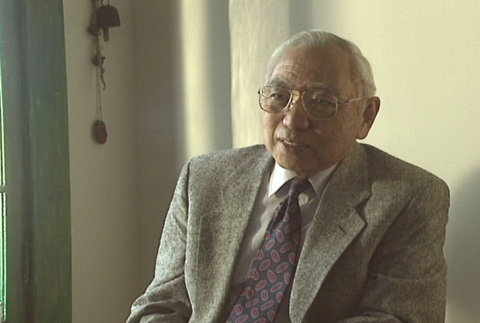
Ernest Besig Interview (ddr-densho-1002-3)
vh Ernest Besig Interview (ddr-densho-1002-3)
White male. Born in May 30, 1904, in Albany, New York. Founder and Executive Director of the American Civil Liberties Union of Northern California from 1934 to 1971. Fought for civil rights throughout his career, and was involved in the General Strike in San Francisco, the McCarthy Era, and the Free Speech, civil rights, and anti-war …
Jimmie Omura Interview (ddr-densho-1002-11)
vh Jimmie Omura Interview (ddr-densho-1002-11)
Nisei male. Born November 27, 1912, on Bainbridge Island, Washington. After the bombing of Pearl Harbor, moved to Denver and took a job as English Editor of a Japanese American vernacular newspaper, the Rocky Shimpo. As editor, wrote about and supported the Fair Play Committee in Heart Mountain concentration camp. Was charged and tried for conspiracy …
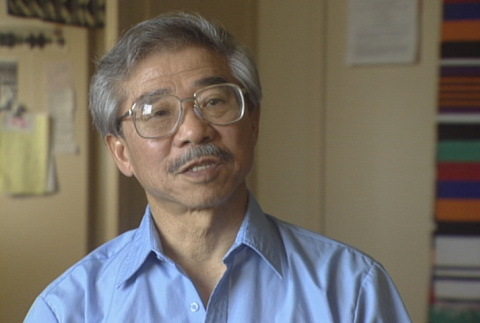
Frank Emi Interview (ddr-densho-1002-9)
vh Frank Emi Interview (ddr-densho-1002-9)
Nisei male. Born September 23, 1916, in Los Angeles, California. Attended Los Angeles City College for one year before leaving to run the family produce business. Married and had a daughter before being removed to Pomona Assembly Center, California, and Heart Mountain concentration camp, Wyoming. The leader of Heart Mountain's Fair Play Committee, was convicted of …
[Group at Wu Kong Restaurant] (ddr-csujad-29-172)
img [Group at Wu Kong Restaurant] (ddr-csujad-29-172)
Candid photograph of group at Wu Kong Restaurant. With: Chizu Omori, Jimmy Omura, Emiko Omori, and Harry Ueno. Oral histories 1765, 2331.00 with James Omura; #1518 with Harry Ueno, COPH, Japanese American Collection. See this object in the California State Universities Japanese American Digitization project site: P113
Shosuke Sasaki Interview (ddr-densho-1002-2)
vh Shosuke Sasaki Interview (ddr-densho-1002-2)
Issei male. Born 1912 in Yamaguchi ken, Japan. Immigrated to United States in 1919. Lived in Pomeroy, Washington, and Seattle, Washington, before World War II. Incarcerated at the Puyallup Assembly Center, Washington and the Minidoka concentration camp, Idaho. Resettled in New York. As a member of the Newspaper Guild, led effort to eliminate pejorative use of …
Hisaye Yamamoto Interview (ddr-densho-1002-10)
vh Hisaye Yamamoto Interview (ddr-densho-1002-10)
Nisei female. Born August 23, 1921, in Redondo Beach, California. Raised in California before mass removal to Parker Dam Assembly Center, Arizona, which was later converted into Poston concentration camp. An aspiring writer, worked for the camp newspaper, the Poston Chronicle, while incarcerated. After leaving camp, returned to California and worked for the Los Angeles Tribune. …
Mits Koshiyama Interview (ddr-densho-1002-6)
vh Mits Koshiyama Interview (ddr-densho-1002-6)
Nisei male. Born August 7, 1924, in Mountain View, California. Grew up in the Santa Clara Valley, California, working on his family's leased strawberry farm. In June of 1942, he was involuntarily "evacuated" to Santa Anita Assembly Center, California, then to Heart Mountain concentration camp, Wyoming. Graduated from high school in camp and at the age …
Hiroshi Kashiwagi Interview (ddr-densho-1002-4)
vh Hiroshi Kashiwagi Interview (ddr-densho-1002-4)
Nisei male. Born November 8, 1922, in Sacramento, California. Spent childhood and adolescence in Loomis, California, before spending senior year in high school in Los Angeles, California. After the bombing of Pearl Harbor, removed to Marysville Assembly Center, California, and then to Tule Lake concentration camp, California. Resisted the draft and renounced U.S. citizenship, remaining with …
Frank Miyamoto Interview (ddr-densho-1002-1)
vh Frank Miyamoto Interview (ddr-densho-1002-1)
Nisei male. Born July 29, 1912, in Seattle, Washington. Wrote 'Social Solidarity Among the Japanese in Seattle' as a Master's thesis, published in 1939 as one of the first academic works on the Japanese immigrant community. Incarcerated in Tule Lake concentration camp, California. Member of the Evacuation and Resettlement Study which studied the incarceration and resettlement …
Aiko Herzig Interview (ddr-densho-1002-8)
vh Aiko Herzig Interview (ddr-densho-1002-8)
Nisei female. Born August 5, 1924, in Sacramento, California. Grew up in Sacramento and Los Angeles. During World War II, removed to the Manzanar concentration camp, California, and transferred to the Jerome concentration camp, Arkansas. Washington representative and researcher for National Council for Japanese American Redress (NCJAR) and primary archival researcher for Commission on Wartime Relocation …
Jim Hirabayashi Interview (ddr-densho-1002-5)
vh Jim Hirabayashi Interview (ddr-densho-1002-5)
Nisei male. Born October 30, 1926, in small town of Thomas, Washington, on family farm. Attended school in Auburn, Washington, before being removed to the Pinedale Assembly Center and Tule Lake concentration camp, California. Left camp to work in Idaho, and was subsequently joined by family. Postwar, became a social anthropologist, and later became only the …
Frank Emi Interview Segment 17 (ddr-densho-1002-9-17)
vh Frank Emi Interview Segment 17 (ddr-densho-1002-9-17)
Raising a family

This interview was conducted by sisters Emiko and Chizuko Omori for their 1999 documentary, Rabbit in the Moon, about the Japanese American resisters of conscience in the World War II incarceration camps. As a result, the interviews in this collection are typically not life histories, instead primarily focusing on issues surrounding the …

Frank Emi Interview Segment 3 (ddr-densho-1002-9-3)
vh Frank Emi Interview Segment 3 (ddr-densho-1002-9-3)
First impressions of Heart Mountain concentration camp, Wyoming: a "miserable sight"

This interview was conducted by sisters Emiko and Chizuko Omori for their 1999 documentary, Rabbit in the Moon, about the Japanese American resisters of conscience in the World War II incarceration camps. As a result, the interviews in this collection are typically not life …

Frank Emi Interview Segment 13 (ddr-densho-1002-9-13)
vh Frank Emi Interview Segment 13 (ddr-densho-1002-9-13)
Reasons for joining the resisters' cause: "I felt so strongly about the injustice of it that I just had to do something"

This interview was conducted by sisters Emiko and Chizuko Omori for their 1999 documentary, Rabbit in the Moon, about the Japanese American resisters of conscience in the World War II incarceration camps. As …

Frank Emi Interview Segment 6 (ddr-densho-1002-9-6)
vh Frank Emi Interview Segment 6 (ddr-densho-1002-9-6)
Deciding to qualify answers to the so-called "loyalty questions"

This interview was conducted by sisters Emiko and Chizuko Omori for their 1999 documentary, Rabbit in the Moon, about the Japanese American resisters of conscience in the World War II incarceration camps. As a result, the interviews in this collection are typically not life histories, instead …

Frank Emi Interview Segment 10 (ddr-densho-1002-9-10)
vh Frank Emi Interview Segment 10 (ddr-densho-1002-9-10)
Sending press releases and news bulletins to newspapers outside of camp

This interview was conducted by sisters Emiko and Chizuko Omori for their 1999 documentary, Rabbit in the Moon, about the Japanese American resisters of conscience in the World War II incarceration camps. As a result, the interviews in this collection are typically not life …

Frank Emi Interview Segment 18 (ddr-densho-1002-9-18)
vh Frank Emi Interview Segment 18 (ddr-densho-1002-9-18)
Talking about resister status postwar; discussion of principles involved in becoming a resister

This interview was conducted by sisters Emiko and Chizuko Omori for their 1999 documentary, Rabbit in the Moon, about the Japanese American resisters of conscience in the World War II incarceration camps. As a result, the interviews in this collection are typically …

Frank Emi Interview Segment 11 (ddr-densho-1002-9-11)
vh Frank Emi Interview Segment 11 (ddr-densho-1002-9-11)
Fair Play Committee's cause discouraged by the ACLU

This interview was conducted by sisters Emiko and Chizuko Omori for their 1999 documentary, Rabbit in the Moon, about the Japanese American resisters of conscience in the World War II incarceration camps. As a result, the interviews in this collection are typically not life histories, instead primarily …

Frank Emi Interview Segment 16 (ddr-densho-1002-9-16)
vh Frank Emi Interview Segment 16 (ddr-densho-1002-9-16)
Not feeling too affected by resister status later in life

This interview was conducted by sisters Emiko and Chizuko Omori for their 1999 documentary, Rabbit in the Moon, about the Japanese American resisters of conscience in the World War II incarceration camps. As a result, the interviews in this collection are typically not life histories, …

Frank Emi Interview Segment 4 (ddr-densho-1002-9-4)
vh Frank Emi Interview Segment 4 (ddr-densho-1002-9-4)
Working in camp

This interview was conducted by sisters Emiko and Chizuko Omori for their 1999 documentary, Rabbit in the Moon, about the Japanese American resisters of conscience in the World War II incarceration camps. As a result, the interviews in this collection are typically not life histories, instead primarily focusing on issues surrounding the …

Frank Emi Interview Segment 20 (ddr-densho-1002-9-20)
vh Frank Emi Interview Segment 20 (ddr-densho-1002-9-20)
Reflections: pardoned in 1947; thoughts on the American justice system

This interview was conducted by sisters Emiko and Chizuko Omori for their 1999 documentary, Rabbit in the Moon, about the Japanese American resisters of conscience in the World War II incarceration camps. As a result, the interviews in this collection are typically not life histories, …

Frank Emi Interview Segment 12 (ddr-densho-1002-9-12)
vh Frank Emi Interview Segment 12 (ddr-densho-1002-9-12)
The resisters' story: experiences in jail, the trial of sixty-three

This interview was conducted by sisters Emiko and Chizuko Omori for their 1999 documentary, Rabbit in the Moon, about the Japanese American resisters of conscience in the World War II incarceration camps. As a result, the interviews in this collection are typically not life histories, …

Frank Emi Interview Segment 5 (ddr-densho-1002-9-5)
vh Frank Emi Interview Segment 5 (ddr-densho-1002-9-5)
Frustration with the "ambiguous" and "senseless" questions on the so-called "loyalty questionnaire"; posting suggested answers

This interview was conducted by sisters Emiko and Chizuko Omori for their 1999 documentary, Rabbit in the Moon, about the Japanese American resisters of conscience in the World War II incarceration camps. As a result, the interviews in this collection …

Frank Emi Interview Segment 7 (ddr-densho-1002-9-7)
vh Frank Emi Interview Segment 7 (ddr-densho-1002-9-7)
Attending hearings regarding qualified answers to the so-called "loyalty questions"

This interview was conducted by sisters Emiko and Chizuko Omori for their 1999 documentary, Rabbit in the Moon, about the Japanese American resisters of conscience in the World War II incarceration camps. As a result, the interviews in this collection are typically not life histories, …

API