
6866 items
6866 items
img
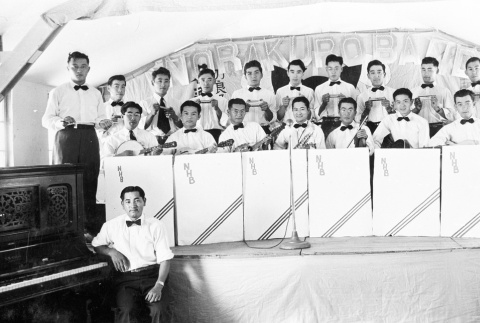
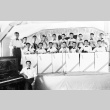
Norakuro Harmonica Band (ddr-densho-39-45)
The Norakuro Harmonica Band played instruments in addition to the harmonica. At camp dances the group performed both American and Japanese music as well as American music with Japanese lyrics. Many of its members were Kibei, Nisei who were born in the United States but educated in Japan.
doc
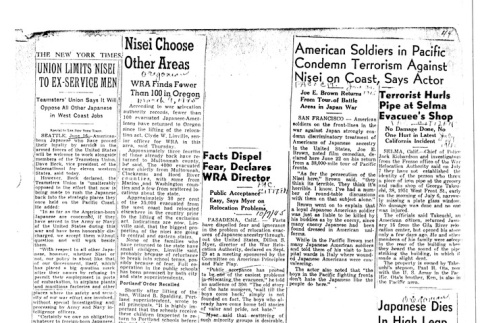
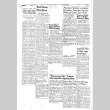
Scrapbook page (ddr-densho-35-353)
Newspaper articles from the New York Times, Oregonian, and Pacific Citizen all describing public reactions to Japanese Americans returning to the West Coast. One of the articles is titled "Union Limits Nisei to Ex-Service Men: Teamsters' Union Says it Will Oppose All Other Japanese in West Coast Jobs."
doc
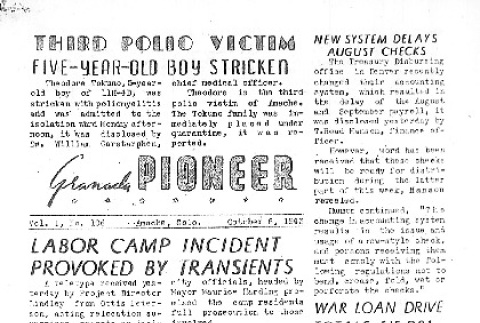
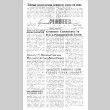
Granada Pioneer Vol. I No. 106 (October 6, 1943) (ddr-densho-147-107)
Selected article titles: "Third Polio Victim: Five-Year-Old Boy Stricken" (p. 1), "Labor Camp Incident Provoked by Transients" (p. 1), "Nisei Troops in Italy Prove They are Real Americans" (p. 1), "Discharge of Japs in Service Urged" (p. 2), "Japanese Problem May Become an Important Issue" (p. 3).
doc
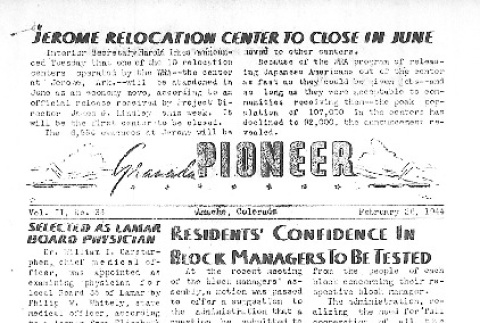
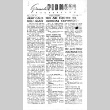
Granada Pioneer Vol. II No. 33 (February 26, 1944) (ddr-densho-147-146)
Selected article titles: "Jerome Relocation Center to Close in June" (p. 1), "Five Expatriates Returned Here" (p. 1), "Residents' Confidence in Block Managers to be Tested" (p. 1), "500 Disloyal Evacuees Moved to Tule Lake" (p. 3), "Fuji, Poston Nisei, Held on War Time Sedition Act" (p. 5).
doc
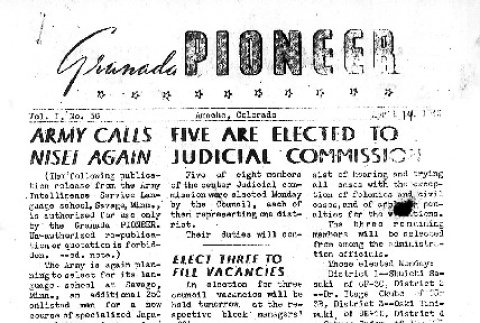
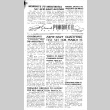
Granada Pioneer Vol. I No. 56 (April 14, 1943) (ddr-densho-147-57)
Selected article titles: "Army Calls Nisei Again" (p. 1), "There's Really a Tokio, USA" (p. 2), "Resident Fined for Liquor Sales" (p. 2), "Nisei's Civil Service Rights Upheld by State" (p. 3), "Appointments for Photos May be Made" (p. 3), "Future of Japanese is Post-War Problem" (p. 5).
doc
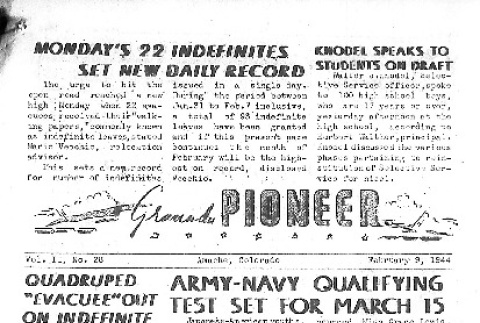
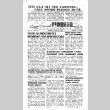
Granada Pioneer Vol. II No. 28 (February 9, 1944) (ddr-densho-147-141)
Selected article titles: "Army-Navy Qualifying Test Set for March 15" (p. 1), "Is This Democracy?" (p. 2), "Two Japanese Babies Available for Adoption by Interested Folks" (p. 2), "1850 Manzanar Segregants to be Transferred Soon" (p. 3), "Nisei War Hero Sgt. Kuroki Pleads for American Respect" (p. 3).
doc
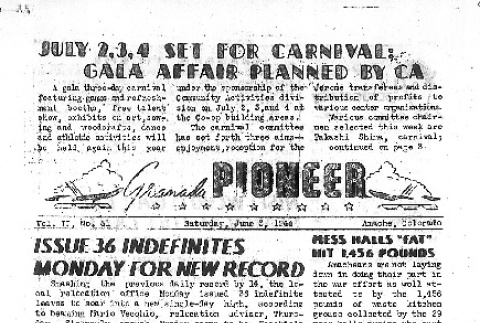
Granada Pioneer Vol. II No. 61 (June 3, 1944) (ddr-densho-147-174)
Selected article titles: "Mess Halls 'Fat' Hit 1,456 Pounds" (p. 1), "Revised Domestic Service Rates Made Public" (p. 1), "Nisei World War I Vet Beaten at Tule Lake" (p. 2), "Kido Attacks Race Baiters on Dual Citizenship Issue" (p. 3), "WRA Official in Hearty, Agreement with Legionnaire" (p. 8).
doc
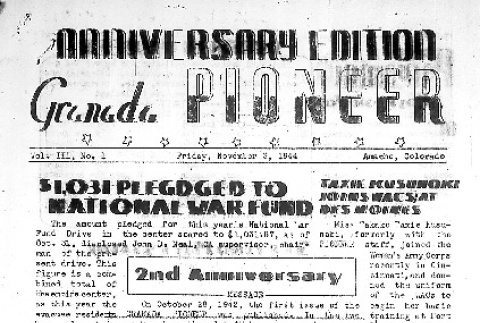
Granada Pioneer Vol. III No. 1 (November 3, 1944) (ddr-densho-147-214)
Selected article titles: "$1,031 Plegdged [Pledged] to National War Fund" (p. 1), "Store Ample Farm Produce for Winter" (p. 3), "To Get Coast Information" (p. 3), "Local Draft Delinquents Sentenced" (p. 3), "Two Nisei Held on Suspicion" (p. 4), "James R. Young: Debates Alien Leniency Query" (p. 8).
img
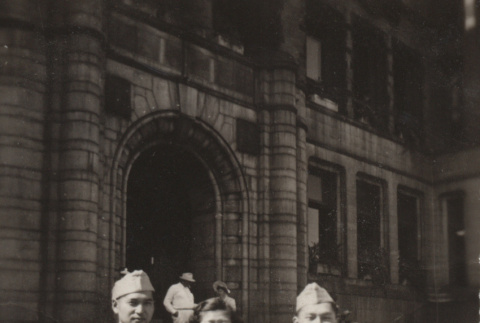
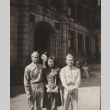
Japanese American serviceman and woman (ddr-csujad-55-2301)
Black and white photograph of two Nisei servicemen and woman standing in front of a city building. See this object in the California State Universities Japanese American Digitization project site: sac_jaac_2406
doc
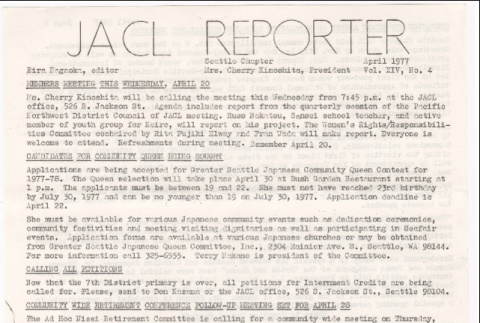
Seattle Chapter, JACL Reporter, Vol. XIV, No. 4, April 1977 (ddr-sjacl-1-200)
Newsletter covering the following topics: Follow up Nisei Retirement Workshop on April 28th; Summary of Installation Banquet and Gordon Hirabayashi?s remarks; Keiro update; JCCC committee votes unanimously to go alone in progress without Betsuin, doomed\n ?self-Destruct? proposal; Seattle JACL Japan Tour for 1978, three week tour.
vh
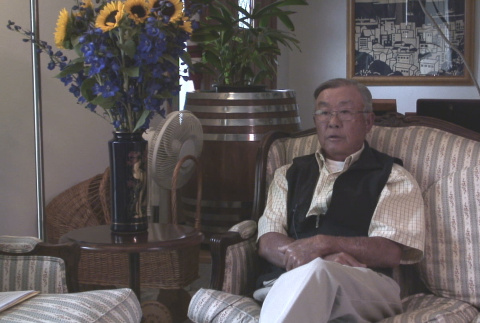
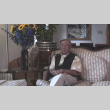
Minoru Yamaguchi Interview (ddr-manz-1-127)
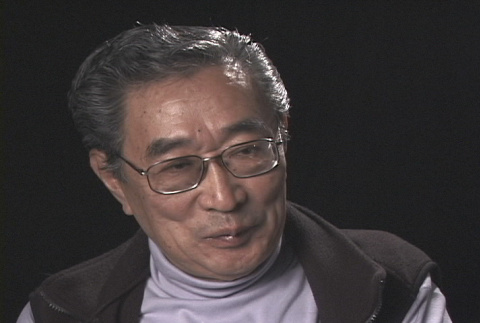
Nisei male. Born 1940 in Spreckels, California. Soon after Minoru was born, father decided to move the family to Japan. Lived in Japan during World War II, returning to the U.S. in the 1960s. Went to school in Chicago for a time before eventually settling in Southern California.
vh
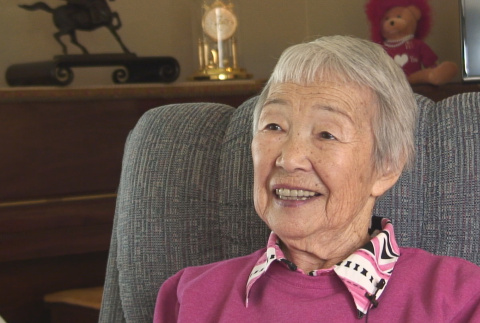
Michiko Wada Interview (ddr-manz-1-162)
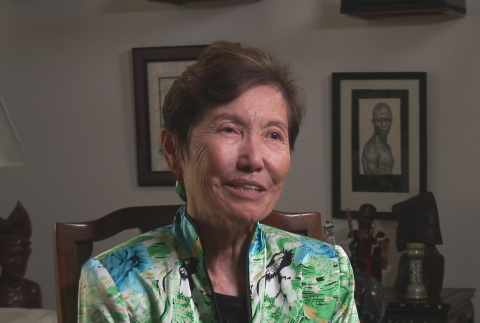
Nisei female. Born in California. Grew up in Watts, California, where parents ran a grocery business. During World War II, removed to the Manzanar concentration camp, California. After the so-called "loyalty questionnaire," transferred to the Tule Lake concentration camp, California. After leaving camp, returned to Los Angeles.
vh
Gloria Toshiko Imagire Interview (ddr-manz-1-46)
Nisei female. Born June 25, 1935, in Vacaville, California. Grew up in Vacaville before being removed to the Turlock Assembly Center, California, and the Gila River concentration camp, Arizona, during World War II. After the war, lived briefly with parents in Ogden, Utah, before returning to the Sacramento area.
vh
Sumiye Takeno Interview (ddr-manz-1-36)
Nisei female. Born November 17, 1922, in Florin, California. Grew up in Florin, where parents operated a farm. Just prior to World War II, attended sewing school in Los Angeles. During the war, removed to the Manzanar concentration camp, California. Married in camp, and moved to Denver, Colorado.
vh
Fusako Yamamoto Interview (ddr-manz-1-49)
Nisei female. Born March 29, 1920, in Sacramento, California, where father owned and operated a restaurant, and mother taught Japanese language school. During World War II, removed to the Marysville Assembly Center and Tule Lake concentration camp, California. Left camp to work in Chicago before eventually returning to Sacramento.
vh
Madelon Arai Yamamoto Interview (ddr-manz-1-118)
Nisei female. Born October 10, 1932, in Los Angeles, California. Grew up in Los Angeles, where father had a gardening business. During World War II, removed to the Manzanar concentration camp, California, where father notably helped to build the Japanese garden. After leaving camp, Madelon returned to Los Angeles.
vh
Frank Isamu Kikuchi Interview (ddr-manz-1-5)
Nisei male. Born 1925, and during childhood lived in various places in the Midwest, Seattle, Washington, and Los Angeles, California. Was a high school student when Japan bombed Pearl Harbor on December 7, 1941. Removed to the Manzanar concentration camp, California, and after camp returned to Los Angeles.
vh
Richard Sakurai Interview (ddr-manz-1-106)
Nisei male. Born December 26, 1926, in Portland, Oregon. Grew up in Troutdale, Oregon, where parents ran a farm. During World War II, removed to the Portland Assembly Center, Oregon, and the Minidoka concentration camp, Idaho. After leaving camp, attended college in Ohio before eventually returning to Oregon.
vh
Bo T. Sakaguchi Interview (ddr-manz-1-8)
Nisei male. Born 1925 and raised in North Hollywood, California. Removed to Manzanar concentration camp, California, following the bombing of Pearl Harbor. Attended high school in camp, then left in 1945 to attend college. Drafted into the army, then lived and worked in various locations after World War II.
vh
Margie Y. Wong Interview (ddr-manz-1-113)
Nisei female. Born July 5, 1936, in Boyle Heights, California, where father ran a wholesale grocery business. During World War II, removed to the Manzanar concentration camp, California. Lived and attended school for a time in Salt Lake City, Utah, after leaving camp, then returned to Boyle Heights.
vh
James "Turk" Suzuki Interview (ddr-densho-1000-204)
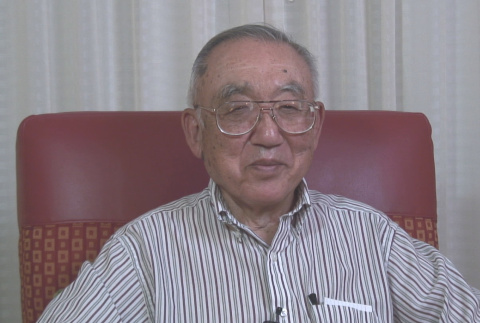
Nisei male. Born October 17, 1923, in Seattle, Washington. Grew up in Seattle, Washington, before being incarcerated in the Puyallup Assembly Center, Washington, and the Minidoka concentration camp, Idaho. Volunteered in the 442nd Regimental Combat team out of camp, and eventually returned to Seattle after World War II.
vh
Mary Hirata Interview (ddr-densho-1000-22)
Nisei female. Born November 27, 1926, in Wenatchee, Washington. Grew up in Wenatchee and moved to Seattle with family in 1938. Incarcerated at the Puyallup Assembly Center, Washington, and Minidoka concentration camp, Idaho. Resettled during World War II in Pocatello, Idaho. Returned to Seattle after World War II.
vh
Walter Tanaka Interview (ddr-densho-1004-6)
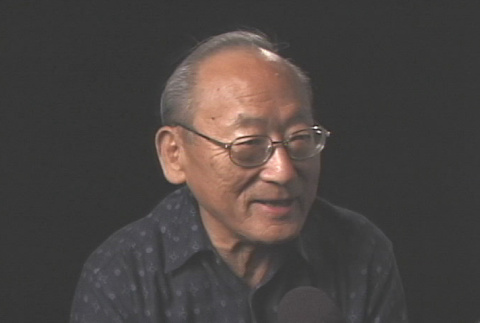
Nisei male. Born February 19, 1918, in Watsonville, California. Drafted into the military before the bombing of Pearl Harbor. Volunteered for the Military Intelligence Service and interrogated Japanese POWs in Australia during the war. After the war, served as a linguist and interpreter in Japan during the U.S. occupation.
vh
Tatsukichi Moritani Interview (ddr-densho-1001-2)
Nisei male. Born October 24, 1916, in Bainbridge Island, Washington. After the bombing of Pearl Harbor, was removed to Manzanar concentration camp, California. Left camp to work in Chicago before eventually returning to Bainbridge Island. Worked for the Washington State Ferries for forty years until retirement in 2005.
doc
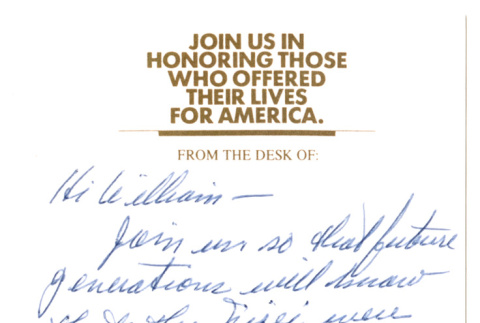
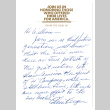
Note attached to 100th/442nd/MIS World War II Memorial Foundation letter (ddr-densho-368-256)
Written on front: Hi William - Join us so that future generations will know that the nisei were there as true patriots of this great nation. Let's show America the spirit of "H" Company while we still have time. Let's make one more effort to "Go For Broke." [illeg.] Keegan