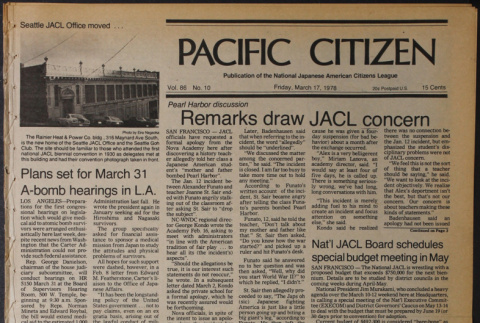
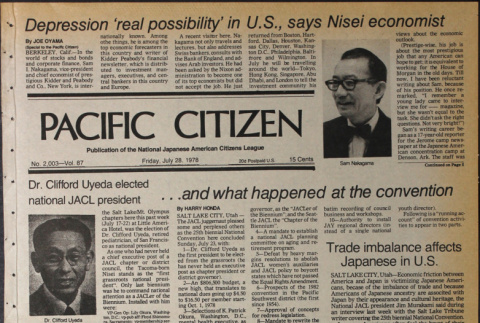
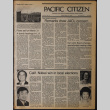
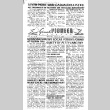
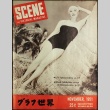
Selected article titles: "Trade Imbalance Affects Japanese in U.S." (1); "Dr. Clifford Uyeda Elected National JACL President" (1); "Depression 'Real Possibility' in U.S. Says Nisei Economist" (1);
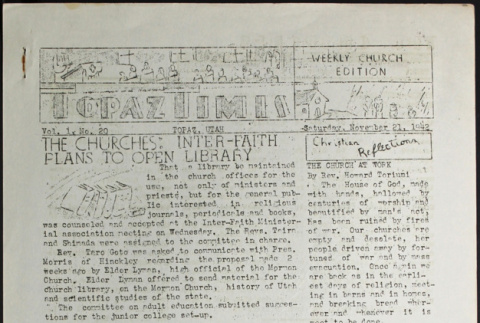
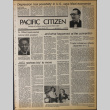
Selected article titles: "The Churches: Inter-Faith Plans to Open Library" (p. 1), "Faith Stressed for Nisei in Message" (p. 1), "Protestant Church to Commemorate" (p. 2).
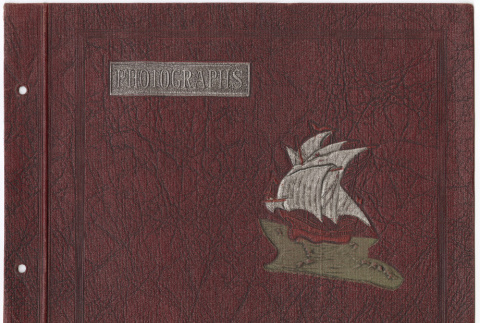
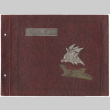
Molly (Kageyama) Maeda's red photo album containing images of young nisei at Oregon State College (now Oregon State University), graduation portaits, and images of life at Minidoka.
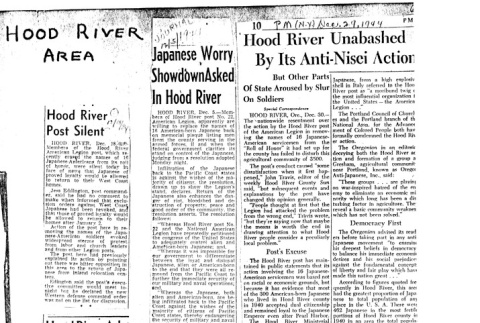
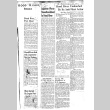
Newspaper clippings from scrapbook page, one of which is titled: "Hood River Unabashed By Its Anti-Nisei Action." Newspapers include the Oregonian, Oregon Journal, and Minidoka Irrigator.
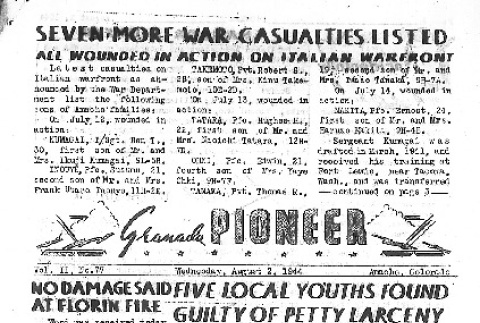
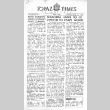
Selected article titles: "Five Local Youths Found Guilty of Petty Larceny" (p. 1), "Nisei Retain Property Equity" (p. 4), "Tule Lake Japanese Pick New Policemen" (p. 6).
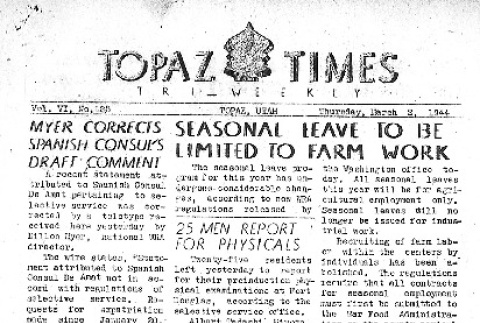
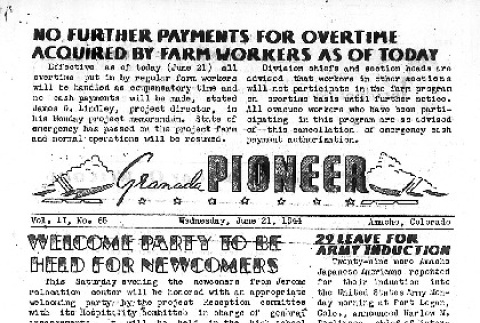
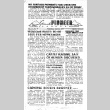
Selected article titles: "No Further Payments for Overtime Acquired by Farm Workers as of Today" (p. 1), "Pueblo Nisei Girl Takes Her Life by Poison" (p. 3).
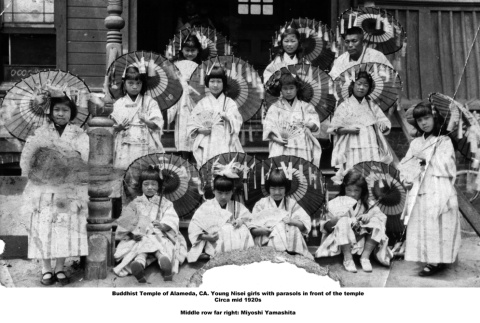
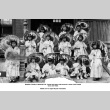
Caption below photo: Buddhist Temple of Alameda, CA. Young Nisei girls with parasols in front of the temple circa mid 1920s / Middle row far right: Miyoshi Yamashita
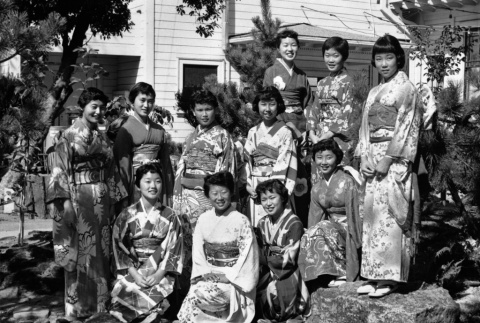
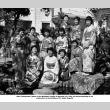
Caption below photo: Nisei "Usherettes" gather at the Buddhist Temple of Alameda, CA., They will be participating in the celebration of the birthday of Dr. Hideo Noguchi
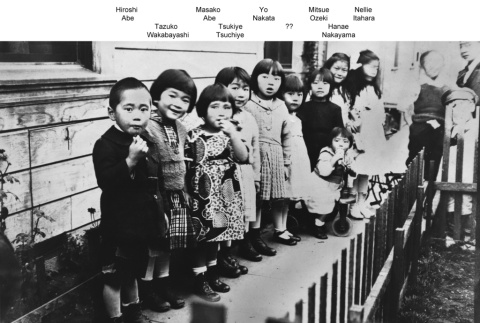
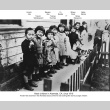
Caption below photo: Nisei children in Alameda, CA, circa 1919. Hiroshi Abe drowned in the Alameda estuary while he was looking after some younger children. Individuals identified
Selected article titles: "Priceless Japanese art objects shown in San Francisco" (p. 11), "Nisei lobby scores in Sacramento" (p. 21), "Occupation wives learn Japanese art" (p. 4).
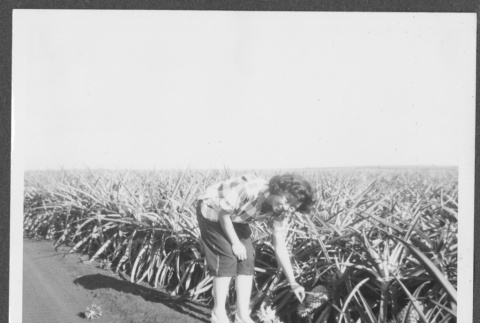
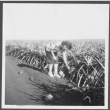
Nisei woman poses with a growing pineapple. Pat Kuroda attended the 442nd Regimental Combat Team 10th Anniversary Reunion in Hawaii from July 27th to July 31st, 1953.
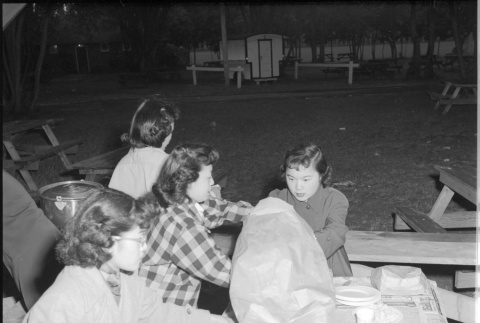
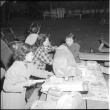
Black and white photographic negative of three Nisei girls cleaning up after a picnic. From left to right: Aki (Shiraishi) Dong, Mary (Nakata) Fujii, and Betty Nakashimada.
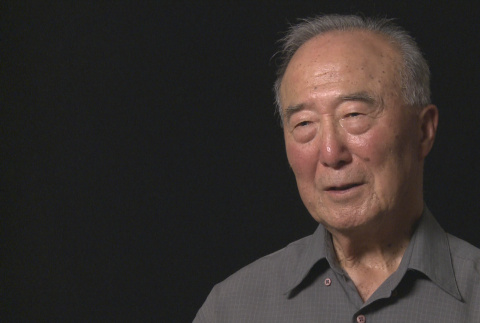
A story of a Nisei serving in the Military Intelligence Service in occupied Japan
This material is based upon work assisted by a grant from the Department of the Interior, National Park Service. Any opinions, finding, and conclusions or recommendations expressed in this material are those of the author(s) and do not necessarily reflect the views …
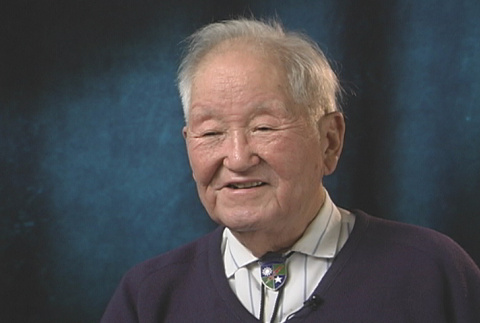
Discussion of discrimination experienced by Kibei at the hands of some Nisei who had never been to Japan
Although Mr. Matsumoto does not identify himself as a Kibei (American-born person of Japanese ancestry sent to Japan for formal education and socialization when young and later returned to the U.S.), some of his life experiences are similar …
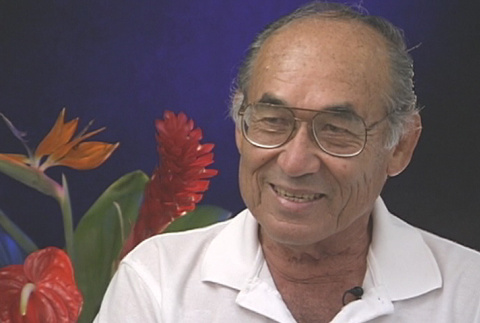
Relations between the Hawaiian and mainland Nisei soldiers at Camp Shelby, Mississippi
This interview was conducted at the 1998 Americans of Japanese Ancestry Veterans National Convention, held in Honolulu, Hawaii. Given the full conference schedule, interviews conducted at the reunion were shorter in length than typical Densho interviews and concentrated on a single topic, namely, the …
Hearing about FBI arrests of Issei in the community
Nisei male. Born July 24, 1925, in Ketchikan, Alaska. Grew up in Ketchikan, where parents ran a store. During World War II, was removed to the Puyallup Assembly Center, Washington, and the Minidoka incarceration camp, Idaho. After leaving camp, went with family to work for a time …
Attending the University of Washington and living in SYNKOA house
Nisei male. Born July 24, 1925, in Ketchikan, Alaska. Grew up in Ketchikan, where parents ran a store. During World War II, was removed to the Puyallup Assembly Center, Washington, and the Minidoka incarceration camp, Idaho. After leaving camp, went with family to work for a …
Leaving Alaska by ship: mother brings a washing machine along
Nisei male. Born July 24, 1925, in Ketchikan, Alaska. Grew up in Ketchikan, where parents ran a store. During World War II, was removed to the Puyallup Assembly Center, Washington, and the Minidoka incarceration camp, Idaho. After leaving camp, went with family to work for a …
The role of the Nisei and Kibei in the Military Intelligence Service Language School
This material is based upon work assisted by a grant from the Department of the Interior, National Park Service. Any opinions, finding, and conclusions or recommendations expressed in this material are those of the author(s) and do not necessarily reflect the views …
This interview was conducted by filmmaker Frank Abe for his 2000 documentary, Conscience and the Constitution, about the World War II resisters of conscience at the Heart Mountain incarceration camp. As a result, the interviews in this collection are typically not life histories, instead primarily focusing on issues surrounding …
The difficulty of getting Nisei military volunteers from the camps
This interview was conducted by filmmaker Frank Abe for his 2000 documentary, Conscience and the Constitution, about the World War II resisters of conscience at the Heart Mountain incarceration camp. As a result, the interviews in this collection are typically not life histories, instead primarily …
The role the World War II Nisei veterans had on the Hawai'i statehood movement (audio only)
This material is based upon work assisted by a grant from the Department of the Interior, National Park Service. Any opinions, finding, and conclusions or recommendations expressed in this material are those of the author(s) and do not necessarily reflect …