
59 items
59 items
av
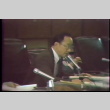
Speak Out for Justice: August 6, 1981 - Part 6 (ddr-densho-1024-114)
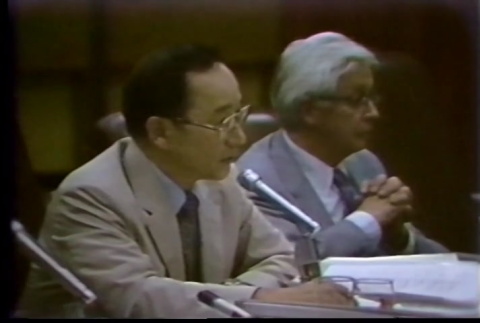
The three days of CWRIC LA hearings concludes with final comments from the three remaining Commissioners present. [Commissioners Arthur S. Flemming, Hugh B. Mitchell, and William M. Marutani] Introduction by Abraham Ferrer of Visual Communications. To commemorate the 40th anniversary of the 1981 Commission on Wartime Relocation and Internment of Civilians (CWRIC) Los Angeles hearings, Visual …
av
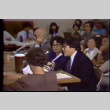
Speak Out for Justice: August 4, 1981 - Part 3 (ddr-densho-1024-101)
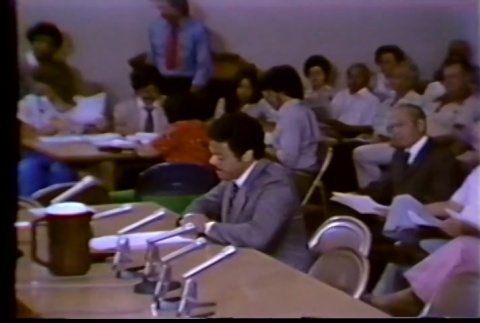
Testifiers speak out on the heartbreaking accounts of camp experiences, post-war trauma, and the racial prejudice endured by many Japanese Americans. Introduction by Harry Kawahara, Former Redress Committee Chairman. Part 3 Testifiers: Henry S. Yamaga, Alfred Nabeta, Robert O'Brien, Morris Kight, Harry Kawahara, Hannah Tomiko Holmes, Raymond Wiedman To commemorate the 40th anniversary of the 1981 …
av
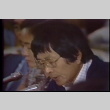
Speak Out for Justice: August 6, 1981 - Part 2 (ddr-densho-1024-110)
Mental health professionals provide insight into the detrimental effects of camp trauma and the impact on psychological and physical health. Japanese Americans speak out on the extreme racial prejudice and discrimination experienced in post-camp life. Introduction by Karen Umemoto, Executive Director of the UCLA Asian American Studies Center, and Michael Nishimura, member of Nikkei Progressives. Part …
av
Speak Out for Justice: August 5, 1981 - Part 4 (ddr-densho-1024-106)
As the Commission on Wartime Relocation and Internment of Civilians (CWRIC) Los Angeles hearings resume, Issei testifiers speak out on the injustice shown towards people of Japanese ancestry during World War II. Testifiers from the San Diego Redress and Reparations Committee also speak out on behalf of their experiences and their families. Introduction by Jan Tokumaru, …
av
Speak Out for Justice: August 5, 1981 - Part 6 (ddr-densho-1024-108)
Testifiers continue to speak out on economic and property loss as a result of forced relocation and internment. Japanese Americans share their experiences of search, seizure, and mistreatment during their time spent in internment camps. Introduction by Alison Kochiyama, Executive Director of the Gardena Valley Japanese Cultural Institute. Part 6 Testifiers: Kiyoshi Sonoda, Larry Boss, Mary …
av
Speak Out for Justice: August 5, 1981 - Part 1 (ddr-densho-1024-103)
Nisei (second-generation Japanese Americans) veterans speak out about the injustice shown to Japanese Americans during World War II and in solidarity demand redress. A confrontation occurs between testifier Jim Kawaminami and author Lillian Baker, who denied that Japanese Americans were incarcerated during World War II. Introduction by Roy Nakano, Director of UCLA Asian American Studies Center. …
av
Speak Out for Justice: August 5, 1981 - Part 5 (ddr-densho-1024-107)
As the Commission on Wartime Relocation and Internment of Civilians (CWRIC) Los Angeles hearings proceed, testimonies of financial losses and psychological trauma drive the movement for Redress and Reparations forward. The testifiers show solidarity in their support for interned people of Japanese ancestry. Introduction by Mark Masaoka and Miyako Noguchi of Nikkei Progressives. Part 5 Testifiers: …
av
Speak Out for Justice: August 4, 1981 - Part 4 (ddr-densho-1024-102)
Testifiers continue to speak out on the intergenerational impact of Executive Order 9066 on Japanese Americans. The demand for Community Redress and Reparations grows as the testimonies continue to speak out on the psychological trauma and feelings of shame felt by many interned Japanese Americans. Introduction by Duane Kubo, Co-Founder of Visual Communications. Part 4 Testifiers: …
av
Redress: An Oral History of the Office of Redress Administration (ddr-densho-1020-13)
In 1988, Congress passed and President Ronald Reagan signed the Civil Liberties Act, a historic piece of legislation that sought, for the first time, to provide a measure of justice to Japanese Americans nearly 40 years after their incarceration during World War II. The Japanese American Redress program that resulted is a little-known success story of …