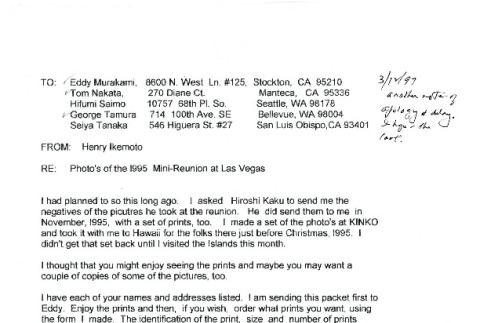
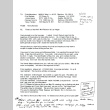
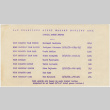
A letter regarding the order of copies of photographs taken at the 1995 mini-reunion at Las Vegas. Includes handwritten marginalia. See this object in the California State Universities Japanese American Digitization project site: ike_02_06_005
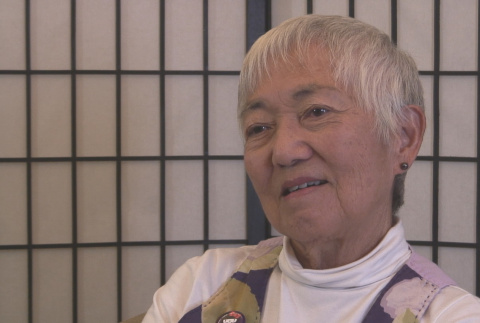
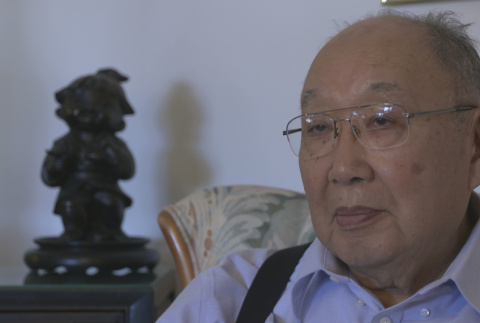
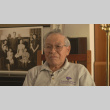
Sansei male. Born November 11, 1931, in San Francisco, California. During World War II, removed to the Merced Assembly Center, California, and the Amache concentration camp, Colorado. After leaving camp, moved to Utah for a time before eventually returning to California and becoming a pharmacist. Served on the board of the Japanese American Citizens League and …
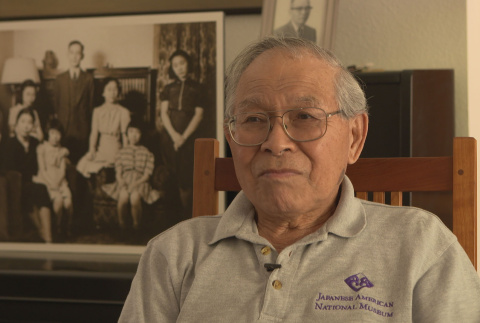
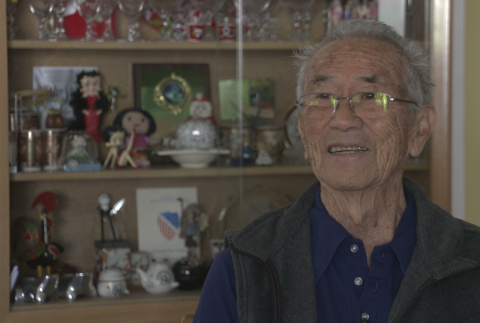
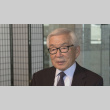
Nisei male. Born February 1, 1933, in San Francisco, California. Grew up in San Francisco's Japantown, where father edited a bilingual newspaper. After the bombing of Pearl Harbor, removed to the Pomona Assembly Center, California, and the Heart Mountain concentration camp, Wyoming. After leaving camp, lived for a time in Salt Lake City, Utah, before returning …
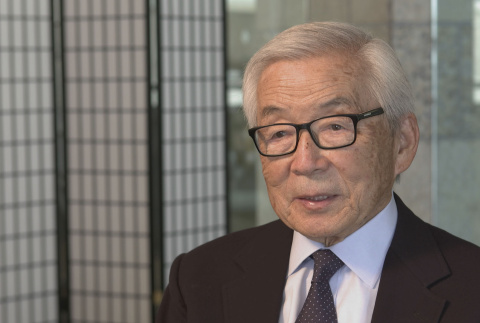
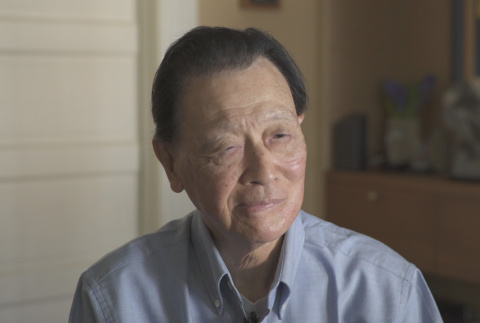
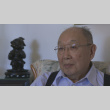
Issei male. Born April 4, 1934, in Hiroshima, Japan, while mother and older siblings were visiting Japan for an extended period. Came to the United States at a few months old, and grew up in the Uptown area of Los Angeles, California. During World War II, removed to the Santa Anita Assembly Center, California, and the …
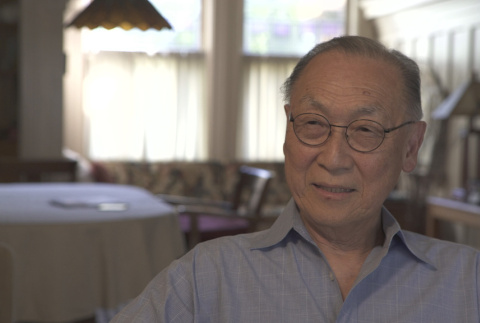
Nisei male. Born June 23, 1930, in Fairfax, Washington. Grew up in Venice, California, where parents had a produce farm. During World War II, removed to the Manzanar concentration camp, California. Parents signed "no-no" on the so-called "loyalty questionnaire" and decided to return with the family to Japan to live. After several years in Japan, came …
Born May 23, 1936, in Callao, Peru. Spent early childhood in Peru, where parents ran a laundry business, and father was a prominent community leader. During World War II, the FBI arrested Jimmy's father and the entire family was placed on a ship and sent to the Department of Justice camp at Crystal City, Texas. After …
Born July 28, 1942, in Callao, Peru. Before World War II, parents ran a laundry business and father was a prominent community leader. When Kazumu was still an infant, the FBI arrested his father and sent the entire family to the Department of Justice camp at Crystal City, Texas. After leaving camp, the family was not …
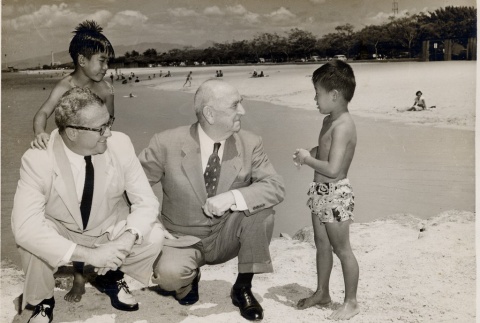
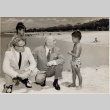
Caption on reverse: "CITY GETS NEW ALA MOANA BEACH AREA: The new $43,000 Ala Moana beach and swimming area was officially transferred to the city-county by the territory at a ceremony held yesterday at 11 a.m. Left to right: Kneeling, John P. Creedon, city-county parks board chairman, and Gov. Samuel Wilder King, who were among the …
Born August 20, 1938, in Lima, Peru. Parents ran a laundry business and father was a prominent community leader. During World War II, the FBI arrested George's father and the entire family was placed on a ship and sent to the Department of Justice camp at Crystal City, Texas. After leaving camp, the family was not …
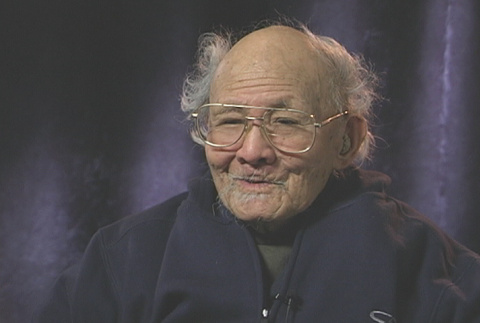
Nisei male. Born November 7, 1920, in Mountain View, Hawaii. Grew up in Hawaii, where parents ran a sugar cane plantation. Was working hauling lumber when Japan attacked Pearl Harbor on December 7, 1941. Was not dismissed from work like other Japanese Americans, and was required to clean up the aftermath of the bombing. Volunteered for …
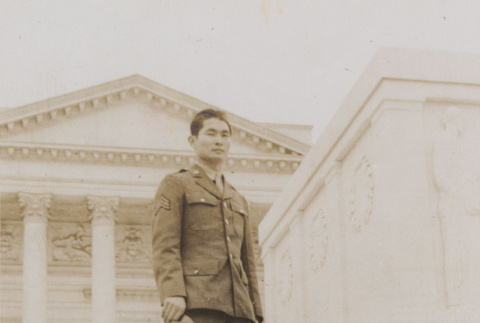
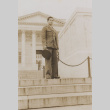
1 photographic print: b&w; A Japanese-American soldier in military uniform stands at the top of the stairs, looking away from camera, with his hands to his side, his right hand holding his hat. Behind him is a monument and building.\n\nWritten on verso in black ink, "????????????--? (Hachisen Mairu, han no murakami saki). On center of photograph …
This material is based upon work assisted by a grant from the Department of the Interior, National Park Service. Any opinions, finding, and conclusions or recommendations expressed in this material are those of the author(s) and do not necessarily reflect the views of the Department of the Interior.
This material is based upon work assisted by a grant from the Department of the Interior, National Park Service. Any opinions, finding, and conclusions or recommendations expressed in this material are those of the author(s) and do not necessarily reflect the views of the Department of the Interior.
Lifestyle changes during the war: gas masks, martial law
This material is based upon work assisted by a grant from the Department of the Interior, National Park Service. Any opinions, finding, and conclusions or recommendations expressed in this material are those of the author(s) and do not necessarily reflect the views of the Department of the …
Father's arrest by a Japanese American police officer
This material is based upon work assisted by a grant from the Department of the Interior, National Park Service. Any opinions, finding, and conclusions or recommendations expressed in this material are those of the author(s) and do not necessarily reflect the views of the Department of the Interior.
This material is based upon work assisted by a grant from the Department of the Interior, National Park Service. Any opinions, finding, and conclusions or recommendations expressed in this material are those of the author(s) and do not necessarily reflect the views of the Department of the Interior.
This material is based upon work assisted by a grant from the Department of the Interior, National Park Service. Any opinions, finding, and conclusions or recommendations expressed in this material are those of the author(s) and do not necessarily reflect the views of the Department of the Interior.
This material is based upon work assisted by a grant from the Department of the Interior, National Park Service. Any opinions, finding, and conclusions or recommendations expressed in this material are those of the author(s) and do not necessarily reflect the views of the Department of the Interior.
This material is based upon work assisted by a grant from the Department of the Interior, National Park Service. Any opinions, finding, and conclusions or recommendations expressed in this material are those of the author(s) and do not necessarily reflect the views of the Department of the Interior.
Oldest sister sent to live in Japan before World War II
This material is based upon work assisted by a grant from the Department of the Interior, National Park Service. Any opinions, finding, and conclusions or recommendations expressed in this material are those of the author(s) and do not necessarily reflect the views of the Department …
This material is based upon work assisted by a grant from the Department of the Interior, National Park Service. Any opinions, finding, and conclusions or recommendations expressed in this material are those of the author(s) and do not necessarily reflect the views of the Department of the Interior.
This material is based upon work assisted by a grant from the Department of the Interior, National Park Service. Any opinions, finding, and conclusions or recommendations expressed in this material are those of the author(s) and do not necessarily reflect the views of the Department of the Interior.