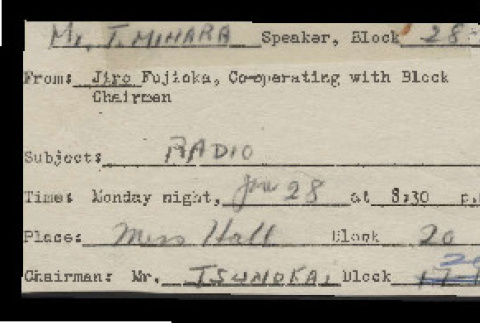
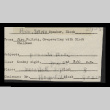
Memorandum from Jiro Fujioka to Speaker, Mr. T. Mihara, regarding his speech on radio at Heart Mountain incarceration camp. See this object in the California State Universities Japanese American Digitization project site: sac_jaac_0700
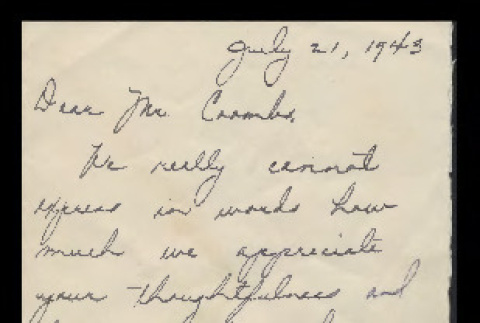
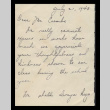
Thank you card from the 5th and 6th grade core class to Mr. Coombs in the Minidoka incarceration camp. See this object in the California State Universities Japanese American Digitization project site: sac_jaac_0140
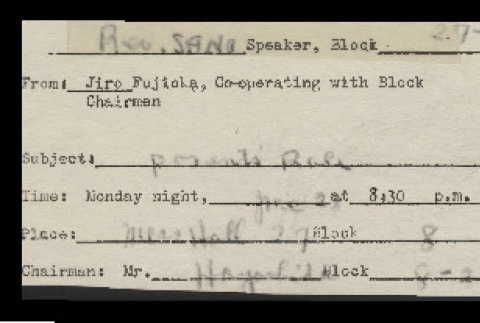
Memorandum from Jiro Fujioka to Speaker, Mr. Sano, regarding his speech on parent's role at Heart Mountain incarceration camp. See this object in the California State Universities Japanese American Digitization project site: sac_jaac_0698
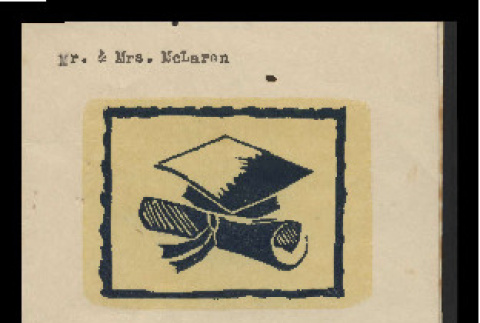
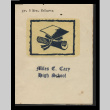
Invitation for the commencement program at Miles E. Cary High School at Poston incarceration camp. Addresses "Mr. & Mrs. McLaren." See this object in the California State Universities Japanese American Digitization project site: sac_jaac_1709
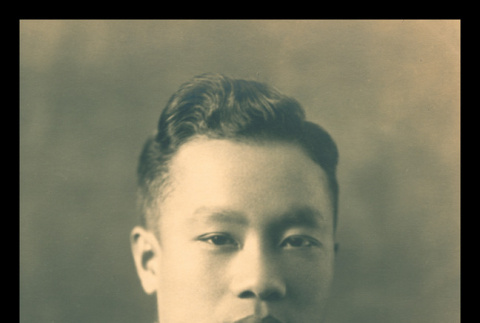
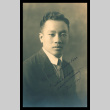
Black and white formal portrait photograph depicting Yoshio Ichikawa, age 25, at Stanford University. Inscribed to Mr. and Mrs. Kambara. See this object in the California State Universities Japanese American Digitization project site: sac_jaac_2321
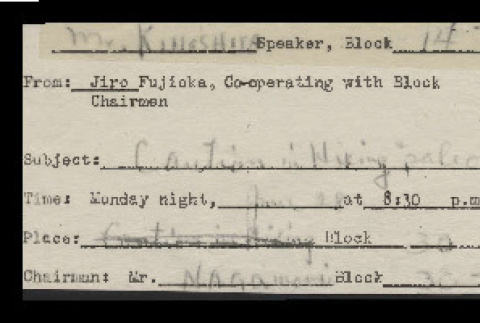
Memorandum from Jiro Fujioka to Speaker, Mr. Kinoshita, regarding his speech on hiking paleontology at Heart Mountain incarceration camp. See this object in the California State Universities Japanese American Digitization project site: sac_jaac_0697
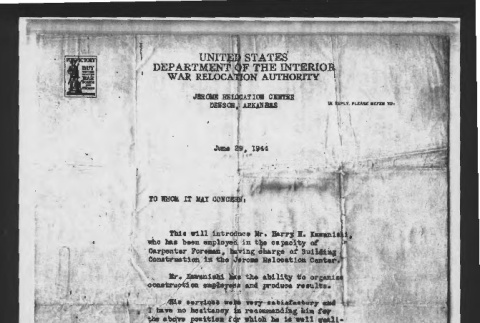
A letter of recommendation for Mr. Harry H. Kawasnishi written by M.A. Church, Senior Engineer, at the Jerome incarceration camp. See this object in the California State Universities Japanese American Digitization project site: sac_jaac_2773
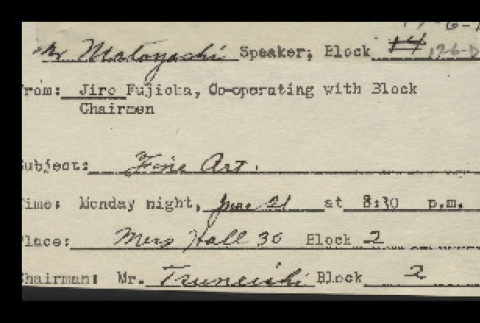
Memorandum from Jiro Fujioka to Speaker, Mr. Motoyoshi, regarding his speech on fine art at Heart Mountain incarceration camp. See this object in the California State Universities Japanese American Digitization project site: sac_jaac_0704
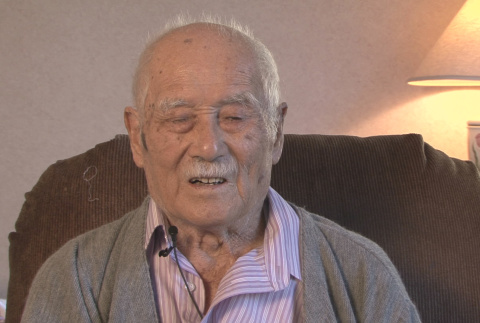
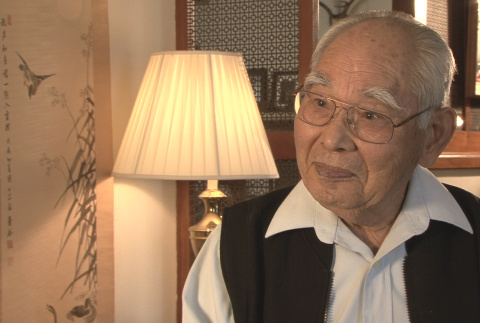
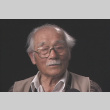
Nisei male. Born April 25, 1913, in Los Angeles, California. Grew up in California prior to World War II. Removed to Manzanar concentration camp, California, during the war. Left Manzanar in 1943 and lived in various locations, eventually settling in New York and California. Mr. Fukuhara was a prominent artist.
Nisei male. Born April 25, 1913, in Los Angeles, California. Grew up in California prior to World War II. Removed to Manzanar concentration camp, California, during the war. Left Manzanar in 1943 and lived in various locations, eventually settling in New York and California. Mr. Fukuhara was a prominent artist.
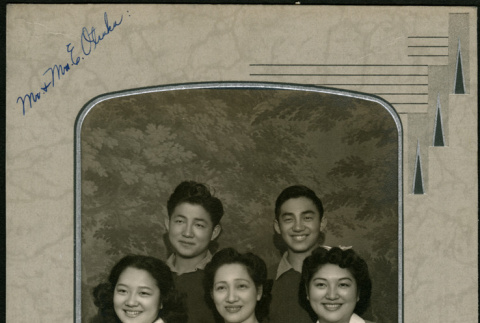
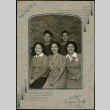
The portrait is signed "Mr. + Mrs. E. Otsuka: Kanogawa family 4/21/42". The studio stamp in the bottom right hand corner "James & Merrihew Seattle". Left to right: Yae Kanogawa, Reo Kanogawa, Shizu Kanogawa, Shoji Kanogawa, Sei Kanogawa. Sho Kanogawa is likely not pictured because the government had already seized him.
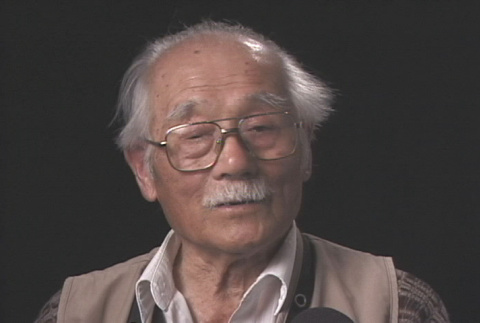
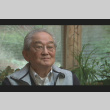
Nisei male. Born March 18, 1923, in Bainbridge Island, Washington. Prior to World War II, parents operated a barber shop, farm and grocery store. Removed to Manzanar concentration camp, California. Left camp and lived in Illinois, then eventually returned to Bainbridge Island. Mr. Nakata passed away on June 3, 2007.
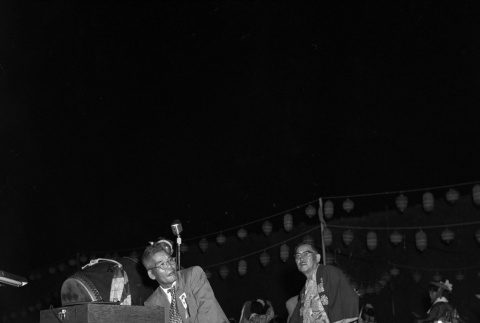
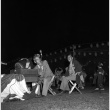
Black and white photographic negative of two men sitting and looking beyond the camera, Obon dancers perform behind. Man on the right identified as Mr. Akiyama. Obon is an annual event hosted by the Oregon Buddhist Church (now known as Oregon Buddhist Temple) and attended by the wider Nikkei community.
Kibei-Nisei male. Born January 20, 1916, in Alameda, California. At the age of five, family returned to live in Japan. Attended school in Japan before returning to the U.S. in 1937. Drafted into the U.S. Army, and was in training when Japan bombed Pearl Harbor on December 7, 1941. Resisted military orders while in basic training, …
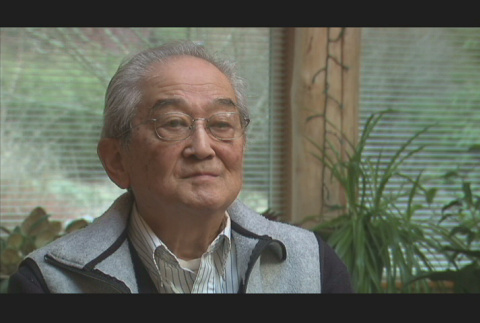
Nisei male. Born February 16, 1934, in Anaheim, California. Grew up in Selma, California, where parents ran a restaurant. During World War II, removed to the Gila River concentration camp, Arizona. Family returned to the Selma area after leaving camp. Mr. Ogata attended California State University Fresno and served in the army. Became a high school …
Traveling overseas by ship along with Caucasian soldiers
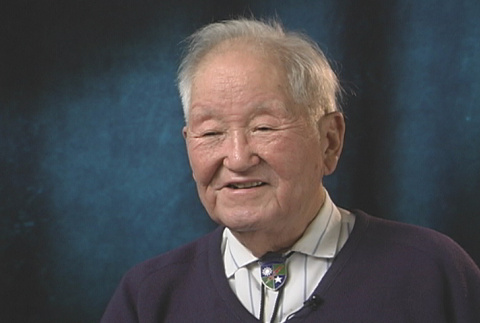
Although Mr. Matsumoto does not identify himself as a Kibei (American-born person of Japanese ancestry sent to Japan for formal education and socialization when young and later returned to the U.S.), some of his life experiences are similar to those who do identify themselves as such.
Reuniting with brother, who had been drafted before World War II
Although Mr. Matsumoto does not identify himself as a Kibei (American-born person of Japanese ancestry sent to Japan for formal education and socialization when young and later returned to the U.S.), some of his life experiences are similar to those who do identify themselves as …
Description of middle school in Japan, involvement in compulsory military training
Although Mr. Matsumoto does not identify himself as a Kibei (American-born person of Japanese ancestry sent to Japan for formal education and socialization when young and later returned to the U.S.), some of his life experiences are similar to those who do identify themselves as …
Using a telephone to tap into a Japanese army communications wire
Although Mr. Matsumoto does not identify himself as a Kibei (American-born person of Japanese ancestry sent to Japan for formal education and socialization when young and later returned to the U.S.), some of his life experiences are similar to those who do identify themselves as …
Pursing a romantic interest in Japan as a teenager
Although Mr. Matsumoto does not identify himself as a Kibei (American-born person of Japanese ancestry sent to Japan for formal education and socialization when young and later returned to the U.S.), some of his life experiences are similar to those who do identify themselves as such.
Feeling angry about conditions in Santa Anita Assembly Center, California
Although Mr. Matsumoto does not identify himself as a Kibei (American-born person of Japanese ancestry sent to Japan for formal education and socialization when young and later returned to the U.S.), some of his life experiences are similar to those who do identify themselves as such.
Finding out details of mission in the jungles of Burma
Although Mr. Matsumoto does not identify himself as a Kibei (American-born person of Japanese ancestry sent to Japan for formal education and socialization when young and later returned to the U.S.), some of his life experiences are similar to those who do identify themselves as such.
Given a job by a prominent Japanese American family
Although Mr. Matsumoto does not identify himself as a Kibei (American-born person of Japanese ancestry sent to Japan for formal education and socialization when young and later returned to the U.S.), some of his life experiences are similar to those who do identify themselves as such.
Shouting military orders in Japanese to confuse the enemy
Although Mr. Matsumoto does not identify himself as a Kibei (American-born person of Japanese ancestry sent to Japan for formal education and socialization when young and later returned to the U.S.), some of his life experiences are similar to those who do identify themselves as such.
Growing up on family farm; not experiencing discrimination as a child
Although Mr. Matsumoto does not identify himself as a Kibei (American-born person of Japanese ancestry sent to Japan for formal education and socialization when young and later returned to the U.S.), some of his life experiences are similar to those who do identify themselves as …