This material is based upon work assisted by a grant from the Department of the Interior, National Park Service. Any opinions, finding, and conclusions or recommendations expressed in this material are those of the author(s) and do not necessarily reflect the views of the Department of the Interior.
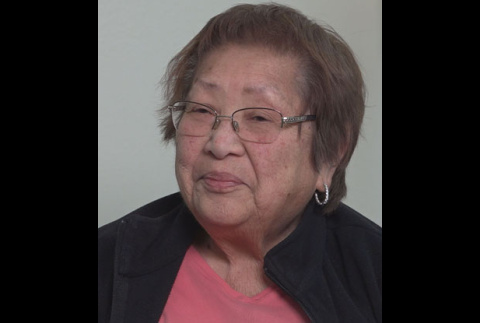
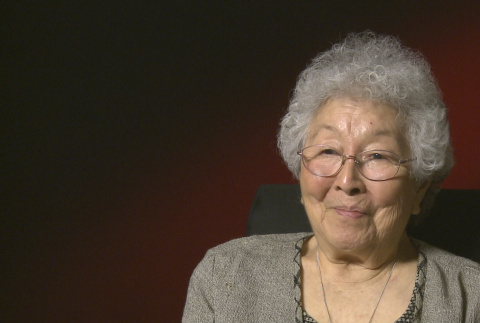
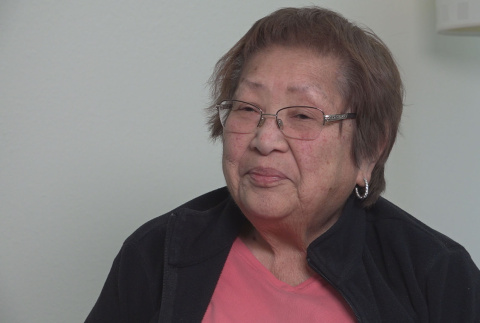
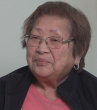
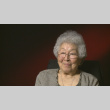
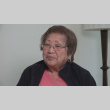
Sansei female. Born August 12, 1937, in Seattle, Washington. During World War II, family removed to the Puyallup Assembly Center, Washington, and the Minidoka concentration camp, Idaho. Lived in Minidoka for only four months before leaving camp to live and farm in Great Falls, Montana. After a few years, returned to Seattle. Attended the University of …
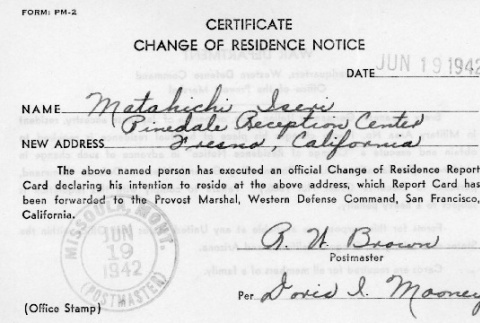
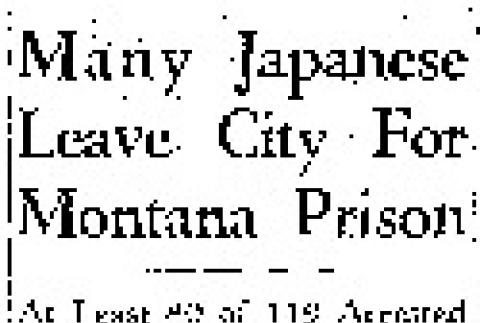
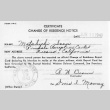
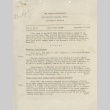
Considered a "dangerous enemy alien," Matahichi Iseri was separated from his family and sent to the Department of Justice internment camp at Fort Missoula, Montana. In June 1942, he received a Change of Residence Notice certificate, which indicated that his request to join his family at the Pinedale Assembly Center in California had been approved.
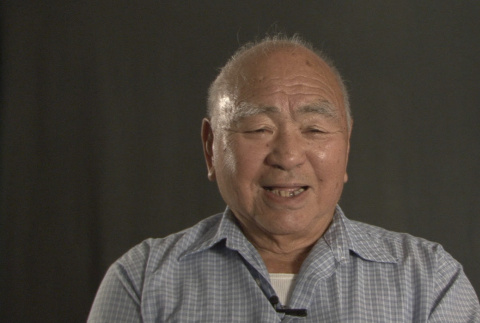
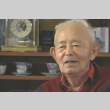
Kibei male. Born August 1, 1903, in Sprecklesville, Maui, Hawaii. Taken to Japan in 1905 and raised by grandparents. Returned to the United States in 1919, joining father at Barneston sawmill in Washington. Married and farmed in Bellevue, Washington. Founded Bellevue Seinenkai and managed the Bellevue Vegetable Growers Association prior to World War II. Was picked …
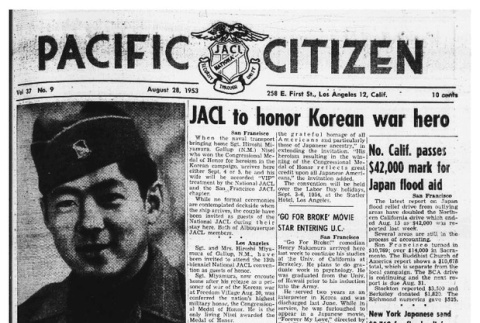
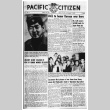
Selected article titles: "JACL to honor Korean war hero" (p. 1), "Sacramento Nisei prisoner of war home from Korea, among first Mainlanders freed in 'Operation Big Switch'" (p. 1), "Anti-U.S. Japanese Movies" (p. 2), "Canada bars Montana Nisei seeking employment in Canadian oil company" (p. 4), "Dating, courtship lively discussion topic for Japanese Fulbright students" (p. …
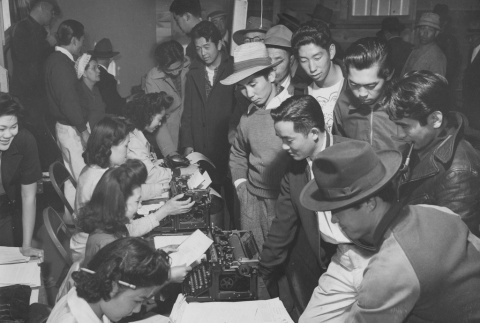
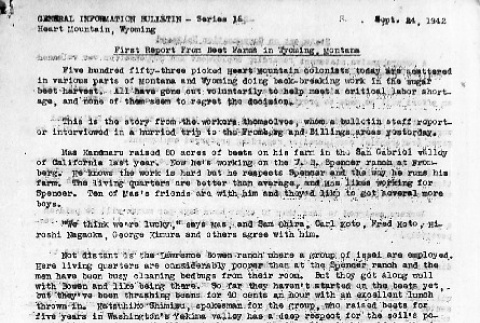
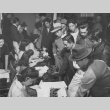
Young incarcerees from Los Angeles at Heart Mountain incarceration camp volunteering to top beets in Wyoming, Montana, and Colorado. September 27, 1942. Photo by Tom Parker. See this object in the California State Universities Japanese American Digitization project site: HMLSC_TOMO_f17
This material is based upon work assisted by a grant from the Department of the Interior, National Park Service. Any opinions, finding, and conclusions or recommendations expressed in this material are those of the author(s) and do not necessarily reflect the views of the Department of the Interior.
This material is based upon work assisted by a grant from the Department of the Interior, National Park Service. Any opinions, finding, and conclusions or recommendations expressed in this material are those of the author(s) and do not necessarily reflect the views of the Department of the Interior.
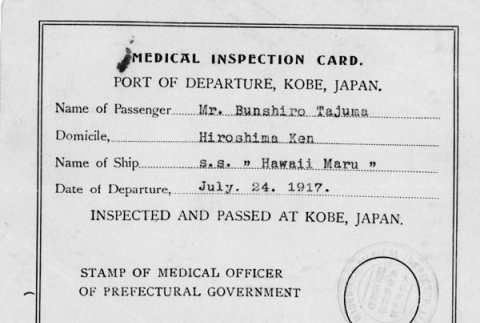
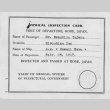
Bunshiro Tazuma was a longtime Seattle resident and the owner of the Tazuma Ten-Cent Store in Seattle's Nihonmachi. In 1917, he immigrated to Seattle and became a permanent resident. (From 1908 to 1914, he had worked in Montana.) The Issei were required to carry medical inspection cards in conjunction with several other documents to show that …
Sansei female. Born August 12, 1937, in Seattle, Washington. During World War II, family removed to the Puyallup Assembly Center, Washington, and the Minidoka concentration camp, Idaho. Lived in Minidoka for only four months before leaving camp to live and farm in Great Falls, Montana. After a few years, returned to Seattle. Attended the University of …
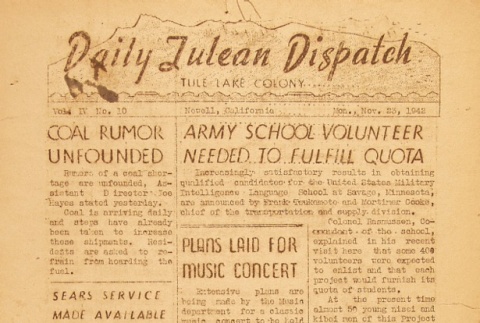
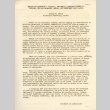
Selected article titles: "Coal Rumor Unfounded" (p. 1), "Army School Volunteer Needed to Fulfill Quota" (p. 1), "Sears Service Made Available" (p. 1), "Plans Laid for Music Concert" (p. 1), "Project Directory to be Published by Dispatch" (p. 1), "Montana Workers Return" (p. 1), "City Board Needs 3 Technicians" (p. 1), "Communique No. 3: Early Birds …
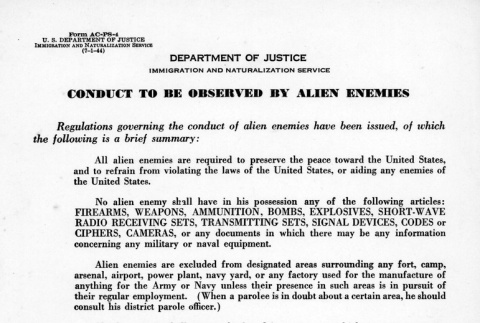
Matahichi Iseri, considered a "dangerous enemy alien," was arrested on Dec. 7, 1941, and imprisoned in the Department of Justice internment camp at Fort Missoula, Montana. During the war, enemy aliens were not allowed to own contraband articles such as weapons, signal devices, and cameras. They were required to carry certificates of identification at all times, …
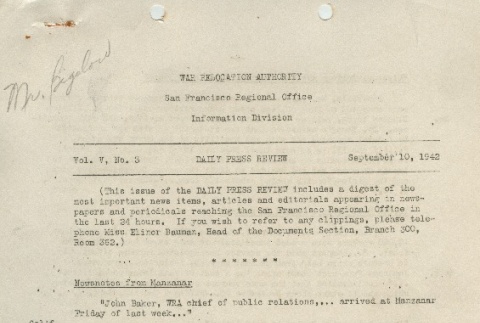
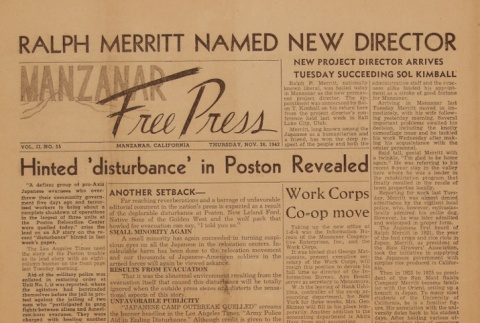
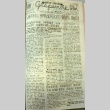
Article titles: "Newsnotes from Manzanar"; "Delta County Beet Growers Agree to Employ Japanese"; "Missouri College Accepts Japanese Despite Protests"; "10,000 Best Workers Needed in Montana"; "Idaho Relocation Center is Half Filled"; "Brandt Urges Farmers Seek Labor Now"; "Inquisitive Cameraman"; "Japanese Center Should Not Cause Any Shortages Here..."; "FBI Seizes Japanese Alien in New York"; "Japanese Center, …
Correspondence from Thomas Parran to Mary Clark regarding Clarks travel authorization from Lexington, Kentucky to Fort Missoula, Montana. From the Mary F. Clark scrapbook, "Before I Forget, 1942-1947" page 5. See also sac_jaac_1334 through sac_jaac_1529. See this object in the California State Universities Japanese American Digitization project site: sac_jaac_1336
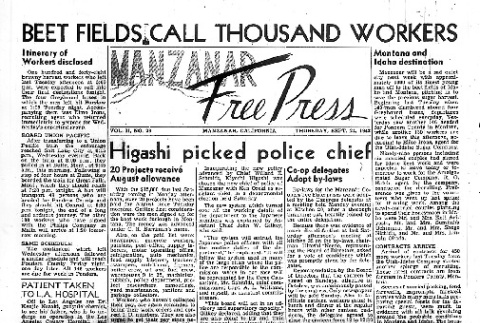
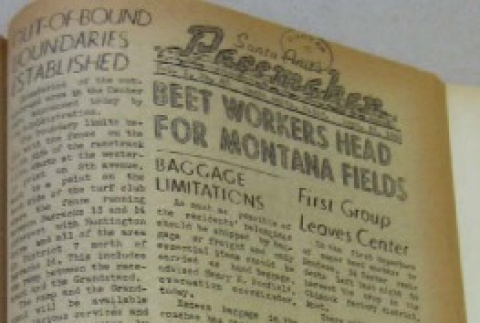
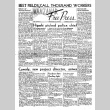
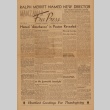
Selected article titles: "Out-of-Bound Boundaries Established" (p. 1), "Movements to Granada and Rohwer Continue" (p. 1), "Beet Workers Head for Montana Fields. First Group Leaves Center" (p. 1), "Belongings May Not be Sent In" (p. 1), "Laundry Service Still Available" (p. 1), "Trash Crews Given Praise" (p. 2), "Residents to Call for Toilet Paper" (p. 2), …
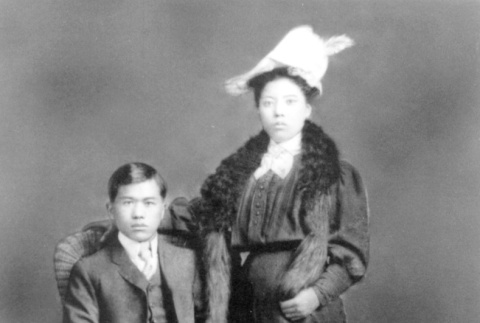
The Yamada collection, early 1900s-1950s and 1990s, focuses on the Iseri family, who resided in the White River Valley area of Washington State before World War II and in Weiser, Idaho, after the war. The photographs depict agricultural life and community activities such as sports, mochitsuki, and religious ceremonies. This collection also includes mass removal and …
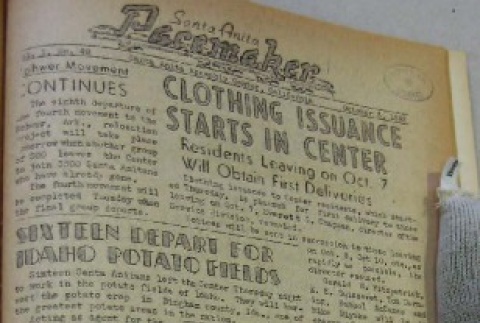
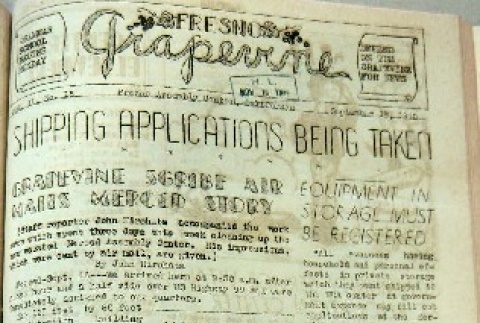
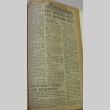
Selected article titles: "Shipping Applications Being Taken. Equipment in Storage Must be Registered" (p. 1), "Beet Fields of Montana Call 44 More Residents" (p. 1), "Clothing Staff Busy Unpacking First Shipment" (p. 1), "Community Service Vital at Relocation Center" (p. 2), "Center Grammar School Class Schedules Made" (p. 3), "Residents Should Turn Off Shower Faucets Tightly" …
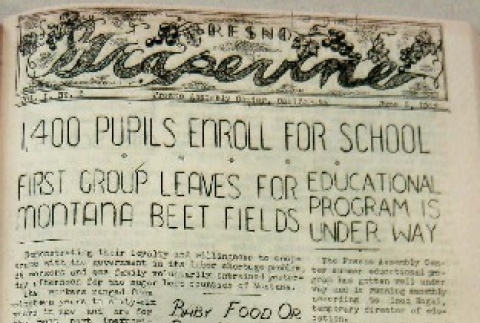
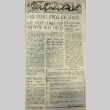
Selected article titles: "1,400 Pupils Enroll for School. Educational Program is Under Way" (p. 1), "First Group Leaves for Montana Beet Fields" (p. 1), "Baby Food Op., Bad Neighbors, They Are Ready" (p. 1), "Law and Order" (p. 2), "Babies Fed Scientifically" (p. 3), "Use Your Coupon Books Before Going" (p. 3), "Center Girl Scouts are …
Tru-Line Wire-o Composition Book; Written between January 18, 1942 - February 13, 1942. Paul Hiratzka and other Japanese were taken to Lincoln Heights Jail and later to county jail, then boarded by train to Fort Missoula, Montana Detention Camp. Covers his daily activities from weather reports and various activities throughout the daily entries. His diaries covered …