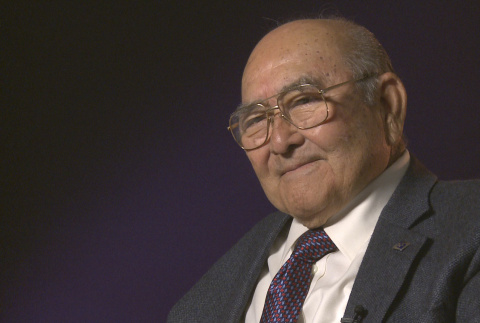
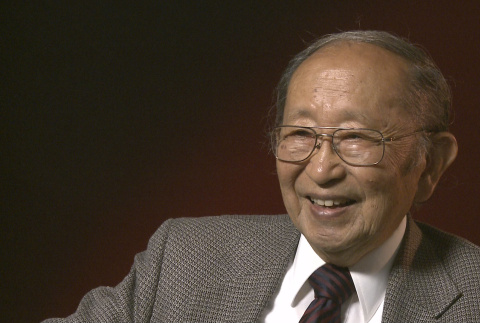
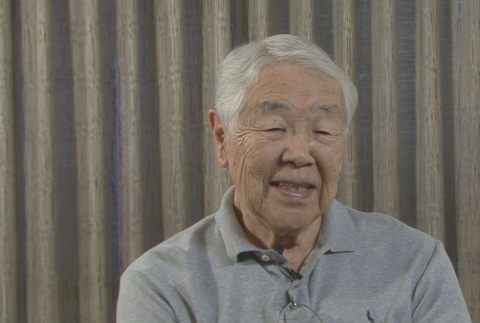
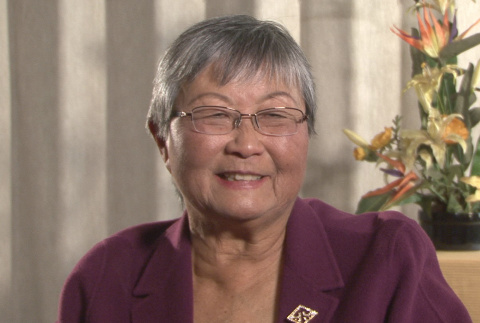
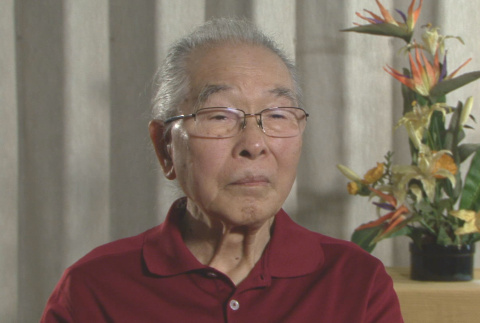
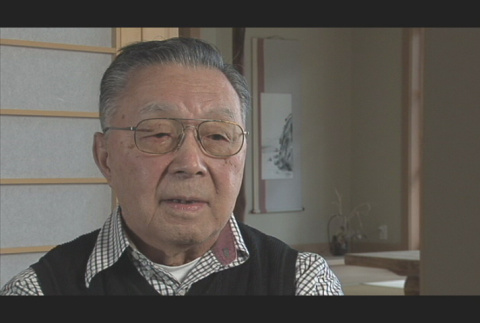
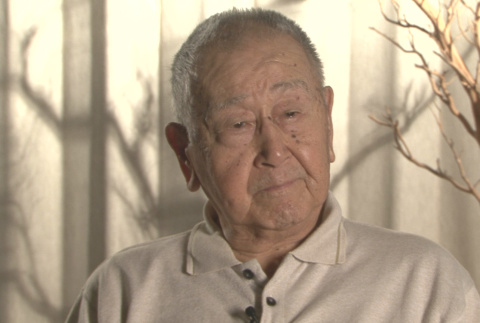
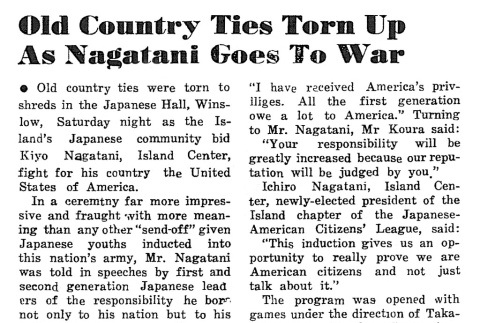
Nisei male. Born April 14, 1907, in Pauilo, Hawaii. Lived in Japan from 1915 to 1923, and settled on the mainland upon his return to the United States. Was married in 1930, and was removed along with family to Manzanar concentration camp, California, during World War II. While in Manzanar, organized the Mess Hall Workers Union. …
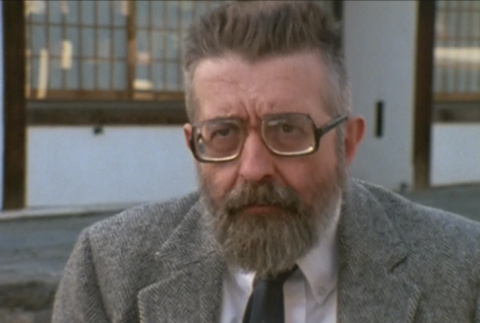
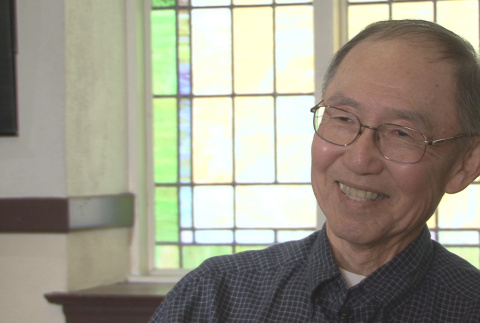
Nisei male. Born February 13, 1929, in Seattle, Washington. Grew up in Hollywood, California, and was living there when Japan bombed Pearl Harbor in 1941. Removed to the Manzanar concentration camp, California. Parents signed "no-no" on the so-called "loyalty questionnaire" and the family was transferred to the Tule Lake concentration camp, California, then designated as a …
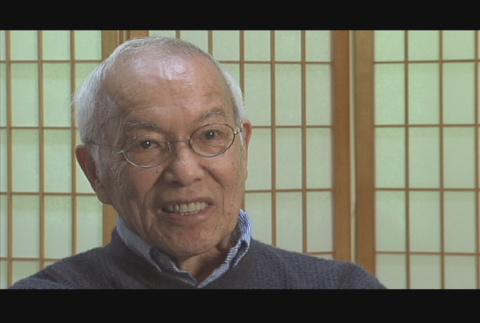
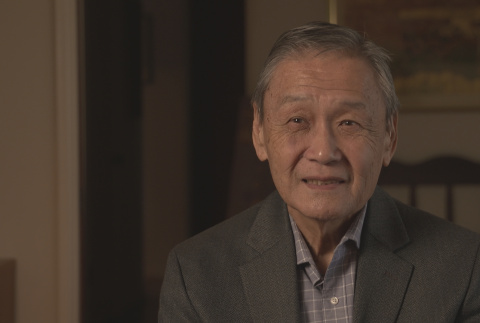
Nisei male. Born October 12, 1928, in Florin, California, a small community outside of Sacramento, California. Lost father at an early age, and was raised primarily by older brother. During World War II, removed with family to the Manzanar concentration camp, California. While in camp, snuck out of camp to spend time in the surrounding hillside. …
Sansei male. Born March 6, 1947, in Los Angeles, California. Son of Akira Kageyama, one of the key players in the guyaule rubber-producing project at the Manzanar concentration camp, California, during World War II.
(This material is based upon work assisted by a grant from the Department of the Interior, National Park Service. Any opinions, finding, …
Nisei male. Born May 9, 1926, in Los Angeles, California. Grew up in Los Angeles and was in high school when Japan bombed Pearl Harbor on December 7, 1941. During the war, removed to the Manzanar concentration camp, California. Left camp to attend Morningside College in Sioux City, Iowa, then was inducted into the army. Joined …
Nisei male. Born November 6, 1924, in Los Angeles, California. Grew up in Los Angeles, where father, renowned photographer Toyo Miyatake, established a photo studio. During World War II, was removed to the Manzanar concentration camp, California. In camp, father became the camp's photographer. After the war, Archie Miyatake returned to Los Angeles and eventually took …
Nisei male. Born March 26, 1923, in Los Angeles, California. Grew up in the Boyle Heights area where father ran a pharmacy. During World War II, removed to the Manzanar concentration camp, California. After leaving camp, lived for a time in Cleveland, Ohio, before returning to Los Angeles and establishing a successful career in public health.
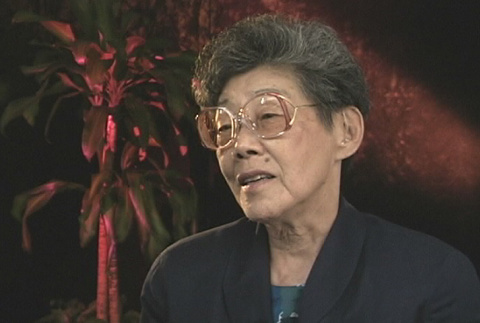
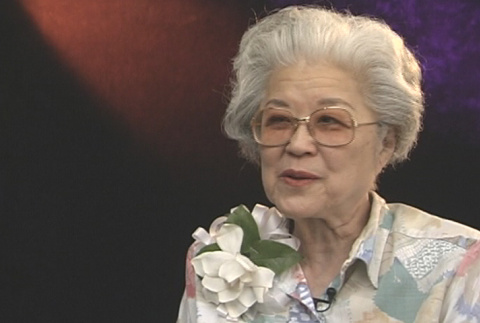
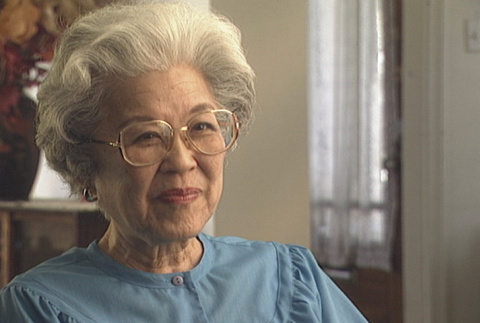
Nisei female. Born May 29, 1936, in Los Angeles, California. Grew up in Los Angeles, where parents ran a cleaning business. During World War II, removed to the Manzanar concentration camp, California, with family. After leaving camp, returned to Los Angeles where parents reestablished the family business. Studied and performed Japanese classical dance during and after …
Work in Manzanar concentration camp: making camouflage nets, writing for the Free Press
This interview was conducted at the Voices of Japanese American Redress Conference, held on the UCLA campus and sponsored by the UCLA Asian American Studies Center and the UCLA School of Public Policy and Social Research. Because of the full conference schedule, our …
Description of dissent at the Manzanar concentration camp (audio only)
This interview is audio-only. It contains raw footage used by Steven Okazaki in his 1985 film Unfinished Business.
This material is based upon work assisted by a grant from the Department of the Interior, National Park Service. Any opinions, finding, and conclusions or recommendations expressed …
Nisei male. Born July 17, 1926, in Santa Monica, California. Grew up in the Santa Monica area where parents ran a nursery business. During World War II, removed to the Manzanar concentration camp, California. After leaving camp, worked as a chick sexer, technical illustrator in the aerospace industry, and a life insurance salesman. Returned to California …
Nisei female. Born August 5, 1924, in Sacramento, California. Grew up in Sacramento and Los Angeles. During World War II, removed to the Manzanar concentration camp, California, and transferred to the Jerome concentration camp, Arkansas. Washington representative and researcher for National Council for Japanese American Redress (NCJAR) and primary archival researcher for the Commission on Wartime …
Nisei female. Born August 5, 1924, in Sacramento, California. Grew up in Sacramento and Los Angeles. During World War II, removed to the Manzanar concentration camp, California, and transferred to the Jerome concentration camp, Arkansas. Washington representative and researcher for National Council for Japanese American Redress (NCJAR) and primary archival researcher for Commission on Wartime Relocation …
Nisei male. Born 1923, and grew up on Bainbridge Island, Washington, prior to World War II. During the war, removed with family to the Manzanar concentration camp, California. Drafted into the military during the war and served in Europe and France with the 442nd Regimental Combat Team.
Nisei male. Born October 5, 1922, in Bainbridge Island, Washington. Was attending the University of Washington when Japan bombed Pearl Harbor on December 7, 1941. During World War II, was removed to the Manzanar concentration camp, California. Was drafted into the military and served with the Military Intelligence Service.
Nisei male. Born April 10, 1920, in Seattle, Washington. Moved from Seattle to Bainbridge Island, Washington, at age five. During World War II, removed to the Manzanar concentration camp, California. Volunteered for the military and served in Europe. After the war, eventually returned to Bainbridge Island and reestablished family's farm.
Nisei/Sansei male. Born July 5, 1936, in Venice, California. During World War II, removed to the Manzanar concentration camp, California. After leaving camp, lived for a time in Denver before returning to Los Angeles. After the war, became a pioneering filmmaker. Founder of Visual Communications, the oldest community-based media arts center in the United States. Along …
Nisei female. Born April 6, 1932, in Bainbridge Island, Washington. Grew up on Bainbridge, and was eight years old when Japan bombed Pearl Harbor on December 7, 1941. Removed with family to the Manzanar concentration camp, California. Before the war was over, moved to Chicago, Illinois. Returned to Bainbridge Island after World War II.
Nisei male. Born 1927 in Terminal Island, California. Grew up on Terminal Island, where father was a fisherman. Lived in Japan for a short time in 1941. After the bombing of Pearl Harbor, moved to Compton after the Japanese Americans were excluded from Terminal Island. Removed to the Manzanar concentration camp, California. After leaving camp, worked …
Nisei male. Born August 28, 1920, in Los Angeles, California. Grew up in the Glendale area, where father ran a gardening business. Was in college at UC Berkeley when Japan bombed Pearl Harbor. During World War II, removed to the Manzanar concentration camp, California. Left camp to work in Chicago. Drafted into the army and served …
Nisei male. Born July 27, 1935, in Los Angeles, Califonia. Grew up in Los Angeles' Little Tokyo neighborhood prior to World War II. After the bombing of Pearl Harbor, removed with family to the Manzanar concentration camp, California. After leaving camp, returned to Los Angeles and attended school. Became involved in gang activity in L.A. in …
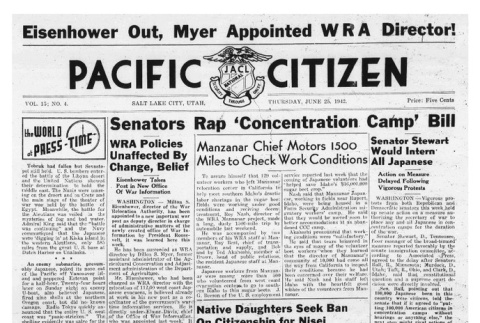
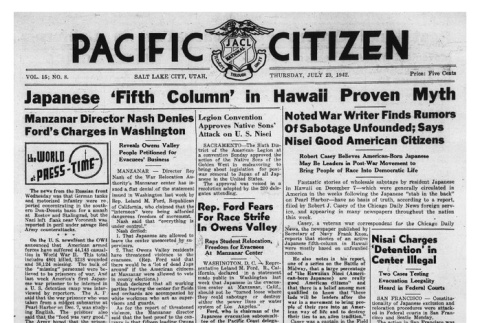
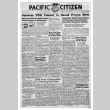
Selected article titles: "Japanese 'Fifth Column' in Hawaii Proven Myth. Noted War Writer Finds Rumors Of Sabotage Unfounded; Says Nisei Good American Citizens" (p. 1), "Nisei Charges 'Detention' in Center Illegal" (p. 1), "WRA Aware of Responsibility For Protecting Nisei Rights" (p. 1), "Post Final Orders For Evacuation in California" (p. 2), "Seattle Judge Indicates Verdict …
Sansei male. Born August 9, 1945, at the Manzanar concentration camp, California, where his parents were incarcerated during World War II. Grew up in the Venice area of California, and became increasingly politically active while attending the University of California, Berkeley, during the Free Speech Movement during the late 1960s. Earned a master's degree at the …
This collection consists of selected articles from the Bainbridge Island Review, a community paper from Bainbridge Island, Washington. During World War II, the Bainbridge Island Review was the sole newspaper on the West Coast to continuously speak out against the mass removal and incarceration of Japanese Americans, primarily through the editorials of Walt Woodward, editor from …