
2034 items
![Historical photographs and documents, from internment camps to Military Intelligence Service Language School [order form] (ddr-csujad-1-190)](https://ddr.densho.org/media/cache/08/aa/08aacbd21ed99687c7f9e9114b169bc0.jpg)

2034 items
img
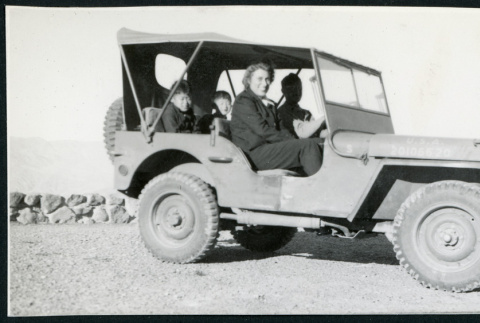
Photograph of L. Josephine Hawes and three others sitting in an Army jeep in Death Valley (ddr-csujad-47-133)
Photograph of L. Josephine Hawes and three others sitting in an Army jeep in Death Valley National Park. Incarcerees were transferred to the former Civilian Conservation Camp after the Manzanar Riot for their own protection. See this object in the California State Universities Japanese American Digitization project site: ecm_merritt_0218
img
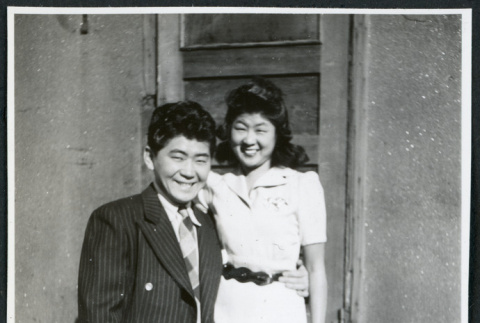
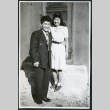
Photograph of a couple posing in front of a door at Cow Creek Camp in Death Valley (ddr-csujad-47-127)
Photograph of a couple posing in front of a door at Cow Creek Camp in Death Valley National Park. Incarcerees were transferred to the former Civilian Conservation Camp after the Manzanar Riot for their own protection. See this object in the California State Universities Japanese American Digitization project site: ecm_merritt_0212
img
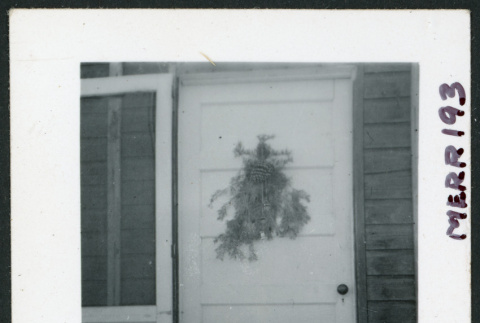
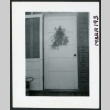
Photograph of a front door at Cow Creek Camp with a pine bough decoration (ddr-csujad-47-108)
Photograph of a front door decorated with a pine bough at Cow Creek Camp in Death Valley National Park. Incarcerees were transferred to the former Civilian Conservation Camp after the Manzanar Riot for their own protection. See this object in the California State Universities Japanese American Digitization project site: ecm_merritt_0193
img
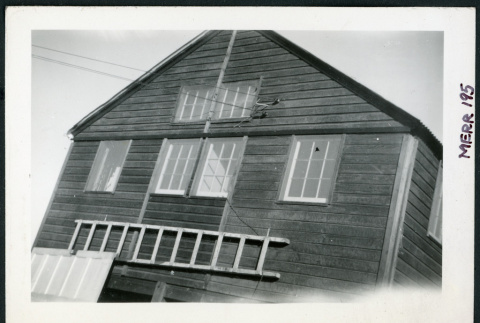
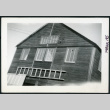
Photograph of a building with a ladder in front at Cow Creek Camp in Death Valley (ddr-csujad-47-110)
Photograph of a building with a ladder in front at Cow Creek Camp in Death Valley. Incarcerees were transferred to the former Civilian Conservation Camp after the Manzanar Riot for their own protection. See this object in the California State Universities Japanese American Digitization project site: ecm_merritt_0195
img
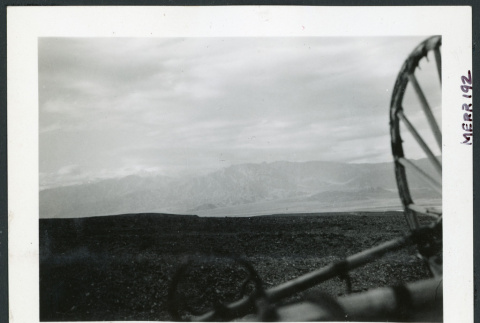
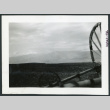
Photograph of Death Valley with an irrigation wheel in the foreground (ddr-csujad-47-107)
Photograph of an irrigation wheel and pipe at Cow Creek Camp in Death Valley National Park. Incarcerees were transferred to the former Civilian Conservation Camp after the Manzanar Riot for their own protection. See this object in the California State Universities Japanese American Digitization project site: ecm_merritt_0192
![Historical photographs and documents, from internment camps to Military Intelligence Service Language School [order form] (ddr-csujad-1-190)](https://ddr.densho.org/media/cache/6e/35/6e35819655fe6655cf65196c6abe8682.jpg)
doc
Historical photographs and documents, from internment camps to Military Intelligence Service Language School [order form] (ddr-csujad-1-190)
A book order form. Books published by TecCom Productions include: Manzanar, Tule Lake, Rohwer, Heart Mountain, Assembly Center I (Santa Anita, Pomona, Fresno, Tulare, Pinedale, Salinas), Assembly Center II (Turlock, Tanforan, Stockton, Sacramento, Marysville, Portland, Puyallup). See this object in the California State Universities Japanese American Digitization project site: ike_03_01_004
doc
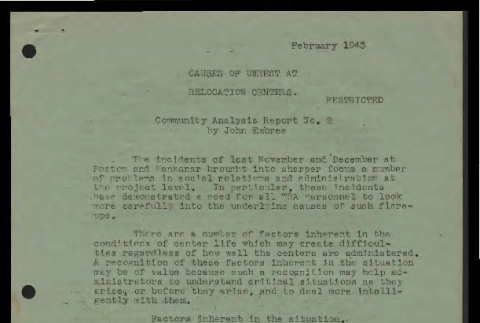
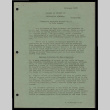
Community analysis report, no. 2 (February 1943) (ddr-csujad-55-1656)
Report, "Causes of unrest at relocation centers," discussing factors contributing to the strikes and unrest at Poston and Manzanar incarceration camps. Covers living conditions, cultural issues, security, administration, authority, labor, and other issues. See this object in the California State Universities Japanese American Digitization project site: sac_jaac_1658
doc
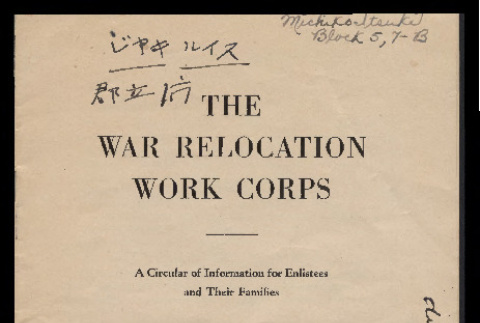
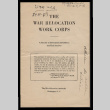
War Relocation Work Corps (ddr-csujad-55-351)
Pamphlet describing the War Relocation Work Corps including planned camp facilities, types of work available, eligibility, benefits, and private employment. "Approved Relocation Areas" section includes descriptions of Manzanar, Parker, Gila, Tule Lake, and Minidoka camps. See this object in the California State Universities Japanese American Digitization project site: sac_jaac_0353
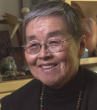
Narrator Karlene Koketsu
Nisei female. Born January 7, 1935, in Los Angeles, California. Grew up in the Sawtelle area of Los Angeles. During World War II, removed to the Manzanar concentration camp, California. After leaving Manzanar, lived briefly with family in Utah before eventually returning to California.
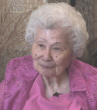
Narrator Hanako Hoshiyama Fukumoto
Nisei female. Born March 3, 1923, in Montebello, California. Lived in several places in Southern California, where father was a flower grower. During World War II, removed to the Manzanar concentration camp, California. Married and had a child in camp. Left Manzanar for Chicago, Illinois.
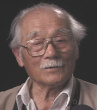
Narrator Henry Fukuhara
Nisei male. Born April 25, 1913, in Los Angeles, California. Grew up in California prior to World War II. Removed to Manzanar concentration camp, California, during the war. Left Manzanar in 1943 and lived in various locations, eventually settling in New York and California. Mr. Fukuhara was a prominent artist.

vh
An Oral History with Mitsuhiko H. Shimizu (ddr-csujad-29-57)
Issei community leader and businessman in Los Angeles's Little Tokyo recounts his arrest by Federal Bureau of Investigation after Pearl Harbor, his experiences in internment camps in North Dakota and Louisiana, and the Manzanar incarceration camp, California. This oral history was conducted for the Japanese American Oral History Project, Oral History Program, CSU Fullerton. Transcript is …
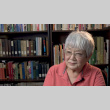
vh
Constance Yamashiro Interview (ddr-chi-1-18)
Sansei female. Born May 6, 1938, in Los Angeles, California. During World War II, sent to the Manzanar concentration camp, California, with her parents and grandparents. After leaving camp, the family resettled in Chicago, Illinois, where her mother did factory work. (This material is based upon work assisted by a grant from the U.S. Department of …
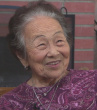
Narrator Ann Sugimoto
Nisei female. Born September 22, 1916, in Los Angeles, California, and grew up in Venice, California. Married before World War II, and removed during the war to the Manzanar concentration camp, California. Had a child in camp. After leaving Manzanar, lived in Ohio for a number of years before returning to California.
doc
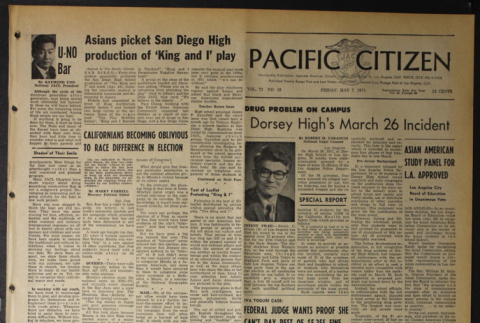
Pacific Citizen, Vol. 72, No. 18 (May 7, 1971) (ddr-pc-43-18)
Selected article titles: "Drug problem on campus: Dorsey High's March 26 Incident" (p. 1), "Asians picket San Diego High production of 'King and I' play" (p. 1), "Californians becoming oblivious to race difference in election" (p. 1), "500 Sansei win California state scholarship award" (p. 1), "JACL represented at American Immigration and Citizenship confab" (p. 2), …
img
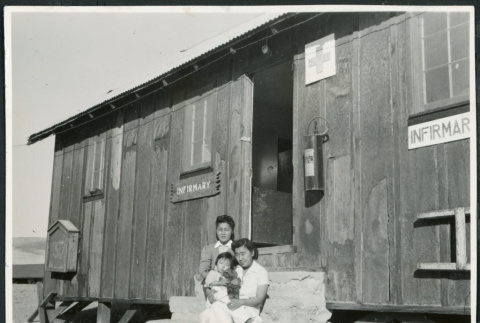
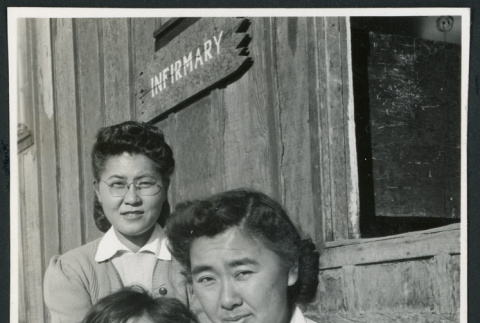
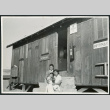
Photograph of two women an a young child posing in front of the infirmary at Cow Creek Camp in Death Valley (ddr-csujad-47-136)
Photograph of two women an a young child posing in front of the infirmary at Cow Creek Camp in Death Valley National Park. Incarcerees were transferred to the former Civilian Conservation Camp after the Manzanar Riot for their own protection. See this object in the California State Universities Japanese American Digitization project site: ecm_merritt_0221
img
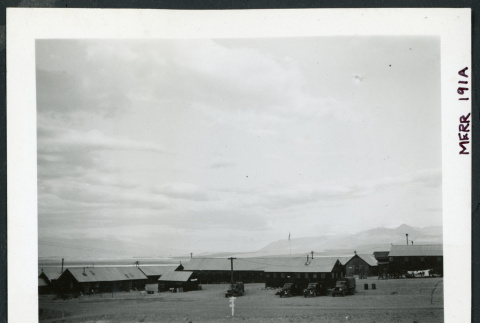
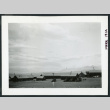
Photograph of Cow Creek Camp in Death Valley (ddr-csujad-47-348)
Photograph of Cow Creek Camp in Death Valley National Park. Incarcerees were transferred to the former Civilian Conservation Camp after the Manzanar Riot for their own protection. The photograph is taken from the east looking west toward the Panamint range. See this object in the California State Universities Japanese American Digitization project site: ecm_merritt_1191
img
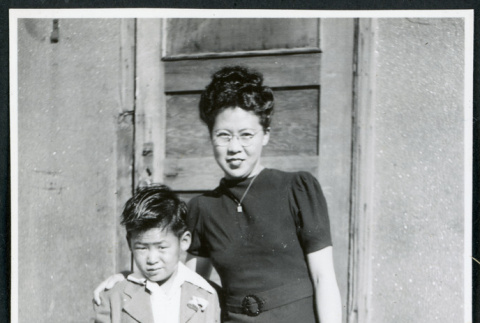
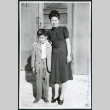
Photograph of Mrs. Moroika and son Ned posing in front of a door at Cow Creek Camp in Death Valley (ddr-csujad-47-128)
Photograph of Mrs. Moroika and son Ned posing in front of a door at Cow Creek Camp in Death Valley. Incarcerees were transferred to the former Civilian Conservation Camp after the Manzanar Riot for their own protection. See this object in the California State Universities Japanese American Digitization project site: ecm_merritt_0213
img
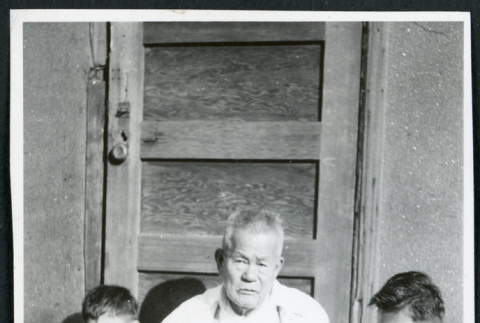
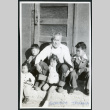
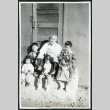
Photograph of Grandpa Tayama surrounded by four children in front of a door in Cow Creek Camp in Death Valley (ddr-csujad-47-131)
Photograph of Grandpa Tayama surrounded by four children in front of a door in Cow Creek Camp in Death Valley National Park. Incarcerees were transferred to the former Civilian Conservation Camp after the Manzanar Riot for their own protection. See this object in the California State Universities Japanese American Digitization project site: ecm_merritt_0216
img
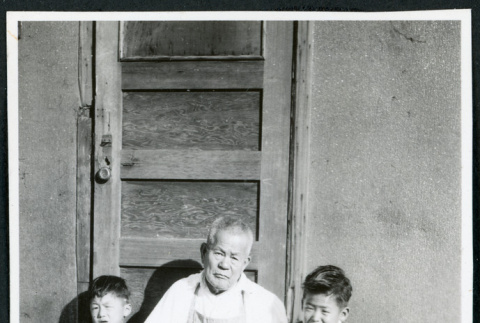
Photograph of Grandpa Tayama surrounded by five children in front of a door in Cow Creek Camp in Death Valley (ddr-csujad-47-132)
Photograph of Grandpa Tayama surrounded by five children in front of a door in Cow Creek Camp in Death Valley National Park. Incarcerees were transferred to the former Civilian Conservation Camp after the Manzanar Riot for their own protection. See this object in the California State Universities Japanese American Digitization project site: ecm_merritt_0217
img
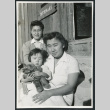
Photograph of two women an a young child posing in front of the infirmary at Cow Creek Camp in Death Valley (ddr-csujad-47-135)
Photograph of two women an a young child posing in front of the infirmary at Cow Creek Camp in Death Valley National Park. Incarcerees were transferred to the former Civilian Conservation Camp after the Manzanar Riot for their own protection. See this object in the California State Universities Japanese American Digitization project site: ecm_merritt_0220
doc
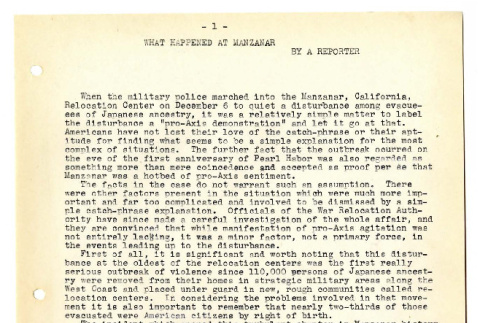
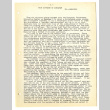
What happened at Manzanar (ddr-csujad-19-70)
This is an article from the magazine "Common Ground," volume III, no. 3, spring 1943, which discusses about the first violent outbreak at the Manzanar incarceration camp on the eve of the first anniversary of the Pearl Harbor attack. See this object in the California State Universities Japanese American Digitization project site: WRA_02-22_01
doc
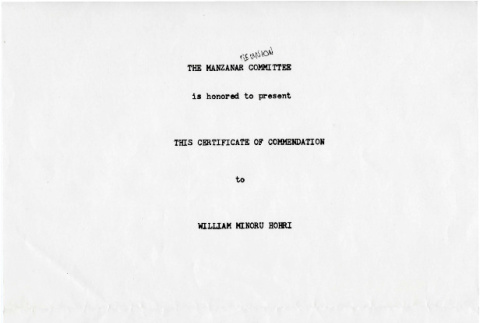
Certificate of Commendation to William Minoru Hohri (ddr-csujad-24-47)
William Minoru Hohri was honored by the Manzanar Committee for his leadership of the class action lawsuit Hohri v. U.S., a civil suit filed against the U.S. government demanding compensation for Japanese Americans incarcerated during World War II. See this object in the California State Universities Japanese American Digitization project site: chi_02_006
vh
Fumiko Hayashida Interview (ddr-densho-1001-1)
Nisei female. Born January 21, 1911, in Winslow, Washington. Grew up in Japan and the Fletcher's Bay area of Bainbridge Island, Washington. Member of the first group of Japanese Americans to be forcibly removed from their homes and incarcerated. Incarcerated at Manzanar concentration camp, California, and Minidoka concentration camp, Idaho, while pregnant and caring for two …
Narrator Ko Nishimura
Nisei male. Grew up the Pasadena, California, area, where parents worked in a family-owned nursery. After the bombing of Pearl Harbor, family moved to Reedley, California, for a short time before being removed to the Manzanar concentration camp, California. At Manzanar, father worked for the government's guayule project. After leaving camp, returned to California and became …