A letter from Kumaji Meguro in the Pomona Assembly Center to his son-in-law and daughter, Fumio Fred and Yoneko Takano in the Santa Anita Assembly Center. The letter describes the lives and living conditions in the assembly center, including the allowance and wages, entertainments, etc. Kumaji details his daily routine and expresses his appreciation for the …
A letter from Masao and Ayame Okine to their parents, Seiichi and Tomeyo Okine. Masao reports to his parents about his arrival to Chicago after his discharge from the U.S. Army, serving as a Nisei solder in Japan. He describes his life in Chicago, such as buying a car and driving to New York to see …
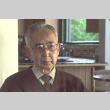
Issei male. Born 1912 in Yamaguchi ken, Japan. Immigrated to United States in 1919. Lived in Pomeroy, Washington, and Seattle, Washington, before World War II. Incarcerated at the Puyallup Assembly Center, Washington and the Minidoka concentration camp, Idaho. Resettled in New York. As a member of the Newspaper Guild, led effort to eliminate pejorative use of …
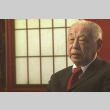
Nisei male. Born November 27, 1912, on Bainbridge Island, Washington. After the bombing of Pearl Harbor, moved to Denver and took a job as English Editor of a Japanese American vernacular newspaper, the Rocky Shimpo. As editor, wrote about and supported the Fair Play Committee in Heart Mountain concentration camp. Was charged and tried for conspiracy …
Nisei male. Born November 27, 1912, on Bainbridge Island, Washington. After the bombing of Pearl Harbor, moved to Denver and took a job as English Editor of a Japanese American vernacular newspaper, the Rocky Shimpo. As editor, wrote about and supported the Fair Play Committee in Heart Mountain concentration camp. Was charged and tried for conspiracy …
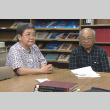
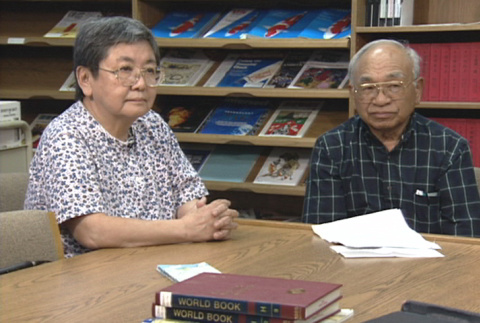
Kats Kunitsugu is a Nisei female, incarcerated at Heart Mountain concentration camp during World War II. Was on the staff of the camp's newspaper, the Heart Mountain Sentinel.Paul Tsuneishi is a Nisei male. Incarcerated at Heart Mountain concentration camp, Wyoming, and was drafted into the military at age eighteen. After World War II, served …
Nisei male. Born November 27, 1912, on Bainbridge Island, Washington. After the bombing of Pearl Harbor, moved to Denver and took a job as English Editor of a Japanese American vernacular newspaper, the Rocky Shimpo. As editor, wrote about and supported the Fair Play Committee in Heart Mountain concentration camp. Was charged and tried for conspiracy …
Nisei female. Born June 6, 1916, in Santa Clara County, California. Raised in Santa Clara, and met and married Issei Guntaro Kubota, one of the leaders of the Heart Mountain Fair Play Committee. During World War II, incarcerated at Heart Mountain concentration camp, Wyoming, along with daughter. Gave birth to a son in camp. Husband Guntaro …
Getting a job as a delivery boy for a grocery store: making deliveries to outlying communities of Los Angeles
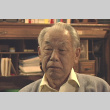
Although Mr. Matsumoto does not identify himself as a Kibei (American-born person of Japanese ancestry sent to Japan for formal education and socialization when young and later returned to the U.S.), some of his life experiences are …
Reuniting with a relative while stationed in China, and finding out that brother, also in the military, had survived
Although Mr. Matsumoto does not identify himself as a Kibei (American-born person of Japanese ancestry sent to Japan for formal education and socialization when young and later returned to the U.S.), some of his life experiences are …
Thoughts on not being recommended for the Medal of Honor for actions on Nhpum Ga hill
Although Mr. Matsumoto does not identify himself as a Kibei (American-born person of Japanese ancestry sent to Japan for formal education and socialization when young and later returned to the U.S.), some of his life experiences are similar to those …
Warning battalion of a planned Japanese attack, then shouting military orders in Japanese to confuse the enemy
Although Mr. Matsumoto does not identify himself as a Kibei (American-born person of Japanese ancestry sent to Japan for formal education and socialization when young and later returned to the U.S.), some of his life experiences are similar to …
While delivering groceries to Japanese families, being exposed to different dialects from various regions of Japan
Although Mr. Matsumoto does not identify himself as a Kibei (American-born person of Japanese ancestry sent to Japan for formal education and socialization when young and later returned to the U.S.), some of his life experiences are similar to those …
Discussion of discrimination experienced by Kibei at the hands of some Nisei who had never been to Japan
Although Mr. Matsumoto does not identify himself as a Kibei (American-born person of Japanese ancestry sent to Japan for formal education and socialization when young and later returned to the U.S.), some of his life experiences are similar …
Reported to the FBI for possessing a short-wave radio before the war, listening to Japanese news reports
Although Mr. Matsumoto does not identify himself as a Kibei (American-born person of Japanese ancestry sent to Japan for formal education and socialization when young and later returned to the U.S.), some of his life experiences are similar to …
First seeing Minidoka: "Is this where I'm going to be for the rest of my life?"
This material is based upon work assisted by a grant from the Department of the Interior, National Park Service. Any opinions, finding, and conclusions or recommendations expressed in this material are those of the author(s) and do not necessarily reflect …
Memories of the Portland Assembly Center: "Life there was just a noisy terrible confusion"
This material is based upon work assisted by a grant from the Department of the Interior, National Park Service. Any opinions, finding, and conclusions or recommendations expressed in this material are those of the author(s) and do not necessarily reflect the views …
Meeting with Japanese American Citizens League representatives
This interview was conducted by sisters Emiko and Chizuko Omori for their 1999 documentary, Rabbit in the Moon, about the Japanese American resisters of conscience in the World War II incarceration camps. As a result, the interviews in this collection are typically not life histories, instead primarily focusing …
Reflections on the incarceration, monetary aspects
This interview was conducted by sisters Emiko and Chizuko Omori for their 1999 documentary, Rabbit in the Moon, about the Japanese American resisters of conscience in the World War II incarceration camps. As a result, the interviews in this collection are typically not life histories, instead primarily focusing on …
Visit to Tule Lake to investigate stockade situation
This interview was conducted by sisters Emiko and Chizuko Omori for their 1999 documentary, Rabbit in the Moon, about the Japanese American resisters of conscience in the World War II incarceration camps. As a result, the interviews in this collection are typically not life histories, instead primarily …
This interview was conducted by sisters Emiko and Chizuko Omori for their 1999 documentary, Rabbit in the Moon, about the Japanese American resisters of conscience in the World War II incarceration camps. As a result, the interviews in this collection are typically not life histories, instead primarily focusing on …
Description of the Holmes-Eureka lumber mill strike
This interview was conducted by sisters Emiko and Chizuko Omori for their 1999 documentary, Rabbit in the Moon, about the Japanese American resisters of conscience in the World War II incarceration camps. As a result, the interviews in this collection are typically not life histories, instead primarily focusing …
Fair Play Committee's cause discouraged by the ACLU
This interview was conducted by sisters Emiko and Chizuko Omori for their 1999 documentary, Rabbit in the Moon, about the Japanese American resisters of conscience in the World War II incarceration camps. As a result, the interviews in this collection are typically not life histories, instead primarily …
Description of trial: found guilty and sent to jail
This interview was conducted by sisters Emiko and Chizuko Omori for their 1999 documentary, Rabbit in the Moon, about the Japanese American resisters of conscience in the World War II incarceration camps. As a result, the interviews in this collection are typically not life histories, instead …
Description of the Fair Play Committee: popularity of meetings
This interview was conducted by sisters Emiko and Chizuko Omori for their 1999 documentary, Rabbit in the Moon, about the Japanese American resisters of conscience in the World War II incarceration camps. As a result, the interviews in this collection are typically not life histories, instead …

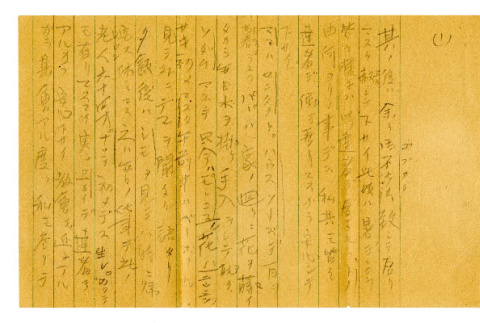
![Letter from Ayame and Masao Okine to Mr. and Mrs. Okine, October 18, 1946 [in Japanese] (ddr-csujad-5-172)](https://ddr.densho.org/media/cache/1d/5a/1d5a71b8d10d8774e2217d6f2a48ac9b.jpg)
![Letter from Ayame and Masao Okine to Mr. and Mrs. Okine, October 18, 1946 [in Japanese] (ddr-csujad-5-172)](https://ddr.densho.org/media/cache/96/b6/96b6285aa569f7c7557fcd110d12cc8d.jpg)