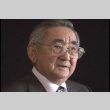
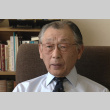
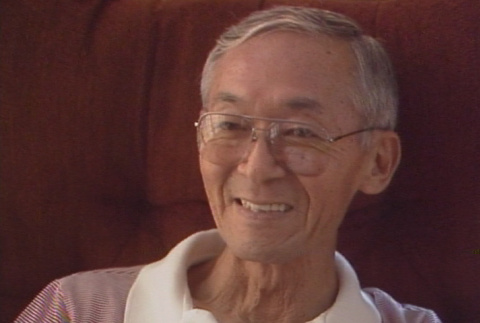
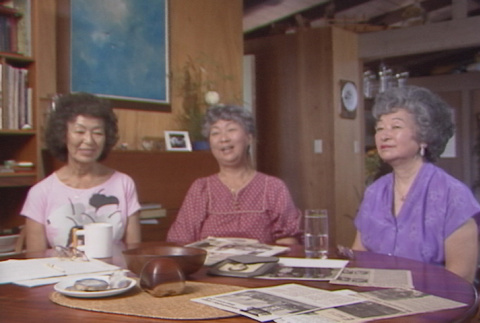
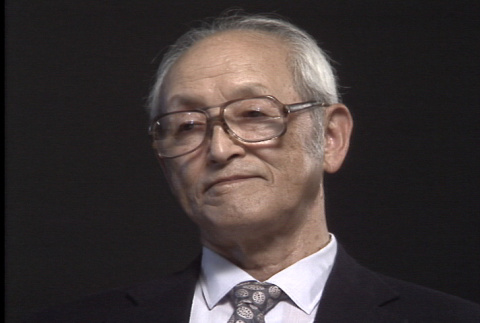
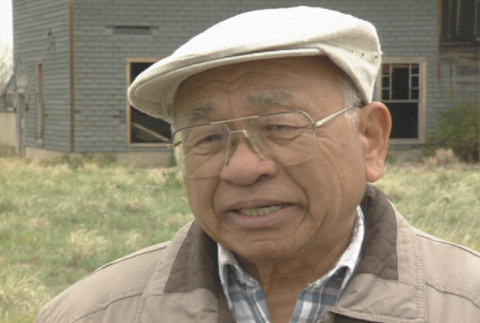
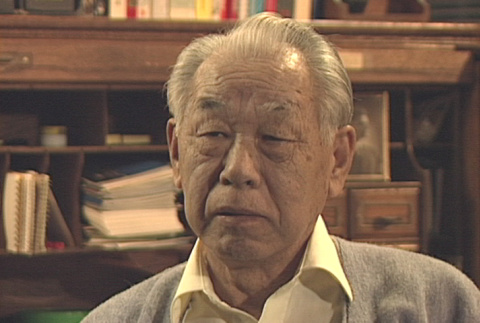
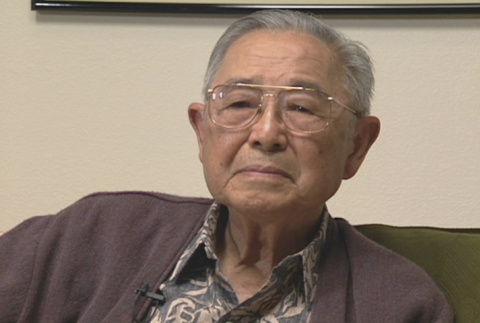
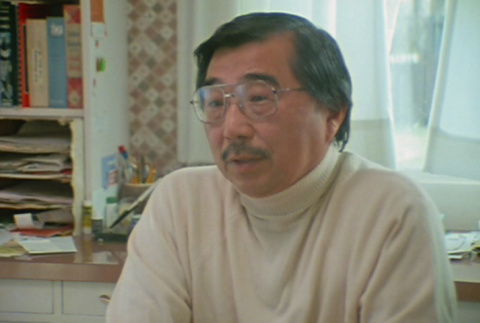
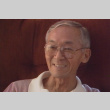
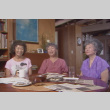
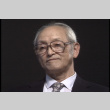
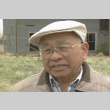
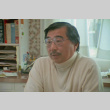
This interview was conducted by filmmaker Frank Abe for his 2000 documentary, Conscience and the Constitution, about the World War II resisters of conscience at the Heart Mountain incarceration camp. As a result, the interviews in this collection are typically not life histories, instead primarily focusing on issues surrounding the resistance movement itself.
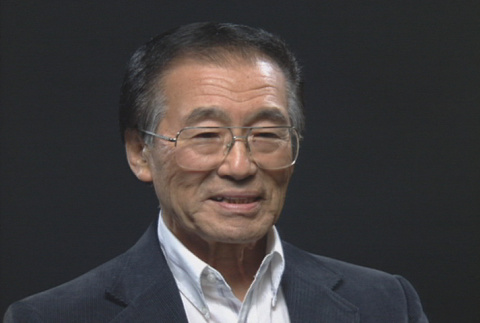
This interview was conducted by filmmaker Frank Abe for his 2000 documentary, Conscience and the Constitution, about the World War II resisters of conscience at the Heart Mountain incarceration camp. As a result, the interviews in this collection are typically not life histories, instead primarily focusing on issues surrounding the resistance movement itself.
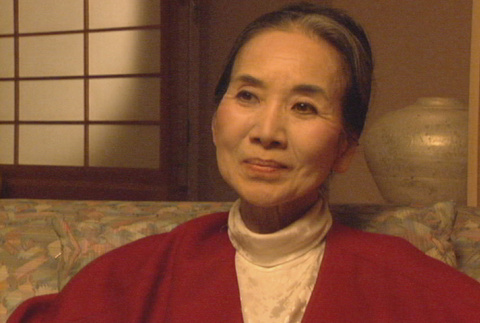
This interview was conducted by filmmaker Frank Abe for his 2000 documentary, Conscience and the Constitution, about the World War II resisters of conscience at the Heart Mountain incarceration camp. As a result, the interviews in this collection are typically not life histories, instead primarily focusing on issues surrounding the resistance movement itself.
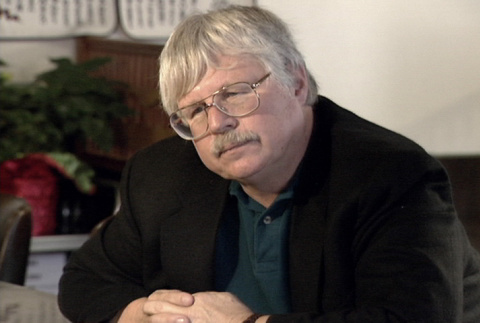
This interview was conducted by filmmaker Frank Abe for his 2000 documentary, Conscience and the Constitution, about the World War II resisters of conscience at the Heart Mountain incarceration camp. As a result, the interviews in this collection are typically not life histories, instead primarily focusing on issues surrounding the resistance movement itself.
This material is based upon work assisted by a grant from the Department of the Interior, National Park Service. Any opinions, finding, and conclusions or recommendations expressed in this material are those of the author(s) and do not necessarily reflect the views of the Department of the Interior.
This material is based upon work assisted by a grant from the Department of the Interior, National Park Service. Any opinions, finding, and conclusions or recommendations expressed in this material are those of the author(s) and do not necessarily reflect the views of the Department of the Interior.
This interview was conducted by filmmaker Frank Abe for his 2000 documentary, Conscience and the Constitution, about the World War II resisters of conscience at the Heart Mountain incarceration camp. As a result, the interviews in this collection are typically not life histories, instead primarily focusing on issues surrounding the resistance movement itself.
This interview was conducted by filmmaker Frank Abe for his 2000 documentary, Conscience and the Constitution, about the World War II resisters of conscience at the Heart Mountain incarceration camp. As a result, the interviews in this collection are typically not life histories, instead primarily focusing on issues surrounding the resistance movement itself.
This interview was conducted by filmmaker Frank Abe for his 2000 documentary, Conscience and the Constitution, about the World War II resisters of conscience at the Heart Mountain incarceration camp. As a result, the interviews in this collection are typically not life histories, instead primarily focusing on issues surrounding the resistance movement itself.
This interview was conducted by filmmaker Frank Abe for his 2000 documentary, Conscience and the Constitution, about the World War II resisters of conscience at the Heart Mountain incarceration camp. As a result, the interviews in this collection are typically not life histories, instead primarily focusing on issues surrounding the resistance movement itself.
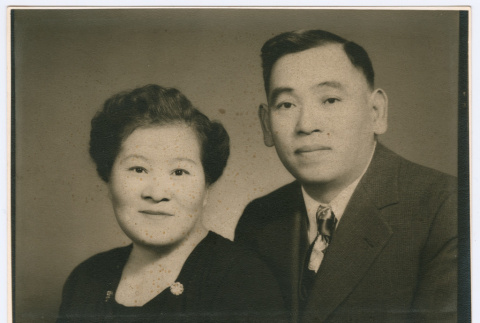
The Higa collection includes two portraits of members of the Moriguchi family and a 1973 edition of Boys' Life that includes an illustration celebrating a heroic act by 16-year-old Warren Higa. The Higa collection also includes Orville C. Shirey's book Americans: The story of the 442nd Combat Team and one of the editions of the World …
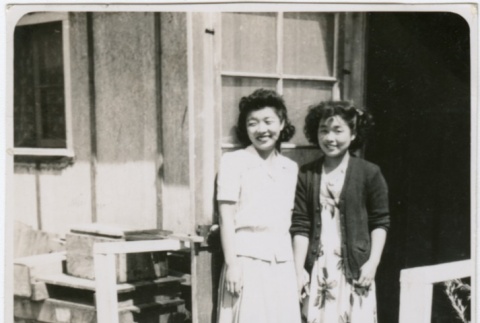
The first accession of the Nishioka Family Collection consists of three photographs from Topaz concentration camp. The second accession of the Nishioka Family Collection consists of documents, letters, photographs that covers the immigration of Torakichi and Mitsu Nishioka, family life in Oakland, California, incarceration in Topaz concentration camp and Frank Nishioka's military service in the post …
The Steven Okazaki Collection consists of interviews conducted by filmmaker Steven Okazaki for his 1984 Oscar-nominated documentary, Unfinished Business. The film profiles Gordon Hirabayashi, Fred Korematsu, and Minoru Yasui and their legal fight to have their World War II convictions overturned. The interviews are audio-only, and are typically not life histories, instead primarily focusing on issues …
Brief for the Supreme Court of Washington prepared by the attorneys for the respondents, Bogle, Bogle & Gates—Edward G. Dobrin. An amended petition submitted by the contestants charged 1) lack of capacity, 2) undue influence by blandishments and promises, 3) undue influence by duress, 4) improper execution, 5) unlawful conspiracy. Document reviews past Washington cases contesting …
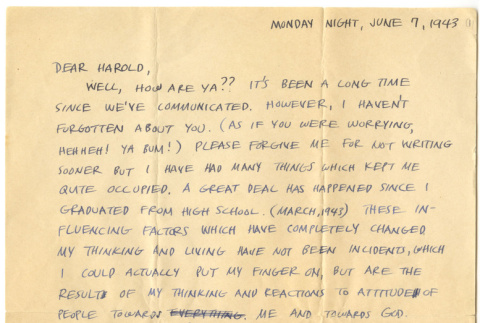
Letter from John (Sohei) Hohri to Harold Landon dated June 7, 1943. John apologizes to Harold for not writing and writes about his high school graduation in March 1943. John writes about noticing a disconnect between his life and his faith, that he was feeling ill and felt as if God was far away from him, …
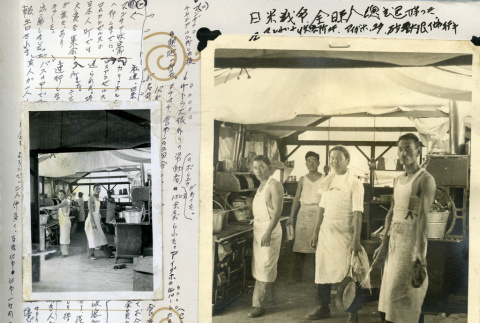
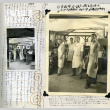
The George and Mitzi Naohara Papers consists of photo albums and scrapbooks compiled by George and Mitzi Naohara, and other documents pertaining to the Naohara and Masukawa family. Contained are photographs, correspondence, documents, and memorabilia depicting their experiences during World War II. George Nobuo Naohara is a Kibei Nisei, and his experiences include his farm labor …
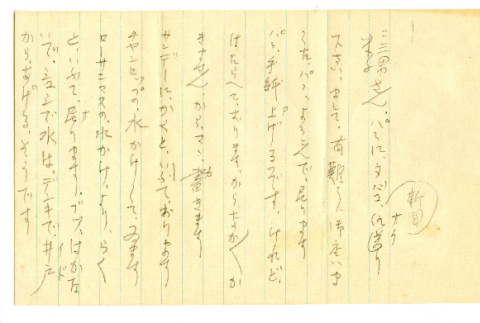
A letter from Tsuruno Meguro to her son-in-law and daughter, Fumio Fred and Yoneko Takano in Chicago, Illinois. She writes from Santa Clarita, California, where she has been reestablishing her life after the forced evacuation and incarceration. The letter explains about the reason why she has not moved to Los Angles, California, but instead to Saugus, …
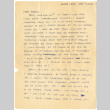
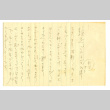
A letter from Miyuki Matsuura to her uncle and aunt, Seiichi and Tomeyo Okine. In the letter, she writes about her family in Japan. She has received a letter from her family in Japan and learned about their situations. She writes about her father who suffers from flash burns because of the atomic bombing in August. …
Japanese American congressman, representing the Thirteenth Congressional District of California, born and raised in San Jose, California, discusses his early life, graduation from the University of California, Berkeley, and receiving a commission and serving in the armed forces from 1953-1956. Recalls the removal, "relocation," and incarceration of Japanese Americans during World War II at the Heart …
"Resettlement Handbook" with front cover illustration of a person considering locations on a large globe. Published by the Evacuee Information Office of the Granada Project. Resource and instruction book for leaving camp. Instructions for how to make transportation arrangements and apply for transportation funding, close out clothing allowance, employment and last paychecks, return of government property, …
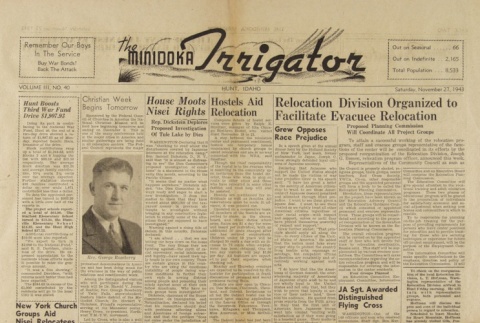
Selected article titles: "Hunt Boosts Third War Fund Drive $1,907.93" (p. 1), "New York Church Groups Aid Nisei Relocatees" (p. 1), "Income Tax Must Be Filed Before December 15" (p. 1), "Christian Week Begins Tomorrow" (p. 1), "Repatriates Reach Yokohama Harbor" (p. 1), "15,000 lbs. Mochi-gome Ordered for New Years" (p. 1), "Groups Oppose Selling Land …
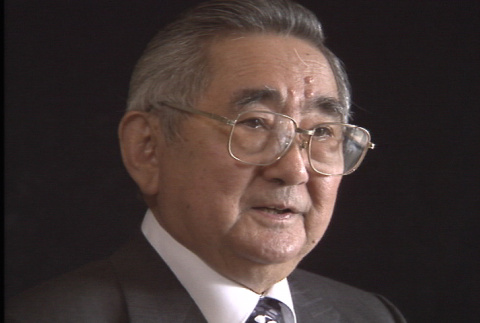
Nisei male. Born 1920 in Seattle, Washington. Incarcerated at Puyallup Assembly Center, Washington, and Minidoka concentration camp, Idaho. Resisted draft, with the rationale that the U.S. government had classified him 4-C, an enemy alien, and he was therefore under no obligation to serve. Imprisoned at McNeil Island Penitentiary, Washington. Vocal critic of JACL. Resettled in Seattle, …
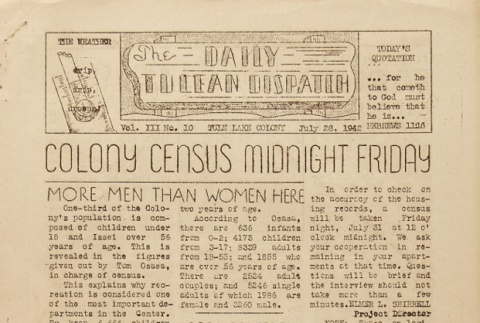
Selected article titles: "Colony Census Midnight Friday" (p. 1), "More Men Than Women Here" (p. 1), "1000 Workers Fail to Call for Tags" (p. 1), "Notary Public Here Tuesday 7 to 8 P.M." (p. 1), "Tough Operation Claimed Success" (p. 1), "No Overtime Paid" (p. 1), "Tule Lake is Bird's Paradise: Farmer's Life. It's Beautiful Outside, …
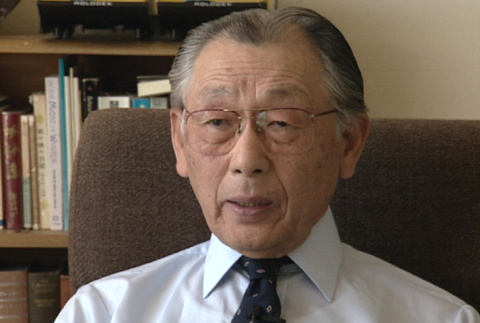
Nisei male. Born January 14, 1917, in Olympia, Washington. Raised in Washington before attending the University of Wisconsin, where he graduated in 1940. Earned medical degree from Tulane University School of Medicine in New Orleans, and completed his residency at Harvard Medical School in 1949. Served in the U.S. Air Force during the Korean War and …
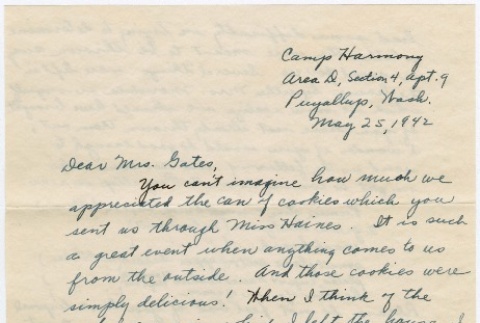
The Gates Family Collection, 1942-1943, contains correspondence from the Matsuda and Morishita families to Mrs. Charles Gates. The Gates, Matsuda, and Morishita families were friends in Seattle, Washington before the outbreak of World War II and the correspondence covers the Matsuda's and Morishita's life at Puyallup "Camp Harmony" Assembly Center, Washington and later at Poston (Colorado …


![Letter from Miyuki Matsuura to Mr. and Mrs. Okine, March 31, 1946 [in Japanese] (ddr-csujad-5-139)](https://ddr.densho.org/media/cache/a7/58/a758665e67b1e574cb9fd58bafdbaac6.jpg)



![Letter from Miyuki Matsuura to Mr. and Mrs. Okine, March 31, 1946 [in Japanese] (ddr-csujad-5-139)](https://ddr.densho.org/media/cache/e9/1b/e91b8a246e077c1b6a50d134069094c2.jpg)