Topics
Facilities
Format
Genre
Usage

Use <Ctrl> or (⌘) keys to select multiple terms

52 items
Bruce T. Kaji Interview I Segment 16 (ddr-densho-1000-289-16)
vh Bruce T. Kaji Interview I Segment 16 (ddr-densho-1000-289-16)
Breakdown of family traditions in camp

This material is based upon work assisted by a grant from the Department of the Interior, National Park Service. Any opinions, finding, and conclusions or recommendations expressed in this material are those of the author(s) and do not necessarily reflect the views of the Department of the Interior.
Bruce T. Kaji Interview I Segment 14 (ddr-densho-1000-289-14)
vh Bruce T. Kaji Interview I Segment 14 (ddr-densho-1000-289-14)
Participating in a camp band, the Jive Bombers

This material is based upon work assisted by a grant from the Department of the Interior, National Park Service. Any opinions, finding, and conclusions or recommendations expressed in this material are those of the author(s) and do not necessarily reflect the views of the Department of the Interior.

Bruce T. Kaji Interview I Segment 1 (ddr-densho-1000-289-1)
vh Bruce T. Kaji Interview I Segment 1 (ddr-densho-1000-289-1)
Father's immigration to the United States

This material is based upon work assisted by a grant from the Department of the Interior, National Park Service. Any opinions, finding, and conclusions or recommendations expressed in this material are those of the author(s) and do not necessarily reflect the views of the Department of the Interior.

Bruce T. Kaji Interview I Segment 26 (ddr-densho-1000-289-26)
vh Bruce T. Kaji Interview I Segment 26 (ddr-densho-1000-289-26)
Social activities after the war

This material is based upon work assisted by a grant from the Department of the Interior, National Park Service. Any opinions, finding, and conclusions or recommendations expressed in this material are those of the author(s) and do not necessarily reflect the views of the Department of the Interior.

Bruce T. Kaji Interview I Segment 18 (ddr-densho-1000-289-18)
vh Bruce T. Kaji Interview I Segment 18 (ddr-densho-1000-289-18)
Applying to leave camp for college

This material is based upon work assisted by a grant from the Department of the Interior, National Park Service. Any opinions, finding, and conclusions or recommendations expressed in this material are those of the author(s) and do not necessarily reflect the views of the Department of the Interior.

Bruce T. Kaji Interview II Segment 9 (ddr-densho-1000-300-9)
vh Bruce T. Kaji Interview II Segment 9 (ddr-densho-1000-300-9)
Fighting unfair hiring practices on behalf of returning Japanese American GIs
Bruce T. Kaji Interview II Segment 14 (ddr-densho-1000-300-14)
vh Bruce T. Kaji Interview II Segment 14 (ddr-densho-1000-300-14)
The very early days and the grand opening of the Japanese American National Museum
Bruce T. Kaji Interview II Segment 8 (ddr-densho-1000-300-8)
vh Bruce T. Kaji Interview II Segment 8 (ddr-densho-1000-300-8)
Key role in the fight to save Los Angeles' Little Tokyo from redevelopment
Bruce T. Kaji Interview II Segment 16 (ddr-densho-1000-300-16)
vh Bruce T. Kaji Interview II Segment 16 (ddr-densho-1000-300-16)
Description of the project to resurrect the Japanese Garden at Roosevelt High School
Bruce T. Kaji Interview II Segment 17 (ddr-densho-1000-300-17)
vh Bruce T. Kaji Interview II Segment 17 (ddr-densho-1000-300-17)
Attending a special graduation ceremony for Nisei whose educations were disrupted by the war
Bruce T. Kaji Interview II Segment 13 (ddr-densho-1000-300-13)
vh Bruce T. Kaji Interview II Segment 13 (ddr-densho-1000-300-13)
The challenge of securing community monetary support for the Japanese American National Museum
Bruce T. Kaji Interview II Segment 3 (ddr-densho-1000-300-3)
vh Bruce T. Kaji Interview II Segment 3 (ddr-densho-1000-300-3)
Establishing several successful business ventures in Little Tokyo

Narrator Bruce T. Kaji

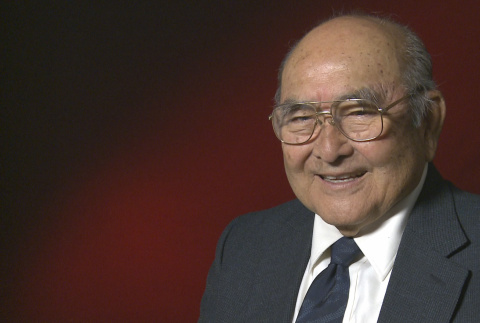
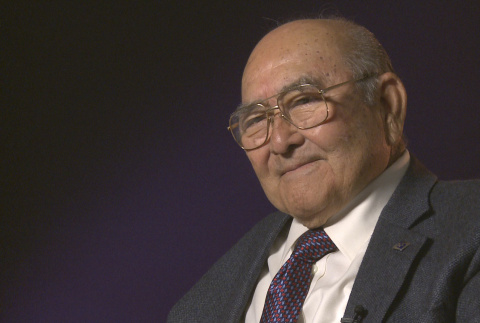
Nisei male. Born May 9, 1926, in Los Angeles, California. Grew up in Los Angeles and was in high school when Japan bombed Pearl Harbor on December 7, 1941. During the war, removed to the Manzanar concentration camp, California. Left camp to attend Morningside College in Sioux City, Iowa, then was inducted into the army. Joined …
Frances Kaji Interview (ddr-densho-400-10)
vh Frances Kaji Interview (ddr-densho-400-10)
Frances Kaji was born on April 30, 1928, in Gardena, California. She grew up in Gardena as the daughter of pioneer physician Kikuwo Tashiro. She remembers Gardena as it changed from a rural to suburban community. During World War II, her family moved to Fresno to avoid incarceration but was eventually imprisoned at the concentration camp …
API