This interview was conducted by filmmaker Frank Abe for his 2000 documentary, Conscience and the Constitution, about the World War II resisters of conscience at the Heart Mountain incarceration camp. As a result, the interviews in this collection are typically not life histories, instead primarily focusing on issues surrounding …
This interview was conducted by filmmaker Frank Abe for his 2000 documentary, Conscience and the Constitution, about the World War II resisters of conscience at the Heart Mountain incarceration camp. As a result, the interviews in this collection are typically not life histories, instead primarily focusing on issues surrounding …
Receiving the silent treatment from the Japanese American community postwar
This interview was conducted by filmmaker Frank Abe for his 2000 documentary, Conscience and the Constitution, about the World War II resisters of conscience at the Heart Mountain incarceration camp. As a result, the interviews in this collection are typically not life histories, instead primarily …
This interview was conducted by filmmaker Frank Abe for his 2000 documentary, Conscience and the Constitution, about the World War II resisters of conscience at the Heart Mountain incarceration camp. As a result, the interviews in this collection are typically not life histories, instead primarily focusing on issues surrounding the …
Younger brother's experience also as a draft resister
This interview was conducted by filmmaker Frank Abe for his 2000 documentary, Conscience and the Constitution, about the World War II resisters of conscience at the Heart Mountain incarceration camp. As a result, the interviews in this collection are typically not life histories, instead primarily focusing on …
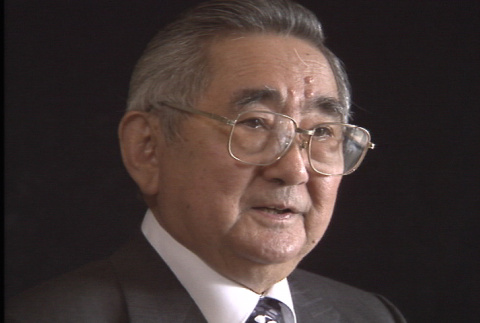
This interview was conducted by filmmaker Frank Abe for his 2000 documentary, Conscience and the Constitution, about the World War II resisters of conscience at the Heart Mountain incarceration camp. As a result, the interviews in this collection are typically not life histories, instead primarily focusing on issues surrounding the resistance movement itself.
This interview was conducted by filmmaker Frank Abe for his 2000 documentary, Conscience and the Constitution, about the World War II resisters of conscience at the Heart Mountain incarceration camp. As a result, the interviews in this collection are typically not life histories, instead primarily focusing on issues surrounding the resistance movement itself.
This interview was conducted by filmmaker Frank Abe for his 2000 documentary, Conscience and the Constitution, about the World War II resisters of conscience at the Heart Mountain incarceration camp. As a result, the interviews in this collection are typically not life histories, instead primarily focusing on issues surrounding the resistance movement itself.
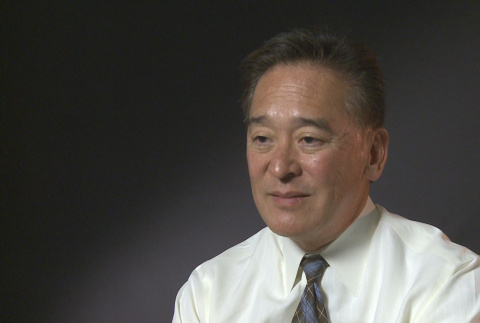
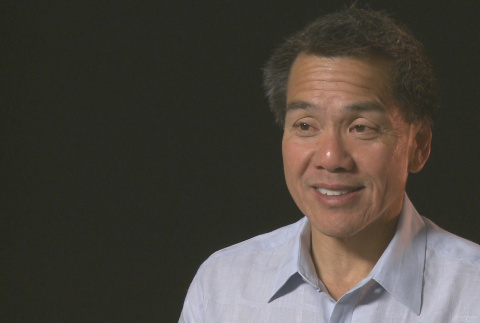
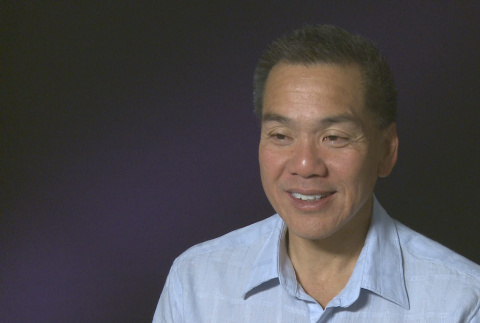
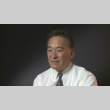
Yonsei male. Born February 14, 1953, in Los Angeles, California. Grew up in Los Angeles. After graduating from college, took over the family's prestigious mortuary business. Active in several community organizations in Los Angeles' Little Tokyo including Nisei Week and the Japanese American National Museum.
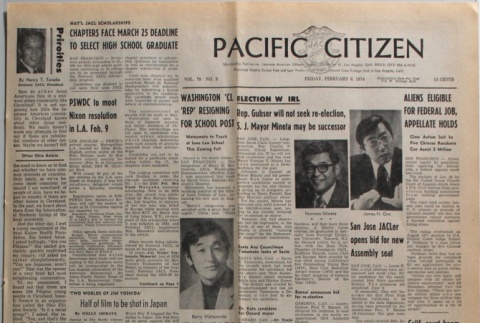
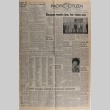
Selected article titles: "Aliens Eligible for Federal Job, Appellate Holds" (p. 1), "'Two Worlds of Jim Yoshida': Half of Film to Be Shot in Japan" (pp. 1, 4), "Cranston-Kennedy Bilingual Education Bill Adopted by Senate Subcommittee" (p. 3), and "Monterey Peninsula JACL: Matsunaga Sees Nixon to Resign" (p. 3).
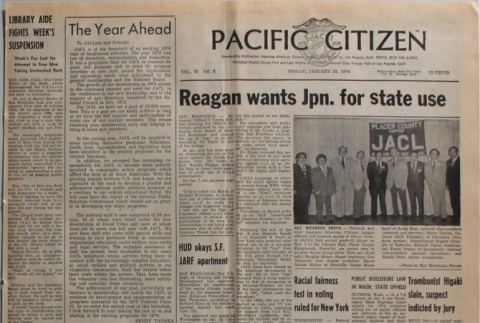
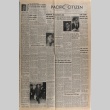
Selected article titles: "Reagan Wants Jpn. For State Use" (p. 1), "Washington Newsletter: Anti-Japanese American Acts (It Can Happen Here, Again)" (p. 2), "'Two Worlds of Jim Yoshida': Hollywood Film Production Starts on Saga of Nisei Strandee in Japan" (p. 3), and "Book Review: Manzanar in Retrospect" (p. 5).
Photograph of the Bears Boys Basketball team. Front row left to right: Ubo (?) Harper, Zane Hayes, Jim Riskowski, Franz. See this object in the California State Universities Japanese American Digitization project site: P170
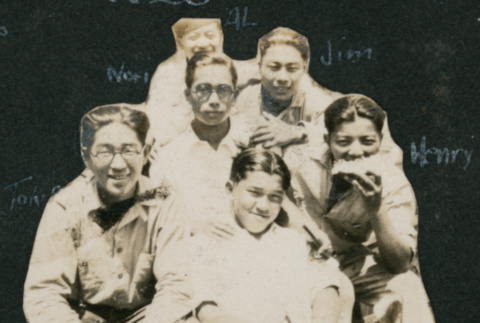
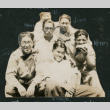
Cutout image of 6 men posing together in a pyramid for the camera. Front row identified left to right: Tokio, Stogie, and Henry. 2nd row identified left to right: Nori and Jim. Back row identified as Al. Caption on page: "At F.A. Wilcon Ranch During Summer '1926'" and The pyramid O'boy Wate-melon!!"
Correspondence from Shigeki Hiratsuka to Dorothy Nakamura regarding a copy of a letter from Jim Kolbe and the redress and reparations movement. See this object in the California State Universities Japanese American Digitization project site: sac_jaac_2200
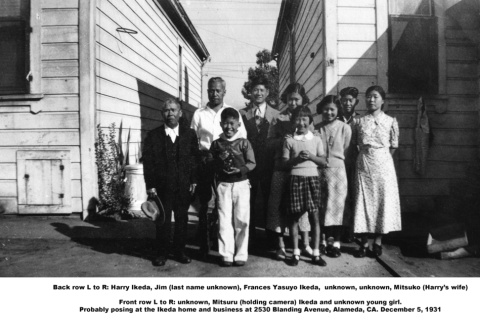
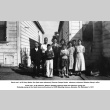
Caption below photo: Backrow L to R: Harry Ikeda, Jim (last name unknown), Frances Yasuyo Ikeda, unknown, unknown, Mitsuko (Harry's wife). Front row L to R: unknown, Mitsuru (holding camera) Ikeda and unknown young girl. Probably posing at the Ikeda home and business at 2530 Blanding Avenue, Alameda, CA. December 5, 1931
Select article titles: "Manzanar Group rejects alternate plan for memorial" (p. 1), "Florin Chapter gets human rights award" (p. 1), "Japanese American exhibit planned for Imperial Valley" (p. 1), "Bush veto of unemployment act criticized" (p. 1), "San Diego university policies protested" (p. 1), "Man gets 4 years in Jim Loo case" (p. 1).
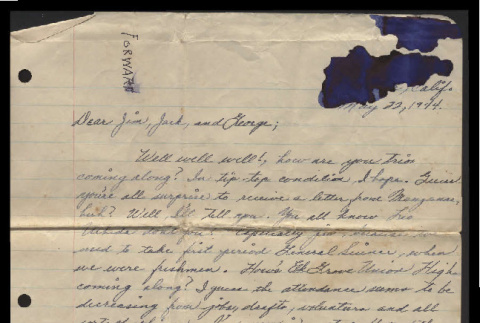
Correspondence from Leo Uchida to Jim [James Waegell], Jack, and George regarding Uchida's life and schooling at Manzanar incarceration camp during World War II. See this object in the California State Universities Japanese American Digitization project site: sac_jaac_2442
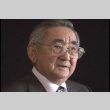
Sansei male. Born February 16, 1955, in Los Angeles, California. Graduated from UCLA and the Pacific School of Religion in Berkeley. Served as pastor in Sacramento and West Los Angeles before being appointed Senior Minister at the Centenary United Methodist Church in Los Angeles in 2000.
Sansei male. Born February 16, 1955, in Los Angeles, California. Graduated from UCLA and the Pacific School of Religion in Berkeley. Served as pastor in Sacramento and West Los Angeles before being appointed Senior Minister at the Centenary United Methodist Church in Los Angeles in 2000.

![[Boys basketball team] (ddr-csujad-29-227)](https://ddr.densho.org/media/cache/9e/67/9e67dacaf5519da31fae71992d66aa51.jpg)

![Letter from Shigeki Hiratsuka to [Dorothy] Nakamura, August 23, 1991 (ddr-csujad-55-2097)](https://ddr.densho.org/media/cache/be/d0/bed0068c23aceaeb735cbbc8780f7d15.jpg)
![Pacific Citizen, Vol. 113, No. 12 [October 18, 1991] (ddr-pc-63-37)](https://ddr.densho.org/media/cache/6d/b2/6db2eb72464c3ff639b1e147d3af2fbc.jpg)
![[Boys basketball team] (ddr-csujad-29-227)](https://ddr.densho.org/media/cache/2c/1a/2c1a2f974f46c7926507e764dec78629.jpg)

![Letter from Shigeki Hiratsuka to [Dorothy] Nakamura, August 23, 1991 (ddr-csujad-55-2097)](https://ddr.densho.org/media/cache/fb/25/fb2507c0fce63bf1d93c0fba7ba49572.jpg)
![Pacific Citizen, Vol. 113, No. 12 [October 18, 1991] (ddr-pc-63-37)](https://ddr.densho.org/media/cache/fd/f9/fdf9e1f53fec6bba00fe065aa6bc3354.jpg)