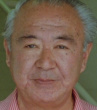
Nisei male. Grew up in Los Angeles, California. Married in 1942 and removed with wife to the Tanforan Assembly Center, California, and the Topaz concentration camp, Utah, during World War II.
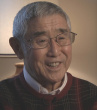
Nisei male. Born June 15, 1932, in Hillsboro, Oregon. Grew up in Hillsboro, where parents ran a produce business and farm. During World War II, removed to the Portland Assembly Center, Oregon, and the Minidoka concentration camp, Idaho. Left camp for Boise, Idaho, where mother received medical treatment. Eventually returned to Oregon and served in the …
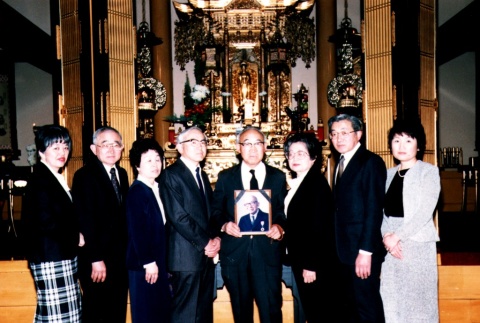
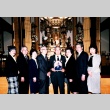
Funeral service for Bunshiro Tazuma who died on 3/29/88 at 104 years old. Sons & spouses (L to R): Frances (59 yrs), Jim (62 yrs), Miyoka (58 yrs), Nobi (67 yrs), Elmer (72 yrs), Masako (62 yrs), Yukio (59 yrs), Kimi (50 yrs).
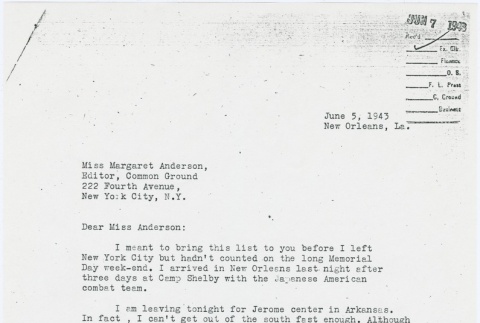
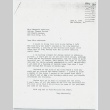
Larry Tajiri discusses his travels to Camp Shelby, New Orleans, and Jerome concentration camp. He is disturbed by "the sight of Jim Crow cars and the white-colored segretation." Also sends a list of books he would like to receive from the Common Council.
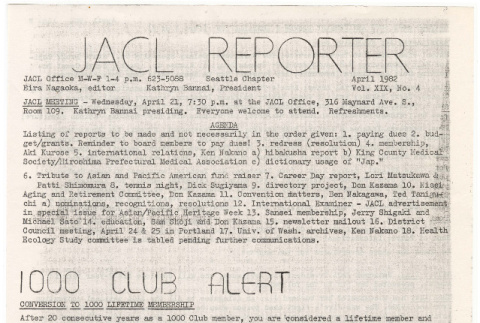
Newsletter covering the following topics: Following received Silver Pins from National JACL President Jim Tsujimura-Shea Aoki, Mich Matsudaira, Hana Masuda, Henry Miyatake, Kenko Nogaki, Ben Nakagawa, Ken Nakano, and Charles Z Smith; Sansei Membership committee to be headed by Michael Sato and Jerry Shigaki.
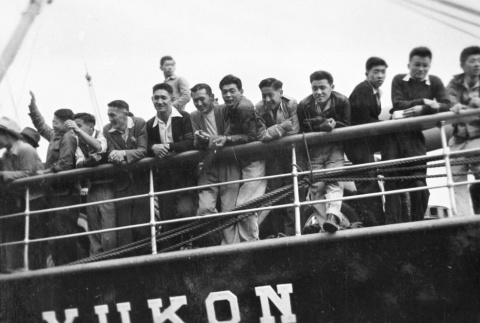
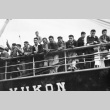
These Japanese Americans are en route to Alaska to work in the canneries. Several can be identified: "Turk" Fujiya and Jim Yoshida stand fifth and sixth from the left; Ben Uyeno and George Yano stand third and second from the right. Ben Uyeno later became a well-known doctor in Seattle's Japanese American community. He was interviewed …
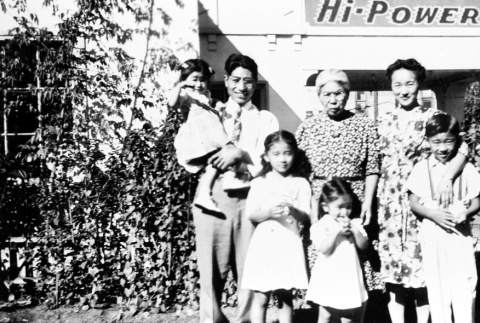
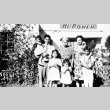
The Fukuda family was originally from Seattle and voluntarily relocated to Nampa, Idaho, during World War II. After the war, the family moved to Spokane, Washington. Front (left to right): Janet, Lillian, and Alan Fukuda. Back: Jim Fukuda holding his daughter Mitsue, Mrs. Fukuda, and Rina Fukuda.
Gordon Hirabayashi's decision to reopen his case (audio only)
This interview is audio-only. It contains raw footage used by Steven Okazaki in his 1985 film Unfinished Business.
This material is based upon work assisted by a grant from the Department of the Interior, National Park Service. Any opinions, finding, and conclusions or recommendations expressed in …
Support of parents in Gordon's initial case (audio only)
This interview is audio-only. It contains raw footage used by Steven Okazaki in his 1985 film Unfinished Business.
This material is based upon work assisted by a grant from the Department of the Interior, National Park Service. Any opinions, finding, and conclusions or recommendations expressed in …
The lessons of Gordon Hirabayashi's case (audio only)
This interview is audio-only. It contains raw footage used by Steven Okazaki in his 1985 film Unfinished Business.
This material is based upon work assisted by a grant from the Department of the Interior, National Park Service. Any opinions, finding, and conclusions or recommendations expressed in this …
The importance of the redress movement (audio only)
This interview is audio-only. It contains raw footage used by Steven Okazaki in his 1985 film Unfinished Business.
This material is based upon work assisted by a grant from the Department of the Interior, National Park Service. Any opinions, finding, and conclusions or recommendations expressed in this …
Thoughts on being seen as a culture hero (audio only)
This interview is audio-only. It contains raw footage used by Steven Okazaki in his 1985 film Unfinished Business.
This material is based upon work assisted by a grant from the Department of the Interior, National Park Service. Any opinions, finding, and conclusions or recommendations expressed …
The conservatism of Japanese Americans in the immediate postwar era (audio only)
This interview is audio-only. It contains raw footage used by Steven Okazaki in his 1985 film Unfinished Business.
This material is based upon work assisted by a grant from the Department of the Interior, National Park Service. Any opinions, finding, and conclusions or …
Hearing about the bombing of Pearl Harbor (audio only)
This interview is audio-only. It contains raw footage used by Steven Okazaki in his 1985 film Unfinished Business.
This material is based upon work assisted by a grant from the Department of the Interior, National Park Service. Any opinions, finding, and conclusions or recommendations expressed in …
Looking back on camp and immediate postwar period (audio only)
This interview is audio-only. It contains raw footage used by Steven Okazaki in his 1985 film Unfinished Business.
This material is based upon work assisted by a grant from the Department of the Interior, National Park Service. Any opinions, finding, and conclusions or recommendations expressed …
This interview is audio-only. It contains raw footage used by Steven Okazaki in his 1985 film Unfinished Business.
This material is based upon work assisted by a grant from the Department of the Interior, National Park Service. Any opinions, finding, and conclusions or recommendations expressed in this material are …
This interview is audio-only. It contains raw footage used by Steven Okazaki in his 1985 film Unfinished Business.
This material is based upon work assisted by a grant from the Department of the Interior, National Park Service. Any opinions, finding, and conclusions or recommendations expressed in this material are …
This interview is audio-only. It contains raw footage used by Steven Okazaki in his 1985 film Unfinished Business.
This material is based upon work assisted by a grant from the Department of the Interior, National Park Service. Any opinions, finding, and conclusions or recommendations expressed in this material …
Researching Gordon Hirabayashi's life story (audio only)
This interview is audio-only. It contains raw footage used by Steven Okazaki in his 1985 film Unfinished Business.
This material is based upon work assisted by a grant from the Department of the Interior, National Park Service. Any opinions, finding, and conclusions or recommendations expressed in this material …
Gordon Hirabayashi's incredible wartime story (audio only)
This interview is audio-only. It contains raw footage used by Steven Okazaki in his 1985 film Unfinished Business.
This material is based upon work assisted by a grant from the Department of the Interior, National Park Service. Any opinions, finding, and conclusions or recommendations expressed in this material …
Remembering Gordon Hirabayashi's decision to resist the curfew (audio only)
This interview is audio-only. It contains raw footage used by Steven Okazaki in his 1985 film Unfinished Business.
This material is based upon work assisted by a grant from the Department of the Interior, National Park Service. Any opinions, finding, and conclusions or recommendations expressed …