
5890 items
5890 items
doc
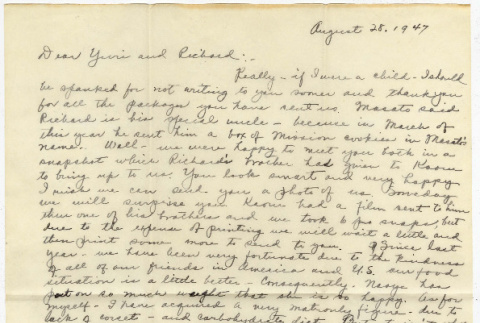
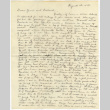
Letter to Yuri and Richard Tsukada from Kayeko Nakashima (ddr-densho-356-585)
Letter to Yuriko Domoto Tsukada and Richard Tsukada from her sister Kayeko Domoto Nakashima. In the letter Kayeko write about her family's pending move to Tokyo from the countryside, and inquires about their other siblings.
doc
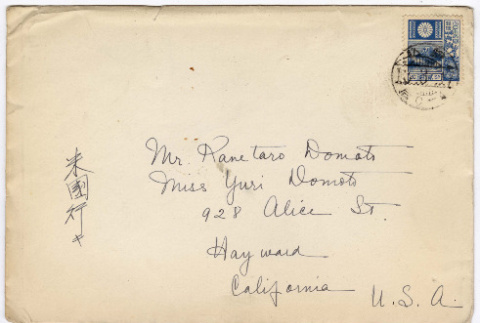
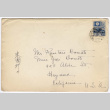
Letter to Kanetaro and Yuri Domoto (ddr-densho-356-204)
Envelope and card to Kanetaro Domoto and Yuriko Domoto Tsukada in Japanese. Envelope is postmarked 13.3.17, card notes date as Showa 13, month 3.
doc
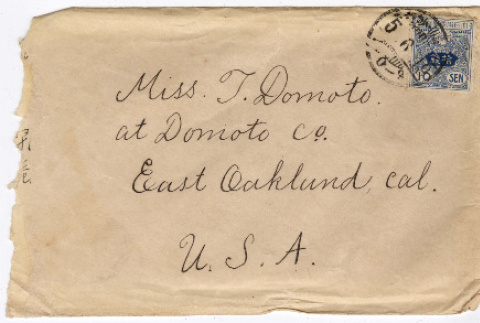
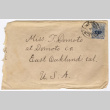
Envelope and letter to T. Domoto (ddr-densho-356-201)
Envelope addressed to Miss T. Domoto (possibly Tokuko?), postmarked 5.5.19. Note in Japanese on the back of the envelope. Inside envelope was a long letter written in Japanese.
img
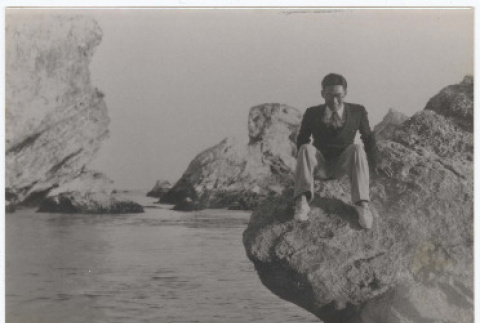
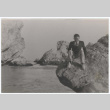
Richard Tsukada sitting on rock above water (ddr-densho-356-24)
Photograph of Richard Tsukada sitting a on a rock above water. Inscribed on the back: "Somewhere in Japan whereabouts unknown."
doc
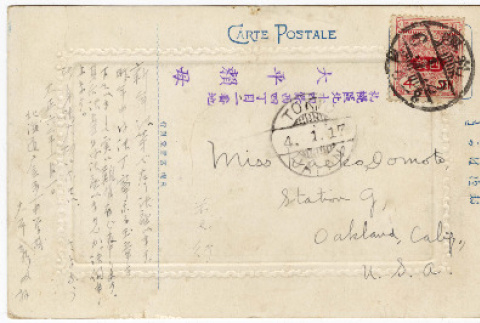
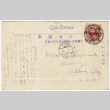
Postcard to Kaeko Domoto (ddr-densho-356-182)
Postcard addressed to Kaeko Domoto with a message in Japanese. Postmarked 6.1.2 (Taisho 6-1917 January 2) and 4.1.17 (Taisho 4-1915 January 17)
img
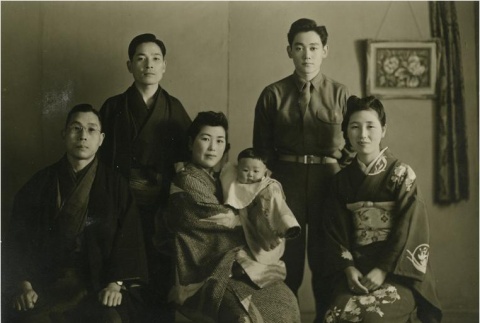
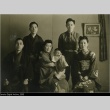
Family portrait (ddr-densho-166-2)
Jim Minoru Mayeno, a member of the United States' Military Intelligence Service pictured with relatives in Japan. This photo is of Jim with his Mayeno relatives.
doc
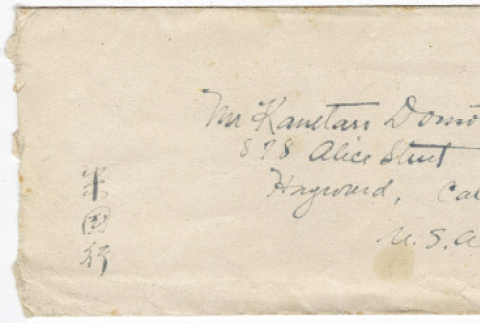
Envelope and letter to Kanetaro Domoto (ddr-densho-356-206)
Envelope addressed to Mr. Kanetaro Domoto, postmarked 16.7. Note in Japanese on the back of the envelope. Inside envelope was a long letter written in Japanese.
doc
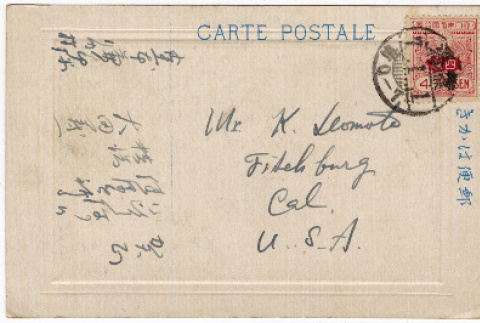
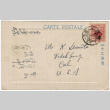
Postcard to K. Domoto (ddr-densho-356-188)
Postcard addressed to K. Domoto (likely Kanetaro Domoto) with a message written in Japanese. Postmarked 7.1.1 (Taisho 7- 1918 January, 1). Tied together with objects ddr-densho-356-183 through ddr-densho-356-188.
img
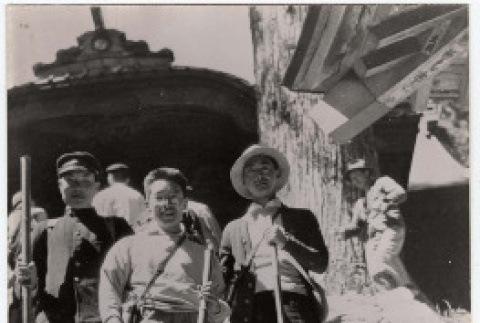
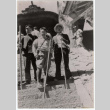
Three men on steps with bamboo poles (ddr-densho-356-26)
Richard Tsukada (middle) with two relatives standing on stone steps each holding a bamboo pole. Caption on photograph reads: "With other relatives whereabouts? 39 or 40."
doc
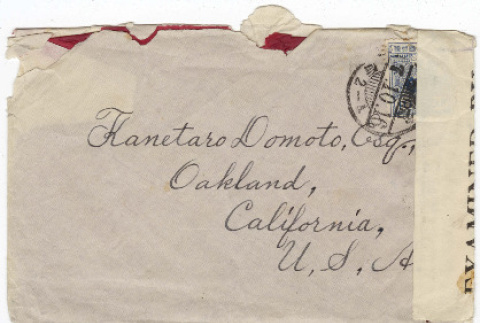
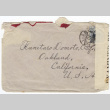
envelope to Kanetaro Domoto (ddr-densho-356-194)
Empty envelope addressed to Kanetaro Domoto. Postmarked 7.10.16 (Taisho 7-1918, October 16 or Showa 7-1932, October 16). Censor sticker on the back of the envelope.
doc
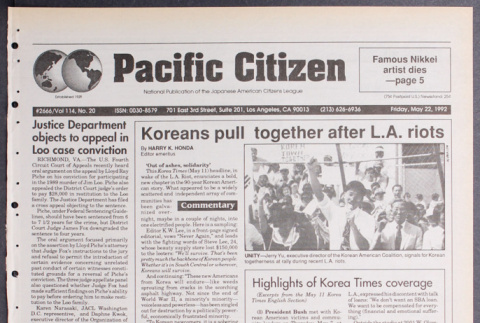
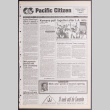
Pacific Citizen, Vol. 114, No. 20 (May 22, 1992) (ddr-pc-64-20)
Select article titles: "Koreans pull together after L.A. riots" (p. 1); "Mineta calls for federal aid to L.A., Chicago" (p. 3); "Group to discuss Japan bashing" (p. 4); "Japan chapter looks at stereotyping" (p. 5).
img
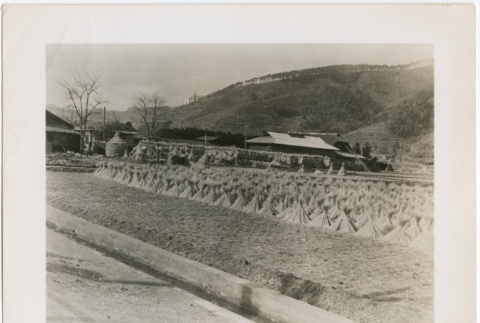
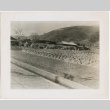
A field of rice shocks (ddr-densho-299-16)
Caption on reverse: "WPA-46-69185. 25 Nov 46 / Field of rice shocks: / This field of rice shocks around / Yoshida-mura, Yamakashi, Japan, is / a typical farm scene of Japan in / the fall. / Photographer - Wheeler."
img
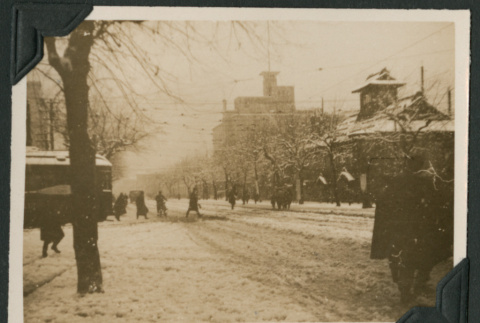
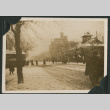
Downtown Sapporo in the snow (ddr-densho-397-183)
The caption in the photo album reads "Snow on Hokkaido Main Street". Takashi Matsui was stationed in Japan with the U.S. military during the Allied occupation of Japan after the end of World War II.
img
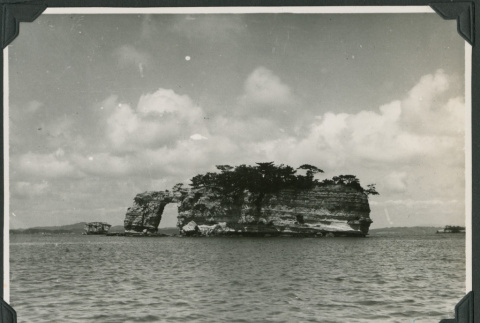
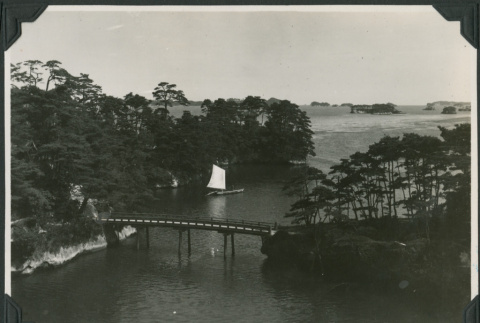
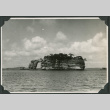
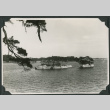
Islet in Matsushima Bay (ddr-densho-397-151)
The caption in the photo album is written in Japanese.\n\n Takashi Matsui was stationed in Japan with the U.S. military during the Allied occupation of Japan after the end of World War II.
img
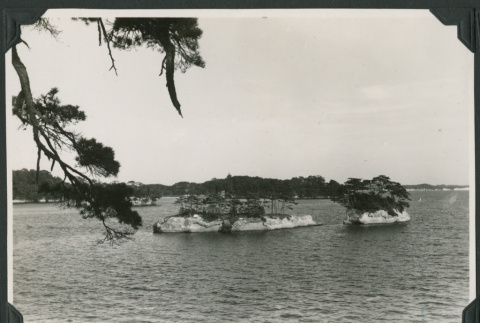
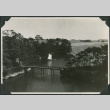
Islets in Matsushima Bay (ddr-densho-397-148)
The caption in the photo album is written in Japanese.\n\n Takashi Matsui was stationed in Japan with the U.S. military during the Allied occupation of Japan after the end of World War II.
img
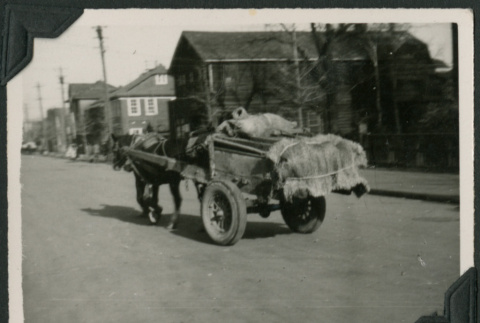
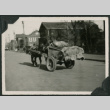
Horse drawn cart (ddr-densho-397-187)
The caption in the photo album reads "A two wheel cart Sapporo". Takashi Matsui was stationed in Japan with the U.S. military during the Allied occupation of Japan after the end of World War II.
img
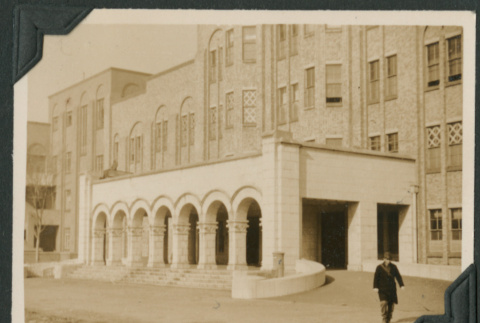
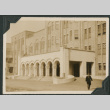
Medical department building (ddr-densho-397-223)
The caption in the photo album reads "Medical dept Tokyo Imperial Univ". Takashi Matsui was stationed in Japan with the U.S. military during the Allied occupation of Japan after the end of World War II.
img
Matsushima Bay (ddr-densho-397-149)
The caption in the photo album is written in Japanese. \n\n Takashi Matsui was stationed in Japan with the U.S. military during the Allied occupation of Japan after the end of World War II.
img
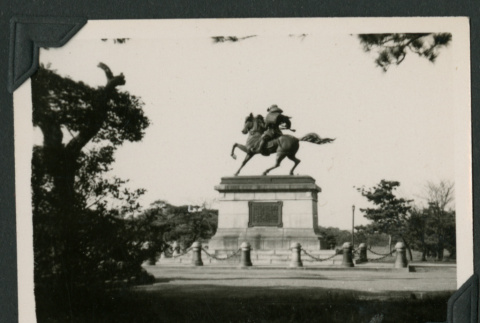
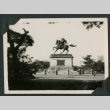
Statue of Kusunoki Masashige (ddr-densho-397-95)
The caption in the photo album reads "Statue of Kusunoki Nov. '46". Takashi Matsui was stationed in Japan with the U.S. military during the Allied occupation of Japan after the end of World War II.
img
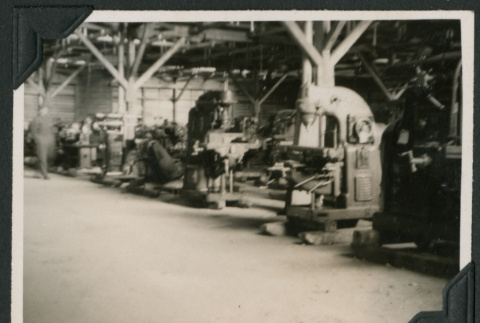
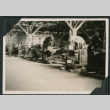
Japanese machinery (ddr-densho-397-165)
The caption in the photo album reads "More Machinery listed for reparation". Takashi Matsui was stationed in Japan with the U.S. military during the Allied occupation of Japan after the end of World War II.
img
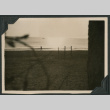
Sunset (ddr-densho-397-143)
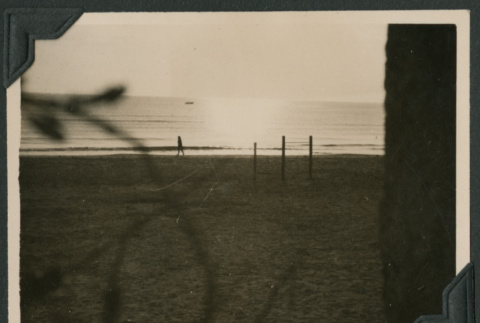
The caption in the photo album reads "Sunset in Kamakura Nov. '46". Takashi Matsui was stationed in Japan with the U.S. military during the Allied occupation of Japan after the end of World War II.
img
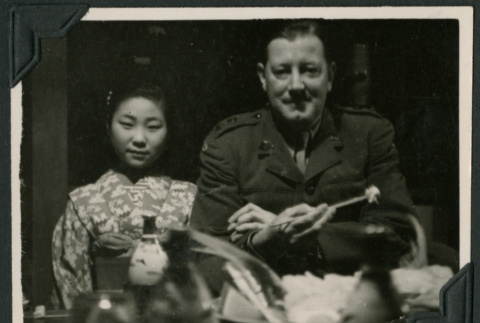
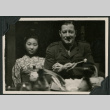
Colonel and Geisha (ddr-densho-397-168)
The caption in the photo album reads "Col Allen posing with Geisha". Takashi Matsui was stationed in Japan with the U.S. military during the Allied occupation of Japan after the end of World War II.
img
Japanese tobacco plant (ddr-densho-397-317)
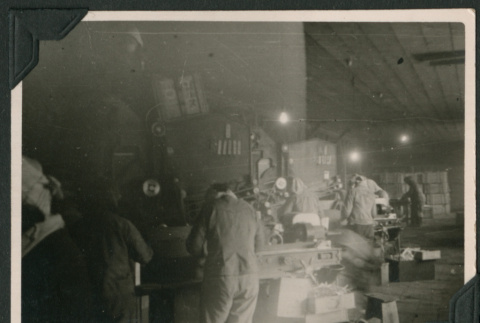
The caption in the photo album reads "At the Hokkaido tobacco plant". Takashi Matsui was stationed in Japan with the U.S. military during the Allied occupation of Japan after the end of World War II.
img
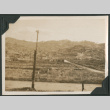
Japanese town (ddr-densho-397-83)
The caption in the photo album reads "Residences in Yawata Oct. '46". Takashi Matsui was stationed in Japan with the U.S. military during the Allied occupation of Japan after the end of World War II.