
5890 items
5890 items
av
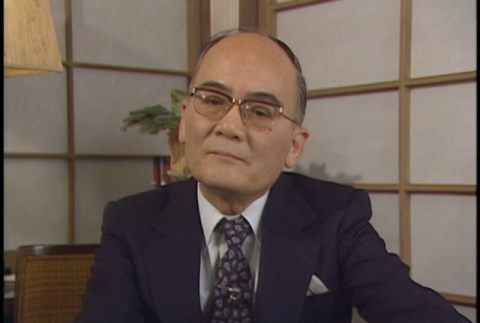
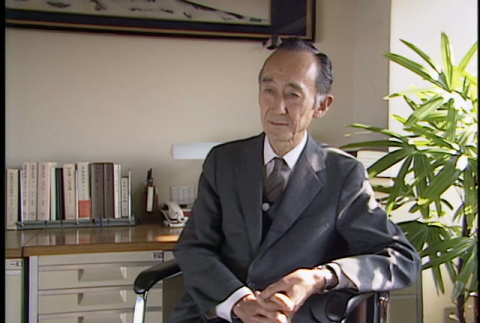
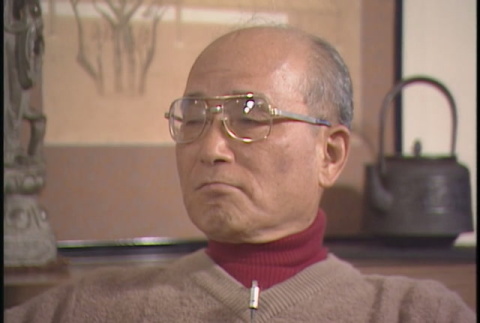
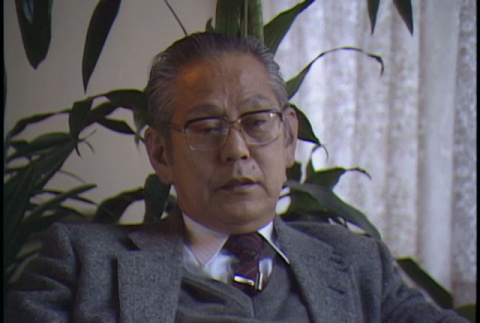
Interview with Kiyofumi Kojima, part 1 of 4 (ddr-densho-1007-1693)
Kojima served as a signal caller in the Japanese Imperial Navy on the battleship Yamato. Interview conducted in Japanese. Original title: 208, II JA #32, Kiyofumi Kojima, Feb. 1, 1986, 15A. Interview continues at ddr.densho.org/ddr-densho-1007-1694/
av
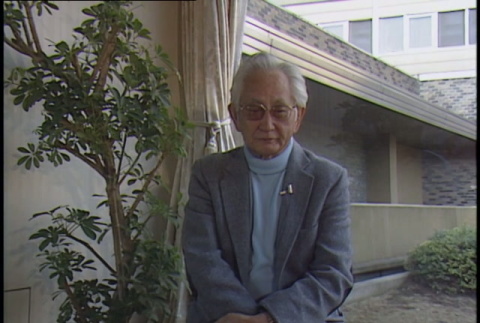
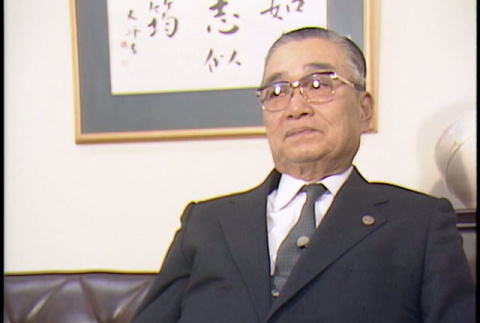
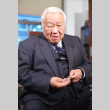
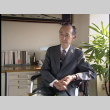
Interview with Barry Saiki, part 5 of 5 (ddr-densho-1007-1706)
Saiki discusses what he wants Sansei and Americans in general to know about internment and the importance of being "bicultural". Loni Ding can be heard asking questions behind the camera. Original title: 219, II JA #45, Barry Saiki, Sun. Feb. 2
av
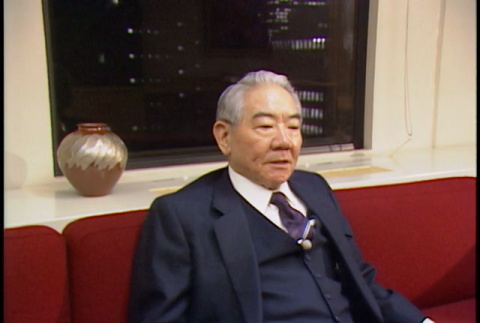
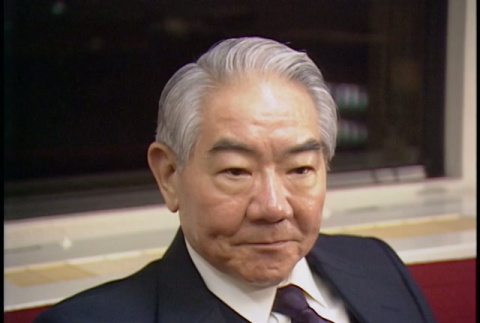
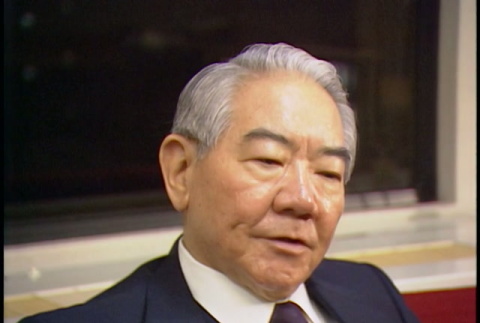
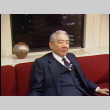
Interview with Sen Nishiyama, part 3 of 5 (ddr-densho-1007-1673)
Nishiyama discusses being in Japan during the war, his and Japan's general reactions to the surrender, the American soldiers that came over during the occupation, and the foundation of the Japanese chapter of the Japanese American Citizens League. Loni Ding can be heard asking questions behind the camera. Original title: II JA #7, Sen Nishiyama, Fri. …
av
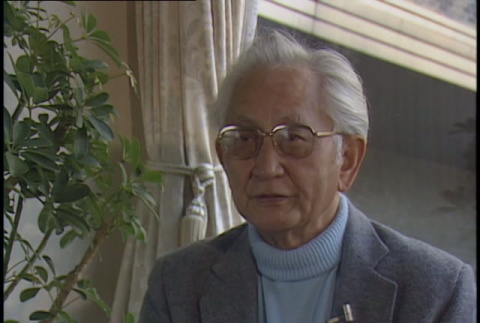
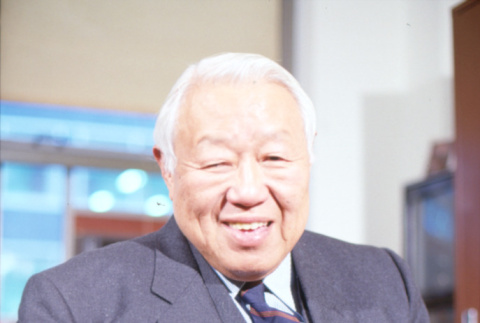
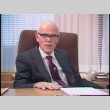
Interview with George Nakamura, part 2 of 5 (ddr-densho-1007-1681)
Nakamura discusses his deployment to Asia, his service in Chongqing, interrogating Japanese prisoners of war, and translating captured documents. Loni Ding can be heard asking questions in the background. Original title: 197, II JA #15, George Nakamura, Fri. Jan 31. Interview continues at ddr.densho.org/ddr-densho-1007-1682/
av
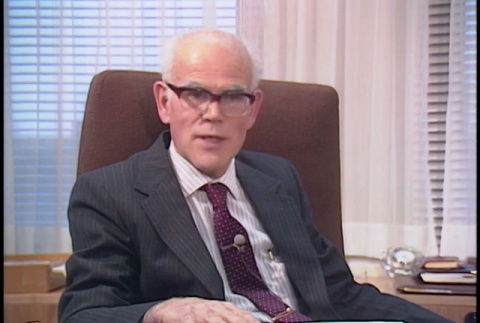
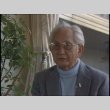
Interview with Bill Dizer, part 1 of 3 (ddr-densho-1007-1676)
Dizer, who lives in Japan, discusses how he started to learn Japanese at the University of Michigan, his thoughts on evacuation and his deployment in Japan. Interview starts at 6:15. Loni Ding can be heard asking questions behind the camera. Original title: 193, II JA #10, Bill Dizer, Fri., Jan. 31. Interview continues at ddr.densho.org/ddr-densho-1007-1677/
av
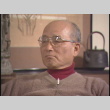
Interview with Harry Fukuhara, part 1 of 5 (ddr-densho-1007-1697)
Fukuhara discusses his service in the Pacific theater, working with ATIS, and his first landing. Loni Ding can be heard asking questions behind the camera. Last few seconds are an accidental recording from the Kiyofumi Kojima interview. Original title: 212, II JA #36, Harry Fukuhara, Sun. Feb. 2. Interview continues at ddr.densho.org/ddr-densho-1007-1698/
av
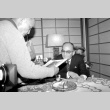
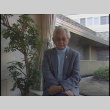
Interview with Ray Aka, part 2 of 6 (ddr-densho-1007-1686)
Aka discusses being drafted in San Francisco, his reaction to Pearl Harbor (which happened two months after he was drafted), being relieved from duties after Pearl Harbor, his prospects as a Nisei growing up in Hawaii, his father's arrest in Hawaii and incarceration in mainland US. Loni Ding can be heard asking questions in the background. …
av
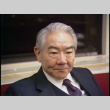
Interview with Harry Fukuhara, part 2 of 5 (ddr-densho-1007-1698)
Fukuhara discusses his service in the Pacific, being mistaken for a Japanese soldier, interviewing a gravely wounded prisoner of war, and POWs he interviewed just before their death. Loni Ding can be heard asking questions behind the camera. Original title: 213, II JA #37, Harry Fukuhara, Sun. Feb. 2. Interview continues at ddr.densho.org/ddr-densho-1007-1699/
av
Interview with George Nakamura, part 5 of 5 (ddr-densho-1007-1684)
Nakamura discusses helping his son write a paper on internment, the importance of the Pacific Citizen newspaper for his children, and racial discrimination in the US. At 10:45, George and Loni Ding look and talk through several of his old papers and letters. Loni Ding can be heard asking questions in the background.Original title: II JA …
av
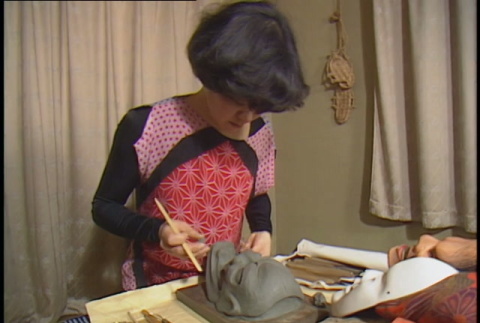
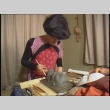
Koto performance, part 2 of 2; Noh mask making (ddr-densho-1007-1716)
The koto player is Brian Yamakoshi. The woman making masks is Chizuko, last name unknown. Loni Ding can be heard directing in the background. First portion of koto performance at ddr.densho.org/ddr-densho-1007-1724/. Original title: 223, II JA #55, Brian Yamakoshi, Fri. Feb. 7, Last of Yamakoshi, Endo mask making
av
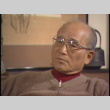
Interview with Ray Aka, part 3 of 6 (ddr-densho-1007-1687)
Aka discusses his father's reaction to being arrested, the sort of person his father was, growing up apart from his family, working as a "schoolboy", his time studying at San Francisco City College, getting drafted, being evacuated to Fort San Houston, and being ordered to go to Camp Savage for language school. Loni Ding can be …
img
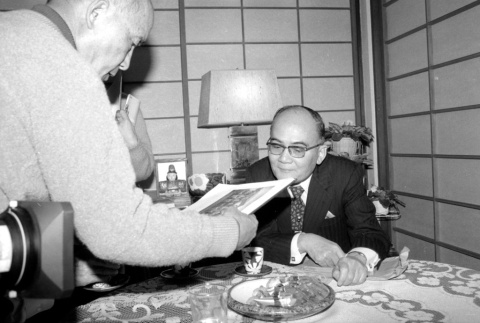
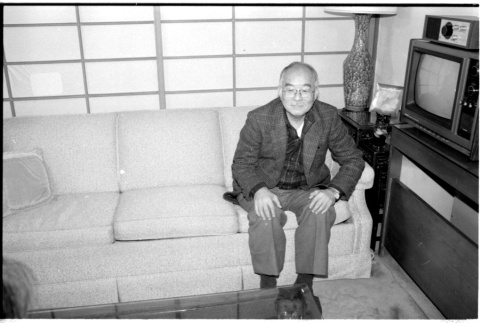
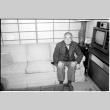
John Fujii on sofa (ddr-densho-1007-1172)
Negative. Taken during an interview for The Color of Honor.
av
Interview with Ray Aka, part 4 of 6 (ddr-densho-1007-1688)
Aka discusses his father's arrest and incarceration by the FBI, his time in language school, his time teaching in the military in Monterey, his service in occupied Japan after the war, and his first impressions of Tokyo. Loni Ding can be heard asking questions in the background. Original title: II JA #22, Ray Aka, Feb. 1, …
av
Interview with Barry Saiki, part 4 of 5 (ddr-densho-1007-1705)
Saiki discusses the loyalty questionnaire given to Nisei in camp, visiting his father in New Mexico, being drafted, being recruited for intelligence work, moving to Japan in 1967, his work in international business, and the formation of the Military Intelligence Service Language School Association and other such organizations. Loni Ding can be heard asking questions behind …
av
Interview with Yoshio Miwa, part 3 of 4 (ddr-densho-1007-1669)
Miwa discusses his relationship with Harry Fukuhara, Fukuhara's work during the occupation, the difficulty of distributing food in occupied Japan, and the role of Nisei in the occupation. Interview conducted mostly in Japanese with the aid of an interpreter. Loni Ding can be heard asking questions behind the camera. Original title: 190, II JA #3, Yoshio …
av
Interview with George Nakamura, part 3 of 5 (ddr-densho-1007-1682)
Nakamura discusses his service in China on the front lines, and meeting an American pilot who crash-landed in his area. He reads a letter he wrong during wartime. Loni Ding can be heard asking questions in the background. Original title: 198, II JA #16, George Nakamura, Fri. Jan. 31. Interview continues at ddr.densho.org/ddr-densho-1007-1683/
doc
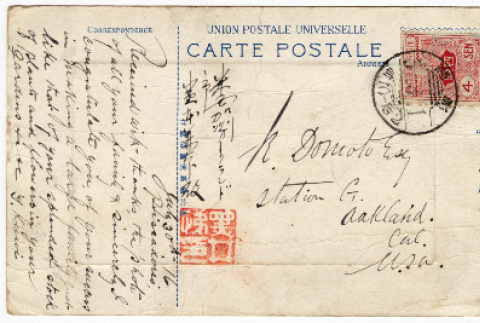
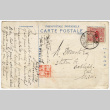
Postcard to K. Domoto (ddr-densho-356-185)
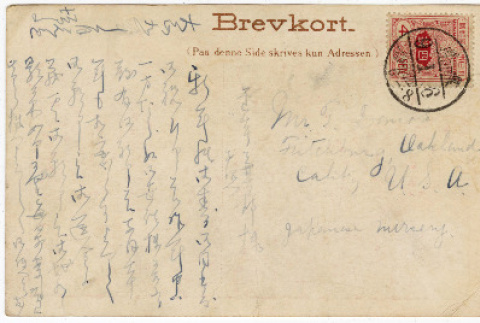
Postcard addressed to K. Domoto (likely Kanetaro Domoto) from Y. Kuwi dated July 30, 1916. Postmarked 5.8.1 (Taisho 5- 1916 August, 1). Message is thanking Kanetaro Domoto for sending a photograph of the Domoto family. Tied together with objects ddr-densho-356-183 through ddr-densho-356-188.
doc
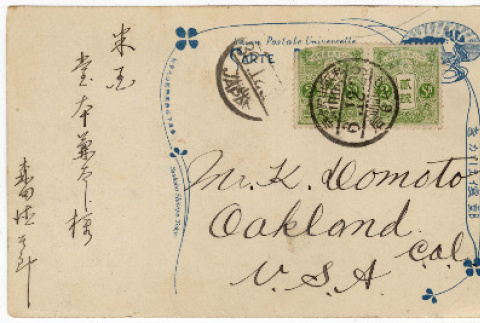
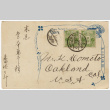
Postcard to K. Domoto (ddr-densho-356-187)
Postcard addressed to Mr. K. Domoto (likely Kanetaro Domoto) with a message written in Japanese. Postmarked 6.12.29 (Taisho 6- 1917, December 29 or Showa 6-1931, December 29). Tied together with objects ddr-densho-356-183 through ddr-densho-356-188.
img
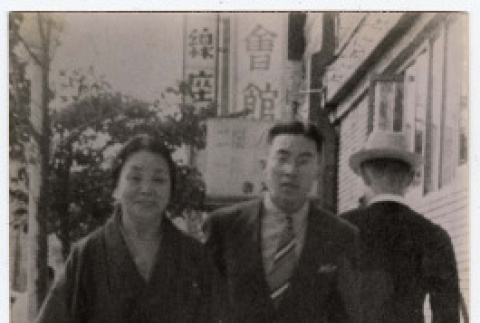
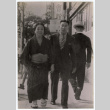
Richard Tsukada and mother along Ginza (ddr-densho-356-20)
Photograph of Richard Tsukada and his mother Hana Tsukada (Uyeda) walking in Ginza. Inscribed on the back: "With Mother Along Ginza 39 or 40."
doc
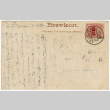
Postcard to T. Domoto (ddr-densho-356-198)
Postcard addressed to T. Domoto (likely Toichi Domoto) with a message written in Japanese. Postmarked 9.1.6 (Taisho 9 -1920, January 6)