
5890 items





5890 items

img
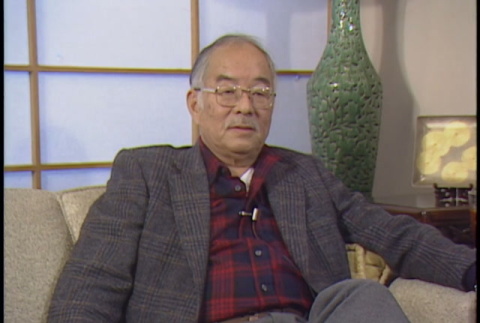
Ray Aka reading (ddr-densho-1007-1177)
Negative. Taken during an interview for The Color of Honor.
av
Interview with Barry Saiki, part 3 of 5 (ddr-densho-1007-1704)
Saiki discusses being relocated to the Rohwer camp, working as editor for the Rohwer Outpost newspaper, the social stigma around his Caucasian friends visiting in camp, his friend Elizabeth Homberger (sp?) and the work she did for the Nisei during the war, the reactions to military recruiters at Rohwer, and his reasons for not volunteering for …
av
Interview with Masaru Ogawa, part 2 of 3 (ddr-densho-1007-1711)
Ogawa discusses his time in the Philippines in 1944 with the Japanese army. Loni Ding can be heard asking questions behind the camera. Original title: II JA #50, Masaru Ogawa, Sun. Feb. 2. Interview continues at ddr.densho.org/ddr-densho-1007-1712/
av
Interview with John Fujii, part 2 of 2 (ddr-densho-1007-1692)
Fujii discusses being suspected as a Japanese spy while working for a newspaper, serving Japan and being interned in India during the war, his sympathy for Japan during the war, his brother's service in the US army, and his brother's attitude toward Japan. Video starts at 0:25. Loni Ding can be heard asking questions in the …

av
Interview with Ray Aka, part 1 of 6 (ddr-densho-1007-1685)
Aka discusses moving to Japan in 1946, growing up on Maui and in Okinawa, returning to the US as a teenager, being drafted, and his Japanese education. The first few minutes of the tape are Loni Ding explaining her interview process to Aka. Loni Ding can be heard asking questions during the interview. Original title: II …
av
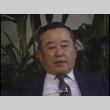
Interview with Shigeo Yamada, part 3 of 3 (ddr-densho-1007-1709)
Yamada discusses the military service of his brothers (for the Japanese army) and the state of Japan after the war/post-reconstruction. Loni Ding can be heard asking questions behind the camera. Original title: II JA #48, Shigeo Yamada, Sun. Feb. 2

av
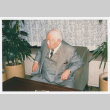
Interview with Sen Nishiyama, part 1 of 5 (ddr-densho-1007-1671)
Nishiyama discusses moving to Japan in the 1930s, growing up in Salt Lake City, starting to work in a Japanese research laboratory and obtaining Japanese citizenship, learning Japanese as a child, Japanese attitudes towards Americans, and the end of the war. Loni Ding can be heard asking questions behind the camera. Original title: II JA #5, …
av
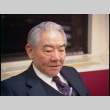
Interview with George Nakamura, part 4 of 5 (ddr-densho-1007-1683)
Nakamura discusses the relationship between the American military and the Chinese government, his impression of the Chinese military, and what he's told his children about incarceration and service. He also reads a letter written about his fellow Nisei Sho Numura, who had to have his appendix removed in China. Loni Ding can be heard asking questions …
av
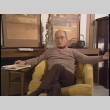
Interview with Ray Aka, part 6 of 6 (ddr-densho-1007-1690)
Aka discusses the new Japanese constitution drafted by the occupation forces, the war crimes trials in Japan, his father's death and funeral, and the diffrences between Nisei and Sansei. Loni Ding can be heard asking questions in the background. Original title: 201, II JA #24, Ray Aka, Feb. 1, 1986
av
Interview with George Nakamura, part 1 of 5 (ddr-densho-1007-1680)
Nakamura discusses leaving camp for language school at Camp Savage, his experience in high school, his first encounter with racism in the South while at Camp Shelby, and his experience with racial discrimination as a child and young adult. Loni Ding can be heard asking questions in the background. Original title: 196, II JA #14, George …
av
Interview with Harry Fukuhara, part 5 of 5 (ddr-densho-1007-1701)
Fukuhara discusses the role of Nisei in the occupation, the Japanese reaction to occupation, the difficulties of occupation, and the occupation in Okinawa. Loni Ding can be heard asking questions behind the camera. Original title: 216, II JA #40, Harry Fukuhara, Sun. Feb. 2

av
Interview with Shigeo Yamada, part 2 of 3 (ddr-densho-1007-1708)
Yamada discusses growing up on farms in Hansen and Jerome, ID, his parents' views on education, his first impressions of Japan, the sinking of the cruiser he served on in the Japanese navy and being rescued. Loni Ding can be heard asking questions behind the camera. Original title: II JA #47, Shigeo Yamada, Sun. Feb. 2. …
av
Interview with Sen Nishiyama, part 5 of 5 (ddr-densho-1007-1675)
Nishiyama discusses the Sansei and the Nisei. Loni Ding can be heard asking questions behind the camera. Original title: 192, II JA #9, Sen Nishiyama, Fri. Jan. 31
av
Interview with Kiyofumi Kojima, part 4 of 4 (ddr-densho-1007-1696)
Interview conducted in Japanese, ends at 11:05. Rest of tape is Kojima reading a poem he wrote while a prisoner of war in Hawaii. Original title: 211, II JA #35, Kiyofumi Kojima, Feb. 1, 1986
av
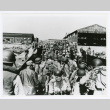
Interview with Sen Nishiyama, part 4 of 5 (ddr-densho-1007-1674)
Nishiyama discusses the progress of civil rights in the US and the resulting impacts on Nisei and Japanese nationals, his experiences with occupation soldiers, the war crimes committed by Japanese soldiers, and the attitudes of Sansei towards Japan. Loni Ding can be heard asking questions behind the camera. Original title: II JA #8, Sen Nishiyama, Fri. …
av
Interview with Barry Saiki, part 2 of 5 (ddr-densho-1007-1703)
Saiki discusses his mother's reaction to his father's arrest and imprisonment, his time at Stockton Assembly Center, the attitudes of incarcerees at Stockton, the difficulty Nisei faced trying to find jobs at the time, and being relocated to the Rohwer camp. Loni Ding can be heard asking questions behind the camera. Original title: II JA #42, …
av
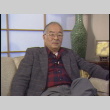
Interview with John Fujii, part 1 of 2 (ddr-densho-1007-1691)
Fujii, who was born and lives in Japan, discusses growing up in Livingston, CA, realizing he was Japanese as a child, going to college at Pomona, segregation in the schools he attended as a child, and his family's internment during the war. Loni Ding can be heard asking questions in the background. Original title: 202, II …
av
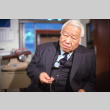
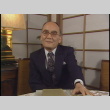
Interview with Kiyofumi Kojima, part 2 of 4 (ddr-densho-1007-1694)
Interview conducted in Japanese. Original title: 209, II JA #33, Kiyofumi Kojima, Feb. 1, 1986, 15B. Interview continues at ddr.densho.org/ddr-densho-1007-1695/
av
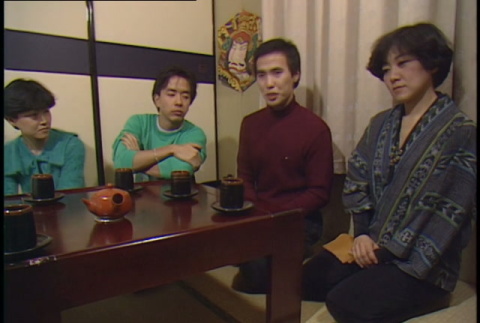
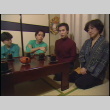
Interview with Akiko, Brian Yamakoshi, Kenny and Chizuko, part 3 of 4 (ddr-densho-1007-1719)
Akiko, a Japanese national, discusses her time in the US, meeting a Nisei couple from Watsonville, CA, being a minority in the US, the differences between Japanese Americans and Japanese nationals, and racial discrimination in the US. Original title: 226, II JA #58, Brian Yamakoshi, Fri. Feb. 7. Interview continues at ddr.densho.org/ddr-densho-1007-1720/
