
5890 items
5890 items
img
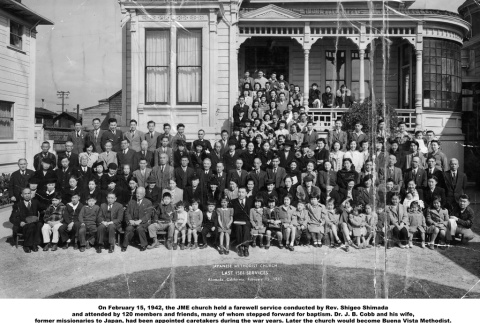
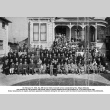
Large group photo outside church (ddr-ajah-4-57)
Printed on photo front: Japanese Methodist Church "Last Issei Services" Alameda, California, February 15, 1942. Caption below photo: On February 15, 1942, the JME church held a farewell service conducted by Rev. Shigeo Shimada and attended by 120 members and friends, many of whom stepped forward for baptism. Dr. J.B. Cobb and his wife, former missionaries …
vh
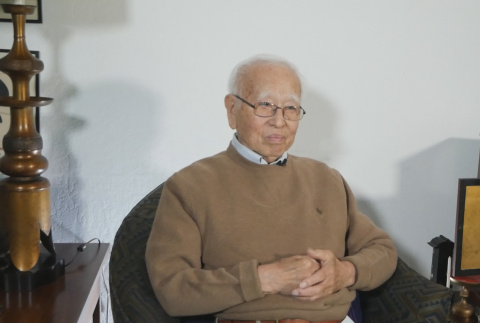
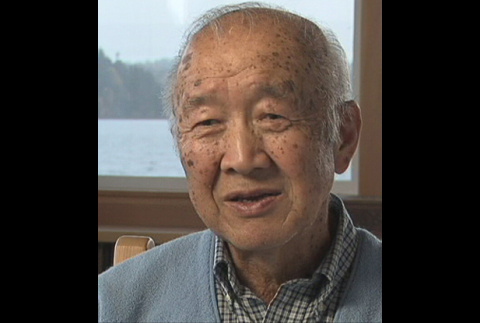
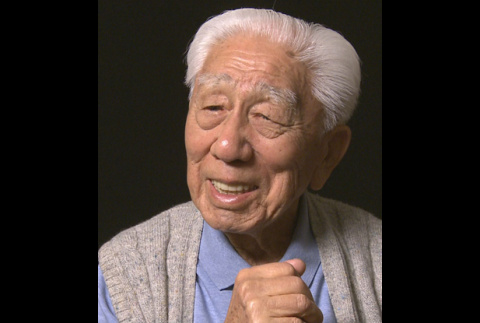
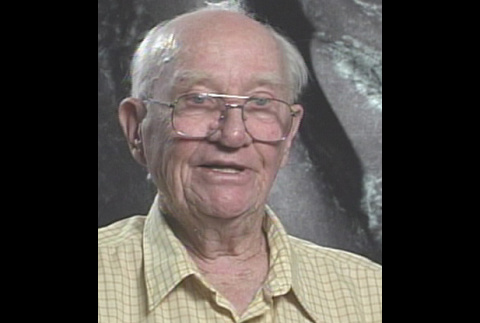
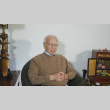
Hisaji Q. Sakai Interview (ddr-densho-1000-475)
Nisei male. Born February 28, 1925, in San Francisco, California. Grew up in San Francisco, where parents had a grocery store business. After the bombing of Pearl Harbor, moved to Iowa to attend college and avoid the mass incarceration. Attended college in Nebraska and Michigan. Drafted into the Military Intelligence Service and served in Japan during …
vh
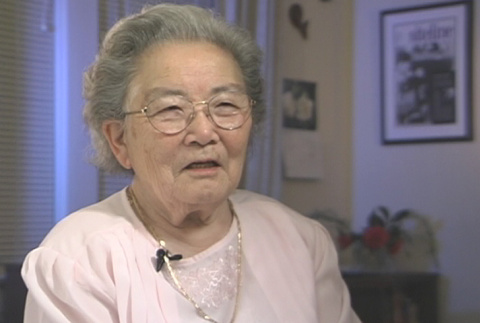
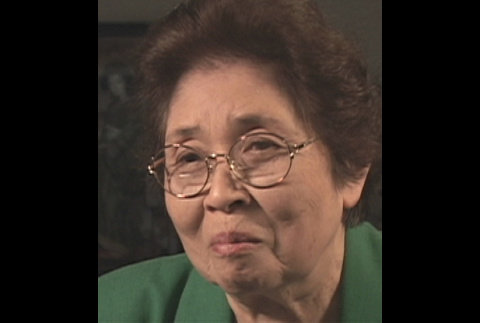
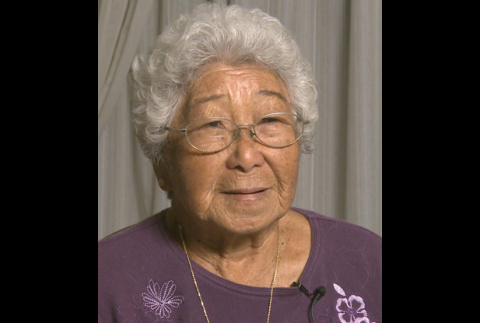
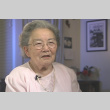
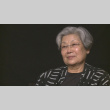
Fumiko Hayashida Interview (ddr-densho-1000-15)
Nisei female. Born January 21, 1911, in Winslow, Washington. Grew up in Japan and the Fletcher's Bay area of Bainbridge Island, Washington. Member of the first group of Japanese Americans to be forcibly removed from their homes and incarcerated. Incarcerated at Manzanar concentration camp, California, and Minidoka concentration camp, Idaho, while pregnant and caring for two …
vh
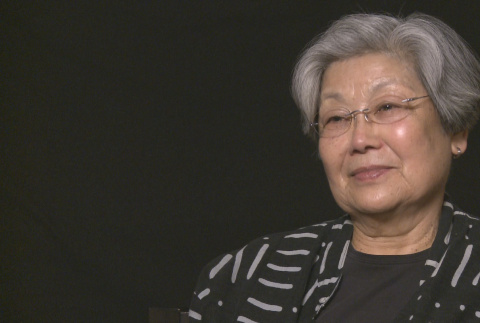
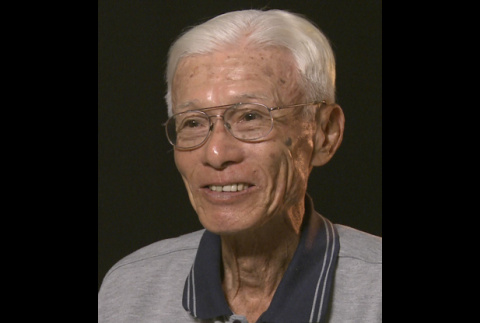
Ruth Y. Okimoto Interview (ddr-densho-1000-331)
Nisei female. Born April 15, 1936, in Tokyo, Japan. Brought to the United States with parents at the age of one, and grew up in San Diego, California, where father was a minister. During World War II, removed to the Santa Anita Assembly Center, California, and the Poston concentration camp, Arizona. After the war, forged connections …
img
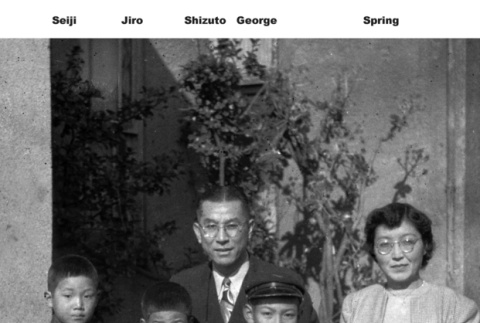
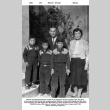
Shizuto Kawamura family outside house (ddr-ajah-6-11)
Caption below photo: Shizuto and Spring Kawamura family in the backyard of their western style two story house, owned by the steel mill company where Shizuto worked. Both Spring and Shiz were from Alameda, CA., USA. Right after World War II ended the Kawamuras lived in Yokohama (1945-54), where this home is located. They would live …
doc
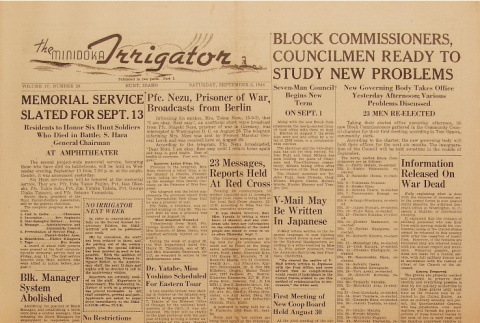
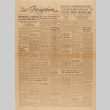
Minidoka Irrigator Vol. IV No. 28 (September 2, 1944) (ddr-densho-119-101)
Selected article titles: "No Restrictions on Sending Human Ashes to Japan" (p. 1), "Car Theft Report Released by I. S." (p. 1), "Two Slightly Hurt in Truck Mishap" (p. 1), "Nisei Soldier Overseas Hits Draft Evasion" (p. 1), "Two Tule, Santa Fe Parolees Arrive" (p. 1), "Labor Shortage Hits Camp; 400 Positions Left Open" (p. 1), …
doc
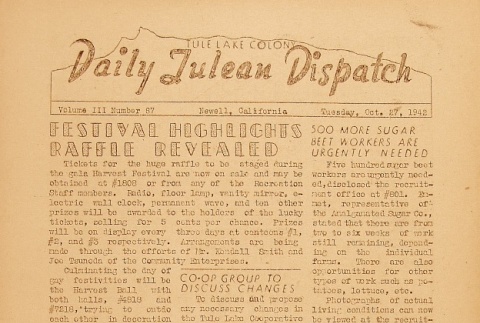
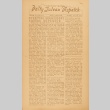
Tulean Dispatch Vol. III No. 87 (October 27, 1942) (ddr-densho-65-83)
Selected article titles: "Festival Highlights Raffle Revealed" (p. 1), "Co-op Group to Discuss Changes" (p. 1), "500 More Sugar Beet Workers Are Urgently Needed" (p. 1), "Church Choir to Be Organized" (p. 1), "Caleb Foote, Speaks Tonight" (p. 1), "Block 48 is Model Community Unit" (p. 3), "Japan Utilizes Rabbit Meat" (p. 3), "Girl Reserve YWCA …
av
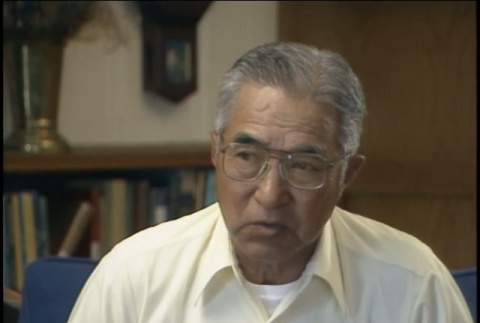
Interview with Shiro Tokuno, part 1 of 4 (ddr-densho-1007-1781)
Tokuno discusses his time in occupied Japan, giving out sandwiches on Christmas, a commanding officer of his during occupation who wanted all shops removed from Ginza and the difficulty some officers had understanding cultural and economic issues. Loni Ding can be heard asking questions behind the camera. Original title: II SAC #1, 9-6-85, Shiro T.. Interview …
doc
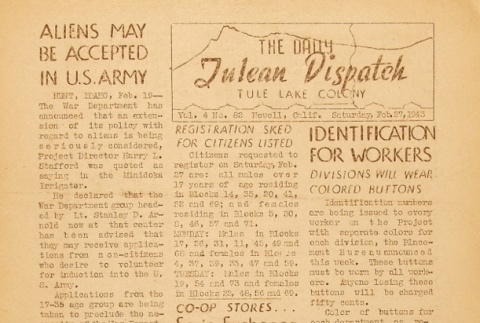
Tulean Dispatch Vol. 4 No. 82 (February 27, 1943) (ddr-densho-65-169)
Selected article titles: "Aliens May Be Accepted in U.S. Army" (p. 1), "Messages to Japan Are Being Taken" (p. 1), "National Sawmill" (p. 1), "Registration Sked For Citizens Listed" (p. 1), "Co-op Stores... Scrip Exchange to be Stopped" (p. 1), "Procedure For Soldiers to Visit Tule Lake Given By DeWitt" (p. 1), "Identification For Workers: Divisions …
av
Interview with Yukio Kawamoto, part 5 of 8 (ddr-densho-1007-1549)
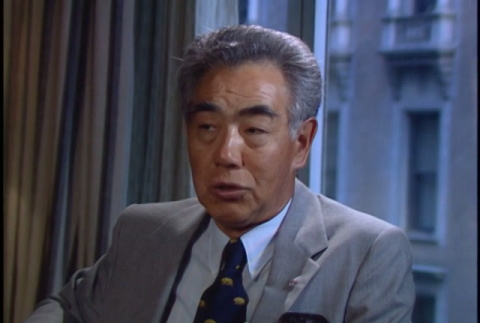
Kawamoto discusses the letters he wrote to his parents during his service, visiting them in camp (Topaz), and getting his dog tags marked as Buddhist. Also talks about post-war occupation of Japan with ATIS. Video starts at 0:57. Loni Ding can be heard asking questions behind the camera. Original title: 50, II NY #33, Kawamoto. Interview …
doc
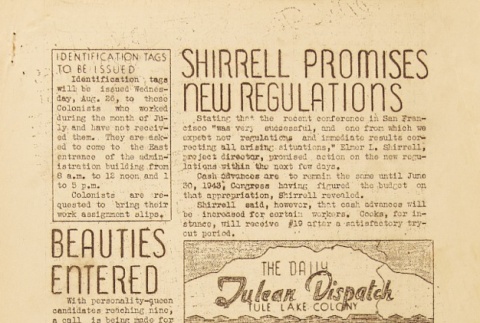
Tulean Dispatch Vol. III No. 34 (August 25, 1942) (ddr-densho-65-30)
Selected article titles: "Identification Tags to be Issued" (p. 1), "Beauties Entered" (p. 1), "Shirrell Promises New Regulations" (p. 1), "Hold Conclave on Advanced Education" (p. 1), "Sickness Prevention Week" (p. 1), "Moon Eclipse Tonight" (p. 1), "Social Welfare Located in 1608" (p. 2), "Thirteen Tuleans to Leave for Japan" (p. 3), "Co-op Discussion Group Meets" …
img
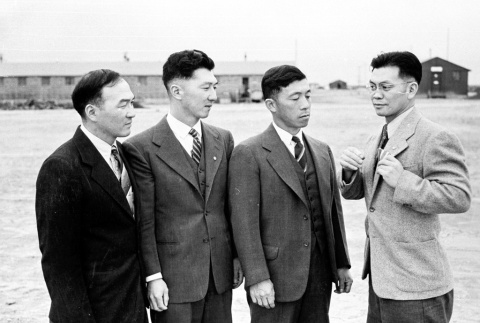
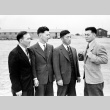
Nisei military volunteers (ddr-densho-37-328)
Original WRA caption: Shown here are the four Sakura brothers who have volunteered for service in the combat team in the United States Army, which is composed of Americans of Japanese ancestry. These four brothers are fulfilling a vow made to their father, who died 20 years ago, to live and die for the United States, …
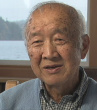
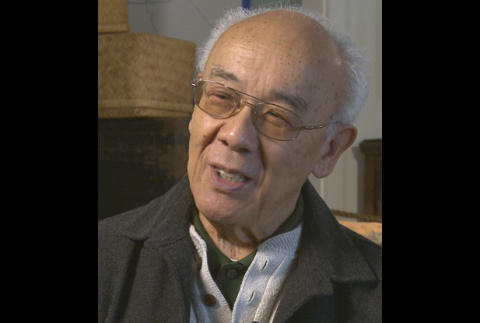
Narrator Zen Shibayama
Nisei male. Born July 5, 1924, in Seattle, Washington, but raised in Bainbridge Island, Washington. Lived in Japan for several years, returning to the U.S. just prior to the bombing of Pearl Harbor in 1941. Moved with family to Moses Lake, Washington, as part of "voluntary evacuation." Drafted into the army and served with the Military …
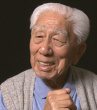
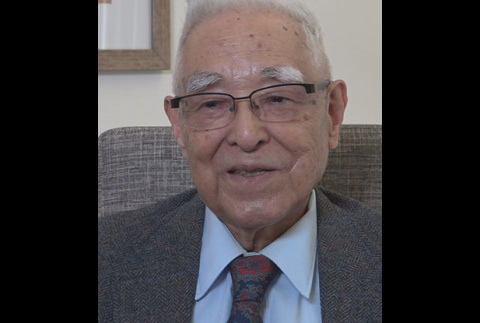
Narrator Nori Masuda
Nisei male. Born September 11, 1916, in Fresno, California. Grew up in Fresno in Chinatown, where the city's Chinese and Japanese communities were concentrated. During World War II, removed to the Fresno Assembly Center, California, and the Jerome concentration camp, Arkansas. Left camp to work for Seabrook Farms, New Jersey. Enlisted in the military and served …
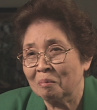
Narrator Atami Ueno
Nisei female. Born March 27, 1927, in Ola'a, Hawaii. Grew up in Ola'a until family moved to Hawaii just before World War II. Attended high school and college during in Japan and then had to work a factory to support the war effort. Witnessed the atomic bombing of Nagasaki. Worked for the military government in Japan, …
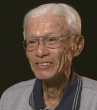
Narrator Izumi Hirano
Kibei male. Born February 25, 1929, in Hilo, Hawaii. At the age of four, moved to Japan, where family operated a farm. Attended school in Japan during World War II. Was in school in Hiroshima when the United States dropped the atomic bomb in 1945. Survived the bombing along with mother and brother. In 1949, returned …
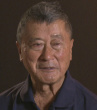
Narrator Jack Dairiki
Kibei male. Born December 25, 1930 in Sacramento, California. Grew up in Sacramento where parents ran a hotel. In 1941, traveled to Japan with father to Japan, then could not return to the United States because of impending war. Was living in Hiroshima when the United States dropped the atomic bomb in 1945. Returned to the …
Narrator Charles Olds
White male. Born 1913 in Karuizawa, Japan, to missionary parents. Attended Canadian school in Kobe, Japan, before coming to the United States with his older brother. He attended the University of Chicago School of Social Work, then volunteered to work for the War Relocation Authority (WRA). He later worked as a relocation officer in the concentration …
Narrator Kazue Murakami Tanimoto
Nisei female. Born January 28, 1919, in Hilo, Hawaii. Grew up in Hilo before moving to Japan in 1934. Attended school in Japan, returning to Hilo before the outbreak of World War II. During the war, father was arrested and removed to the Kilauea Military Camp and Sand Island internment camps, Hawaii. During father's absence, took …
Narrator Hiroshi Terry Terakawa
Nisei male. Born January 3, 1929, in Kyoto, Japan. Came to United States as a young child with parents. Moved frequently as a child due to father's role as a Buddhist minister, living in places like Walnut Grove and Marysville, California. During World War II, was living in Salt Lake City. Drafted into the army and …
Narrator Susumu Nakanishi
Shin-Issei male. Born September 10, 1926, in Hyogo, Japan. Grew up in Japan, where parents farmed. During World War II, exempted from the draft due to higher education status. Attended Doshisha University in Kyoto, learning English from an influential missionary. Moved to the United States and attended Lehigh University in Pennsylvania, then studied at the University …
Collection
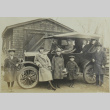
Terakawa Collection (ddr-densho-357)
The Terakawa Collection consists of four photograph albums created by Hanako Terakawa. Hanako's parents, Tadaichi and Yoni Yoshioka, immigrated from Japan and settled in Hayward, California in the early 1900's. In Hayward, they started a family and had five children. They owned a nursery and maintained several greenhouses built around 1913. The earliest photograph album primarily …