
5890 items


![Letter from Masao Okine to Mr. and Mrs. S. Okine, February 18, 1946 [in Japanese] (ddr-csujad-5-190)](https://ddr.densho.org/media/cache/aa/0a/aa0a7d2a46a9b6f91b2a9fdcba1d08a5.jpg)
![Letter from Miyuki Matsuura to Mr. and Mrs. S. Okine, October 30, 1947 [in Japanese] (ddr-csujad-5-214)](https://ddr.densho.org/media/cache/6c/bd/6cbdf5b4d463826254f0d357a0db3b9f.jpg)

5890 items
vh
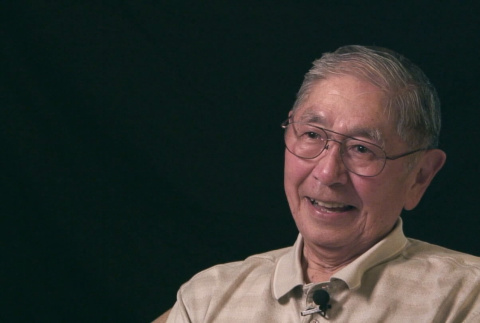
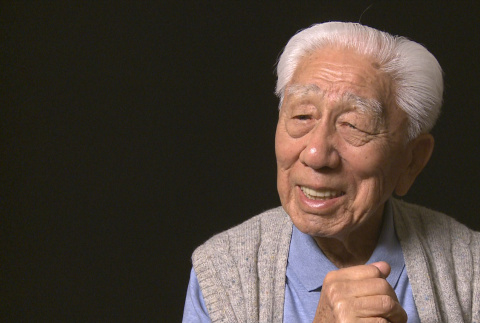
Katsumi Okamoto Interview (ddr-manz-1-24)
Nisei male. Born July 5, 1926, in Seattle, Washington. Grew up in Seattle, where parents owned and operated a grocery store. Following the bombing of Pearl Harbor, removed to Puyallup Assembly Center, Washington, and Minidoka concentration camp, Idaho. Served in Japan with the Military Intelligence Service following World War II.
vh
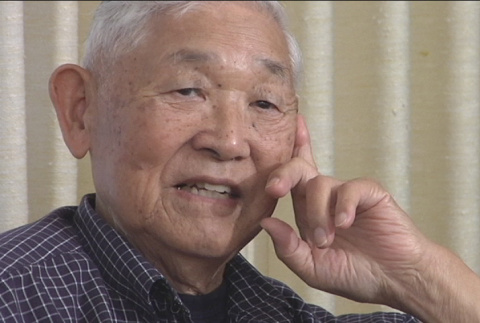
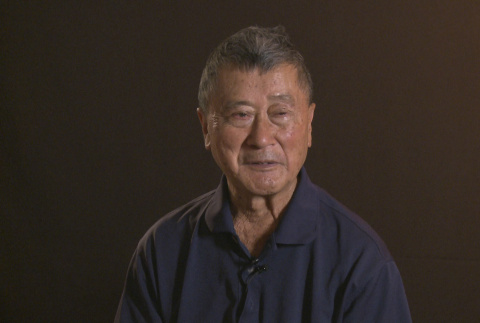
George Hiromoto Interview (ddr-densho-1010-12)
Nisei male. Born 1921 in Courtland, California. Grew up in the Clarksburg area, where parents ran a farm. During World War II, removed to Turlock Assembly Center, California, and the Gila River concentration camp, Arizona. Served with the Military Intelligence Service in Japan. Eventually returned to Clarksburg and reestablished farm.

av
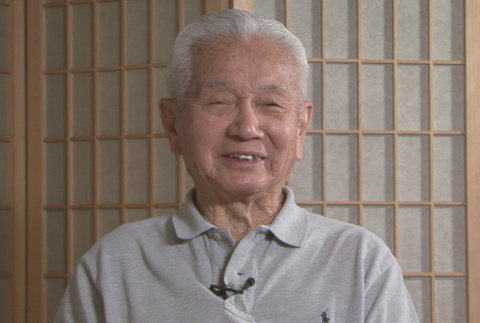
Interview with Mary M. Hirai (tape 1, side 1) (ddr-ajah-3-352)
Mary M. Hirai was born on November 19, 1900. She left Japan as a baby and moved to Hawaii with her parents, then they went to San Jose, California, when Mrs. Hirai was aged five. Her father worked in a cannery and her grandmother cooked in Toyokan, a Japanese hotel.

av
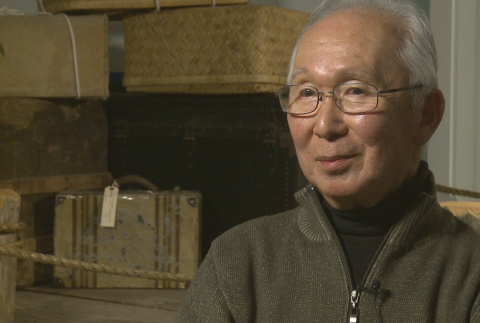
Interview with Mary M. Hirai (tape 1, side 2) (ddr-ajah-3-353)
Mary M. Hirai was born on November 19, 1900. She left Japan as a baby and moved to Hawaii with her parents, then they went to San Jose, California, when Mrs. Hirai was aged five. Her father worked in a cannery and her grandmother cooked in Toyokan, a Japanese hotel.
img
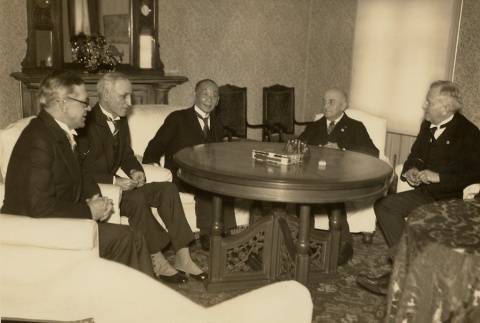
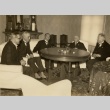
W. Cameron Forbes meeting with Chuji Machida (ddr-njpa-1-374)
Caption on reverse: "The American Economic Mission to Japan and China in conference with Japanese Minister of Commerce and Industry, Mr. Chuji Machida, at the official residence of Mr. Machida. Seated behind the table: (left) Mr. Machida, (right) Hon. W. Cameron Forbes, chairman of the American Economic Mission. April 9, Tokyo."
doc
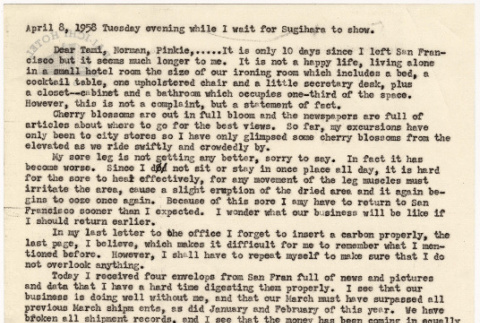
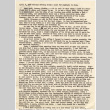
Letter from Henri Takahashi to Tami (Tomoye), Pinkie (Masako) and Norman Takahashi (ddr-densho-422-173)
Cherry blossoms are in bloom, but hasn't had time to see them, his leg is not getting better, worries he may have to cut trip short, glad that business is doing so well at home, would like to take a trip with whole family to Japan. Letter is missing page(s).
Narrator Kimi Ogami
Shin-Issei female. Born January 4, 1928, in Fukuoka, Japan. Lived in Japan during World War II. Met husband in Japan, married, and immigrated to the U.S. in the 1950s.
![Letter from Masao Okine to Mr. and Mrs. S. Okine, February 18, 1946 [in Japanese] (ddr-csujad-5-190)](https://ddr.densho.org/media/cache/47/4a/474a0e512634525517d473f352ad5888.jpg)
doc
Letter from Masao Okine to Mr. and Mrs. S. Okine, February 18, 1946 [in Japanese] (ddr-csujad-5-190)
A letter from Masao Okine to his parents, Seiichi and Tomeyo Okine, along with a note in English. He writes from Tokyo, Japan, where he is stationed as a Nisei soldier. The letter is mailed via San Francisco by the U.S. Postal Service. In the letter, Masao informs that he has been transferred from Sagamihara to …
vh
Nobu Suzuki Interview I Segment 14 (ddr-densho-1000-84-14)
Double discrimination, no jobs for Japanese American women in the U.S. or Japan
References are made to several of Nobu Suzuki's personal papers, which are currently available for public perusal at the University of Washington's Manuscripts and University Archives.
vh
Mas Akiyama Segment 7 (ddr-densho-1000-188-7)
Moving with family to Japan as a teenager
This interview was conducted as part of a project to capture stories of the Japanese American community of Spokane, Washington. Densho worked in collaboration with the Northwest Museum of Arts and Culture.
vh
Sam Ogo Interview Segment 15 (ddr-densho-1000-193-15)
Brother's experience in Japan during the war
This interview was conducted as part of a project to capture stories of the Japanese American community of Spokane, Washington. Densho worked in collaboration with the Northwest Museum of Arts and Culture.
doc
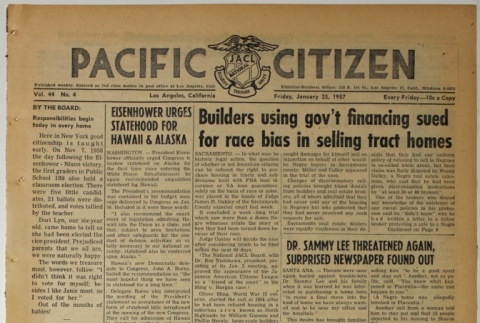
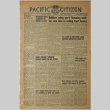
Pacific Citizen, Vol. 44, No. 4 (January 25, 1957) (ddr-pc-29-4)
Selected article titles: "Builders using gov't financing sued for race bias in selling tract homes" (p. 1); "Eisenhower urges statehood for Hawaii & Alaska" (p.1); "Japan refugee returns home after year stay in California, in Uncle Sam uniform" (p. 1); "Nisei opera soloist set for S.F. season" (p. 2); "Temporary farm worker program extended for Mexicans; …
img
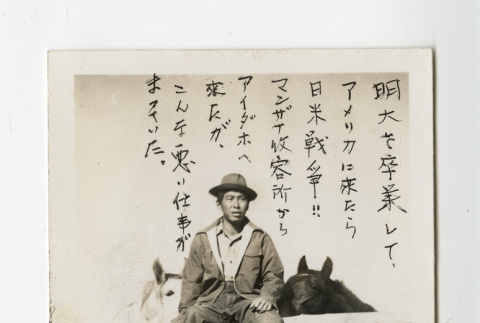
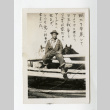
Kibei Nisei at Camp Rupert, Idaho (ddr-csujad-38-14)
A photo of Goerge Nobuo Naohara's Kibei friend. It is presumably taken at Axel Johnson Ranch in Utah. The caption reads: After graduating from Meiji University, Tokyo Japan, I came back to the United States. Then, the outbreak of the war between Japan and the U.S.! After the incarceration at the Manzanar camp, I came to …
![Letter from Miyuki Matsuura to Mr. and Mrs. S. Okine, October 30, 1947 [in Japanese] (ddr-csujad-5-214)](https://ddr.densho.org/media/cache/73/75/737531d51f9a9dbdff1e1a69c8015c4b.jpg)
doc
Letter from Miyuki Matsuura to Mr. and Mrs. S. Okine, October 30, 1947 [in Japanese] (ddr-csujad-5-214)
A letter from Miyuki Matsuura to her uncle and aunt, Seiichi and Tomeyo Okine. She thanks them for the chrysanthemums they grew and sent to her. She keeps some of the flowers in her parlor and some of the flowers on Mrs. Freitas' grave. She includes updates on her work including finishing picking tomatoes and starting …

doc
Kuni Itabashi passport (ddr-densho-493-8)
Passport of Kuni Itabashi, "Returning Emigrant," permitting her to pass from Japan to the U.S.A. Page 1 is entirely in Japanese, page 2 features a passport photo stamped by the Imperial Japanese Government and stamps reading "SEEN at the American Consulate at Kobe, Japan, March 24, 1920" "U.S. Immigration Service SEATTLE, WASH. ADMITTED Date APR 15, …
doc
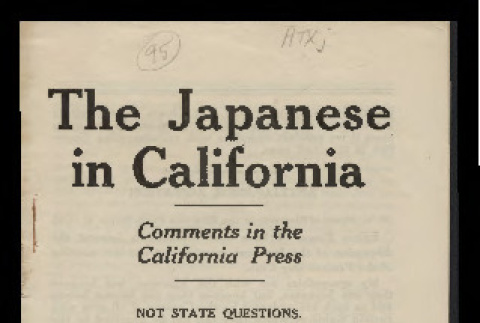
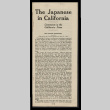
Japanese in California: comments in the California press (ddr-csujad-55-360)
Collection of articles on Japanese in California reprinted from California newspapers. Articles include "Anti-Japanese agitation", "Lyman Gage on the Japanese", "Always at hand", "Senator Phelan and the Japanese", "California mission to Japan", "Church Federation on the Japanese question", "Proposed initiative measure" "The Japanese in California", "Cultivate friendly relations with Japan", "The picture bride", "Stephens is right", …
img
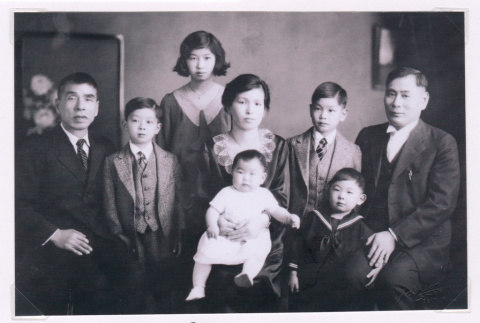
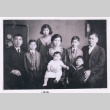
Nakahara and Nakato family photo (ddr-densho-477-65)
Family portrait of the Nakaharas and Nakato in-laws. Identified standing in the back is Mitsuko (Nakahara) Isoshima. Identified in the middle row, left to right: Masataro Nakato, Monzaburo Nakahara, Yoshiko (Nakato) Nakahara, Tsuyoshi Nakahara, and Shohei Nakahara. Front row left to right: Midori (Nakahara) Chikamura (held in lap), Saburo Nakahara (standing). The caption below the image …
vh
Nori Masuda Interview (ddr-densho-1010-10)
Nisei male. Born September 11, 1916, in Fresno, California. Grew up in Fresno in Chinatown, where the city's Chinese and Japanese communities were concentrated. During World War II, removed to the Fresno Assembly Center, California, and the Jerome concentration camp, Arkansas. Left camp to work for Seabrook Farms, New Jersey. Enlisted in the military and served …
vh
Jack Dairiki Interview (ddr-densho-1000-325)
Kibei male. Born December 25, 1930 in Sacramento, California. Grew up in Sacramento where parents ran a hotel. In 1941, traveled to Japan with father to Japan, then could not return to the United States because of impending war. Was living in Hiroshima when the United States dropped the atomic bomb in 1945. Returned to the …
vh
Minoru Tajii Interview (ddr-densho-1000-394)
Nisei male. Born February 23, 1924, in Brawley, California. Grew up in El Centro, California, where parents ran a farm. During World War II, was removed to the Poston concentration camp, Arizona. Family signed "no-no" on the so-called "loyalty questionnaire" and transferred to the Crystal City internment camp, Texas, then to Japan. Lived and worked in …
vh
Taneyuki Dan Harada Interview (ddr-densho-1000-306)
Kibei male. Born June 17, 1923, in Los Angeles, California. Grew up in Los Angeles before moving to Japan and attending school. Returned to the U.S. in 1938, and was attending high school when Japan bombed Pearl Harbor on December 7, 1941. Removed to the Tanforan Assembly Center, California, and the Topaz concentration camp, Utah. While …
doc
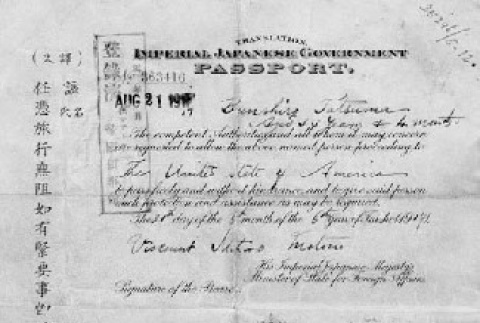
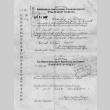
Japanese passport (ddr-densho-23-5)
English and French translations of the Japanese passport belonging to Bunshiro Tazuma. The Issei, mostly young Japanese males, began immigrating to the United States in the late 1800s. Many were farmers or students with dreams of returning to Japan after making their fortunes in America. The vast majority never realized this dream.
doc
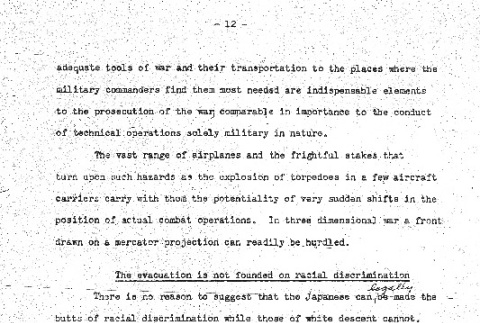
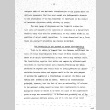
Excerpt from the Korematsu brief (ddr-densho-67-107)
Excerpt from the Korematsu brief defending evacuation on the premise that racial discrimination was not used. Blames Japanese for being unassimilated and too connected to Japan. Compares Japanese with Germans and Italians and discusses why the government did not evacuate them. Justifies internment because Japanese were able to leave camps for work.
doc
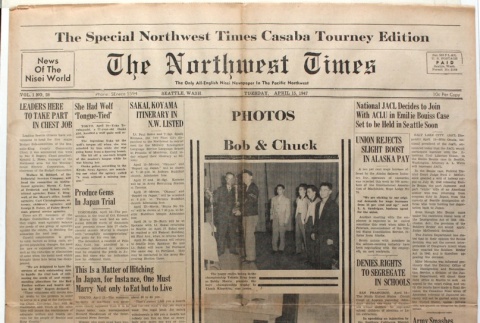
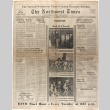
The Northwest Times Vol. 1 No. 28 (April 15, 1947) (ddr-densho-229-14)
"This Is A Matter of Hitching in Japan, for Instance, One Must Marry Not Only to Eat But to Live" (p. 1), "National JACL Decides to Join With ACLU in Emilie Bouiss Case Set to be Held in Seattle Soon" (p. 1) "Hoshino KO's Rival in 4th in Isle Debut" (p. 2).
doc
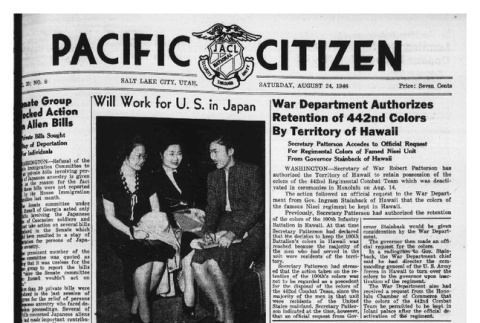
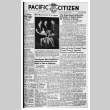
The Pacific Citizen, Vol. 23 No. 8 (August 24, 1946) (ddr-pc-18-34)
Selected article titles: "War Department Authorizes Retention of 442nd Colors By Territory of Hawaii" (p. 1), "Topaz Center Will Provide Veterans Homes" (p. 1), "Hawaii Sugar Workers Seek Better Conditions" (p. 2), "Seek Probation For Evacuees in Draft Cases" (p. 2), "Five Nisei, Stranded by War in Japan, Return to U.S." (p. 3).