Biweekly newspaper published at the Santa Anita Assembly Center from April through October 1942. Current issue includes information on recreational activities, religious services, sports, departure for incarceration camps, social events, nisei soldiers, an editorial on the right to vote, and the features ""Win, Place, and Show"", ""Post Time"", ""Story of the Week"", and ""Feminine Forum."" See …
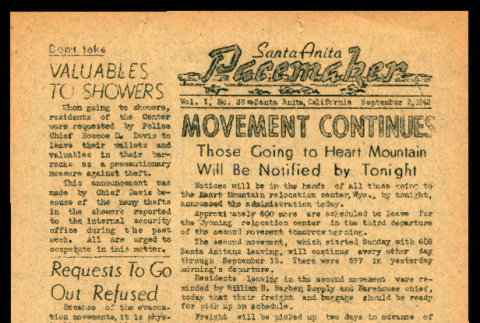
Biweekly newspaper published at the Santa Anita Assembly Center from April through October 1942. Current issue includes information on recreational activities, religious services, sports, departure for incarceration camps, funerals, Heart Mountain housing, transfer regulations, an editorial on letters in the Arkansas Gazette, and the features ""Win, Place, and Show"", ""Post Time"", and ""Feminine Forum."" See this …
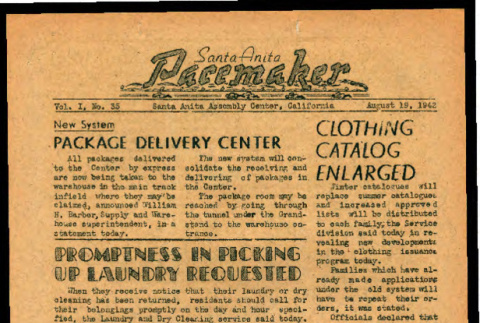
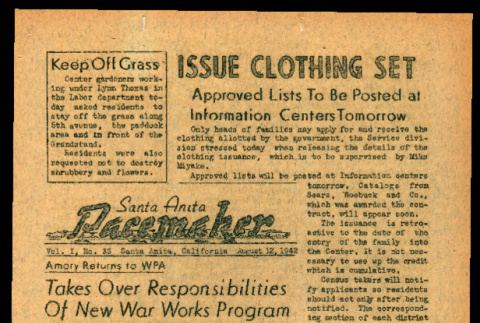
Biweekly newspaper published at the Santa Anita Assembly Center from April through October 1942. Current issue includes information on recreational activities, religious services, sports, clothing catalog, hospital, an editorial on California, and the features "Feminine Forum" and "Win, Place, and Show." See this object in the California State Universities Japanese American Digitization project site: sac_jaac_1269
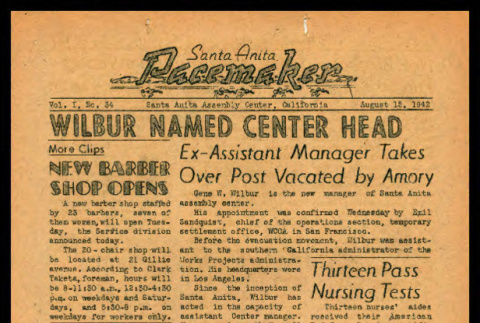
Biweekly newspaper published at the Santa Anita Assembly Center from April through October 1942. Current issue includes information on recreational activities, religious services, sports, Gene W. Wilbur, a barber shop, nurses, paychecks, Yeiki Matsui, and the features "Win, Place, and Show", "Post Time", "Story of the Week", and "Feminine Forum." See this object in the California …
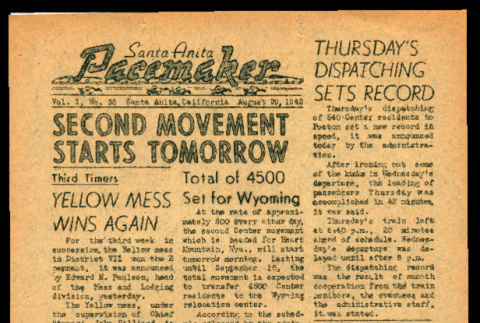
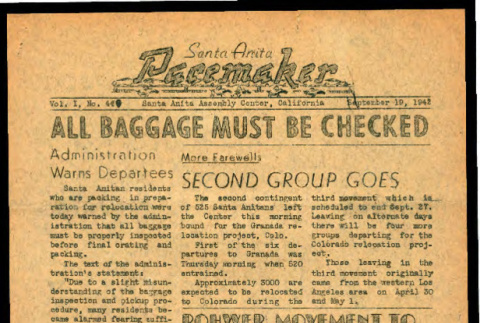
Biweekly newspaper published at the Santa Anita Assembly Center from April through October 1942. Current issue includes information on recreational activities, religious services, sports, departure for the Granada and Rohwer incarceration camps, baggage checks and inspection, and the features "Win, Place, and Show", "Story of the Week", "Post Time", and ""Feminine Forum." See this object in …
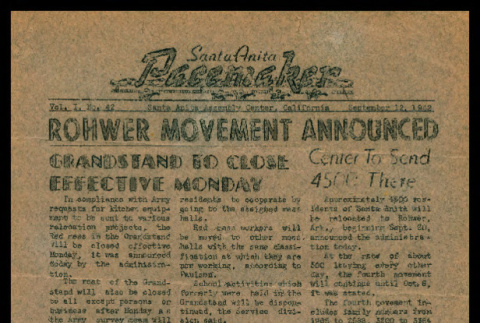
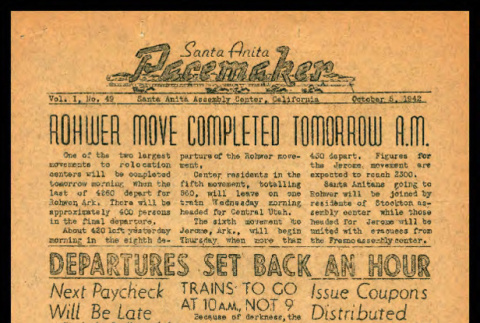
Biweekly newspaper published at the Santa Anita Assembly Center from April through October 1942. Current issue includes information on recreational activities, religious services sports, departure for Rohwer incarceration camp, WRA aid, Grandstand closure, autograph books, and the features "Win, Place, and Show", "Story of the Week", "Post Time", and ""Feminine Forum." See this object in the …
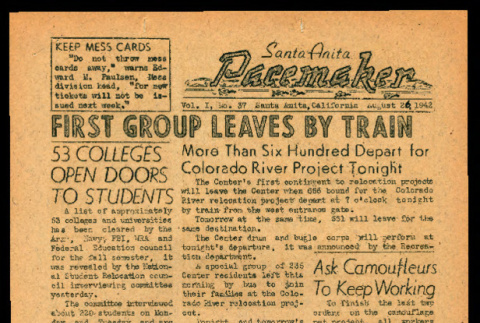
Biweekly newspaper published at the Santa Anita Assembly Center from April through October 1942. Current issue includes information on recreational activities, religious services, sports, departure for incarceration camps, sugar rations, immunizations, an editorial on the WRA, and the features "Feminine Forum", "Post Time", and "Win, Place, and Show." See this object in the California State Universities …
Biweekly newspaper published at the Santa Anita Assembly Center from April through October 1942. Current issue includes information on recreational activities, religious services, sports, H. Russell Amory, the police chief, paychecks, mailmen, clothing and the features "Win, Place, and Show", "Post Time", "Story of the Week", and "Feminine Forum." See this object in the California State …
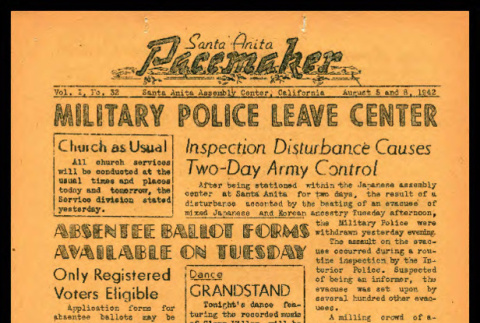
Biweekly newspaper published at the Santa Anita Assembly Center from April through October 1942. Current issue includes information on recreational activities, religious services, sports, absentee ballots, shoe repair, farming, work regulations, infectious diseases, Ichijiro Yoshida, an editorial on rumors, and the features "Win, Place, and Show", "Post Time", and "Feminine Forum." See this object in the …
Biweekly newspaper published at the Santa Anita Assembly Center from April through October 1942. Current issue includes information on recreational activities, religious services, sports, departure for Rohwer incarceration camp, "Relocation Vignettes," the Santa Anita Supply and Warehouse and Finance divisions, and the features "Feminine Forum" and "Win, Place, and Show." See this object in the California …
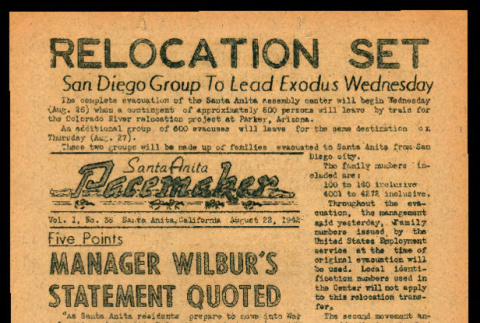
Biweekly newspaper published at the Santa Anita Assembly Center from April through October 1942. Current issue includes information on recreational activities, religious services, sports, the evacuation of the Santa Anita Assembly Center, student relocation, and the features "Feminine Forum", "Post Time", and "Win, Place, and Show." See this object in the California State Universities Japanese American …
Continuing to make grocery deliveries despite restrictions
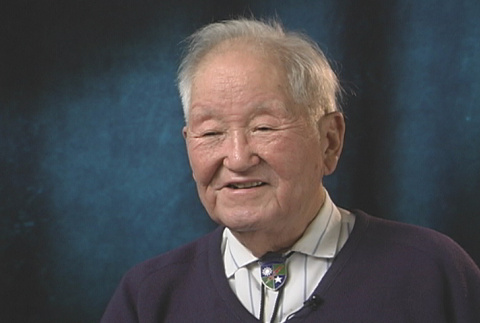
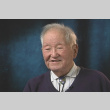
Although Mr. Matsumoto does not identify himself as a Kibei (American-born person of Japanese ancestry sent to Japan for formal education and socialization when young and later returned to the U.S.), some of his life experiences are similar to those who do identify themselves as such.
Traveling overseas by ship along with Caucasian soldiers
Although Mr. Matsumoto does not identify himself as a Kibei (American-born person of Japanese ancestry sent to Japan for formal education and socialization when young and later returned to the U.S.), some of his life experiences are similar to those who do identify themselves as such.
Getting a job as a delivery boy for a grocery store: making deliveries to outlying communities of Los Angeles
Although Mr. Matsumoto does not identify himself as a Kibei (American-born person of Japanese ancestry sent to Japan for formal education and socialization when young and later returned to the U.S.), some of his life experiences are …
Although Mr. Matsumoto does not identify himself as a Kibei (American-born person of Japanese ancestry sent to Japan for formal education and socialization when young and later returned to the U.S.), some of his life experiences are similar to those who do identify themselves as such.
Reuniting with brother, who had been drafted before World War II
Although Mr. Matsumoto does not identify himself as a Kibei (American-born person of Japanese ancestry sent to Japan for formal education and socialization when young and later returned to the U.S.), some of his life experiences are similar to those who do identify themselves as …
Although Mr. Matsumoto does not identify himself as a Kibei (American-born person of Japanese ancestry sent to Japan for formal education and socialization when young and later returned to the U.S.), some of his life experiences are similar to those who do identify themselves as such.
Going to Japan for summer vacation, but remaining there after vacation was over
Although Mr. Matsumoto does not identify himself as a Kibei (American-born person of Japanese ancestry sent to Japan for formal education and socialization when young and later returned to the U.S.), some of his life experiences are similar to those who do identify …
Description of middle school in Japan, involvement in compulsory military training
Although Mr. Matsumoto does not identify himself as a Kibei (American-born person of Japanese ancestry sent to Japan for formal education and socialization when young and later returned to the U.S.), some of his life experiences are similar to those who do identify themselves as …
Family background: grandparents' immigration to Hawaii
Although Mr. Matsumoto does not identify himself as a Kibei (American-born person of Japanese ancestry sent to Japan for formal education and socialization when young and later returned to the U.S.), some of his life experiences are similar to those who do identify themselves as such.
Tutoring Caucasian junior officers in Japanese language
Although Mr. Matsumoto does not identify himself as a Kibei (American-born person of Japanese ancestry sent to Japan for formal education and socialization when young and later returned to the U.S.), some of his life experiences are similar to those who do identify themselves as such.