
2410 items
2410 items
vh
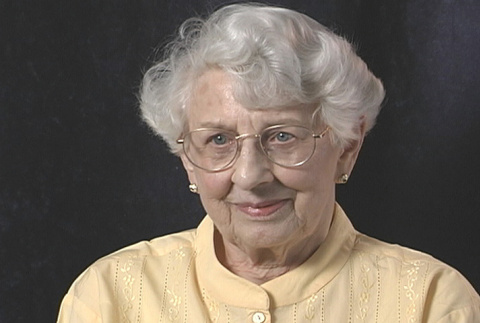
Helen Amerman Manning Interview Segment 1 (ddr-densho-1000-147-1)
Family background: grandfather was a prominent missionary in Japan
vh
Helen Amerman Manning Interview Segment 5 (ddr-densho-1000-147-5)
Memories of the arduous journey by train to Minidoka concentration camp, Idaho
vh
Helen Amerman Manning Interview Segment 12 (ddr-densho-1000-147-12)
Visiting town of Twin Falls, Idaho, on weekends, encountering prejudice
vh
Helen Amerman Manning Interview Segment 3 (ddr-densho-1000-147-3)
Attending Michigan State College and pursuing the field of social work
vh
Helen Amerman Manning Interview Segment 13 (ddr-densho-1000-147-13)
Discussion of policy changes taking place at Minidoka, both in regards to leave clearance and the education system
vh
Helen Amerman Manning Interview Segment 6 (ddr-densho-1000-147-6)
Adjusting to the "primitive" barracks used for housing and the school building
vh
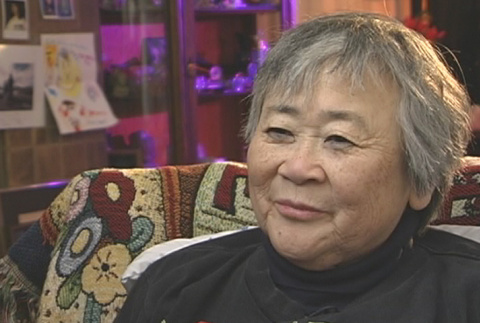
Akiko Kurose Interview II Segment 16 (ddr-densho-1000-42-16)
Meeting Floyd Schmoe
Mrs. Kurose was undergoing treatment for cancer and required frequent breaks and medication to help her with pain management.
vh
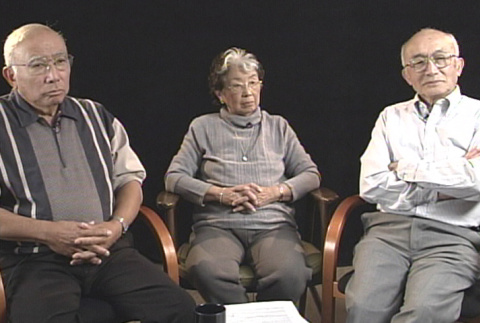
Mitsuye May Yamada - Joe Yasutake - Tosh Yasutake Interview (ddr-densho-1000-135)
Before being contacted by Densho, the Yasutake siblings had planned to conduct their own family history interviews. Individually and jointly, they and other family members had written and gathered material documenting their family history. They shared much of this with me to assist with research and preparation for the Densho interview. Mitsuye's daughter Jeni had coordinated …
vh
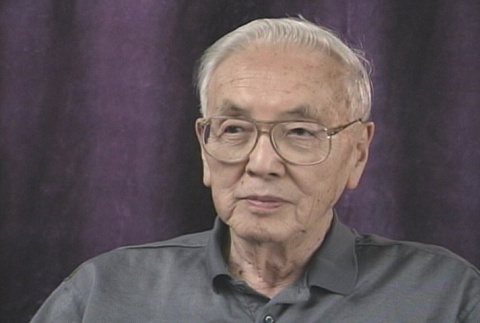
Bill Hosokawa Interview Segment 19 (ddr-densho-1000-129-19)
Discussion of newspaper column written about nativists in California
vh
Bill Hosokawa Interview Segment 14 (ddr-densho-1000-129-14)
Impressions of the Puyallup Assembly Center, Washington: "What the hell are they trying to do to us?"; controversy over Jimmie Sakamoto's role in Puyallup, and being sent to Heart Mountain concentration camp, Wyoming
vh
Bill Hosokawa Interview Segment 1 (ddr-densho-1000-129-1)
Family background: father's work in Montana and California, mother's work as a school teacher
vh
Bill Hosokawa Interview Segment 8 (ddr-densho-1000-129-8)
Getting married and moving to Singapore to work for an American-style newspaper
vh
Bill Hosokawa Interview Segment 23 (ddr-densho-1000-129-23)
Finding the positive in the mass removal: Japanese Americans were forced out of ethnic enclaves into wider society
vh
Bill Hosokawa Interview Segment 17 (ddr-densho-1000-129-17)
Role as editor of a camp newspaper, the Heart Mountain Sentinel
vh
Bill Hosokawa Interview Segment 24 (ddr-densho-1000-129-24)
Moving to Colorado and working for the Denver Post, covering the Korean and Vietnam wars
vh
Bill Hosokawa Interview Segment 9 (ddr-densho-1000-129-9)
Working in Shanghai, anticipating the onset of war between the United States and Japan, and returning to the U.S.
vh
Bill Hosokawa Interview Segment 13 (ddr-densho-1000-129-13)
Description of hostile sentiment toward Japanese Americans following the bombing of Pearl Harbor
vh
Bill Hosokawa Interview Segment 12 (ddr-densho-1000-129-12)
Role of the Emergency Defense Council after the bombing of Pearl Harbor
vh
Bill Hosokawa Interview Segment 28 (ddr-densho-1000-129-28)
Combating racism: deciding whether or not a situation warrants speaking out
vh
Bill Hosokawa Interview Segment 16 (ddr-densho-1000-129-16)
Thoughts on the resisters: admired their courage, but felt that "it wouldn't gain us anything"
vh
Bill Hosokawa Interview Segment 29 (ddr-densho-1000-129-29)
Finding government papers documenting that the move to Heart Mountain was ordered as punishment
vh
Bill Hosokawa Interview Segment 18 (ddr-densho-1000-129-18)
Dilemma faced as editor of the Heart Mountain Sentinel: report the truth without provoking negative sentiment and riots
vh
Bill Hosokawa Interview Segment 6 (ddr-densho-1000-129-6)
Facing discrimination while pursuing a career in journalism: told by a professor, "No American publisher is gonna ever hire you"
vh
Bill Hosokawa Interview Segment 10 (ddr-densho-1000-129-10)
Observations about the world climate shortly before the outbreak of World War II