
3002 items
3002 items
vh
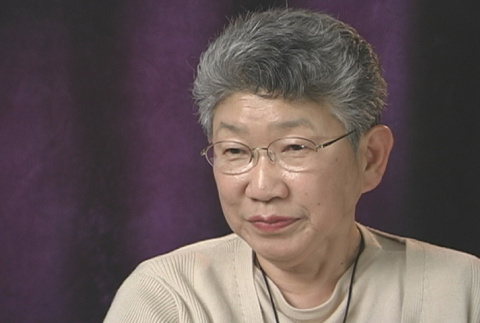
Betty Morita Shibayama Interview Segment 44 (ddr-densho-1000-152-44)
Thoughts on current events; message for younger generations: "if they see an injustice that they shouldn't stand by and let it happen"
vh
Betty Morita Shibayama Interview Segment 1 (ddr-densho-1000-152-1)
Family background: grandfather "jumped ship" on way to Mexico and landed in Seattle, Washington
vh
Betty Morita Shibayama Interview Segment 34 (ddr-densho-1000-152-34)
Returning as a married couple to Chicago; having two children
vh
Betty Morita Shibayama Interview Segment 20 (ddr-densho-1000-152-20)
Remembering family's discussions involving the so-called "loyalty questionnaire"
vh
Betty Morita Shibayama Interview Segment 26 (ddr-densho-1000-152-26)
A younger sister is born in camp; mother stayed to work in camp while father went out to work in Oregon
vh
Betty Morita Shibayama Interview Segment 30 (ddr-densho-1000-152-30)
Living in Chicago, Illinois, postwar: ethnic composition of high school
vh
Betty Morita Shibayama Interview Segment 29 (ddr-densho-1000-152-29)
Parents find work in Chicago after the war
vh
Betty Morita Shibayama Interview Segment 7 (ddr-densho-1000-152-7)
Attending Methodist church as a child in order to become more "Americanized"
vh
Betty Morita Shibayama Interview Segment 28 (ddr-densho-1000-152-28)
Leaving camp for Chicago and attending school there: "I just felt comfortable"
vh
Betty Morita Shibayama Interview Segment 42 (ddr-densho-1000-152-42)
Taking a trip to Japan in 1984, meeting relatives
vh
Betty Morita Shibayama Interview Segment 3 (ddr-densho-1000-152-3)
Description of photographs of parents and grandparents
vh
Betty Morita Shibayama Interview Segment 23 (ddr-densho-1000-152-23)
Attending grammar school in Minidoka; memories of a teacher who nearly used the term "Jap"
vh
Betty Morita Shibayama Interview Segment 12 (ddr-densho-1000-152-12)
Memories of prewar Japanese community activities: mochitsuki and picnics
vh
Betty Morita Shibayama Interview Segment 15 (ddr-densho-1000-152-15)
Some positive memories of supportive Caucasian neighbors in the time leading up to mass removal
vh
Betty Morita Shibayama Interview Segment 39 (ddr-densho-1000-152-39)
Husband is denied redress as a Japanese Peruvian and begins to speak at public venues
vh
Betty Morita Shibayama Interview Segment 40 (ddr-densho-1000-152-40)
Decision to not accept the Japanese Peruvians' settlement, and, with others, sue the government for redress
vh
Betty Morita Shibayama Interview Segment 43 (ddr-densho-1000-152-43)
Experiences lobbying congresspeople in Washington, D.C. on behalf of fight for Japanese Peruvian redress
vh
Betty Morita Shibayama Interview Segment 32 (ddr-densho-1000-152-32)
Getting engaged to a Japanese Peruvian who was not a U.S. citizen
vh
Betty Morita Shibayama Interview Segment 25 (ddr-densho-1000-152-25)
Memories of the funeral service of a family friend who was killed while serving in the U.S. Military Intelligence Service
vh
Betty Morita Shibayama Interview Segment 6 (ddr-densho-1000-152-6)
Early memories of growing up in the Hood River valley: ethnic composition of friends and neighbors
vh
Betty Morita Shibayama Interview Segment 13 (ddr-densho-1000-152-13)
Reading of a flyer put out by the Hood River chief of police in the days following the bombing of Pearl Harbor