Topics
Facilities
Format
Genre
Usage

Use <Ctrl> or (⌘) keys to select multiple terms

3000 items
Tsuguo
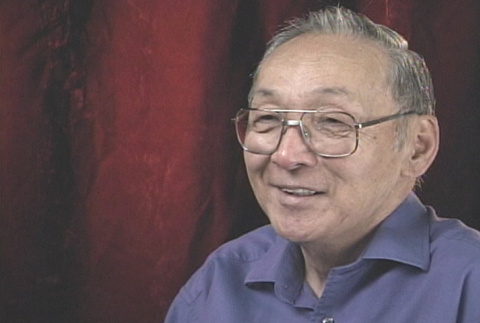
vh Tsuguo "Ike" Ikeda Interview I Segment 25 (ddr-densho-1000-123-25)
Social work: working at Neighborhood House, Atlantic Street Center

As a teenager prior to World War II, began keeping scrapbooks with newspaper articles and memorabilia, a lifetime habit.

Tsuguo
vh Tsuguo "Ike" Ikeda Interview I Segment 9 (ddr-densho-1000-123-9)
Preparing for mass removal: fortunate to find people to take care of home and belongings

As a teenager prior to World War II, began keeping scrapbooks with newspaper articles and memorabilia, a lifetime habit.
Tsuguo
vh Tsuguo "Ike" Ikeda Interview I Segment 26 (ddr-densho-1000-123-26)
Focusing on working with troubled youth with the Atlantic Street Center

As a teenager prior to World War II, began keeping scrapbooks with newspaper articles and memorabilia, a lifetime habit.
Tsuguo
vh Tsuguo "Ike" Ikeda Interview I Segment 11 (ddr-densho-1000-123-11)
Witnessing the shooting of a kitchen worker by a camp guard

As a teenager prior to World War II, began keeping scrapbooks with newspaper articles and memorabilia, a lifetime habit.
Tsuguo
vh Tsuguo "Ike" Ikeda Interview I Segment 1 (ddr-densho-1000-123-1)
Family background: parents' plan to eventually return to Japan

As a teenager prior to World War II, began keeping scrapbooks with newspaper articles and memorabilia, a lifetime habit.

Tsuguo
vh Tsuguo "Ike" Ikeda Interview I Segment 27 (ddr-densho-1000-123-27)
Securing grant from National Institute of Mental Health to study troubled youth

As a teenager prior to World War II, began keeping scrapbooks with newspaper articles and memorabilia, a lifetime habit.

Tsuguo
vh Tsuguo "Ike" Ikeda Interview I Segment 30 (ddr-densho-1000-123-30)
Developing a statewide plan on delinquency prevention

As a teenager prior to World War II, began keeping scrapbooks with newspaper articles and memorabilia, a lifetime habit.

Tsuguo
vh Tsuguo "Ike" Ikeda Interview I Segment 10 (ddr-densho-1000-123-10)
Memories of the Portland Assembly Center, Oregon: working to distribute dairy products, help people settle

As a teenager prior to World War II, began keeping scrapbooks with newspaper articles and memorabilia, a lifetime habit.

Wesley K. Watanabe Interview Segment 19 (ddr-densho-1000-166-19)
vh Wesley K. Watanabe Interview Segment 19 (ddr-densho-1000-166-19)
Thoughts the aftermath of September 11, 2001: "we just hope that history doesn't repeat itself"
Wesley K. Watanabe Interview Segment 16 (ddr-densho-1000-166-16)
vh Wesley K. Watanabe Interview Segment 16 (ddr-densho-1000-166-16)
Impact of the incarceration experience: "a sense of betrayal, anger"
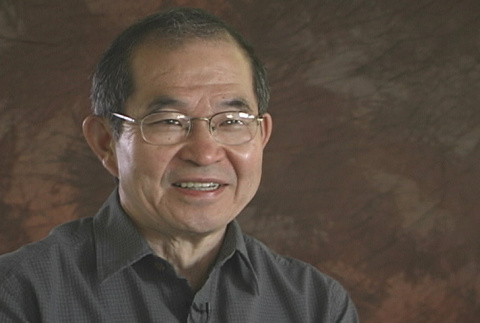
Wesley K. Watanabe Interview Segment 5 (ddr-densho-1000-166-5)
vh Wesley K. Watanabe Interview Segment 5 (ddr-densho-1000-166-5)
As a child, having only vague memories of the bombing of Pearl Harbor and mass removal to Pinedale Assembly Center
Wesley K. Watanabe Interview Segment 7 (ddr-densho-1000-166-7)
vh Wesley K. Watanabe Interview Segment 7 (ddr-densho-1000-166-7)
After leaving camp, resettling in West Chicago: being the only Japanese Americans in neighborhood
Wesley K. Watanabe Interview Segment 21 (ddr-densho-1000-166-21)
vh Wesley K. Watanabe Interview Segment 21 (ddr-densho-1000-166-21)
Reading of a letter written by father reflecting on events in his life
Wesley K. Watanabe Interview Segment 6 (ddr-densho-1000-166-6)
vh Wesley K. Watanabe Interview Segment 6 (ddr-densho-1000-166-6)
Age seven in camps, memories of playing with friends and attending school in Tule Lake, California, and Minidoka, Idaho
Wesley K. Watanabe Interview Segment 20 (ddr-densho-1000-166-20)
vh Wesley K. Watanabe Interview Segment 20 (ddr-densho-1000-166-20)
Discussion about depictions of Japanese Americans in movies and books
API