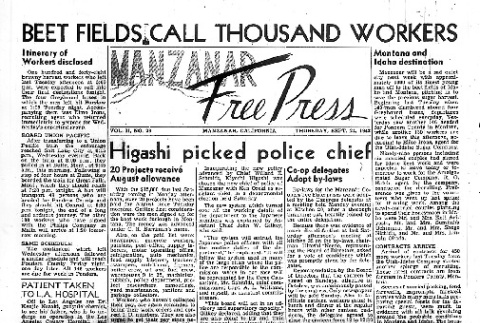
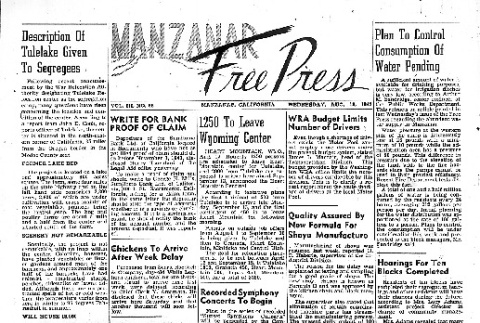
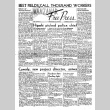
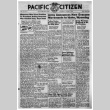
Selected article titles: "Description of Tulelake Given to Segregees" (p. 1), "Violator of Curfew Ruling Released" (p. 1), "Chickens to Arrive After Week Delay" (p. 1), "Evacuees Favored by Idaho Farmers" (p. 1), "Stray Cats; Dogs Menace to Health" (p. 1), "Plan to Control Consumption of Water Pending" (p. 1), "Health in Tulelake" (p. 1), "Chicago …
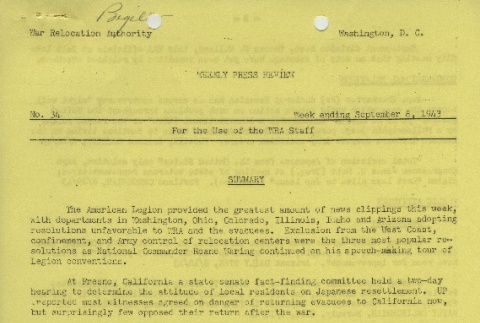
Original summary excerpt: The American Legion provided the greatest amount of news clippings this week, with departments in Washington, Ohio, Colorado, Illinois, Idaho and Arizona adopting resolutions unfavorable to WRA and the evacuees. Exclusion from the West Coast, confinement, and Army control of relocation centers were the three most popular resolution as National Commander Roane Waring …
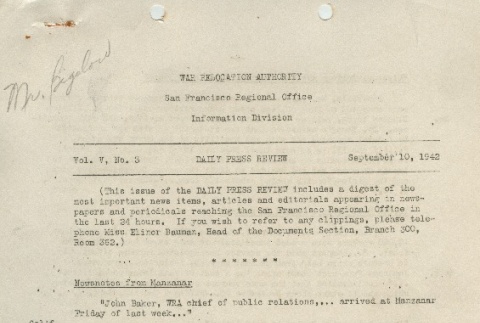
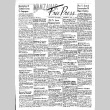
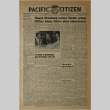
Article titles: "Newsnotes from Manzanar"; "Delta County Beet Growers Agree to Employ Japanese"; "Missouri College Accepts Japanese Despite Protests"; "10,000 Best Workers Needed in Montana"; "Idaho Relocation Center is Half Filled"; "Brandt Urges Farmers Seek Labor Now"; "Inquisitive Cameraman"; "Japanese Center Should Not Cause Any Shortages Here..."; "FBI Seizes Japanese Alien in New York"; "Japanese Center, …
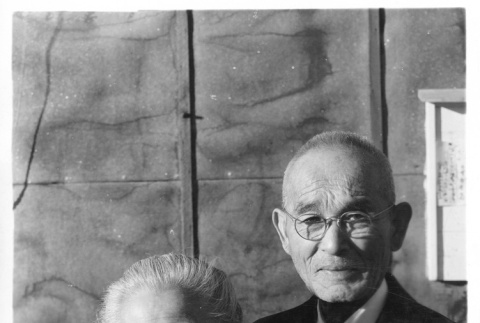
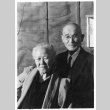
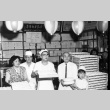
WRA caption on reverse: "Joseph Gerald Osamu Sakamoto, 80, and Mary Ann Tsuchi Sakamoto, 80, on their golden wedding anniversary, Dec. 11, 1943, at the Minidoka Relocation Center, Hunt, Idaho. Mr. and Mrs. Sakamoto came to the United States from Japan in 1894. He was the first Japanese second-hand furniture store proprietor, first Japanese express man …
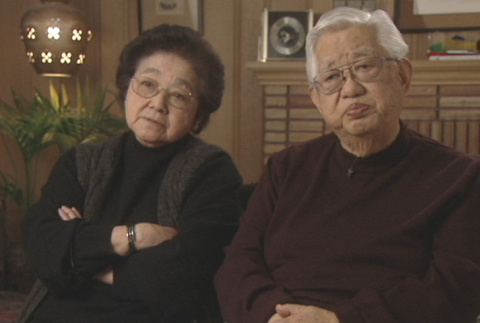
Nisei couple. Met in the Minidoka concentration camp, Idaho, and eventually resettled in Spokane, Washington.
(This material is based upon work assisted by a grant from the Department of the Interior, National Park Service. Any opinions, finding, and conclusions or recommendations expressed in this material are those of the author(s) and do not necessarily reflect the …
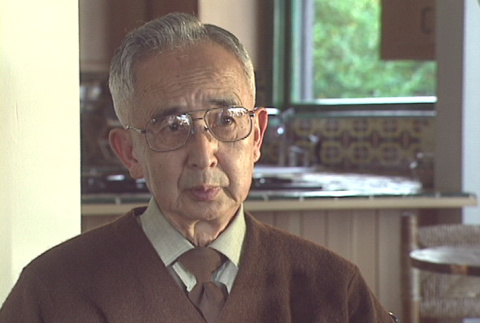
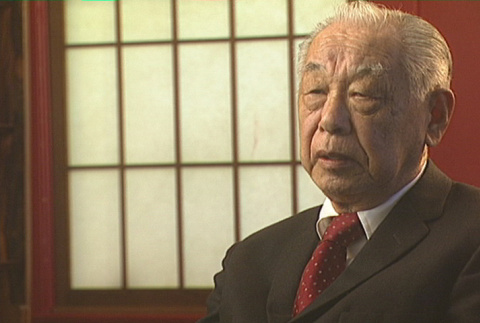
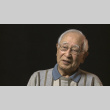
Nisei male. Born January 12, 1925, in Portland, Oregon, where parents ran a hotel business. During World War II, removed to the Portland Assembly Center, Oregon, and the Minidoka concentration camp, Idaho. Left camp early to attend college in Ohio. Was drafted into the Military Intelligence Service and served in Japan during the U.S. occupation. Returned …
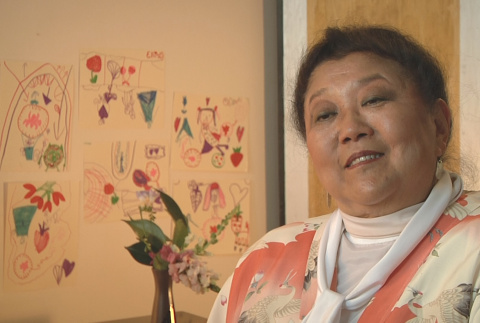
Sansei female. Born April 18, 1942, in Portland, Oregon. During World War II, moved as an infant with family to the Portland Assembly Center, Oregon, and the Minidoka concentration camp, Idaho. After leaving camp, family moved for a time to New York, then returned to Oregon. Tomiko's father created and edited the Minidoka Interlude while in …
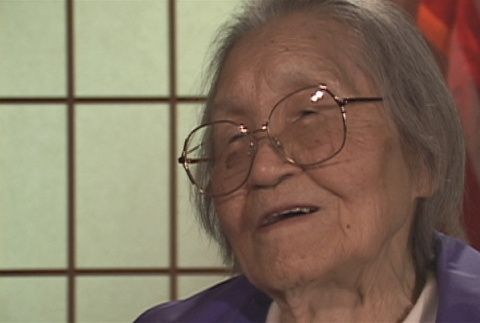
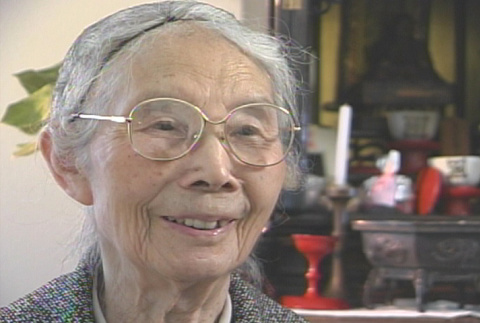
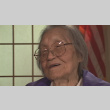
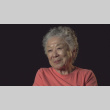
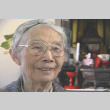
Issei female. Born October 4, 1901, in Fukuda, Japan. Grew up in Japan and immigrated to the U.S. after marrying. Settled in Portland, and during World War II was removed to the Portland assembly center, Oregon, and the Minidoka concentration camp, Idaho. After the war, returned to Portland.
(This interview was conducted in Japanese. The transcript …
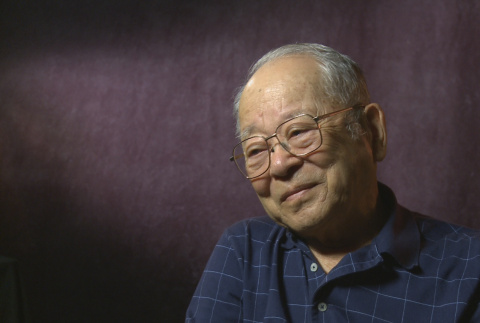
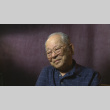
Nisei male. Born May 29, 1926, in Portland, Oregon. Grew up in the Portland area, where parents ran a farm. During World War II, removed to the Portland Assembly Center, Oregon, and the Minidoka concentration camp, Idaho. Left camp to attend college in Des Moines, Iowa, and was drafted into the military. After military service, finished …
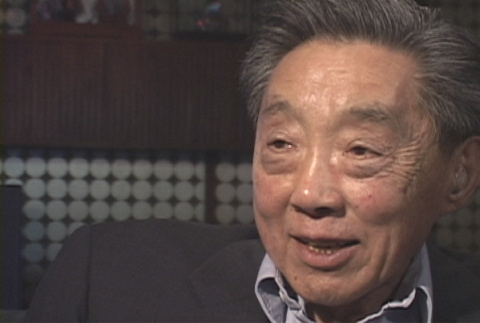
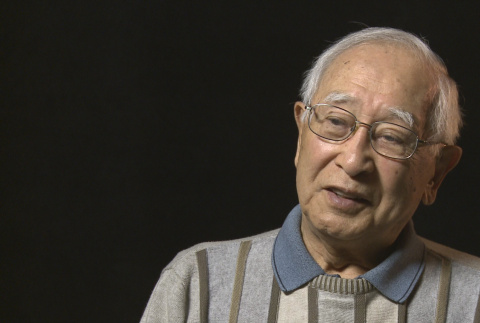
Nisei male. Born on August 10, 1919, in Osaka, Japan. Attended college at the University of Washington before being removed to the Puyallup Assembly Center, Washington, and the Tule Lake concentration camp, California. Established Tule Lake's newspaper, the Tulean Dispatch. Transferred to the Minidoka concentration camp, Idaho, before resettling in Chicago. Drafted into the Military Intelligence …
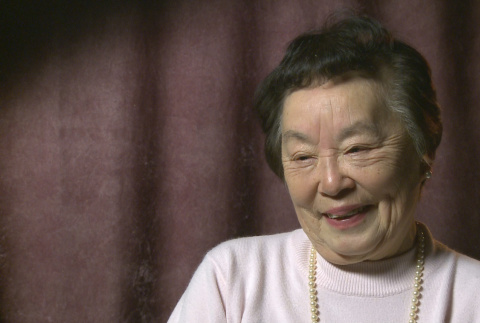
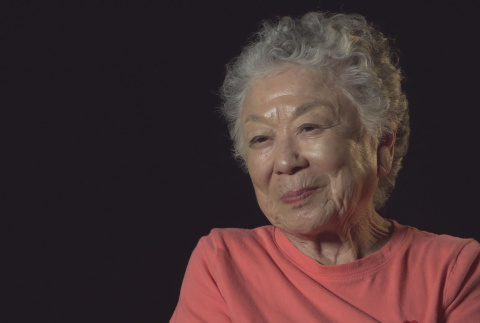
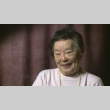
Nisei female. Born May 9, 1927, in Selleck, Washington. Spent much of childhood in Beaverton, Oregon, where father owned a farm. Influenced at an early age by parents' conversion to Christianity. During World War II, removed to the Portland Assembly Center, Oregon, and the Minidoka concentration camp, Idaho. After the war, worked to establish a successful …
Sansei female. Born in 1933 in Seattle, Washington. Grew up in Seattle where father ran a tailor shop. After the bombing of Pearl Harbor, removed with family to the Puyallup Assembly Center, Washington, and the Minidoka concentration camp, Idaho. After leaving camp, resettled in Denver, Colorado, for several years before moving to Los Angeles. Returned to …
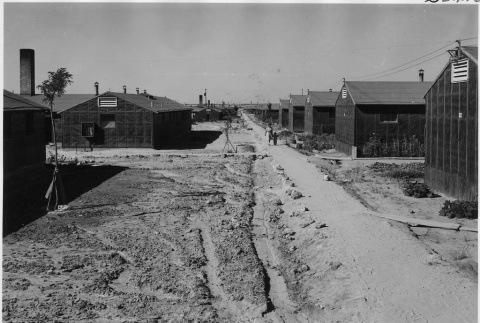
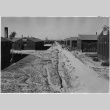
Original WRA caption: Minidoka Relocation Center, Hunt, Idaho. Looking down at the rows of barracks westward from block 44. At extreme left is a corner of the dining hall where the 275 to 300 residents of the block eat. At center background is the sanitation building including showers, lavatories, toilets and washtubs. Nearly all the residents …
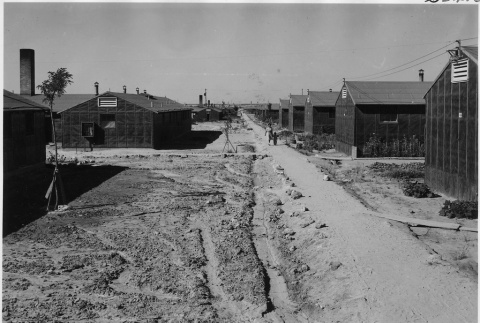
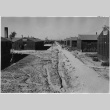
Original WRA caption: Minidoka Relocation Center, Hunt, Idaho. Looking down the rows of barracks westward from block 44. At extreme left is a corner of the dining hall where the 275 to 300 residents of the block eat. At center background is the sanitation building including showers, lavatories, toilets and washtubs. Nearly all the residents planted …
Description of Minidoka concentration camp, Idaho (Japanese language)
This interview was conducted in Japanese and was translated so as to convey Mrs. Terao's way of speaking as closely as possible. For example, there are instances in which she makes some grammatical errors. These mistakes are conveyed through similar grammatical errors in English in order to recreate …
Visiting family in Minidoka concentration camp, Idaho (Japanese language)
This interview was conducted in Japanese and was translated so as to convey Mrs. Terao's way of speaking as closely as possible. For example, there are instances in which she makes some grammatical errors. These mistakes are conveyed through similar grammatical errors in English in order to …
Memories of Minidoka concentration camp, Idaho: two instances of "escaping" from camp
This interview was conducted by sisters Emiko and Chizuko Omori for their 1999 documentary, Rabbit in the Moon, about the Japanese American resisters of conscience in the World War II incarceration camps. As a result, the interviews in this collection are typically not …
Description of siblings in Japan; working as a schoolboy in Pocatello, Idaho
This interview was conducted by sisters Emiko and Chizuko Omori for their 1999 documentary, Rabbit in the Moon, about the Japanese American resisters of conscience in the World War II incarceration camps. As a result, the interviews in this collection are typically not …
The Mamiya collection, c.1918-1960s, records the business and leisure activities of the Asaba and Shibata families of Seattle, Washington. Dance and graduation programs from the Minidoka concentration camp, Idaho, are also shown. Densho interviewed collection donor Yoshi Mamiya in 1998.
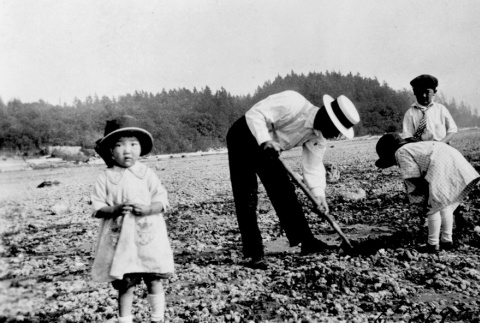
The photographs in the collection of the Wing Luke Asian Museum, Seattle, Washington, 1920s-1940s, focus primarily on oyster farming and the Minidoka concentration camp, Idaho. The images from Minidoka include barracks, schools, and leisure activities such as sports and arts and crafts.
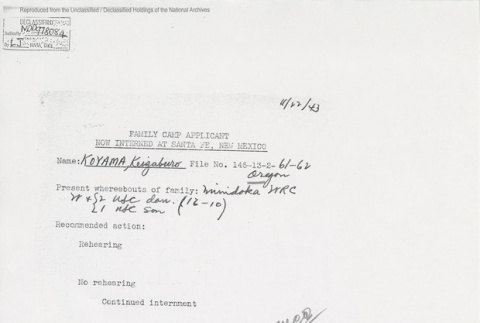
Photocopy of a declassified memo on Keizaburo Koyama on his request to be reunited with his family in Minidoka, Idaho. Two initials are next to the option for "Parole to WRA without rehearing" option. On the bottom is written seven statements on Koyama including his occupation being a dentist, his memberships, his Army report, that he …
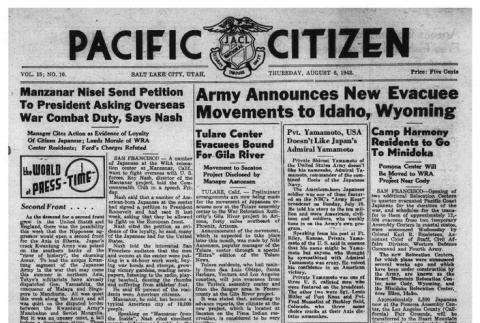
Selected article titles: "Manzanar Nisei Send Petition To President Asking Overseas War Combat Duty, Says Nash" (p. 1), "Army Announces New Evacuee Movements to Idaho, Wyoming" (p. 1), "Military Regulations Relaxed as Family Attends Seattle Funeral" (p. 2), "Fair Play Group Contributes to Test Case Fund" (p. 3), "Mexico to Intern Citizens of Japan Living on …
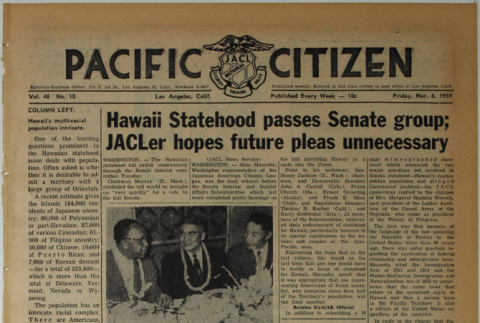
Selected article titles: "Hawaii Statehood passes Senate group; JACLer hopes future pleas unnecessary" (p. 1), "Lip service to brotherhood idea not enough, CLers told" (p. 1), "Idaho governor signs marriage bill" (p. 1), "Washington's governor, Seattle mayor, Mike Masaoka address" (p. 3), "Project to aid Issei old folks in homes aired" (p. 5), "JACLer testifies for …
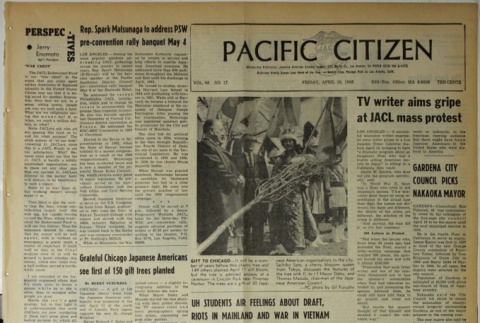
Selected article titles: "TV writer aims gripe at JACL mass protest" (p. 1), "Grateful Chicago Japanese Americans see first of 150 gift trees planted" (p. 1), "UH students air feelings about draft, riots in mainland and war in Vietnam" (p. 1), "Idaho governor lauds Nisei Idahoans as efficient, excellent farmers" (p. 1), "The race problem" (p. …