
512 items

512 items

av
Chaplain Hiro Higuchi interviewed by Eric Saul, part 2 of 2 (ddr-densho-1007-1764)
Higuchi discusses fighting the German army, the religious beliefs of the 100th and 442nd, preventing marriages between Japanese nationals and American soldiers, why he decided to become a chaplain, and his interpretation of Christ and God. This interview was not conducted specifically for Loni Ding's work, rather for a book the Presidio was putting together. Original …
doc
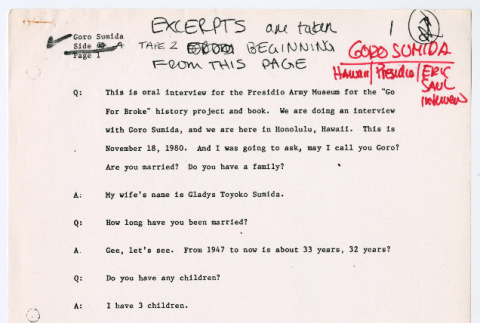
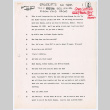
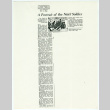
Leighton "Goro" Sumida Interview Transcript (ddr-densho-1007-1871)
Eric Saul interview with Leighton "Goro" Sumida in Honolulu, Hawaii on November 18, 1980: Tape 2, Side A. In this interview Sumida describes his family and upbringing, his experiences in the 100th Infantry Battalion, and postwar life. This transcript is continued on object ddr-densho-1007-1872 as indicated by the page numbers. Content warning: use of strong language …
img
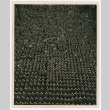
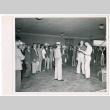
Hawaii provisional battalion in front of Iolani palace (ddr-densho-1007-380)
Caption on back. On loan from "Fuzzy."
img
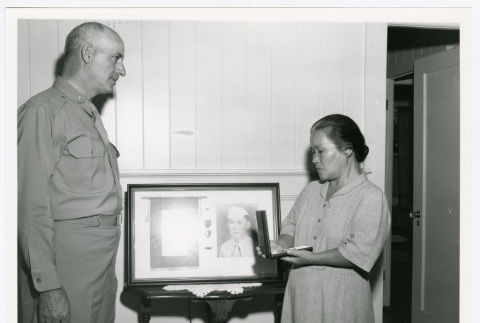
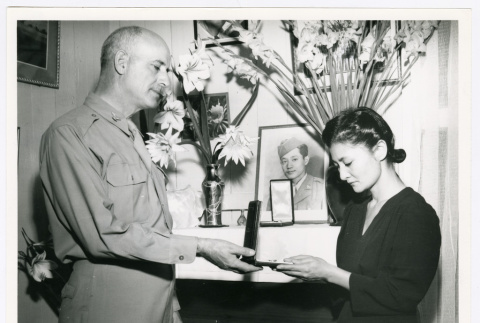
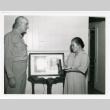
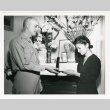
Woman receiving medal (ddr-densho-1007-312)
The man in the photo may be Chaplain Corwin H. Olds, CPBC.
img
Shuzuko Kina receives her late brother's Silver Star (ddr-densho-1007-311)
Pfc. Tomaki Shimabukuro fought in the 2nd Battalion of the 442nd. The man in the photo may be Chaplain Corwin H. Olds, CPBC. Caption on back.
vh
Junji Sarashina Interview (ddr-densho-1021-5)
Junji Sarashina was born in 1929 in Lahaina, Hawai'i, the son of a minister of a Buddhist Temple Nishihongan-ji and a teacher of Japanese-style flower arrangement, music, sewing, and cooking. The youngest of five children, Sarashina grew up surrounded by temple members (mostly plantation workers) and their families who enjoyed community picnics and samurai films. When …
av
Day of Remembrance (ddr-densho-1024-30)
Documentary film by Cynthia Gates Fujikawa consisting of highlights from 2003 Day of Remembrance (DoR) commemorations in New York, San Francisco, Los Angeles, Seattle, and Honolulu, all of which highlight the parallels between what happened to Japanese Americans in 1942 and what was then happening to Arab and Muslim Americans in the aftermath of the 9/11 …