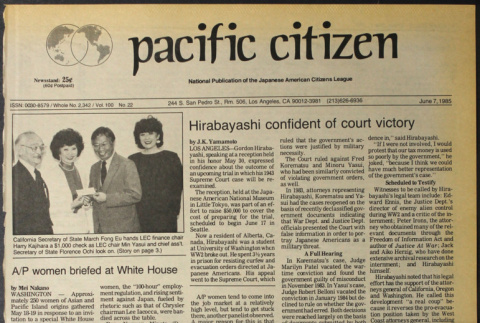
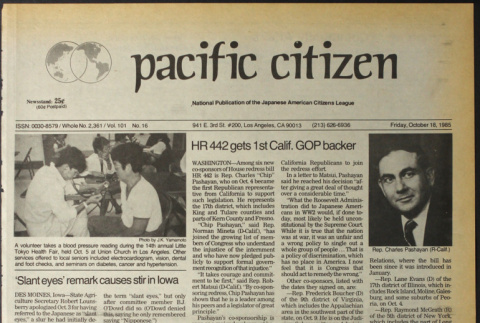
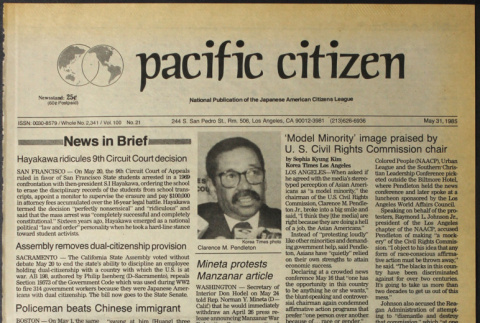
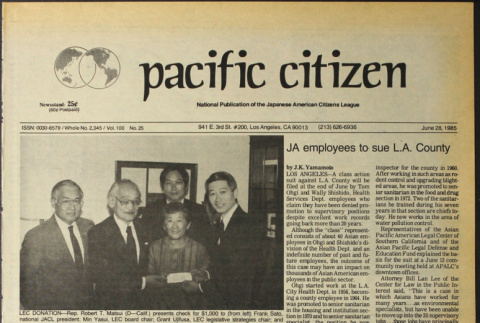
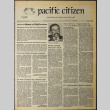
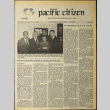
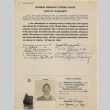
Selected article titles: "Hirabayashi Confident of Court Victory" (1); "Utah JA Runs for Democratic State Chair" (3); "The Other Side of Beauty Contest" (6)
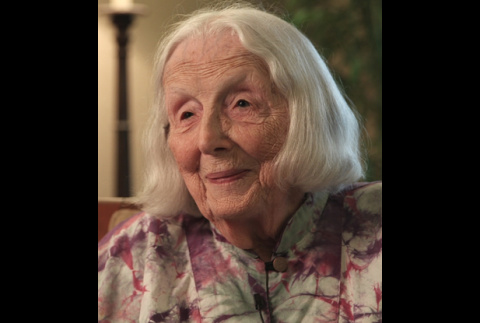
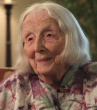
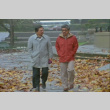
White female. Born November 17, 1922, in Seattle, Washington. Parents were both chiropractors and supportive of Japanese Americans around the time of World War II. Attended the University of Washington in 1940 and became friends with Gordon Hirabayashi.
Gordon Hirabayashi's decision to reopen his case (audio only)
This interview is audio-only. It contains raw footage used by Steven Okazaki in his 1985 film Unfinished Business.
This material is based upon work assisted by a grant from the Department of the Interior, National Park Service. Any opinions, finding, and conclusions or recommendations expressed in …
Support of parents in Gordon's initial case (audio only)
This interview is audio-only. It contains raw footage used by Steven Okazaki in his 1985 film Unfinished Business.
This material is based upon work assisted by a grant from the Department of the Interior, National Park Service. Any opinions, finding, and conclusions or recommendations expressed in …
The lessons of Gordon Hirabayashi's case (audio only)
This interview is audio-only. It contains raw footage used by Steven Okazaki in his 1985 film Unfinished Business.
This material is based upon work assisted by a grant from the Department of the Interior, National Park Service. Any opinions, finding, and conclusions or recommendations expressed in this …
The importance of the redress movement (audio only)
This interview is audio-only. It contains raw footage used by Steven Okazaki in his 1985 film Unfinished Business.
This material is based upon work assisted by a grant from the Department of the Interior, National Park Service. Any opinions, finding, and conclusions or recommendations expressed in this …
Thoughts on being seen as a culture hero (audio only)
This interview is audio-only. It contains raw footage used by Steven Okazaki in his 1985 film Unfinished Business.
This material is based upon work assisted by a grant from the Department of the Interior, National Park Service. Any opinions, finding, and conclusions or recommendations expressed …
The conservatism of Japanese Americans in the immediate postwar era (audio only)
This interview is audio-only. It contains raw footage used by Steven Okazaki in his 1985 film Unfinished Business.
This material is based upon work assisted by a grant from the Department of the Interior, National Park Service. Any opinions, finding, and conclusions or …
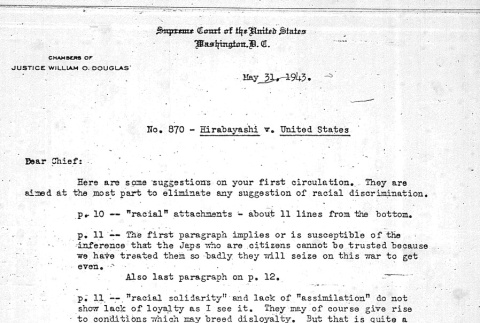
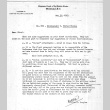
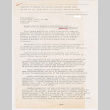
Memo from Justice William Douglas to Chief Justice Harlan Stone on the Hirabayashi decision. Douglas has revised the decision to remove any sort of racial discrimination.
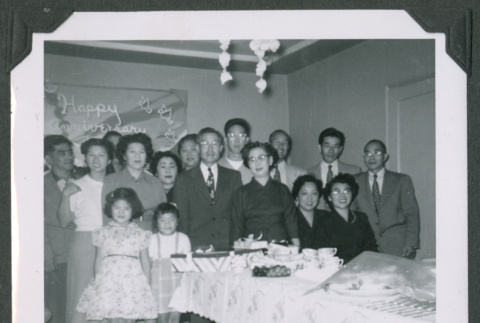
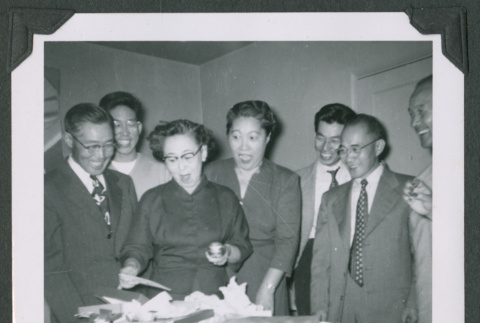
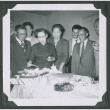
Photograph of Frank Yamato and Mary Haruko (Ohashi) Yamato's wedding anniversary celebration. Front row identified from left to right: Martha Uyemura, and Judy Okubo. Middle row from left to right: Eddie Uyemura, Tama Uyemura, unidentified, Frank Yamato, Mary Haruko (Ohashi) Yamato, Martha Okubo, and Alice Hirabayashi. Back row from left to right: unidentified, unidentified, unidentified, Richard …
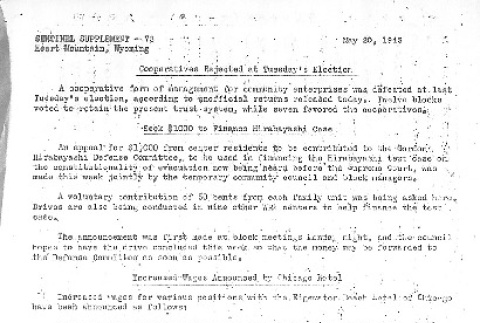
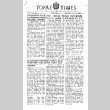
Selected article titles: "Cooperatives Rejected at Tuesday's Election" (p. 1), "Seek $1000 to Finance Hirabayashi Case" (p. 1), "Messages to Relatives in Japan Being Accepted" (p. 1).
Selected article titles: "'Model Minority' Image Praised by U.S. Civil Rights Commission Chair" (1); "JACL Files Brief in Support of Hirabayashi" (3) "Speak Up for Sushi" (5);
Selected article titles: "Government Suffers Setback as Hirabayashi Trial Starts" (1); "Three Community Leaders to be Honored at Service Award Dinner" (3); "In Memory of George Hoshida" (4)
Photograph of people standing around a table of presents. From left to right: Frank Yamato, Richard "Dick" Yamato, Mary Haruko (Ohashi) Yamato, unidentified, Joe Hirabayashi, unidentified, and George Okubo.
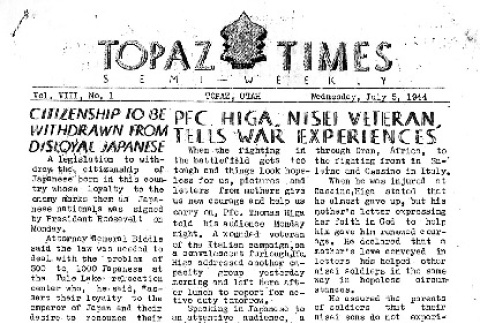
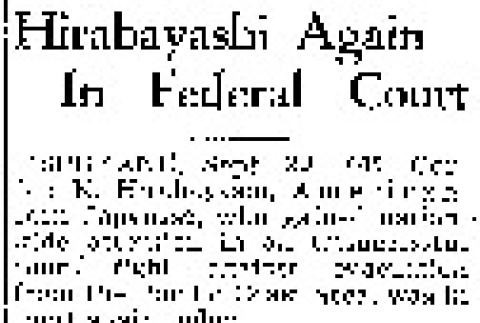
Selected article titles: "Citizenship to be Withdrawn from Disloyal Japanese" (p. 1), "Admiration and Respect Won by Nisei Soldiers" (p. 2), "Hirabayashi: Failure to Return Form Charged" (p. 2).