
897 items
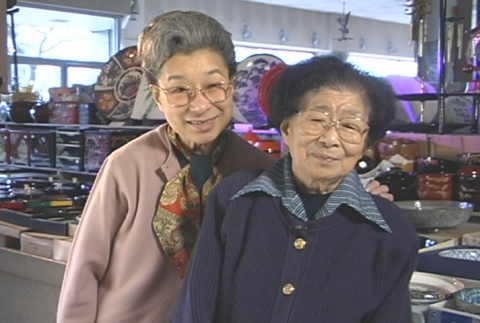
897 items
vh
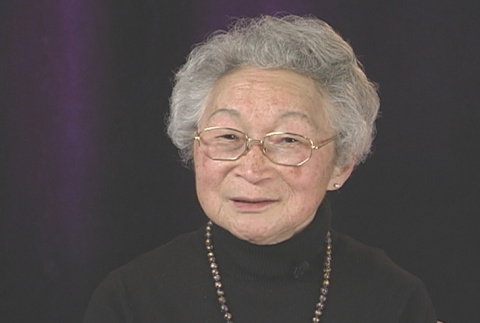
Ruby Inouye Interview Segment 55 (ddr-densho-1000-143-55)
Reflections; pride in passing on values to children and grandchildren
vh
Ruby Inouye Interview Segment 30 (ddr-densho-1000-143-30)
Recollections of the end of World War II; sister's experiences returning to Seattle
vh
Ruby Inouye Interview Segment 35 (ddr-densho-1000-143-35)
Experiencing prejudice when applying for a medical internship
vh
Ruby Inouye Interview Segment 34 (ddr-densho-1000-143-34)
Changes in childbirth practices since the 1940s
vh
Ruby Inouye Interview Segment 19 (ddr-densho-1000-143-19)
Deciding what to bring to assembly center, parents' stoic attitude toward mass removal
vh
Ruby Inouye Interview Segment 36 (ddr-densho-1000-143-36)
Returning to Seattle to open private practice in Nihonmachi, receiving support from the Issei community
vh
Ruby Inouye Interview Segment 6 (ddr-densho-1000-143-6)
Attending Sunday School and being baptized
vh
Ruby Inouye Interview Segment 32 (ddr-densho-1000-143-32)
Discussion of emphasis on teaching women's issues at Woman's Medical College
vh
Ruby Inouye Interview Segment 16 (ddr-densho-1000-143-16)
Little awareness of the world political climate preceding the bombing of Pearl Harbor
vh
Ruby Inouye Interview Segment 2 (ddr-densho-1000-143-2)
Family background: mother came as "picture bride" to join prospective husband in U.S.
vh
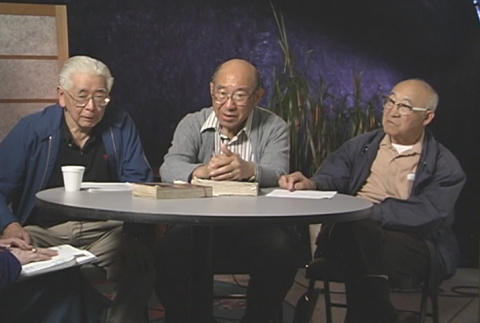
Takashi Hori - Yoshito Mizuta - Elmer Tazuma Interview (ddr-densho-1000-25)
Mr. Hori was born in 1918, Mr. Mizuta was born in 1914, and Mr. Tazuma was born in 1916. Both Mr. Hori and Mr. Mizuta are Nisei, and Mr. Tazuma is an Issei. All three grew up in Seattle and owned hotels in the International District. In this group interview, they discuss Japanese American hotel ownership …
doc
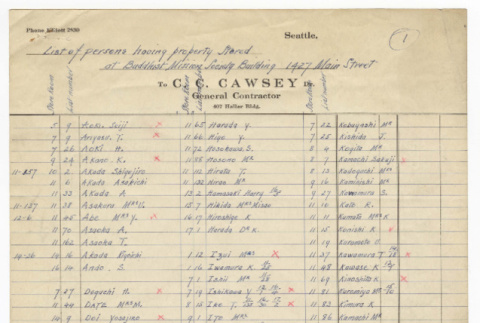
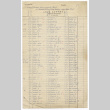
Property storage list for Buddhist Mission Society (ddr-sbbt-2-36)
A list of names and locations for property stored at the Buddhist Mission Society (Seattle Betsuin Buddhist Temple) building addressed to C.C. Cawsey, General Contractor. Seattle Betsuin Buddhist Temple; Cawsey, C. C.; Aoki, Seiji; Ariyasu, T.; Aoki, H.; Akano, K.; Akada, Shigejiro; Akada, Asakichi; Akada, A.; Asakura, U.; Abe, Y.; Asaoka, A.; Asaoka, T.; Akada, Riyoichi; …
av
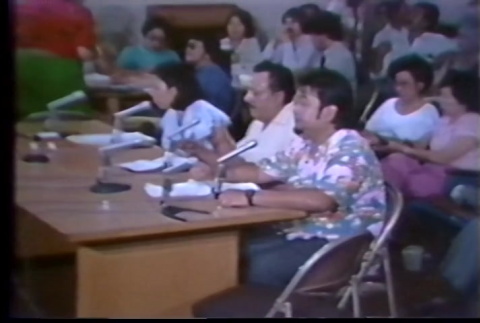
Speak Out for Justice: August 5, 1981 - Part 5 (ddr-densho-1024-107)
As the Commission on Wartime Relocation and Internment of Civilians (CWRIC) Los Angeles hearings proceed, testimonies of financial losses and psychological trauma drive the movement for Redress and Reparations forward. The testifiers show solidarity in their support for interned people of Japanese ancestry. Introduction by Mark Masaoka and Miyako Noguchi of Nikkei Progressives. Part 5 Testifiers: …
vh
Ayako Murakami - Masako Murakami Segment 24 (ddr-densho-1000-63-24)
Thoughts about the end of the war
vh
Ayako Murakami - Masako Murakami Segment 1 (ddr-densho-1000-63-1)
Parents' immigration to U.S. in the early 1900s
vh
Ayako Murakami - Masako Murakami Segment 28 (ddr-densho-1000-63-28)
An "independent woman," a desire to travel
vh
Ayako Murakami - Masako Murakami Segment 7 (ddr-densho-1000-63-7)
Family lessons, saving money and sharing
vh
Ayako Murakami - Masako Murakami Segment 13 (ddr-densho-1000-63-13)
Events following Pearl Harbor: FBI pick-ups, buying and storing provisions
vh
Ayako Murakami - Masako Murakami Segment 2 (ddr-densho-1000-63-2)
Early years in Seattle, opening a retail store
vh
Ayako Murakami - Masako Murakami Segment 3 (ddr-densho-1000-63-3)
Saving money to start the family business, Higo's Ten Cent Store
vh
Ayako Murakami - Masako Murakami Segment 17 (ddr-densho-1000-63-17)
Working as a teacher in Minidoka concentration camp
vh
Ayako Murakami - Masako Murakami Segment 10 (ddr-densho-1000-63-10)
Father considers returning to Japan
vh
Ayako Murakami - Masako Murakami Segment 30 (ddr-densho-1000-63-30)
Reflections on incarceration experience, the decision to not protest
vh
Ayako Murakami - Masako Murakami Segment 31 (ddr-densho-1000-63-31)
Saving money to start the family business, Higo's Ten Cent Store