Feelings on the views of the Heart Mountain resisters
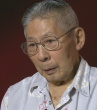
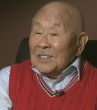
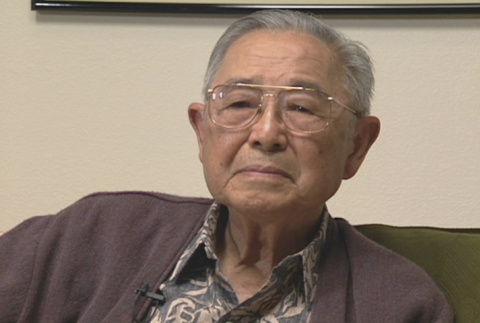
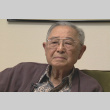
This interview was conducted by filmmaker Frank Abe for his 2000 documentary, Conscience and the Constitution, about the World War II resisters of conscience at the Heart Mountain incarceration camp. As a result, the interviews in this collection are typically not life histories, instead primarily focusing …
This interview was conducted by filmmaker Frank Abe for his 2000 documentary, Conscience and the Constitution, about the World War II resisters of conscience at the Heart Mountain incarceration camp. As a result, the interviews in this collection are typically not life histories, instead primarily focusing on issues surrounding the resistance movement itself.
Thoughts on the wartime stance of the JACL: "I think it was the real practical thing to do"
This interview was conducted by filmmaker Frank Abe for his 2000 documentary, Conscience and the Constitution, about the World War II resisters of conscience at the Heart Mountain incarceration camp. As a result, the interviews in this …
Opinion that the resisters of conscience were "harming the cause of the entire group"
This interview was conducted by filmmaker Frank Abe for his 2000 documentary, Conscience and the Constitution, about the World War II resisters of conscience at the Heart Mountain incarceration camp. As a result, the interviews in this collection are typically not …
History and role of the Japanese American Citizens League
This interview was conducted by filmmaker Frank Abe for his 2000 documentary, Conscience and the Constitution, about the World War II resisters of conscience at the Heart Mountain incarceration camp. As a result, the interviews in this collection are typically not life histories, instead primarily focusing …
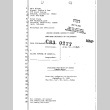
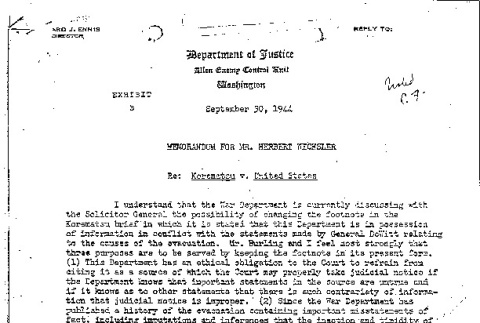
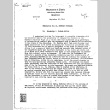
Memo from Edward J. Ennis to Herbert Wechsler regarding Korematsu v. United States. This document was Exhibit B in the coram nobis litigation. This document was available in conjunction with "Race, Rights and Reparation: Law and the Japanese American Internment" by Eric K. Yamamoto, Margaret Chon, Carol Izumi, Jerry Kang, and Frank Wu.
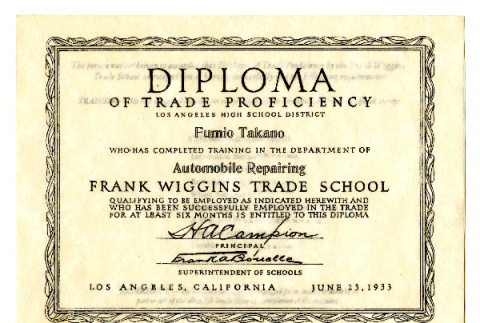
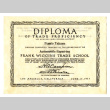
A diploma of trade proficiency issued by Frank Wiggins Trade School. It certifies that Fumio Fred Takano has completed training in the Department of Automobile Repairing. See this object in the California State Universities Japanese American Digitization project site: tak_01_05_001
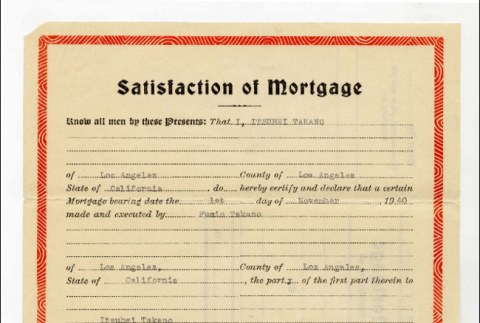
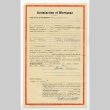
A satisfaction of mortgage form signed by Itsuhei Takano on March 30, 1942. It acknowledged that the mortgage was fully paid by Fumio Fred Takano. See this object in the California State Universities Japanese American Digitization project site: tak_01_14_004
Haruo Kawase, Fred and another young man from Camp Amache pose for the camera. Page 29 of Kawase Family Photo Album, Book Two. See this object in the California State Universities Japanese American Digitization project site: nbea08-03-052
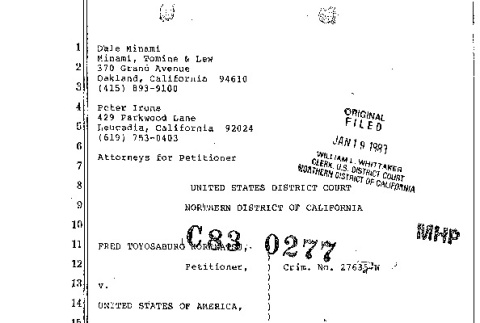
The petition for writ of error coram nobis in the case of Fred Toyoaburo Korematsu v. United States of America. US District Court of Northern California. This document was available in conjunction with "Race, Rights and Reparation: Law and the Japanese American Internment" by Eric K. Yamamoto, Margaret Chon, Carol Izumi, Jerry Kang, and Frank Wu.
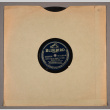
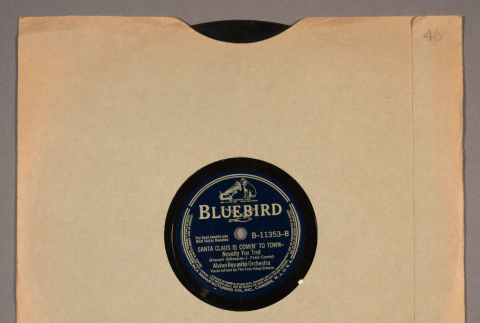
Navy label with silver words\nB-11353-A Harold Dickinson - Bill Comwayy Arr. by Glenn Miller & Wm. Finegan Glenn Miller & his Orchestra Vocal refrain by Tex Beneke, Ernie Caceress & the Modernaires\nB-11353-B Santa calus is Coming to Town novelty fox trot Haven Gillespie-J. Fred Coots Alvino Rey & his Orchestra Vocal refrain by the Four King …
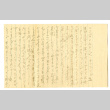
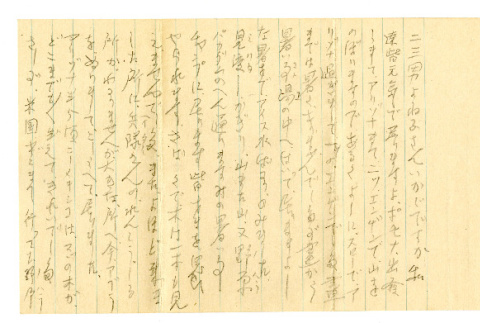
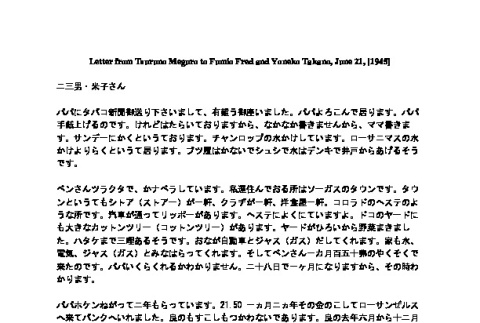
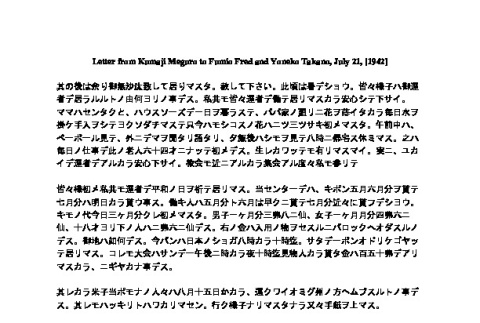
A letter from Tsuruno Meguro to her son-in-law and daughter, Fumio Fred and Yoneko Takano in the Santa Anita Assembly Center. She writes during the train trip to the Heart Mountain incarceration camp and also in the camp after the arrival. The train passes through Arizona, New Mexico, and Colorado. She describes the train trip, including …
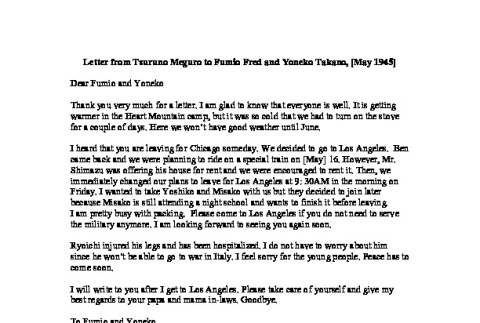
English translation of the letter: csudh_tak_0080. See this object in the California State Universities Japanese American Digitization project site: tak_01_39_001_eng
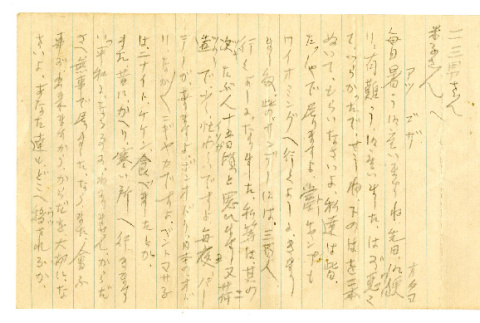
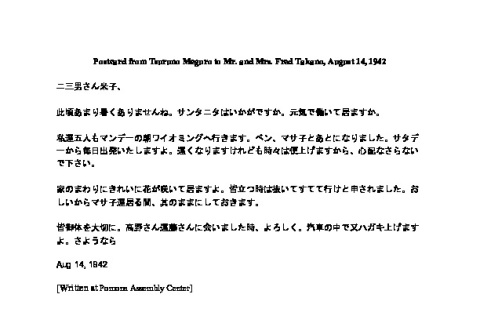
A letter from Tsuruno Meguro in the Pomona Assembly Center to her son-in-law and daughter, Fumio Fred and Yoneko Takano in the Santa Anita Assembly Center. She informs them that their destination has been decided and the people in the Pomona Assembly Center will be sent to an incarceration camp in Wyoming. She assumes that her …
Japanese typescript of the letter: csudh_tak_0062. See this object in the California State Universities Japanese American Digitization project site: tak_01_32_001_jpn
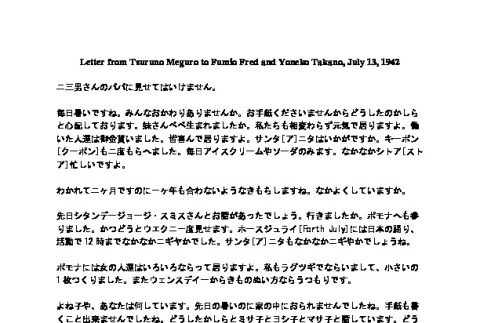
Japanese typescript of the letter: csudh_tak_0083. See this object in the California State Universities Japanese American Digitization project site: tak_01_40_001_jpn
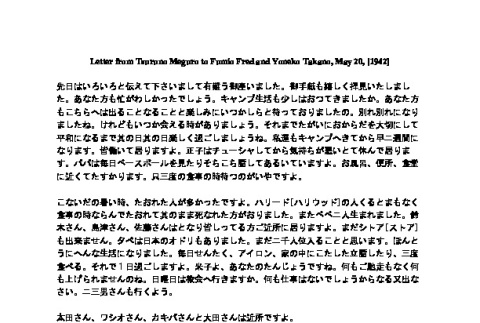
Japanese typescript of the letter: csudh_tak_0053. See this object in the California State Universities Japanese American Digitization project site: tak_01_29_001_jpn
Japanese typescript of the letter: csudh_tak_0044. See this object in the California State Universities Japanese American Digitization project site: tak_01_26_001_jpn
Japanese typescript of the letter: csudh_tak_0056. See this object in the California State Universities Japanese American Digitization project site: tak_01_30_001_jpn
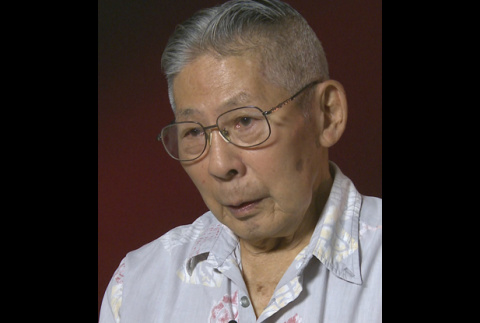
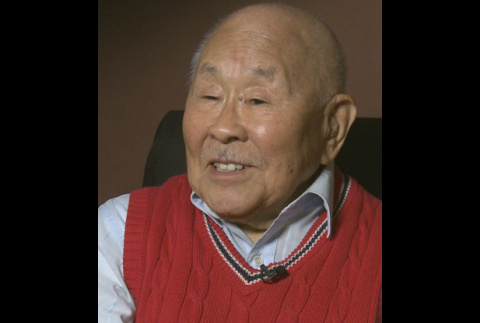
Nisei male. Born April 14, 1923, in Yuba City, California. Grew up in Elk Grove, California. After the bombing of Pearl Harbor, moved with family to Florin, California, and was removed to the Marysville Assembly Center, California, and the Tule Lake concentration camp, California. While in Tule Lake, refused to sign the so-called "loyalty questionnaire," and …
Nisei male. Born December 7, 1914, in Livingston, California, where parents helped to establish a farming community called the Yamato Colony. Lost father at a young age, and moved to San Francisco, California, before World War II, and attended Berkeley. After the bombing of Pearl Harbor, was removed to the Tanforan Assembly Center, California, and the …
This material is based upon work assisted by a grant from the Department of the Interior, National Park Service. Any opinions, finding, and conclusions or recommendations expressed in this material are those of the author(s) and do not necessarily reflect the views of the Department of the Interior.
Activities of community organizations after the bombing of Pearl Harbor
This material is based upon work assisted by a grant from the Department of the Interior, National Park Service. Any opinions, finding, and conclusions or recommendations expressed in this material are those of the author(s) and do not necessarily reflect the views of the Department of …

![[Pyramid] (ddr-csujad-56-243)](https://ddr.densho.org/media/cache/61/bc/61bce60af458fd55333c67dcb4b63a9a.jpg)
![[Pyramid] (ddr-csujad-56-243)](https://ddr.densho.org/media/cache/93/08/93089eb664a1427896107ab964bc9bc2.jpg)