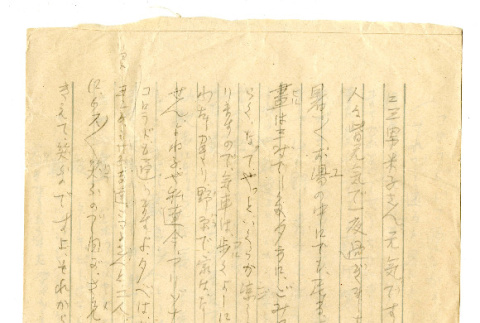
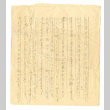
A letter from Tsuruno Meguro to her son-in-law and daughter, Fumio Fred and Yoneko Takano in the Santa Anita Assembly Center. She writes on the second day of the train trip to the Heart Mountain incarceration camp in Wyoming, after spending a night with five hundred people on the train. She describes the scenery viewed from …
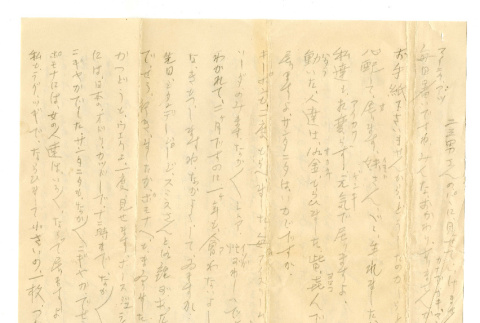
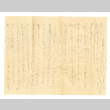
A letter from Tsuruno Meguro in the Pomona Assembly Center to her son-in-law and daughter, Fumio Fred and Yoneko Takano in the Santa Anita Assembly Center. In the letter, she describes the lives in the assembly center, including her daily routine. English translation is found in item: csudh_tak_0054. Typescript is found in item: csudh_tak_0055. See this …
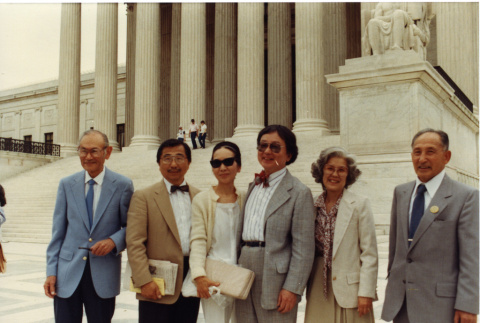
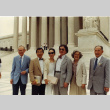
Group photograph of National Council for Japanese American Redress members at Supreme Court. Photograph titled: "Fred Korematsu, Gordon Hirabayashi, Michi Weglyn, William Hohri, Aiko Herzig, and Harry Ueno." See this object in the California State Universities Japanese American Digitization project site: P240
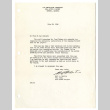
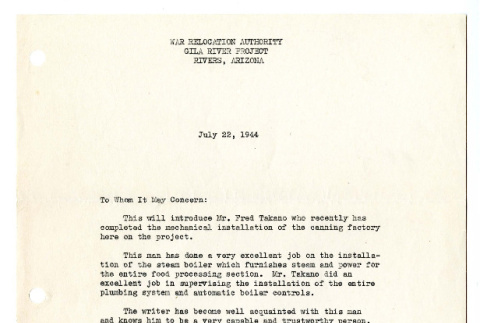
A reference letter regarding Fumio Fred Takano. It is written by Hoyt A. Martin, Manufacturing Superintendent, Gila River Project, War Relocation Authority. See this object in the California State Universities Japanese American Digitization project site: tak_01_51_001
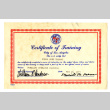
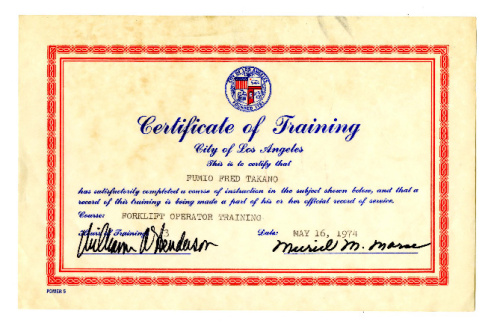
A certificate of training issued by City of Los Angeles. It certifies that Fumio Fred Takano has completed forklift operator training. See this object in the California State Universities Japanese American Digitization project site: tak_01_06_001
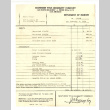
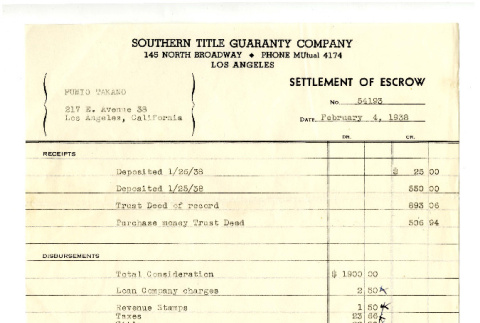
A settlement of escrow for the property in Los Angeles, California under the name of the new owner, Fumio Fred Takano. See this object in the California State Universities Japanese American Digitization project site: tak_01_10_003
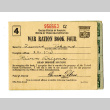
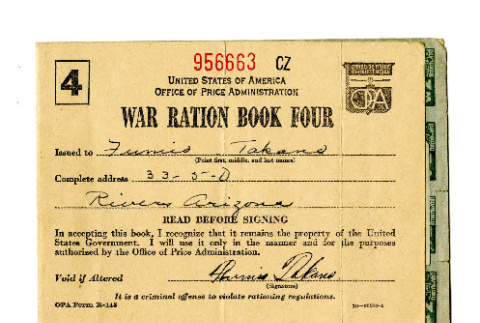
A ration book issued to Fumio Fred Takano incarcerated at the Gila River camp in Arizona. Includes the instructions for use. Unused stamps remain. See this object in the California State Universities Japanese American Digitization project site: tak_01_67_007
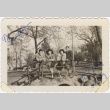
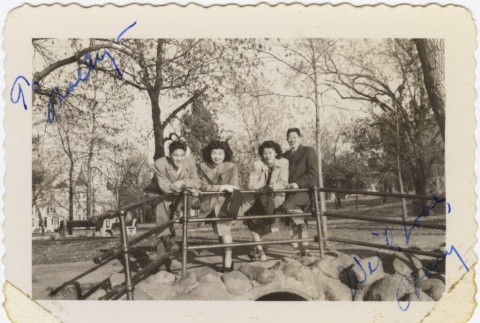
Black and white photograph (from left to right) of Kim Nagano, Micky Nagano, Mary Murakami, and Fred Nishi. They are posed in front of a railing on a bridge. They appear to be in a park. Taken in Minneapolis during the war. Written on the photo in the corner is: "To Molly. With Love, Mary"
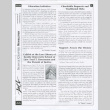
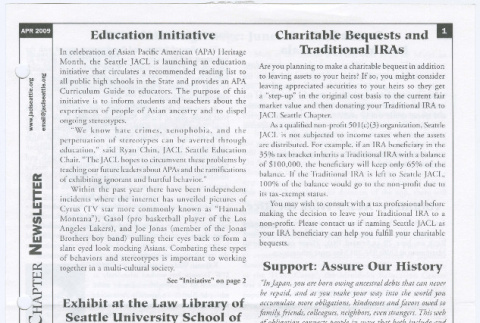
Selected article titles: "Education Initiative" (p. 1-2), "Exhibit at the Law Library of Seattle University Schoo of Law: Fred T. Korematsu and the Pursuit of Justice" (p. 1), "Charitable Bequests and Traditional IRAs" (p. 1), "Support: Assure Our History" (p. 1-2), "Volunteer: ACRS Walk for Rice" (p. 2), "Minidoka Pilgrimage" (p. 3).
This material is based upon work assisted by a grant from the Department of the Interior, National Park Service. Any opinions, finding, and conclusions or recommendations expressed in this material are those of the author(s) and do not necessarily reflect the views of the Department of the Interior.
Volunteering for the military without telling parents
This interview was conducted as part of a project to capture stories of the Japanese American community of Spokane, Washington. Densho worked in collaboration with the Northwest Museum of Arts and Culture.
Witnessing segregation Mississippi: "It was a just completely different world for us"
This interview was conducted as part of a project to capture stories of the Japanese American community of Spokane, Washington. Densho worked in collaboration with the Northwest Museum of Arts and Culture.
This interview was conducted as part of a project to capture stories of the Japanese American community of Spokane, Washington. Densho worked in collaboration with the Northwest Museum of Arts and Culture.
Aftermath of the battle of the "Lost Battalion"; not having time to write to family
This interview was conducted as part of a project to capture stories of the Japanese American community of Spokane, Washington. Densho worked in collaboration with the Northwest Museum of Arts and Culture.
Recalling the period following Pearl Harbor: barred from taking photos as editor of school annual
This interview was conducted as part of a project to capture stories of the Japanese American community of Spokane, Washington. Densho worked in collaboration with the Northwest Museum of Arts and Culture.
Memories of traveling into Spokane every weekend to attend Japanese language school
This interview was conducted as part of a project to capture stories of the Japanese American community of Spokane, Washington. Densho worked in collaboration with the Northwest Museum of Arts and Culture.
Ethnic identity in high school: dating, being excluded from a roller skating rink
This interview was conducted as part of a project to capture stories of the Japanese American community of Spokane, Washington. Densho worked in collaboration with the Northwest Museum of Arts and Culture.
This interview was conducted as part of a project to capture stories of the Japanese American community of Spokane, Washington. Densho worked in collaboration with the Northwest Museum of Arts and Culture.
Being reviewed by General George C. Marshall before going overseas
This interview was conducted as part of a project to capture stories of the Japanese American community of Spokane, Washington. Densho worked in collaboration with the Northwest Museum of Arts and Culture.
Father's loss of a friend and mentor after the bombing of Pearl Harbor
This interview was conducted as part of a project to capture stories of the Japanese American community of Spokane, Washington. Densho worked in collaboration with the Northwest Museum of Arts and Culture.
This interview was conducted as part of a project to capture stories of the Japanese American community of Spokane, Washington. Densho worked in collaboration with the Northwest Museum of Arts and Culture.
This interview was conducted as part of a project to capture stories of the Japanese American community of Spokane, Washington. Densho worked in collaboration with the Northwest Museum of Arts and Culture.
Training alongside Japanese Americans from Hawaii: learning pidgin "just so we could get by"
This interview was conducted as part of a project to capture stories of the Japanese American community of Spokane, Washington. Densho worked in collaboration with the Northwest Museum of Arts and Culture.

![Pacific Citizen, Vol. 112, No. 16 [April 26, 1991] (ddr-pc-63-16)](https://ddr.densho.org/media/cache/31/93/319327ce10e147673ff6d09d5d2fcb52.jpg)
![Pacific Citizen, Vol. 112, No. 16 [April 26, 1991] (ddr-pc-63-16)](https://ddr.densho.org/media/cache/40/f1/40f1985877c3b3315dfdfa03a69cea86.jpg)