
300 items

300 items

vh
Eiichi Edward Sakauye Interview Segment 6 (ddr-jamsj-2-7-6)
Father dissolves agricultural partnership and buys his own land
vh
Eiichi Edward Sakauye Interview Segment 18 (ddr-jamsj-2-7-18)
Preparing for mass removal: finding a neighbor to take care of property
vh
Eiichi Edward Sakauye Interview Segment 19 (ddr-jamsj-2-7-19)
Journey to Santa Anita Assembly Center, California; description of conditions
vh
Eiichi Edward Sakauye Interview Segment 26 (ddr-jamsj-2-7-26)
Opening eyes with Heart Mountain's highly successful agricultural program
vh
Eiichi Edward Sakauye Interview Segment 20 (ddr-jamsj-2-7-20)
Working in an assembly center as a custodian of camp inmates'' property
vh
Eiichi Edward Sakauye Interview Segment 16 (ddr-jamsj-2-7-16)
Cooperative efforts amongst Japanese farmers: trade secrets, co-op
vh
Eiichi Edward Sakauye Interview Segment 30 (ddr-jamsj-2-7-30)
Effect of the incarceration on Japanese American farmers
vh
Eiichi Edward Sakauye Interview Segment 8 (ddr-jamsj-2-7-8)
As a child, being an interpreter for father in business dealings
vh
Eiichi Edward Sakauye Interview Segment 25 (ddr-jamsj-2-7-25)
Description of duties as agriculture superintendent
vh
Eiichi Edward Sakauye Interview Segment 22 (ddr-jamsj-2-7-22)
Working with farmers from different regions to develop concentration camp farm system
vh
Eiichi Edward Sakauye Interview Segment 11 (ddr-jamsj-2-7-11)
Impact of the alien land law on California's Japanese American agricultural community
vh
Eiichi Edward Sakauye Interview Segment 23 (ddr-jamsj-2-7-23)
Description of the camp agricultural program: growing Japanese vegetables for camp consumption
vh
Eiichi Edward Sakauye Interview Segment 1 (ddr-jamsj-2-7-1)
Father's background: immigrating to U.S. by way of Vancouver, B.C., Canada
vh
Eiichi Edward Sakauye Interview Segment 4 (ddr-jamsj-2-7-4)
Description of sharecropping style of farming
vh
Eiichi Edward Sakauye Interview Segment 13 (ddr-jamsj-2-7-13)
The significance of Japanese farmers in the Santa Clara Valley
vh
Eiichi Edward Sakauye Interview Segment 28 (ddr-jamsj-2-7-28)
Returning to Japantown and family farm after the war
vh
Eiichi Edward Sakauye Interview Segment 31 (ddr-jamsj-2-7-31)
Taking home video footage from inside a concentration camp
vh
Eiichi Edward Sakauye Interview Segment 32 (ddr-jamsj-2-7-32)
The contributions of the Issei and Nisei farmers in the Santa Clara Valley, and thoughts about their future in agriculture
vh
Eiichi Edward Sakauye Interview Segment 17 (ddr-jamsj-2-7-17)
Being searched by the FBI after the bombing of Pearl Harbor
vh
Eiichi Edward Sakauye Interview Segment 24 (ddr-jamsj-2-7-24)
Working to harvest produce grown in Heart Mountain's agricultural program
vh
Eiichi Edward Sakauye Interview Segment 21 (ddr-jamsj-2-7-21)
Moving to Heart Mountain concentration camp, Wyoming; eventually working for the agricultural department
vh
Eiichi Edward Sakauye Interview Segment 12 (ddr-jamsj-2-7-12)
Family's specialization in pear growing
img
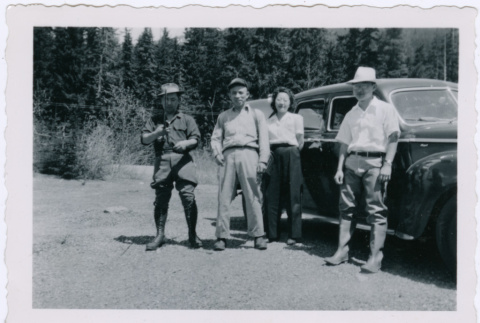
Road trip (ddr-densho-359-1281)
The caption written beneath the photograph in the album is "Cascades 1948". Eddie Otsuka and Alice Okano are between the other two men
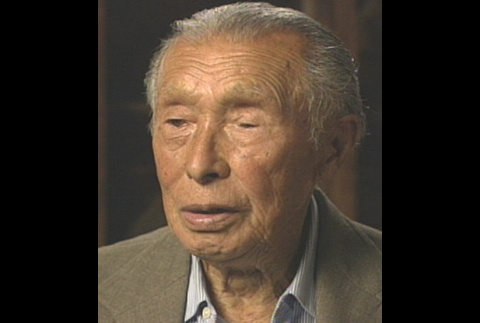
Narrator Eiichi Edward Sakauye
Nisei male. Born January 25, 1912, in San Jose, California. Grew up in San Jose, working on family's extensive farmholdings, and graduating from San Jose Teachers College. After the bombing of Pearl Harbor, was removed to Santa Anita Assembly Center, California, and Heart Mountain concentration camp, Wyoming. While at Heart Mountain, became the agriculture superintendent, and …