
754 items
754 items
av
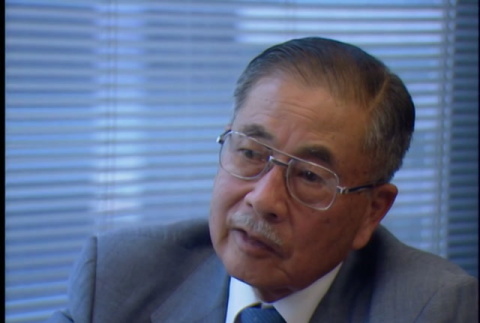
Interview with John Aiso, part 5 of 5 (ddr-densho-1007-1578)
Aiso discusses loyalty to the US, his family's internment at Manzanar, his (and the Nisei's in general) response to Pearl Harbor, and his role in the military. Video starts at 0:26. Loni Ding can be heard asking questions behind the camera. Interview ends at 18:30; rest of tape is b-roll of Aiso reading. Original title: 75, …
av
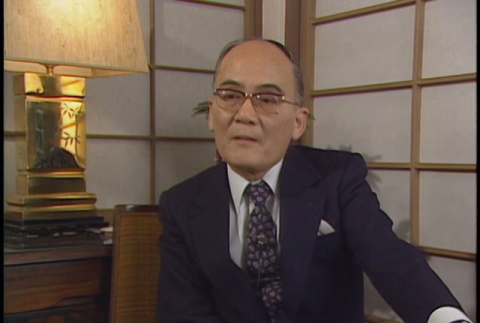
Interview with Kiyofumi Kojima, part 3 of 4 (ddr-densho-1007-1695)
Interview conducted in Japanese. Original title: 210, II JA #34, Kiyofumi Kojima, Feb. 1, 1986. Interview continues at ddr.densho.org/ddr-densho-1007-1696/
av
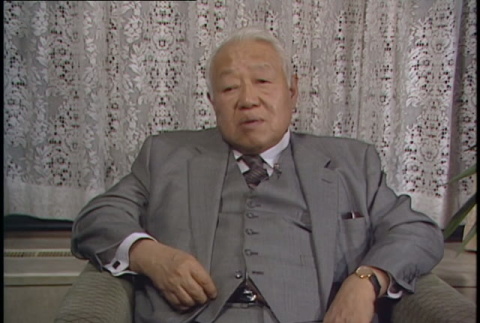
Interview with Masaru Ogawa, part 3 of 3 (ddr-densho-1007-1712)
Ogawa discusses being the last person to surrender from his interpreter school, working with American soldiers in Japan after the war, trusting an American soldier to take his personal belongings back to Tokyo, and his thoughts on post-war Japan. Loni Ding can be heard asking questions behind the camera. Original title: II JA #51, Masaru Ogawa, …
av
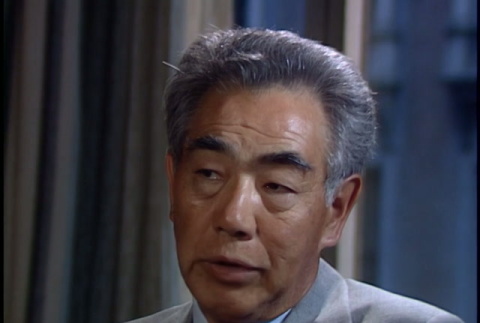
Interview with Yukio Kawamoto, part 8 of 8 (ddr-densho-1007-1552)
Kawamoto discusses the bombing of Hiroshima, Video starts at 0:53, interview ends at 5:38. Loni Ding can be heard asking questions behind the camera. Rest of tape is b-roll: a letter written by Kawamoto, photos from the war. Original title: 52, II NY #36, 6-85, Kawamoto Album Pix
av
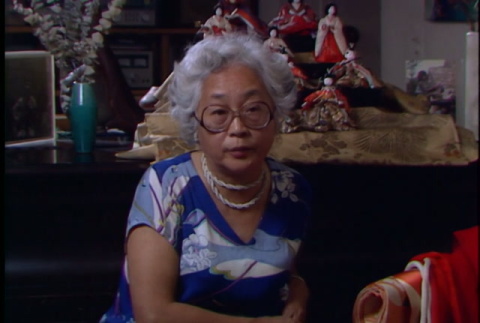
Interview with Kazuko Iijima, part 1 of 4 (ddr-densho-1007-1531)
Iijima discusses Hinamatsuri dolls, her childhood in Oakland, the Buddhist church, evacuation, internment at Topaz, and her mother. Video starts at 0:56. Loni Ding can be heard asking questions behind the camera. Original title: 36, II NY #15, 6-85, Kazuko Iijima. Interview continues at ddr.densho.org/ddr-densho-1007-1532/
av
John Kaneko and father digging; interview with father (ddr-densho-1007-1650)
John Kaneko and his father dig in a field; Loni asks the father about his time in Japan and the US. Original title: 135, II SAC #6, 9-7-85, John & father dig and talk
av
Interview with Harry Fukuhara, part 4 of 5 (ddr-densho-1007-1700)
Fukuhara discusses the possibility of meeting his brother (who was in the Japanese army) on the battlefield, the mental struggles soldiers faced in Japan, and his thoughts on draft resisters. Loni Ding can be heard asking questions behind the camera. Original title: 215, II JA #39, Harry Fukuhara, Sun. Feb. 2. Interview continues at ddr.densho.org/ddr-densho-1007-1701/
av
Interview with Barry Saiki, part 1 of 5 (ddr-densho-1007-1702)
Saiki discusses growing up in Stockton, CA, attending UC Berkeley, Pearl Harbor, the start of evacuation and negative press about Nisei during that time, graduating from Berkeley in 1942, entering Stockton Assembly Center, and the arrest and incarceration of his father. Loni Ding can be heard asking questions behind the camera. Original title: II JA #41, …
av
Interview with Sen Nishiyama, part 2 of 5 (ddr-densho-1007-1672)
Nishiyama discusses working with the occupation govnerment, rebuilding telecommunications infrastructure after the war, advocating against the romanization of written Japanese, the laws imposed by the occupation government, and his reaction to Pearl Harbor. Loni Ding can be heard asking questions behind the camera. Original title: II JA #6, Sen Nishiyama, Fri. Jan. 31, 1986. Interview continues …
av
Interview with Harry Akune, part 2 of 3 (ddr-densho-1007-1755)
Akune tells the story of a jump on Corregidor Island. He tells the same story in another interview in this collection: objects ddr-densho-1007-1600 through ddr-densho-1007-1603. Akune also talks about an argument he had with a captain. Loni Ding can be heard asking questions behind the camera. Original title: 64B, II VFW #7, VFW - LA, Harry …
av
Interview with Masaru Ogawa, part 1 of 3 (ddr-densho-1007-1710)
Ogawa discusses growing up in Hollywood, spending a year in Japan as a child, his experiences with discrimination in high school, attending Japanese classes, being denied from universities for being Japanese, working in Tokyo when the war started, and convincing his parents to move back to Japan in 1941. Loni Ding can be heard asking questions …
av
Interview with Jacob Herzog, part 5 of 6 (ddr-densho-1007-1543)
Herzog discusses his experiences with Nisei soldiers in Saipan, his first deployment to Hawaii in 1942, and serving with the 27th Infantry Division. Video starts at 0:53. Loni Ding can be heard asking questions behind the camera. Original title: 45, II NY #27, 6-85, Herzog. Interview continues at ddr.densho.org/ddr-densho-1007-1544/
av
Interview with Chris Ishii, part 1 of 7 (ddr-densho-1007-1555)
Ishii discusses producing propaganda leaflets with the OWI and serving in the China-Burma-India theater. Video starts at 0:44. Loni Ding can be heard asking questions in the background. Original title: II NY, #39, 6-85, Ishii. Interview continues at ddr.densho.org/ddr-densho-1007-1556/
av
Interview with Monroe Sweetland, part 3 of 3 (ddr-densho-1007-1665)
Sweetland discusses meeting Frank Hachiya's father, the political climate in Hood River and the US at large post-war, meeting with Hugh Ball in Hood River, and his relationship with Frank Hachiya. Loni Ding can be heard asking questions behind the camera. Original title: 149, II MON #17, 9-9-85, Monroe interview, fathe reaction, climate change, France could …
av
Interview with Bruce Kanegai and b-roll (ddr-densho-1007-1580)
Kanegai discusses teaching high school in Simi Valley, working on a yearbook, the hardships his parents faced, and anti-Japanese discrimination. Video starts at 0:29. Loni Ding can be heard asking questions behind the camera. First interview ends at 7:52, second interview starts at 9:18 and ends at 15:45. Rest of tape is b-roll of dojo and …
av
Interview with Jimmie Matsumura, part 2 of 4 (ddr-densho-1007-1606)
Matsumura discusses his time teaching at the 4th Army Military Intelligence School in San Francisco, his experience with John Aiso, his trouble with white officers, the difficulties his students faced, visiting his family at Heart Mountain, and the conflicting feelings his Nisei students had about military service. Loni Ding can be heard asking questions behind the …
av
Interview with Barry Saiki, part 3 of 5 (ddr-densho-1007-1704)
Saiki discusses being relocated to the Rohwer camp, working as editor for the Rohwer Outpost newspaper, the social stigma around his Caucasian friends visiting in camp, his friend Elizabeth Homberger (sp?) and the work she did for the Nisei during the war, the reactions to military recruiters at Rohwer, and his reasons for not volunteering for …
av
Interview with Manny Goldberg, part 5 of 6 (ddr-densho-1007-1566)
Goldberg discusses his service on Iwo Jima, his encounter with Takeshi Mori, "souvenir hunters", and swords. Video starts at 0:54. Loni Ding can be heard asking questions behind the camera. Original title: 63, II NY #50, 6-85, Manny Goldberg Souvenir Swords. Interview continues at ddr.densho.org/ddr-densho-1007-1567/
av
Interview with Masaru Ogawa, part 2 of 3 (ddr-densho-1007-1711)
Ogawa discusses his time in the Philippines in 1944 with the Japanese army. Loni Ding can be heard asking questions behind the camera. Original title: II JA #50, Masaru Ogawa, Sun. Feb. 2. Interview continues at ddr.densho.org/ddr-densho-1007-1712/
av
Interview with John Fujii, part 2 of 2 (ddr-densho-1007-1692)
Fujii discusses being suspected as a Japanese spy while working for a newspaper, serving Japan and being interned in India during the war, his sympathy for Japan during the war, his brother's service in the US army, and his brother's attitude toward Japan. Video starts at 0:25. Loni Ding can be heard asking questions in the …
av
Interview with Chris Ishii, part 6 of 7 (ddr-densho-1007-1560)
Ishii discusses a poster he made during service in China, racial discrimination in the US, meeting and marrying his wife, and his father's death. Video starts at 0:50. Loni Ding can be heard asking questions behind the camera. Original title: 59, II NY #44, 6-85, Ishii. Interview continues at ddr.densho.org/ddr-densho-1007-1561/
av
Interview with Sho Nomura, part 4 of 6 (ddr-densho-1007-1613)
Nomura discusses his service in Yan'an, China with the Dixie Mission and meeting the future leaders of the Chinese Communist Party. Nomura references photos from his personal albums while telling stories. Video starts at 0:23, interview ends at 11:28. Loni Ding can be heard asking questions behind the camera. Then until 17:35 is b-roll of photos …
av
Interview with Yosh Nakayama, part 2 of 4 (ddr-densho-1007-1586)
Nakayama discusses his time in Japanese language school, speaking only Japanese at home, an instructor of his who did not understand why a Nisei student did not speak fluent Japanese, his father's arrest by the FBI, his family's evacuation from LA and internment in Manzanar, and his family's return to LA after the war. Video starts …
av
Interview with Shiro Tokuno, part 2 of 4 (ddr-densho-1007-1782)
Tokuno discusses food distribution and hunger issues in post-war Japan, working on rice collection in Saga Prefecture, the story of a Japanese veteran who was nearly sent back home on his way to a hospital, and how the Nisei were viewed by Japanese nationals. Loni Ding can be heard asking quetsions behind the camera. Original title: …
av
Interview with Harry Fukuhara, part 2 of 6 (ddr-densho-1007-1633)
Fukuhara discusses working as a gardener, his employers (the Mounts) offering to adopt him, deciding to enter camp with his sister, his time in the Tulare assembly center and the Mounts visiting, Video starts at 0:40. Loni Ding can be heard asking questions behind the camera. Original title: 118, II SJ #24, 8-17-85, SJ, Harry's house. …