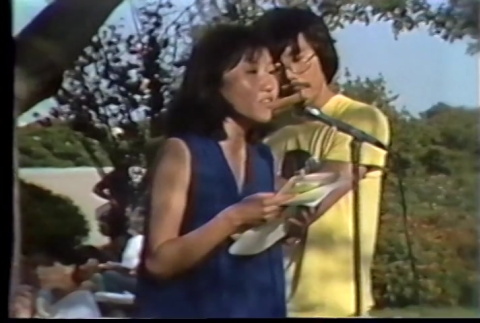
In a lunch-time rally planned by NCRR, organizations and communities come together in solidarity to speak out in support for Japanese American Redress.
Introduction by Miya Iwataki, Co-Founder of NCRR.
To commemorate the 40th anniversary of the 1981 Commission on Wartime Relocation and Internment of Civilians (CWRIC) Los Angeles hearings, Visual Communications and Nikkei for Civil …
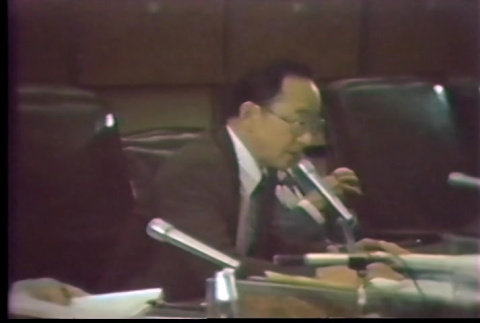
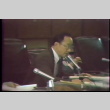
The three days of CWRIC LA hearings concludes with final comments from the three remaining Commissioners present. [Commissioners Arthur S. Flemming, Hugh B. Mitchell, and William M. Marutani]
Introduction by Abraham Ferrer of Visual Communications.
To commemorate the 40th anniversary of the 1981 Commission on Wartime Relocation and Internment of Civilians (CWRIC) Los Angeles hearings, Visual …
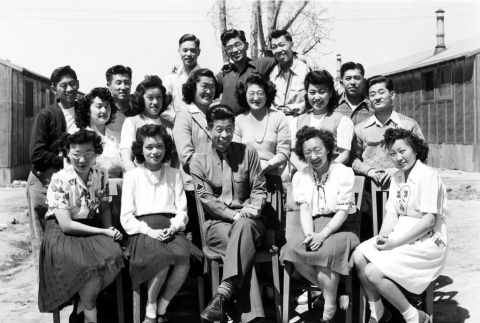
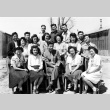
The Kinoshita collection (1940s, 1970s, and 1980s-1990s) contains photographs from the Minidoka concentration camp, Idaho. Several photographs show the staff of the Minidoka Irrigator, the camp's newspaper. The collection also documents the redress movement from its inception, and includes photographs from various Japanese American Citizens League conventions. Densho interviewed collection donor Cherry Kinoshita in 1997.
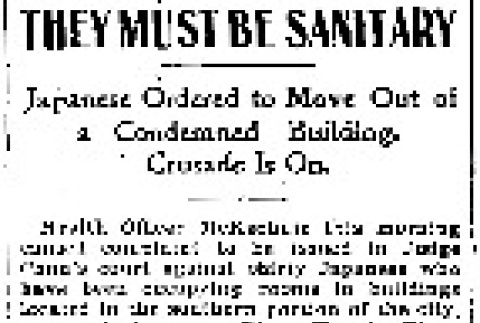
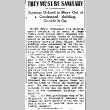
The Seattle Times collection contains articles about Japanese Americans published in the Seattle Times newspaper between 1900 and 1949. The articles were selected by Densho staff and downloaded from the Seattle Times website. They appear to have been originally scanned from microfilm. Cropped versions of each article as well as the original full page are available.
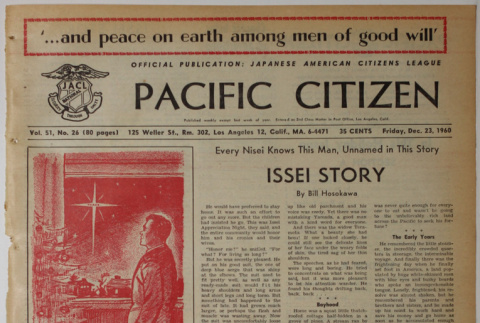
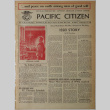
Christmas/Holiday edition of Pacific Citizen.
Select article titles: "Watch the Sansei Generation" (p. A4); "Hawaii's Great Japanese Strike" (p. B1); "JACL Convention in World's Fair Atmosphere" (p. B18).
The holiday issue included advertisements bought by JACL members and chapters that included personal addresses and phone numbers to better foster communications between Japanese American communities. These addresses …
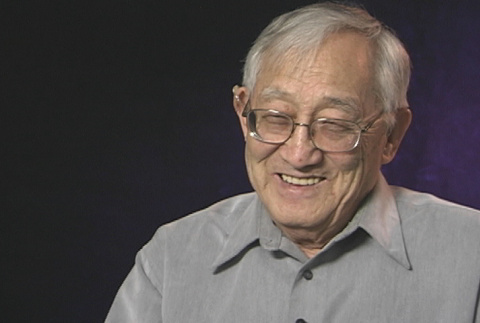
Nisei male. Born September 4, 1922, in Spokane, Washington. Spent childhood in Spokane, where parents operated a downtown Spokane hotel and father worked as a redcap at the local train station. Graduated from Lewis & Clark High School, attended Whitworth College, and then attended trade school where he became an electrician.
This interview was conducted at the 1998 Americans of Japanese Ancestry Veterans National Convention, held in Honolulu, Hawaii. Given the full conference schedule, interviews conducted at the reunion were shorter in length than typical Densho interviews and concentrated on a single topic, namely, the individual's military service during World War II.
This interview was conducted at the 1998 Americans of Japanese Ancestry Veterans National Convention, held in Honolulu, Hawaii. Given the full conference schedule, interviews conducted at the reunion were shorter in length than typical Densho interviews and concentrated on a single topic, namely, the individual's military service during World War II.
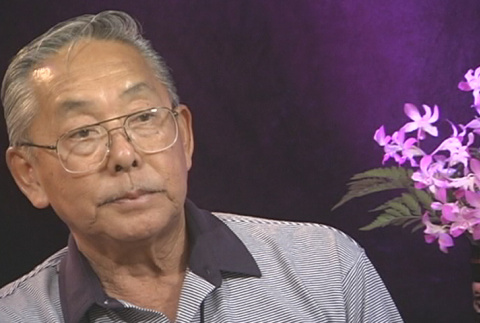
Postwar life in San Jose's Japantown: active in the merchants association, getting married
This interview was conducted by the Japanese American Museum of San Jose, and is part of a project entitled "Lasting Stories: The Resettlement of San Jose Japantown," a collaborative project between the Japanese American Museum of San Jose and Densho.
Memories of mass removal, Santa Anita Assembly Center, and Heart Mountain concentration camp
This interview was conducted by the Japanese American Museum of San Jose, and is part of a project entitled "Lasting Stories: The Resettlement of San Jose Japantown," a collaborative project between the Japanese American Museum of San Jose and Densho.
Family background: parents met through arranged marriage, lived and worked in San Francisco, California
This interview was conducted by the Japanese American Museum of San Jose, and is part of a project entitled "Lasting Stories: The Resettlement of San Jose Japantown," a collaborative project between the Japanese American Museum of San Jose and Densho.
Present-day exterior and interior shots of the Nichi Bei Bussan Department Store
This interview was conducted by the Japanese American Museum of San Jose, and is part of a project entitled "Lasting Stories: The Resettlement of San Jose Japantown," a collaborative project between the Japanese American Museum of San Jose and Densho.
Reflections on George's Service Center: "I never begrudged a day for going to work"
This interview was conducted by the Japanese American Museum of San Jose, and is part of a project entitled "Lasting Stories: The Resettlement of San Jose Japantown," a collaborative project between the Japanese American Museum of San Jose and Densho.
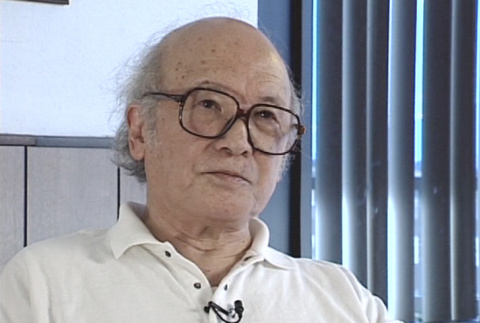
Common misperceptions regarding Kibei political beliefs
This interview was conducted at the 1998 Tule Lake Pilgrimage held at Klamath Falls, Oregon and at the site of Tule Lake incarceration camp in California. Given the limited time available during this event, the length and breadth of this interview are shorter than other Densho interviews.
Decision and impact of renouncing U.S. citizenship
This interview was conducted at the 1998 Tule Lake Pilgrimage held at Klamath Falls, Oregon and at the site of Tule Lake incarceration camp in California. Given the limited time available during this event, the length and breadth of this interview are shorter than other Densho interviews.
This interview was conducted at the 1998 Americans of Japanese Ancestry Veterans National Convention, held in Honolulu, Hawaii. Given the full conference schedule, interviews conducted at the reunion were shorter in length than typical Densho interviews. Beverly Kashino, one of the interviewers, is Shiro and Louise Kashino's daughter.
This interview was conducted at the 1998 Americans of Japanese Ancestry Veterans National Convention, held in Honolulu, Hawaii. Given the full conference schedule, interviews conducted at the reunion were shorter in length than typical Densho interviews. Beverly Kashino, one of the interviewers, is Shiro and Louise Kashino's daughter.
This interview was conducted at the 1998 Americans of Japanese Ancestry Veterans National Convention, held in Honolulu, Hawaii. Given the full conference schedule, interviews conducted at the reunion were shorter in length than typical Densho interviews. Beverly Kashino, one of the interviewers, is Shiro and Louise Kashino's daughter.
This interview was conducted at the 1998 Americans of Japanese Ancestry Veterans National Convention, held in Honolulu, Hawaii. Given the full conference schedule, interviews conducted at the reunion were shorter in length than typical Densho interviews. Beverly Kashino, one of the interviewers, is Shiro and Louise Kashino's daughter.
This interview was conducted at the 1998 Americans of Japanese Ancestry Veterans National Convention, held in Honolulu, Hawaii. Given the full conference schedule, interviews conducted at the reunion were shorter in length than typical Densho interviews. Beverly Kashino, one of the interviewers, is Shiro and Louise Kashino's daughter.
This interview was conducted at the 1998 Americans of Japanese Ancestry Veterans National Convention, held in Honolulu, Hawaii. Given the full conference schedule, interviews conducted at the reunion were shorter in length than typical Densho interviews. Beverly Kashino, one of the interviewers, is Shiro and Louise Kashino's daughter.
A 2012 documentary film on Japanese American swing dance bands in the World War II concentration camps. Produced by Claire Reynolds for KEET, a Eureka, California, based public television station serving California's northern coast, the hour long documentary debuted on October 30, 2012. The film was funded by grants from the Japanese American Confinement Sites Grant …
This interview was conducted at the 1998 Americans of Japanese Ancestry Veterans National Convention, held in Honolulu, Hawaii. Because of the full conference schedule, interviews conducted at the reunion were generally shorter in length than the typical Densho interview and tend to concentrate on the individual's military service during World …
This interview was conducted at the 1998 Americans of Japanese Ancestry Veterans National Convention, held in Honolulu, Hawaii. Because of the full conference schedule, interviews conducted at the reunion were generally shorter in length than the typical Densho interview and tend to concentrate on the individual's military service during World War II.
This interview was conducted at the 1998 Americans of Japanese Ancestry Veterans National Convention, held in Honolulu, Hawaii. Because of the full conference schedule, interviews conducted at the reunion were generally shorter in length than the typical Densho interview and tend to concentrate on the individual's military service during World War …