Father's status as "enemy alien," adhering to "parole" restrictions
Joseph Yasutake was interviewed together with his sister Mitsuye (Yasutake) Yamada and surviving brother, William Toshio Yasutake, in group sessions on October 8-9, 2002. He was also interviewed individually on October 9, 2002.
Before being contacted by Densho, the Yasutake siblings had planned to conduct their own …
High school experiences: very little ethnic identity, planning for college
Joseph Yasutake was interviewed together with his sister Mitsuye (Yasutake) Yamada and surviving brother, William Toshio Yasutake, in group sessions on October 8-9, 2002. He was also interviewed individually on October 9, 2002.
Before being contacted by Densho, the Yasutake siblings had planned to conduct their …
First wife's passing; moving to San Jose, California, getting remarried
Joseph Yasutake was interviewed together with his sister Mitsuye (Yasutake) Yamada and surviving brother, William Toshio Yasutake, in group sessions on October 8-9, 2002. He was also interviewed individually on October 9, 2002.
Before being contacted by Densho, the Yasutake siblings had planned to conduct their …
Involvement in the Japanese American community; recognizing the relevance of history
Joseph Yasutake was interviewed together with his sister Mitsuye (Yasutake) Yamada and surviving brother, William Toshio Yasutake, in group sessions on October 8-9, 2002. He was also interviewed individually on October 9, 2002.
Before being contacted by Densho, the Yasutake siblings had planned to conduct …
Activities in Crystal City internment camp: judo, sumo and baseball
Joseph Yasutake was interviewed together with his sister Mitsuye (Yasutake) Yamada and surviving brother, William Toshio Yasutake, in group sessions on October 8-9, 2002. He was also interviewed individually on October 9, 2002.
Before being contacted by Densho, the Yasutake siblings had planned to conduct their …
The Mamiya collection, c.1918-1960s, records the business and leisure activities of the Asaba and Shibata families of Seattle, Washington. Dance and graduation programs from the Minidoka concentration camp, Idaho, are also shown. Densho interviewed collection donor Yoshi Mamiya in 1998.
The Nakano collection consists of several photographs belonging to Densho narrator James Nakano. Originally born in Hawaii, Mr. Nakano was removed to the mainland U.S. during World War II. The photographs in this collection were taken at the Tule Lake concentration camp, California.
This collection contains documents and photographs from Densho narrator K. Morgan Yamanaka. The documents include letters and papers regarding Tule Lake, California, during the time it was designated a segregation center, including documents about the Tule Lake stockade and renunication of citizenship.
Mitsuko Nagell talks with Frank Iwasaki about his experiences during WWII at Tule Lake concentration camp.
Digital Histories is a mechanism for AAPNHPI older adults to use their unique voices and perspectives in sharing stories with the generations to come. Since its creation in 2003, Digital Histories has provided a professional and artistic work environment for …
On the release of Japanese-American from relocation centers for jobs in the Midwest. Nisei families leave a center. WRA offices locate civilian employment for them. Some Japanese work on a farm in Illinois, others in a candy factory, a machine shop, an egg dehydrating plant, and other industries. The WRA aids families in procuring living quarters.Creator(s): …
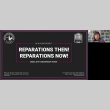
The Struggle for Black Reparations: A Conversation:
Panelists:
Akinyele Umoja, scholar activist, author, Prof. GA State Univ.
Kamm Howard, author, Nat’l Male Co-Chair N’COBRA
Nkechi Taifa, attorney, activist, author, founding member N’COBRA
Miya Iwataki (Moderator), founding member NCRR
Call to Action:
traci kato kiriyama, Nikkei Progressives
Solidarity Statements:
Dr. Cheryl Grills, AB 3121 CA Reparations Task …
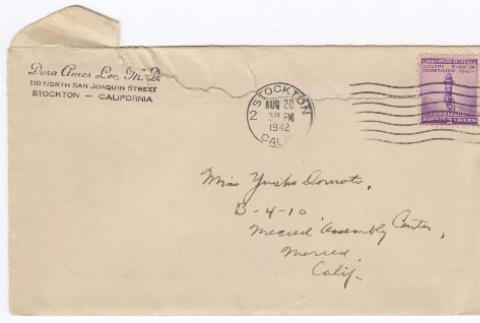
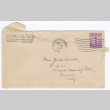
Two letters stored in one envelope between Yuriko Domoto Tsukada and Dora Ames Lee. The first letter is to Dora Ames Lee from Yuriko Domoto dated August 1, 1942. In this letter Yuri writes in regards to a patient of Dr. Ames who's family has made inquires about their wellbeing through Yuriko. She also discusses her …
Witnessing segregation Mississippi: "It was a just completely different world for us"
This interview was conducted as part of a project to capture stories of the Japanese American community of Spokane, Washington. Densho worked in collaboration with the Northwest Museum of Arts and Culture.
Memories of traveling into Spokane every weekend to attend Japanese language school
This interview was conducted as part of a project to capture stories of the Japanese American community of Spokane, Washington. Densho worked in collaboration with the Northwest Museum of Arts and Culture.
Attending Gonzaga university after being barred from volunteering for the military
This interview was conducted as part of a project to capture stories of the Japanese American community of Spokane, Washington. Densho worked in collaboration with the Northwest Museum of Arts and Culture.
Returning home, meeting a member of the "Lost Battalion" from Texas
This interview was conducted as part of a project to capture stories of the Japanese American community of Spokane, Washington. Densho worked in collaboration with the Northwest Museum of Arts and Culture.
Hearing news of Japan's attack on Pearl Harbor: "I felt vulnerable"
This interview was conducted as part of a project to capture stories of the Japanese American community of Spokane, Washington. Densho worked in collaboration with the Northwest Museum of Arts and Culture.
Changes in Spokane's Japanese American community with the influx of "voluntary evacuees"
This interview was conducted as part of a project to capture stories of the Japanese American community of Spokane, Washington. Densho worked in collaboration with the Northwest Museum of Arts and Culture.
Pulled out of rest period for the rescue of the "Lost Battalion"
This interview was conducted as part of a project to capture stories of the Japanese American community of Spokane, Washington. Densho worked in collaboration with the Northwest Museum of Arts and Culture.
Father's work upon immigration to the U.S.: railroad laborer, hotel busboy
This interview was conducted as part of a project to capture stories of the Japanese American community of Spokane, Washington. Densho worked in collaboration with the Northwest Museum of Arts and Culture.
Combat in Bruyeres: new replacement soldiers seeing battle for the first time
This interview was conducted as part of a project to capture stories of the Japanese American community of Spokane, Washington. Densho worked in collaboration with the Northwest Museum of Arts and Culture.
A squad leader uses improvised Japanese language to communicate with troops
This interview was conducted as part of a project to capture stories of the Japanese American community of Spokane, Washington. Densho worked in collaboration with the Northwest Museum of Arts and Culture.
Realizing the immense casualties after the battle of the "Lost Battalion"
This interview was conducted as part of a project to capture stories of the Japanese American community of Spokane, Washington. Densho worked in collaboration with the Northwest Museum of Arts and Culture.
Father's work in the U.S. in the family's import/export business
This interview was conducted as part of a project to capture stories of the Japanese American community of Spokane, Washington. Densho worked in collaboration with the Northwest Museum of Arts and Culture.
Feeling frustrated on the difficult train ride to Minidoka concentration camp
This interview was conducted as part of a project to capture stories of the Japanese American community of Spokane, Washington. Densho worked in collaboration with the Northwest Museum of Arts and Culture.