
457 items
457 items
av
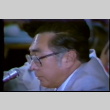
Speak Out for Justice: August 4, 1981 - Part 4 (ddr-densho-1024-102)
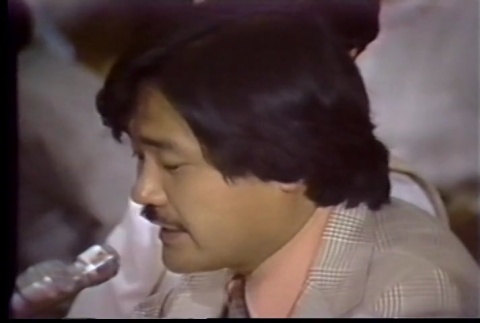
Testifiers continue to speak out on the intergenerational impact of Executive Order 9066 on Japanese Americans. The demand for Community Redress and Reparations grows as the testimonies continue to speak out on the psychological trauma and feelings of shame felt by many interned Japanese Americans.
Introduction by Duane Kubo, Co-Founder of Visual Communications.
Part 4 Testifiers: …
av
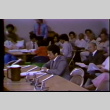
Speak Out for Justice: August 4, 1981 - Part 2 (ddr-densho-1024-100)
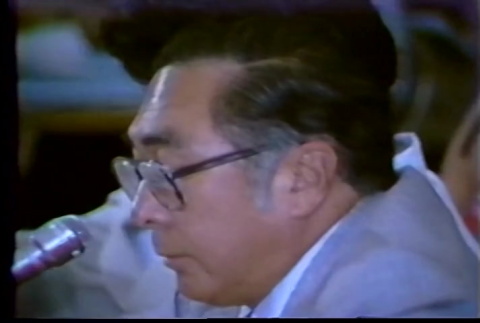
Japanese Americans break their silence to speak out on the pain, suffering, and loss experienced as a result of the issuance of Executive Order 9066. The first-hand accounts detail the enormous loss of property and business among many Japanese Americans after World War II.
Introduction by Jim Matsuoka, Co-Founder of Los Angeles Committee Coalition for Redress …
av
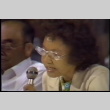
Speak Out for Justice: August 5, 1981 - Part 1 (ddr-densho-1024-103)
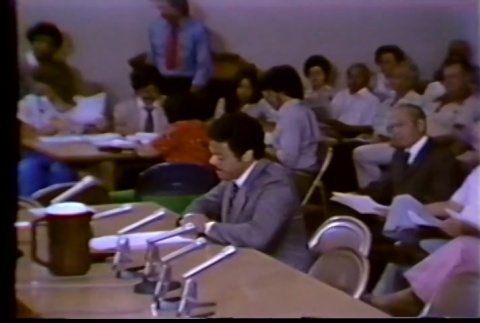
Nisei (second-generation Japanese Americans) veterans speak out about the injustice shown to Japanese Americans during World War II and in solidarity demand redress. A confrontation occurs between testifier Jim Kawaminami and author Lillian Baker, who denied that Japanese Americans were incarcerated during World War II.
Introduction by Roy Nakano, Director of UCLA Asian American Studies Center. …
av
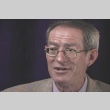
Speak Out for Justice: August 4, 1981 - Little Tokyo Towers Evening Session (ddr-densho-1024-115)
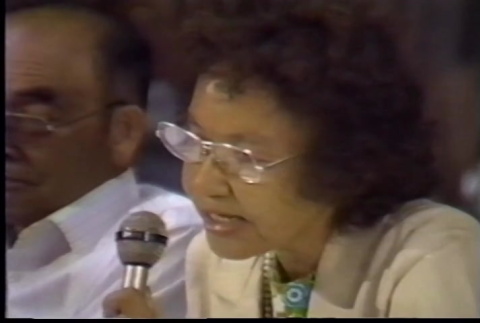
On the evening of August 4, 1981, NCRR arranged a special evening session at the Little Tokyo Towers in Los Angeles, so that people who worked during the day could attend and participate in the CWRIC hearings. While the testimony footage for this session is incomplete and disjointed, the testifiers provide their heartbreaking experiences of personal …
vh
Peter Irons Interview II (ddr-densho-1000-127)
White male. Born 1940 in Salem, Massachusetts. Family moved frequently during his childhood due to father's employment. Strongly influenced by parents' values regarding racial tolerance and inclusion, and principles learned through Unitarian Church. While attending Antioch College in Ohio, became involved in political and social activism for civil rights. Joined the youth branch of NAACP, the …
vh
Peter Irons Interview I (ddr-densho-1000-126)
White male. Born 1940 in Salem, Massachusetts. Family moved frequently during his childhood due to father's employment. Strongly influenced by parents' values regarding racial tolerance and inclusion, and principles learned through Unitarian Church. While attending Antioch College in Ohio, became involved in political and social activism for civil rights. Joined the youth branch of NAACP, the …
vh
Peter Irons Interview (ddr-densho-1012-16)
White male. Born 1940 in Salem, Massachusetts. Family moved frequently during his childhood due to father's employment. Strongly influenced by parents' values regarding racial tolerance and inclusion, and principles learned through Unitarian Church. While attending Antioch College in Ohio, became involved in political and social activism for civil rights. Joined the youth branch of NAACP, the …