
479 items


479 items
img
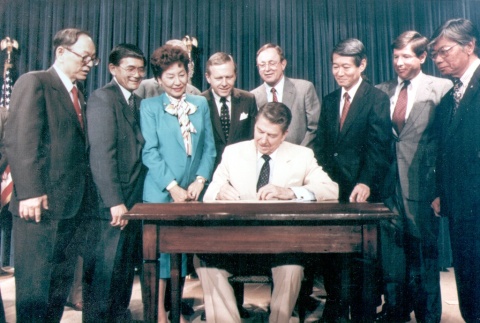
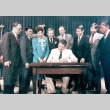
President Reagan signing the Civil Liberties Act of 1988 (ddr-densho-10-6)
Onlookers watch as President Ronald Reagan signs the Civil Liberties Act of 1988. Left to right: Senator Spark Matsunaga (Hawaii), Representative Norman Mineta (California), Representative Patsy Saiki (Hawaii), Senator Pete Wilson (California), Representative. Don Young (Alaska), Representative Robert Matsui (California), Representative Bill Lowery (California), and Harry Kajihara, President, National JACL. The man in the back is …

av
Putting Them Where They Could Do No Harm (ddr-densho-1024-10)
Short film that makes the case for renaming Fletcher Bowron Square in downtown Los Angeles, named after the wartime mayor of Los Angeles who agitated for the removal and incarceration of Japanese Americans. Eschewing narration, the film uses Bowron's wartime radio addresses (voiced by Maciek Kolodziejeczak) as evidence of his anti-Japanese and pro-exclusion stance, juxtaposed with …
vh
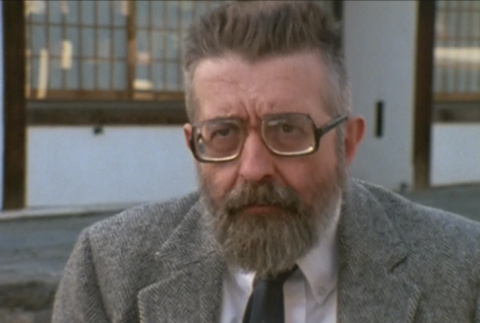
Roger Daniels Interview (ddr-densho-1012-17)
Caucasian male. Born December 1, 1927, in New York City, New York. Charles Phelps Taft Professor Emeritus of History, University of Cincinnati. Served as a consultant to the Commission on Wartime Relocation and Internment of Civilians from 1981 to 1983. Has researched and written numerous books about the Japanese American experience, including Prisoners Without Trial: Japanese …
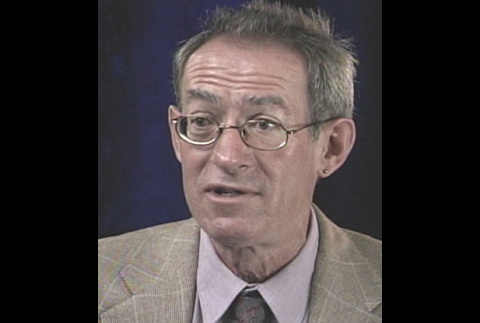
Narrator Peter Irons
White male. Born 1940 in Salem, Massachusetts. Family moved frequently during his childhood due to father's employment. Strongly influenced by parents' values regarding racial tolerance and inclusion, and principles learned through Unitarian Church. While attending Antioch College in Ohio, became involved in political and social activism for civil rights. Joined the youth branch of NAACP, the …
vh
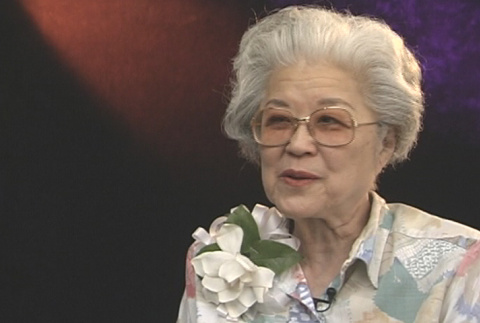
Aiko Herzig-Yoshinaga Interview I (ddr-densho-1000-16)
Nisei female. Born August 5, 1924, in Sacramento, California. Grew up in Sacramento and Los Angeles. During World War II, removed to the Manzanar concentration camp, California, and transferred to the Jerome concentration camp, Arkansas. Washington representative and researcher for National Council for Japanese American Redress (NCJAR) and primary archival researcher for the Commission on Wartime …
vh
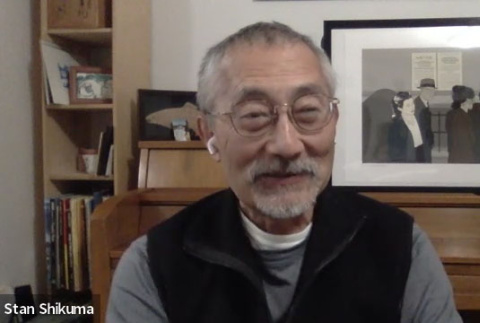
Stan Shikuma Interview (ddr-sjacl-2-33)
In this interview, Ana Tanaka and Dr. Kyle Kinoshita led a conversation with Stan Shikuma in which he related his family's experiences during the World War II incarceration, and the return to California. Stan related how growing up in the turbulent '60's and '70's began to impel him into activism in the Bay Area, beginning with …
vh
Aiko Herzig Interview (ddr-densho-1002-8)
Nisei female. Born August 5, 1924, in Sacramento, California. Grew up in Sacramento and Los Angeles. During World War II, removed to the Manzanar concentration camp, California, and transferred to the Jerome concentration camp, Arkansas. Washington representative and researcher for National Council for Japanese American Redress (NCJAR) and primary archival researcher for Commission on Wartime Relocation …
av
Speak Out for Justice: August 4, 1981- Part 1 (ddr-densho-1024-99)
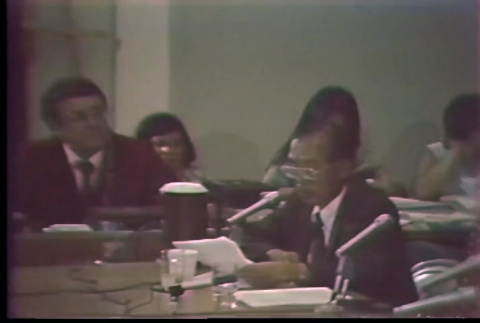
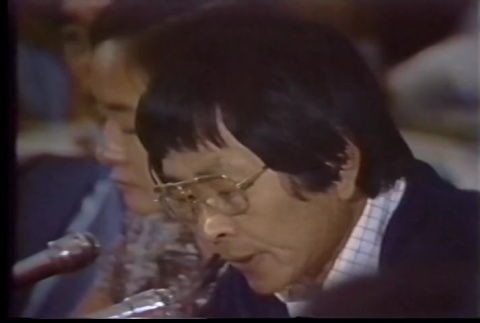
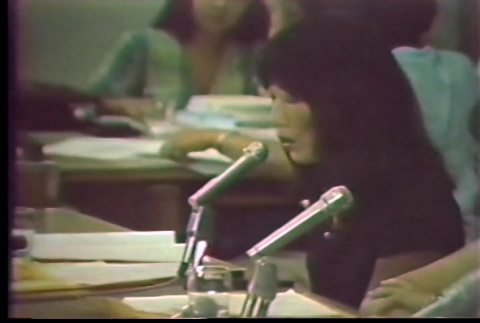
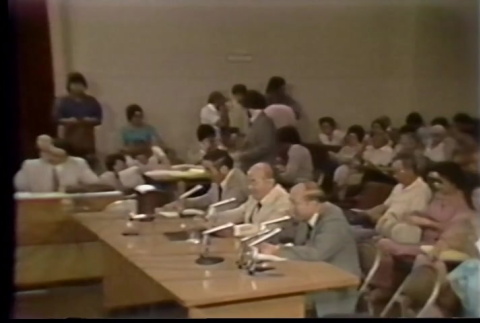
Elected Officials give their testimonies on the circumstances and facts surrounding the forced relocation and internment of over 120,000 Japanese Americans during World War II. Introduction by Co-Chair of NCRR/Los Angeles Kay Ochi. Part 1 Testifiers: Senator S. I. Hayakawa, Barbara Marumoto, Edmund Edelman, Tom Bradley, Mas Fukai To commemorate the 40th anniversary of the 1981 …
vh
William Marutani Interview (ddr-densho-1000-44)
Nisei male. Born March 31, 1923, in Kent, Washington. During World War II, was incarcerated at the Pinedale Assembly Center, California, and Tule Lake concentration camp, California. After leaving camp to attend college in South Dakota, was drafted into the U.S. Army and served with the Military Intelligence Service during the postwar occupation of Japan. After …
av
Speak Out for Justice: August 5, 1981 - Part 6 (ddr-densho-1024-108)
Testifiers continue to speak out on economic and property loss as a result of forced relocation and internment. Japanese Americans share their experiences of search, seizure, and mistreatment during their time spent in internment camps. Introduction by Alison Kochiyama, Executive Director of the Gardena Valley Japanese Cultural Institute. Part 6 Testifiers: Kiyoshi Sonoda, Larry Boss, Mary …
av
Speak Out for Justice: August 5, 1981 - Part 3 (ddr-densho-1024-105)
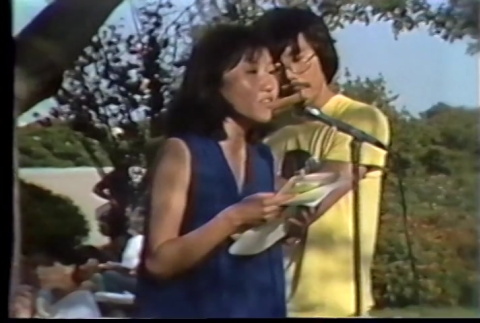
In a lunch-time rally planned by NCRR, organizations and communities come together in solidarity to speak out in support for Japanese American Redress. Introduction by Miya Iwataki, Co-Founder of NCRR. To commemorate the 40th anniversary of the 1981 Commission on Wartime Relocation and Internment of Civilians (CWRIC) Los Angeles hearings, Visual Communications and Nikkei for Civil …
av
Speak Out for Justice: August 6, 1981 - Part 6 (ddr-densho-1024-114)
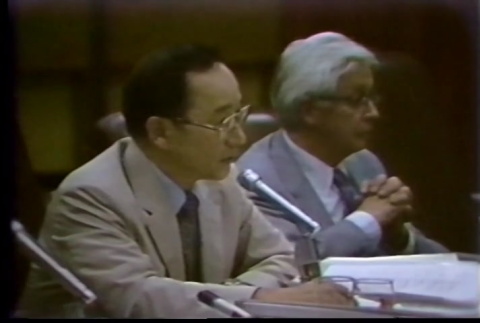
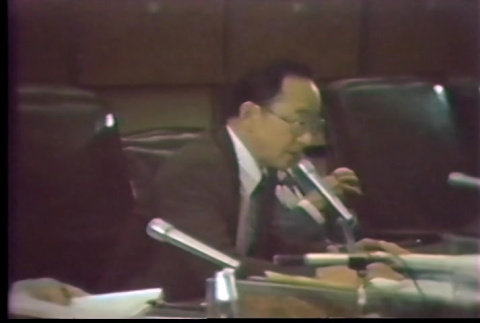
The three days of CWRIC LA hearings concludes with final comments from the three remaining Commissioners present. [Commissioners Arthur S. Flemming, Hugh B. Mitchell, and William M. Marutani] Introduction by Abraham Ferrer of Visual Communications. To commemorate the 40th anniversary of the 1981 Commission on Wartime Relocation and Internment of Civilians (CWRIC) Los Angeles hearings, Visual …
av
Speak Out for Justice: August 4, 1981 - Part 3 (ddr-densho-1024-101)
Testifiers speak out on the heartbreaking accounts of camp experiences, post-war trauma, and the racial prejudice endured by many Japanese Americans. Introduction by Harry Kawahara, Former Redress Committee Chairman. Part 3 Testifiers: Henry S. Yamaga, Alfred Nabeta, Robert O'Brien, Morris Kight, Harry Kawahara, Hannah Tomiko Holmes, Raymond Wiedman To commemorate the 40th anniversary of the 1981 …
av
Speak Out for Justice: August 6, 1981 - Part 4 (ddr-densho-1024-112)
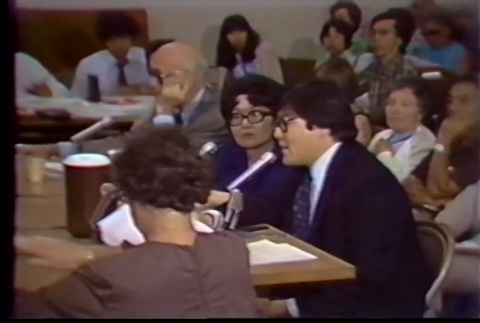
Members from various associations and organizations provide legal viewpoints on the constitutional issues and impact of camp experiences on Japanese American psyche. All of them demand for monetary reparations and constitutional remedy. Introduction by Steve Nagano of NCRR and Nikkei Progressives. Part 4 Testifiers: Fred Okrand, Junji Kumamoto, Alan Terakawa, Carole Sei Morita, Rose Matsui Ochi, …

av
Speak Out For Justice (Speaking Out!) (ddr-densho-1024-8)
Short compilation of testimony from the Los Angeles hearings of the Commission on Wartime Relocation and Internment of Civilians includes excerpts from twenty-eight people covering a range of topics including the arrest and internment of Issei , the travails of being incarcerated, the continuing impact on the incarceration, and calls for monetary reparations. A total of …
av
Speak Out for Justice: August 6, 1981 - Part 2 (ddr-densho-1024-110)
Mental health professionals provide insight into the detrimental effects of camp trauma and the impact on psychological and physical health. Japanese Americans speak out on the extreme racial prejudice and discrimination experienced in post-camp life. Introduction by Karen Umemoto, Executive Director of the UCLA Asian American Studies Center, and Michael Nishimura, member of Nikkei Progressives. Part …
av
Speak Out for Justice: August 6, 1981 - Part 5 (ddr-densho-1024-113)
As the final day of the CWRIC hearings conclude, testifiers continue to speak out on the impact of EO 9066 on Japanese American communities and unite in their demand for monetary redress. The testimonies recall business property loss, resettlement difficulties, and racial prejudice. Introduction by Richard Katsuda, educator and co-chair of NCRR. Part 5 Testifiers: Akemi …
av
Speak Out for Justice: August 5, 1981 - Part 2 (ddr-densho-1024-104)
Testifiers continue to show bravery in speaking out on the impact of Japanese internment during World War II. These stories show the economic loss, psychological trauma, and impact on education for many interned Japanese. Introduction by Jen Noji of Nikkei Progressives and Alan Nishio, Former Co-Chair of NCRR Los Angeles Part 2 Testifiers: Jack Fujimoto, Y. …
av
Speak Out for Justice: August 4, 1981 - Part 4 (ddr-densho-1024-102)
Testifiers continue to speak out on the intergenerational impact of Executive Order 9066 on Japanese Americans. The demand for Community Redress and Reparations grows as the testimonies continue to speak out on the psychological trauma and feelings of shame felt by many interned Japanese Americans. Introduction by Duane Kubo, Co-Founder of Visual Communications. Part 4 Testifiers: …
av
Speak Out for Justice: August 6, 1981 - Part 1 (ddr-densho-1024-109)
Testimonies emerge from the issei (first generation Japanese) perspective as testifiers demand to speak out in Japanese. Japanese Americans from Terminal Island tell their stories of being forcibly removed from their homes and placed into internment camps. Introduction by Yasuko Sakamoto of NCRR, and Alina Nakano, granddaughter of Bert and Lillian Nakano. Part 1 Testifiers: Dean …
av
Speak Out for Justice: August 6, 1981 - Part 3 (ddr-densho-1024-111)
Testifiers continue to speak out on the economic loss and psychological impact of Japanese internment during World War II. Recollections of post-camp resettlement also demonstrate the discrimination and prejudice experienced by many Japanese Americans. Introduction by June Hibino of Nikkei Progressives and NCRR. Part 3 Testifiers: Rei Osaki, Peter K. Ota, John J. Saito, Linda Morimoto, …
vh
Paul Bannai Interview I (ddr-densho-1000-128)
Nisei male. Born July 4, 1920 in Delta, Colorado. Grew up in small mining and farming towns in Colorado, Utah and Arizona, until his family moved to Boyle Heights in the Los Angeles, California area. After graduating from high school, he tested discrimination and employment practices and eventually succeeded in obtaining a job at a bank. …
vh
Paul Bannai Interview II (ddr-densho-1000-150)
Nisei male. Born July 4, 1920 in Delta, Colorado. Grew up in small mining and farming towns in Colorado, Utah and Arizona, until his family moved to Boyle Heights in the Los Angeles, California area. After graduating from high school, he tested discrimination and employment practices and eventually succeeded in obtaining a job at a bank. …
av
Speak Out for Justice: August 5, 1981 - Part 1 (ddr-densho-1024-103)
Nisei (second-generation Japanese Americans) veterans speak out about the injustice shown to Japanese Americans during World War II and in solidarity demand redress. A confrontation occurs between testifier Jim Kawaminami and author Lillian Baker, who denied that Japanese Americans were incarcerated during World War II. Introduction by Roy Nakano, Director of UCLA Asian American Studies Center. …
av
Speak Out for Justice: August 4, 1981 - Little Tokyo Towers Evening Session (ddr-densho-1024-115)
On the evening of August 4, 1981, NCRR arranged a special evening session at the Little Tokyo Towers in Los Angeles, so that people who worked during the day could attend and participate in the CWRIC hearings. While the testimony footage for this session is incomplete and disjointed, the testifiers provide their heartbreaking experiences of personal …