
479 items
479 items
doc
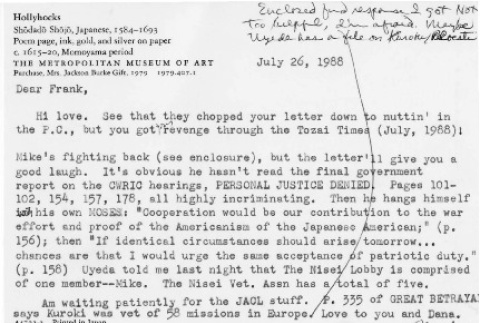
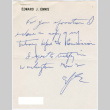
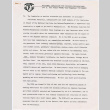
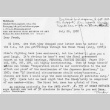
Letter from Michi Weglyn to Frank Chin, July 26, 1988 (ddr-csujad-24-13)
A letter from Michi Weglyn to Frank Chin discussing his letters to the editor and the contents of "Personal Justice Denied," the final government report of the Commission on Wartime Relocation and Internment of Civilians (CWRIC) hearings See this object in the California State Universities Japanese American Digitization project site: chi_01_013
doc
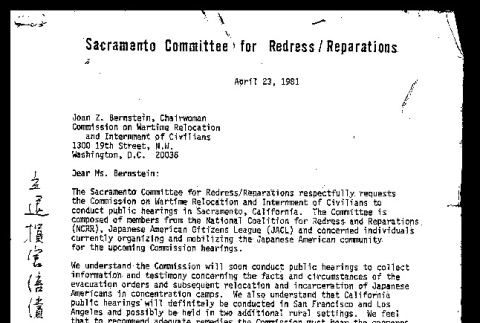
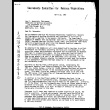
Letter from Carnegie Ouye, Representative, Sacramento Committee for Redress/Reparations, to Joan Z. Bernstein, Chairwoman, Commission on Wartime Relocation and Internment of Civilians, April 23, 1981 (ddr-csujad-55-104)
Correspondence from Carnegie Ouye and Kathy Shiroi of the Sacramento Committee for Redress and Reparations to Joan Bernstein of the Commission on Wartime Relocation and Internment of Civilians, requesting public hearings be held in the Sacramento area. See this object in the California State Universities Japanese American Digitization project site: sac_jaac_0106
vh
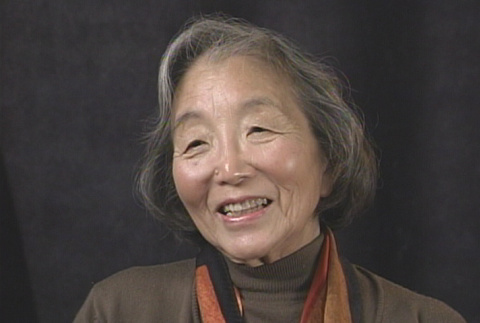
Susan Hayase Segment 7 (ddr-densho-1000-13-7)
Relationship between the Nihonmachi Outreach Committee and the Japanese American Citizens League during Commission on Wartime Relocation and Internment of Civilians hearings
This interview was conducted at the Voices of Japanese American Redress Conference, held on the UCLA campus and sponsored by the UCLA Asian American Studies Center and the UCLA School of Public Policy and …
vh
Susan Hayase Segment 6 (ddr-densho-1000-13-6)
Getting people to testify at the Commission on Wartime Relocation and Internment of Civilians hearings; death of the "quiet American" stereotype, and legacy of the redress movement
This interview was conducted at the Voices of Japanese American Redress Conference, held on the UCLA campus and sponsored by the UCLA Asian American Studies Center and the UCLA …
doc
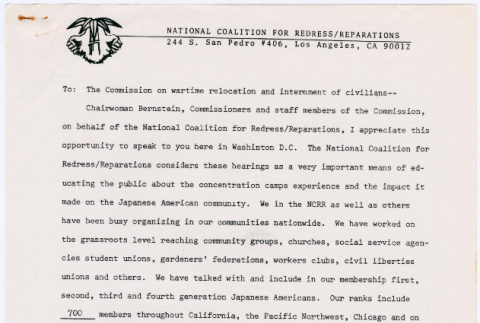
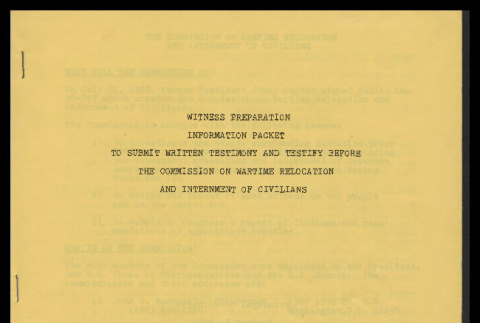
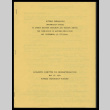
Witness preparation information packet to submit written testimony and testify before the Commission on Wartime Relocation and Internment of Civilians (ddr-csujad-55-109)
Information created for the purpose of assisting individuals in preparing testimony for the Commission on Wartime Relocation and Internment of Civilians. Packet includes information on the investigation and review process, location of hearings, hearing formats, preparing oral testimony, post-hearing procedures, and a list of groups in the redress and reparations effort. See this object in the …
doc
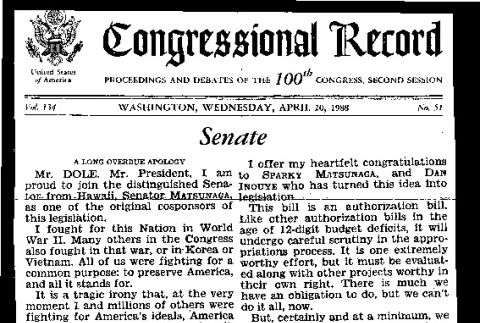
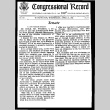
Congressional record, 100th Congress, vol. 134, no. 51 (April 20, 1988) (ddr-csujad-55-208)
Congressional Record, Proceedings of the 100th Congress, First Session, Washington, Wednesday April 20, 1988, Volume 134, Number 51, statement by Bob Dole regarding bill to implement the recommendations of the Commission on Wartime Relocation and Internment of Civilians (the Civil Liberties Act of 1988, HR 442, S 1009). See this object in the California State Universities …
doc
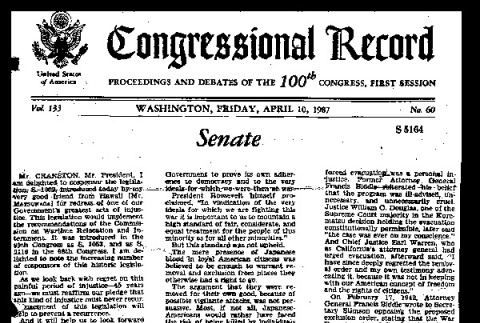
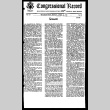
Congressional record, 100th Congress, vol. 133, no. 60 (April 10, 1987) (ddr-csujad-55-206)
Congressional Record, Proceedings of the 100th Congress, First Session, Washington, Friday, April 10, 1987, Volume 133, Number 60, statement by Alan Cranston regarding bill to implement the recommendations of the Commission on Wartime Relocation and Internment of Civilians (the Civil Liberties Act of 1988, HR 442, S 1009). See this object in the California State Universities …
img
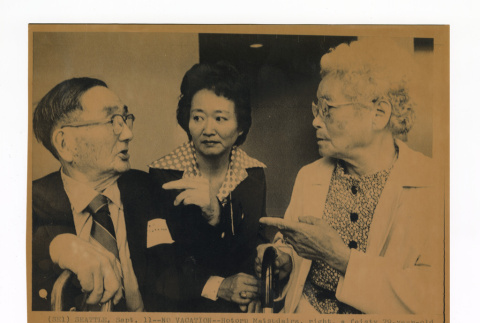
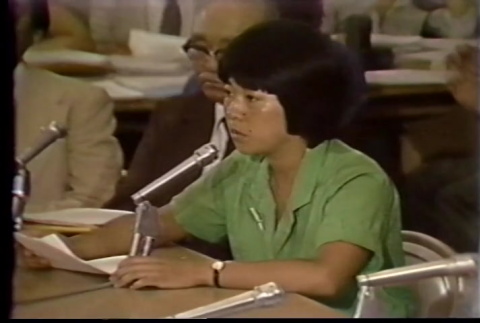
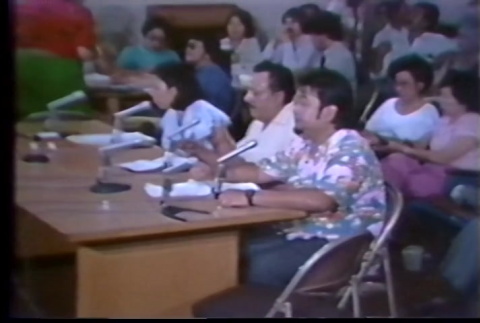
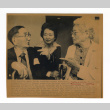
Hotoru Matsudaira, Mako Nakagawa, and Masao Takahashi, who testified at a hearing before the Commission on Wartime Relocation and Internment of Civilians (ddr-csujad-52-32)
Caption below image reads, "NO VACATION--Hotoru Matsudaira, right, a feisty 79-year-old grandmother, told a federal commission Thursday that the internment of Japanese Americans during World War II was anything but a 'three-year vacation,' as described by Sen. S.I. Hayakawa, R-Calif. 'He is a Canadian and he lived in the East all during the war. He is …
img
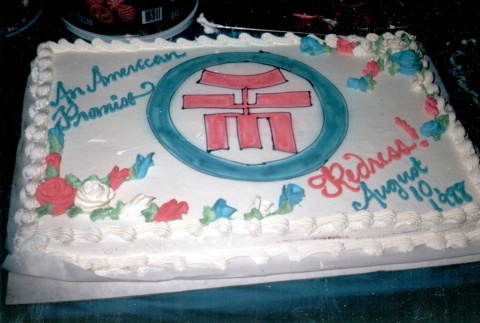
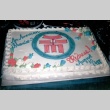
Cake celebrating the passage of the Civil Liberties Act of 1988 (ddr-densho-10-9)
The Civil Liberties Act of 1988 was passed on August 10, 1988. The following month, a celebration was held at the Nisei Veterans Hall in Seattle, Washington. The logo on the cake stands for Issei, Nisei, and Sansei. The Civil Liberties Act of 1988 was enacted to redress the wrongs by the United States government against …
av
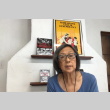
Speak Out for Justice: Afterword by Kathy Masaoka and Alex Kanegawa (ddr-densho-1024-116)
Kathy Masaoka, Co-Chair of NCRR and Nikkei Progressives, and Alex Kanegawa, member of Nikkei Progressives, provide an afterword to the Commission on Wartime Relocation and Internment of Civilians (CWRIC) hearings in Los Angeles, held from August 4 through August 6, 1981. To commemorate the 40th anniversary of the 1981 Commission on Wartime Relocation and Internment of …
vh
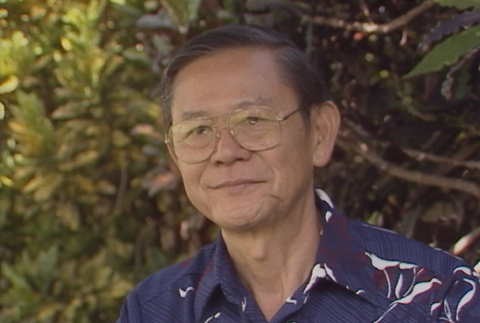
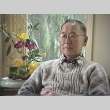
William Marutani Interview (ddr-phljacl-1-14)
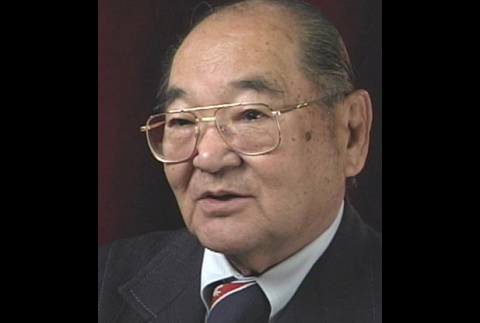
Nisei male. Born March 31, 1923, in Kent, Washington. During World War II, was incarcerated at the Pinedale Assembly Center, California, and Tule Lake concentration camp, California. After leaving camp to attend college in South Dakota, was drafted into the U.S. Army and served with the Military Intelligence Service during the postwar occupation of Japan. After …
vh
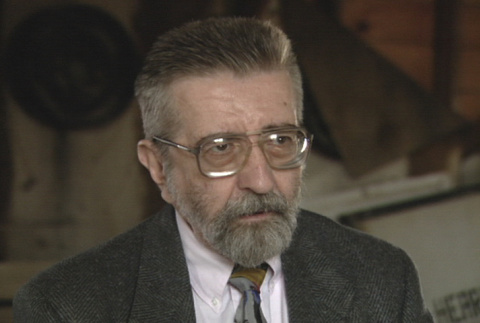
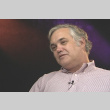
Angus Macbeth Interview (ddr-densho-1000-43)
White male. Born 1942 in Los Angeles, California. During the redress movement, served as Special Counsel to the Commission on Wartime Relocation and Internment of Civilians (CWRIC) and oversaw publication of the Commission's report, Personal Justice Denied.
(This interview was conducted at the Voices of Japanese American Redress Conference, held on the UCLA campus and sponsored …
av
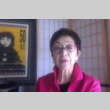
Speak Out for Justice: An Introduction by Kay Ochi (ddr-densho-1024-98)
Co-Chair of NCRR/Los Angeles Kay Ochi provides an overview introduction of the Commission on Wartime Relocation and Internment of Civilians (CWRIC) hearings in Los Angeles, held from August 4 through August 6, 1981. Kay Ochi emphasizes the power of testimonies, grassroots organizations, and the importance of speaking out against injustice. To commemorate the 40th anniversary of …
vh
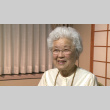
Aiko Herzig-Yoshinaga Interview II (ddr-densho-1000-250)
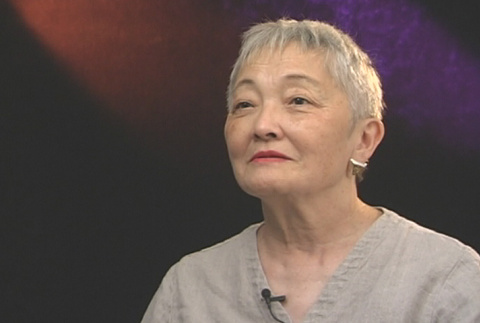
Nisei female. Born August 5, 1924, in Sacramento, California. Grew up in Sacramento and Los Angeles. During World War II, removed to the Manzanar concentration camp, California, and transferred to the Jerome concentration camp, Arkansas. Washington representative and researcher for National Council for Japanese American Redress (NCJAR) and primary archival researcher for Commission on Wartime Relocation …
av
Speak Out for Justice: August 5, 1981 - Part 4 (ddr-densho-1024-106)
As the Commission on Wartime Relocation and Internment of Civilians (CWRIC) Los Angeles hearings resume, Issei testifiers speak out on the injustice shown towards people of Japanese ancestry during World War II. Testifiers from the San Diego Redress and Reparations Committee also speak out on behalf of their experiences and their families. Introduction by Jan Tokumaru, …
vh
Kara Kondo Interview (ddr-densho-1000-139)
Nisei female. Born May 24, 1916, in the Yakima valley, Washington, and spent childhood in Wapato, Washington. Following the bombing of Pearl Harbor, removed to the North Portland Assembly Center, Oregon, and then to the Heart Mountain concentration camp, Wyoming. Was on the staff of the camp newspaper, the Heart Mountain Sentinel. Left camp for Chicago, …
Collection
Loni Ding Oral History and Film Research Collection (ddr-densho-1007)
The Loni Ding Oral History and Film Research Collection contains documents, correspondences, periodicals, testimonies, newspaper clippings, interview transcriptions, ephemera, speeches, booklets and programs, book reviews, press releases, and photographs. There are also A/V materials in Betacam, U-matic, Betamax, VHS, audio cassettes, and reel-to-reel formats. The A/V materials contain first-person interviews, b-roll footage, and archival film footage. …
vh
Roger Daniels Interview (ddr-densho-122-25)
White male. Born December 1, 1927, in New York City, New York. Charles Phelps Taft Professor Emeritus of History, University of Cincinnati. Served as a consultant to the Commission on Wartime Relocation and Internment of Civilians from 1981 to 1983. Has researched and written numerous books about the Japanese American experience, including Prisoners Without Trial: Japanese …
av
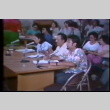
Speak Out for Justice: August 5, 1981 - Part 5 (ddr-densho-1024-107)
As the Commission on Wartime Relocation and Internment of Civilians (CWRIC) Los Angeles hearings proceed, testimonies of financial losses and psychological trauma drive the movement for Redress and Reparations forward. The testifiers show solidarity in their support for interned people of Japanese ancestry. Introduction by Mark Masaoka and Miyako Noguchi of Nikkei Progressives. Part 5 Testifiers: …
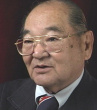
Narrator Paul Bannai
Nisei male. Born July 4, 1920, in Delta, Colorado. Grew up in small mining and farming towns in Colorado, Utah and Arizona, until his family moved to Boyle Heights in the Los Angeles, California area. After graduating from high school, he tested discrimination and employment practices and eventually succeeded in obtaining a job at a bank. …
vh
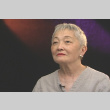
Chiye Tomihiro Interview (ddr-densho-1000-93)
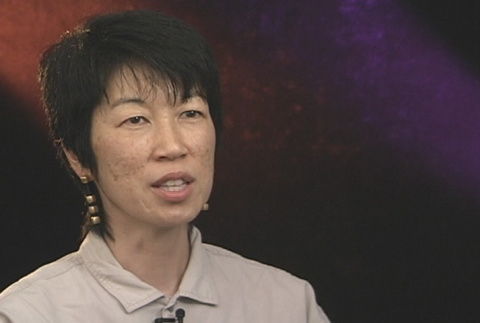
Nisei female. Born December 20, 1924, in Portland, Oregon. Incarcerated at the Portland Assembly Center, Oregon, and Minidoka concentration camp, Idaho. Resettled first in Denver, Colorado and later in Chicago, Illinois. Former witness chair for Chicago area hearings of the Commission on Wartime Relocation and Internment of Civilians (CWRIC) and former chairperson of the JACL Chicago …
img
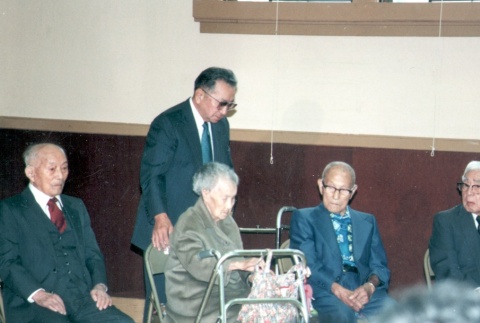
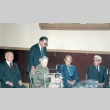
Issei waiting to receive their redress checks (ddr-densho-10-11)
Four Issei, all at least 100 years of age, waiting to receive their redress checks at the Nisei Veterans Hall in Seattle, Washington. Left to right: Mr. Katsuo, Ms. Wakamatsu, Mr. Ishimitsu, and Mr. Nakagawa. The fifth Issei recipient, Mr. Frank Yatsu, is not pictured. The man standing behind Ms. Wakamatsu is unidentified. The Civil Liberties …