
10000 items
10000 items
doc
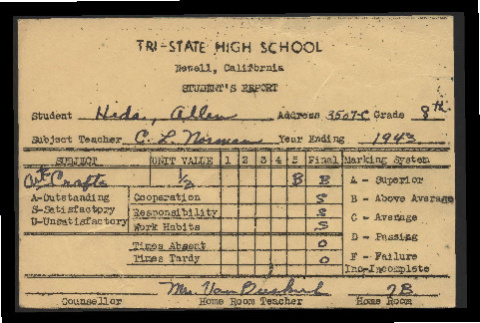
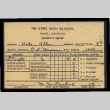
Tri-State High School student's report (ddr-csujad-55-1992)
Report card from Tri-State High School at Tule Lake incarceration camp belonging to Allan Minoru Hida reflecting his grades in arts and crafts during his 8th grade year. See this object in the California State Universities Japanese American Digitization project site: sac_jaac_1995
img
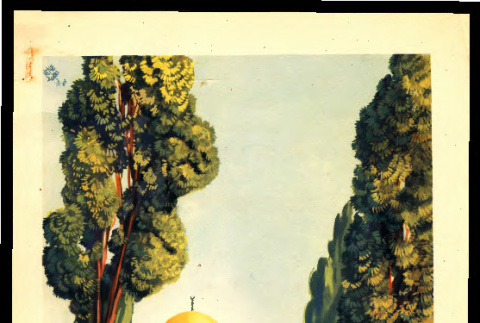
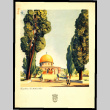
Menu card from the Conte Biancamano ship (ddr-csujad-55-1347)
Menu card with illustration from the Italian steam liner, SS Conte Biancamano. From the Mary F. Clark scrapbook, "Before I Forget, 1942-1947," page 18. See also sac_jaac_1334 through sac_jaac_1529. See this object in the California State Universities Japanese American Digitization project site: sac_jaac_1349
doc
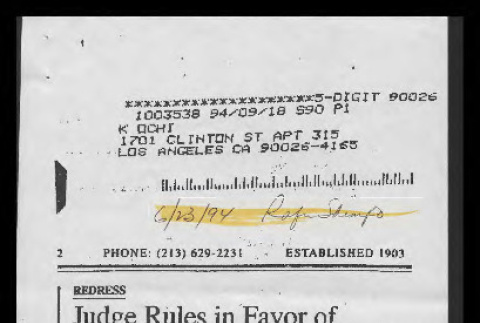
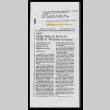
Redress: judge rules in favor of child of voluntary evacuee (ddr-csujad-55-2102)
Newspaper clipping published in Rafu shimpo regarding a court case in which the judge ruled in favor of granting redress payments to the child of "voluntary evacuees" during World War II. See this object in the California State Universities Japanese American Digitization project site: sac_jaac_2205
doc
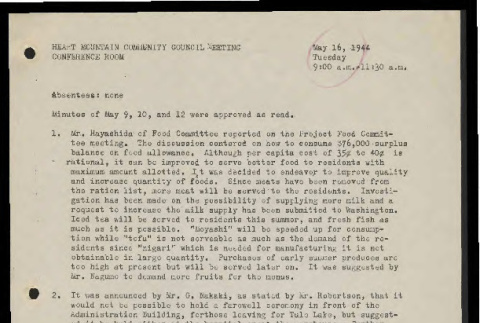
Minutes from the Heart Mountain Community Council meeting, May 16, 1944 (ddr-csujad-55-566)
Minutes from the Heart Mountain Community Council meeting. Includes report from the Food Committee on availability and types of food that will be served during summer and discussion on transportation fares. See this object in the California State Universities Japanese American Digitization project site: sac_jaac_0568
doc
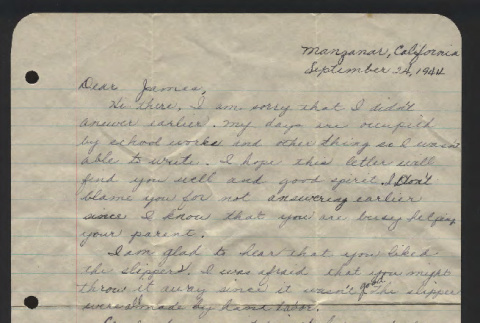
Letter from Bill Taketa to James Waegell, September 24, 1944 (ddr-csujad-55-2340)
Correspondence from Bill Taketa to Mr. James Waegell regarding the opening of school with him taking auto mechanic, English, and social problem and the rest of the day working part-time. See this object in the California State Universities Japanese American Digitization project site: sac_jaac_2446
doc
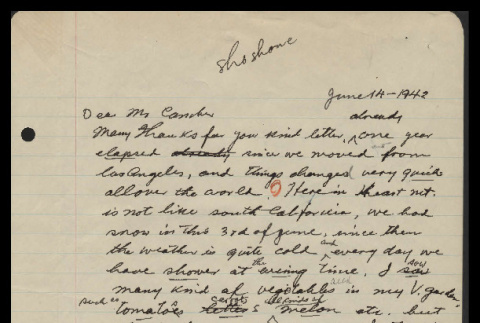
Letter from Shoji Nagumo to Mr. Donald Camber, June 14, 1942 (ddr-csujad-55-876)
Correspondence from Shoji Nagumo to Donald Camber regarding a request for Camber to send Nagumo's personal belongings to Heart Mountain incarceration camp. Includes a hand-drawn map of Nagumo's home. See this object in the California State Universities Japanese American Digitization project site: sac_jaac_0878
doc
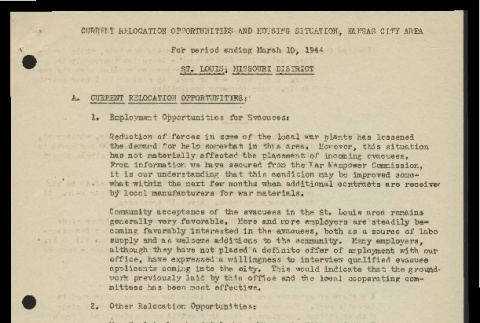
Current relocation opportunities; Current housing situation, Kansas City area for period ending March 10, 1944, St. Louis, Missouri District (ddr-csujad-55-830)
Report on job vacancies and opportunities for "resettlers" in the Kansas City area. Includes summary of jobs, housing, and a list of job titles and pay for males and females. See this object in the California State Universities Japanese American Digitization project site: sac_jaac_0832
doc
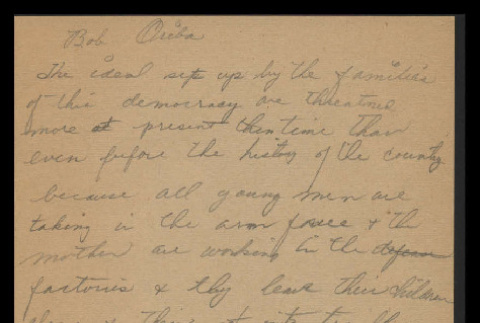
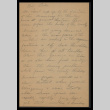
Sociology essay (ddr-csujad-55-1918)
Sociology essay written by Bob Oriba[?] for a class assignment at Tri-State High School at Tule Lake incarceration camp. Covers lack of childcare, food shortage and other social problems. See this object in the California State Universities Japanese American Digitization project site: sac_jaac_1921
doc
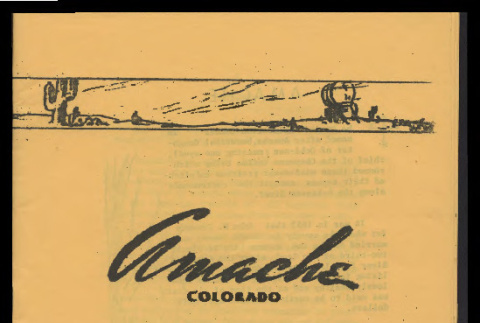
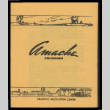
Amache, Colorado (ddr-csujad-55-354)
Booklet describing the history of the "Amache Relocation Center," the surrounding region, incarcerees, community government, administration, leisure activities, facilities, medical services, schools, employment, housing, food, and farming. Includes maps and illustrations. See this object in the California State Universities Japanese American Digitization project site: sac_jaac_0356
img
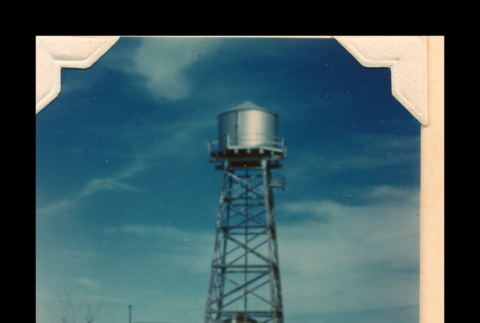
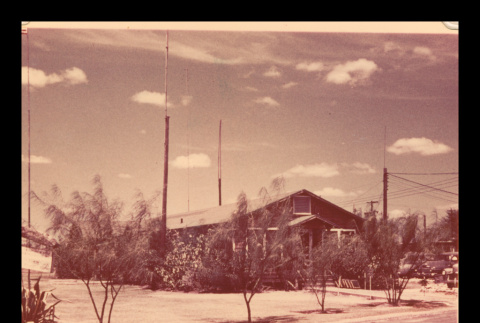
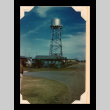
Water tower at Crystal City Department of Justice Internment Camp (ddr-csujad-55-1504)
Color photograph of the water tower at Crystal City Department of Justice Internment Camp. From the Mary F. Clark scrapbook, "Before I Forget, 1942-1947," page 139. See also sac_jaac_1334 through sac_jaac_1529. See this object in the California State Universities Japanese American Digitization project site: sac_jaac_1506
doc
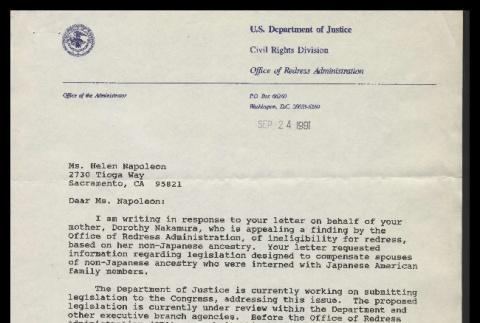
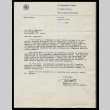
Letter from Robert K. Bratt, Administrator for Redress, U.S. Department of Justice to Helen Napoleon, September 24, 1991 (ddr-csujad-55-2080)
Correspondence from Robert Bratt to Helen Napoleon regarding current legislation covering restitution payments to non-Japanese individuals who chose to accompany their spouse to an incarceration camp during World War II. See this object in the California State Universities Japanese American Digitization project site: sac_jaac_2183
doc
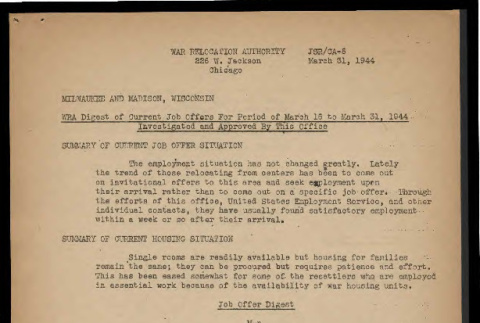
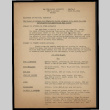
WRA digest of current job offers for period of March 16 to March 31, 1944, Milwaukee and Madison, Wisconsin (ddr-csujad-55-993)
Report on job vacancies for "resettlers" in Milwaukee and Madison, Wisconsin. Includes summary of jobs and housing and a list of job titles and pay for males and females. See this object in the California State Universities Japanese American Digitization project site: sac_jaac_0995
doc
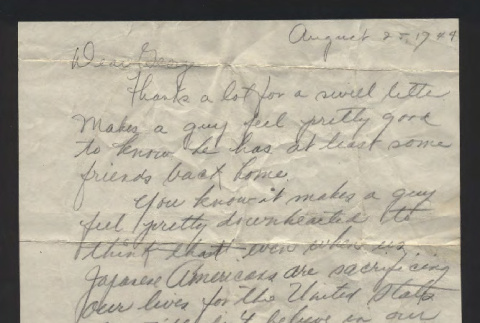
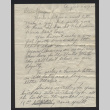
Letter from Kenneth Hori to George Waegell, August 25, 1944 (ddr-csujad-55-2551)
Correspondence from Kenneth Hori to George Waegell regarding the fact that Kenneth feels, "Japanese Americans are sacrificing our lives for the United States they still don't believe in our loyalty." See this object in the California State Universities Japanese American Digitization project site: sac_jaac_2658
img
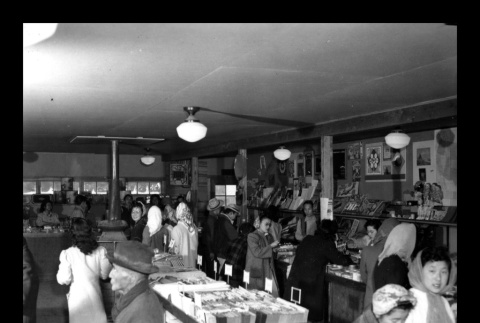
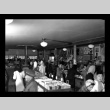
Variety Department, Amache Co-op (ddr-csujad-55-1578)
Black and white photograph depicting incarcerees shopping in the variety department of Amache Consumer Enterprises, Amache incarceration camp. From the Amache Co-op Souvenir Album, page 35. See also sac_jaac_1530. See this object in the California State Universities Japanese American Digitization project site: sac_jaac_1580
img
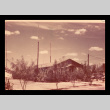
Near entrance at Crystal City Department of Justice Internment Camp (ddr-csujad-55-1503)
Color photograph of the entrance at Crystal City Department of Justice Internment Camp. From the Mary F. Clark scrapbook, "Before I Forget, 1942-1947," page 139. See also sac_jaac_1334 through sac_jaac_1529. See this object in the California State Universities Japanese American Digitization project site: sac_jaac_1505
doc
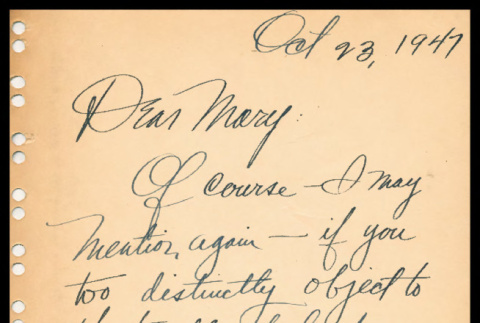
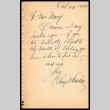
Letter from Henry W. Roscoe to Mary Clark, October 23, 1947 (ddr-csujad-55-1527)
Scrapbook page containing a handwritten note from Henry Roscoe to Mary Clark. From the Mary F. Clark scrapbook, "Before I Forget, 1942-1947," page 146. See also sac_jaac_1334 through sac_jaac_1529. See this object in the California State Universities Japanese American Digitization project site: sac_jaac_1529
img
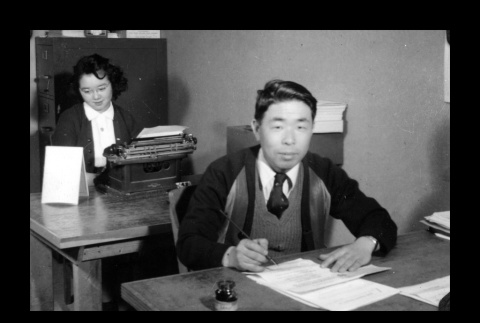
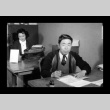
A. Inaba, Secretary, Amache Co-op (ddr-csujad-55-1532)
Black and white photographic portrait of A. Inaba, Secretary of Amache Consumer Enterprises at the Amache incarceration camp. From Amache Co-op Souvenir Album, page 3. See also sac_jaac_1530 through sac_jaac_1589. See this object in the California State Universities Japanese American Digitization project site: sac_jaac_1534
doc
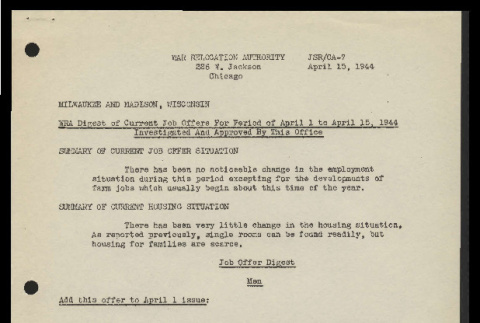
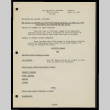
WRA digest of current job offers for period of April 1 to April 15, 1944, Milwaukee and Madison, Wisconsin (ddr-csujad-55-836)
Report on job vacancies and opportunities for "resettlers" in Milwaukee and Madison, Wisconsin. Includes summary of jobs, housing, and a list of job titles and pay for males and females. See this object in the California State Universities Japanese American Digitization project site: sac_jaac_0838
doc
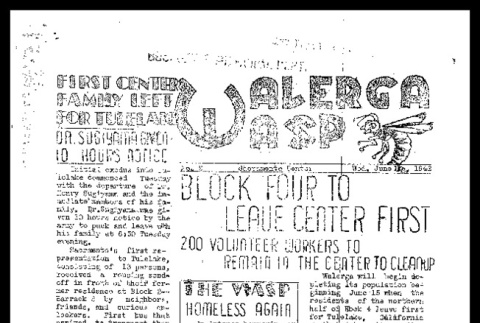
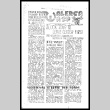
Walerga wasp, no. 9 (June 10, 1942) (ddr-csujad-55-2514)
Newspaper published at the Walerga Assembly Center covering news, updates, camp services, and events. Current issue includes articles on removal to Tule Lake incarceration camp, camp news, and sports. See this object in the California State Universities Japanese American Digitization project site: sac_jaac_2620
doc
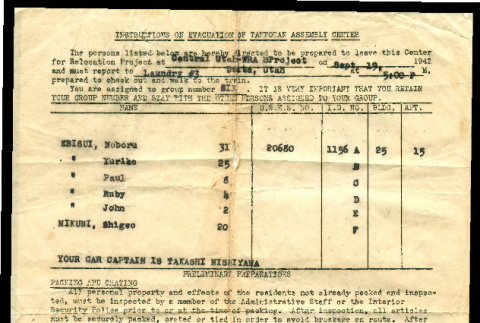
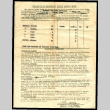
Instructions on evacuation of Tanforan Assembly Center (ddr-csujad-55-1295)
Instructions for the Ebisui family regarding departure from Tanforan Temporary Assembly Center and travel to Topaz incarceration camp. Covers packing and crating, government property, hand baggage, train baggage, freight, and identification tags. See this object in the California State Universities Japanese American Digitization project site: sac_jaac_1297
doc
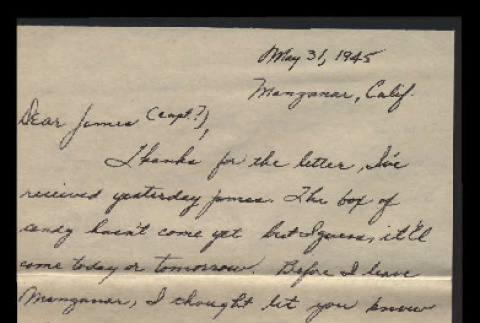
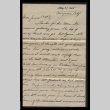
Letter from Leo Uchida to Capt. James Waegell, May 31, 1945 (ddr-csujad-55-2332)
Correspondence from Leo Uchida to James Waegell regarding Uchida's plans to travel from Manzanar incarceration camp to Maryland to be with his family, high school graduation, and other family updates. See this object in the California State Universities Japanese American Digitization project site: sac_jaac_2438
doc
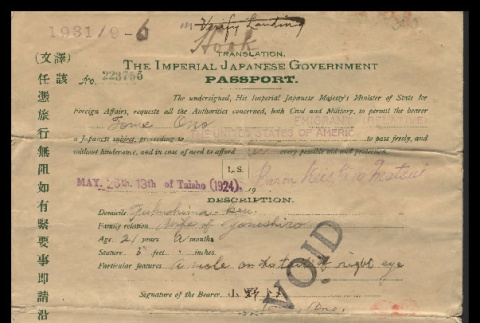
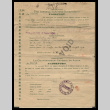
Imperial Japanese Government passport, Tome Ono (ddr-csujad-55-2458)
A passport belonging to Tome Ono, no. 223755. Includes photograph of Ono and admittance stamp from the U.S. Immigration Service for arrival to the United States via the SS Alabama Maru. See this object in the California State Universities Japanese American Digitization project site: sac_jaac_2564
doc
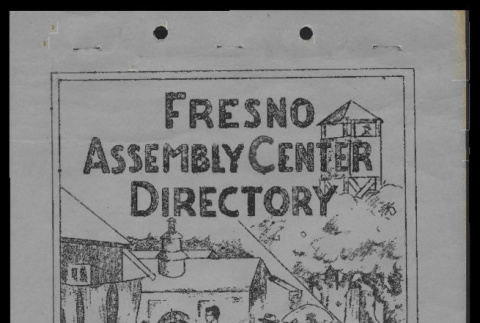
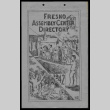
Fresno Assembly Center directory, 1942 (ddr-csujad-55-859)
Directory booklet for the Fresno Temporary Assembly Center. Includes listings for the Center Executive Board, Councils, Section Heads, and the name, number in family, and former city of individual incarcerees. See this object in the California State Universities Japanese American Digitization project site: sac_jaac_0861
doc
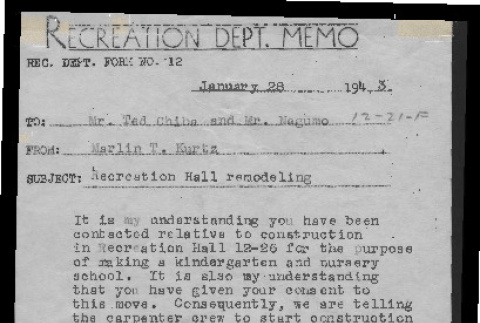
Memo from Marlin T. Kurtz to Mr. Ted Chiba and Mr. Shoji Nagumo, January 28, 1943 (ddr-csujad-55-686)
Memorandum of understanding from Marlin Kurtz to Ted Chiba and Shoji Nagumo regarding construction in Recreation Hall 12-26 at Heart Mountain incarceration camp. "Rec. Dept. Form no. 12." See this object in the California State Universities Japanese American Digitization project site: sac_jaac_0688
img
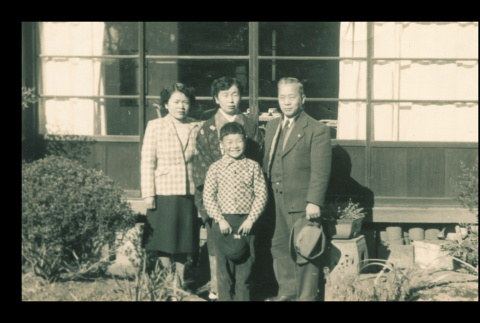
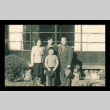
Yoshio Ichikawa family in front of their home (ddr-csujad-55-2223)
Sepia-toned photograph depicting the Ichikawa family in front of their home. Pictured are Yoshio and Hatsue Ichikawa with son and daughter. Verso reads: Y. Ichikawa family in front of the "Ozashiki." See this object in the California State Universities Japanese American Digitization project site: sac_jaac_2326