1026 items
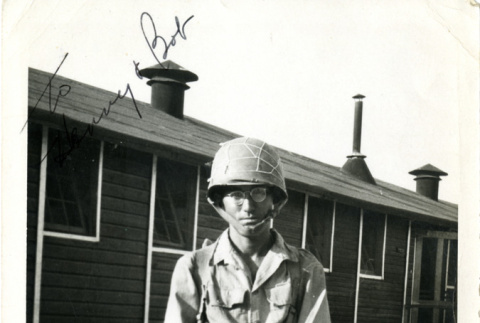
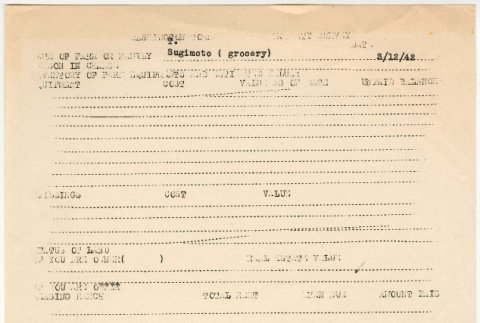
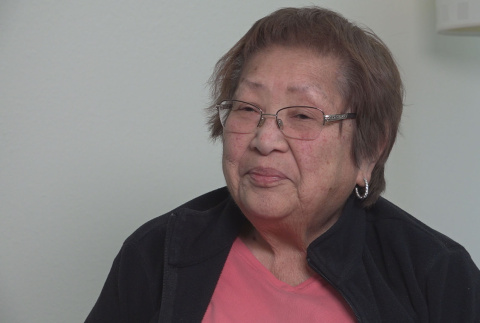

1026 items
Collection
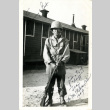
UC Santa Barbara Robert Billigmeier Collection (ddr-csujad-26)
The Robert Billigmeier collection is comprised of materials collected during his work and stay at the Tule Lake incarceration camp conducting research for the University of California’s Japanese Evacuation and Resettlement Study (JERS). The collection includes: photographs taken during his time at Tule Lake; a scrapbook created by students at Tule Lake in 1942; camp publications; …
vh
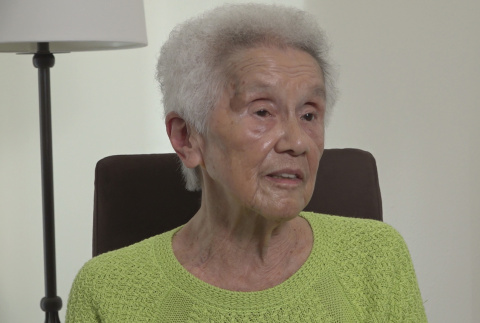
Jan Kumasaka Interview (ddr-densho-1000-518)
Sansei female. Born August 12, 1937, in Seattle, Washington. During World War II, family removed to the Puyallup Assembly Center, Washington, and the Minidoka concentration camp, Idaho. Lived in Minidoka for only four months before leaving camp to live and farm in Great Falls, Montana. After a few years, returned to Seattle. Attended the University of …
doc
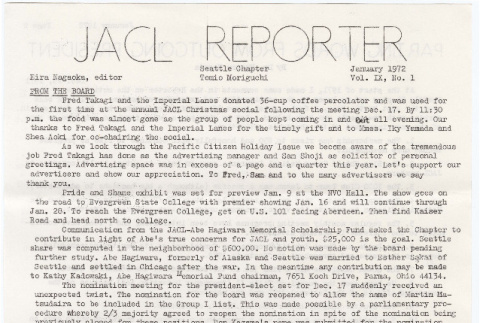
Seattle Chapter, JACL Reporter, Vol. IX, No. 1, January 1972 (ddr-sjacl-1-138)
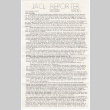
Bulletin covering the following topics: 1972 President Tomio Moriguchi (First Sansei President?); National JACL is raising $25,000 for Abe Hagiwara Scholarships, send donations to Kathy Kadowaki in Parma Ohio; Installation Banquet, January 28th, Bush Garden, Keynote-Kenji Okuda, $6.00/person; outgoing summary from 1971 President, Minoru Masuda\n?The Fence at Minidoka?, on December 7th, by Barbara Tanabe, aired on …
vh
Mary Okazaki Kozu Interview (ddr-densho-1000-511)
Nisei female. Born June 14, 1931, in Seattle, Washington. Grew up in Seattle, where parents ran a boarding house. During World War II, removed to the Puyallup Assembly Center, Washington, and Minidoka concentration camp, Idaho. Left camp in 1943 and moved to Salt Lake City, Utah. Returned with family to Seattle after the war, attended the …

Narrator Kip Tokuda
In this session, Ana Tanaka led a panel of Kip Tokuda's friends (Janice Deguchi, Akemi Matsumoto, Rep. Sharon Tomiko Santos, Barbara Lui, and Bill Tashima) in a remembrance of Tokuda. Tokuda was an iconic leader in the Japanese American community who as a Washington State Legislator, Seattle JACL President, and local organizer advocated and established programs …
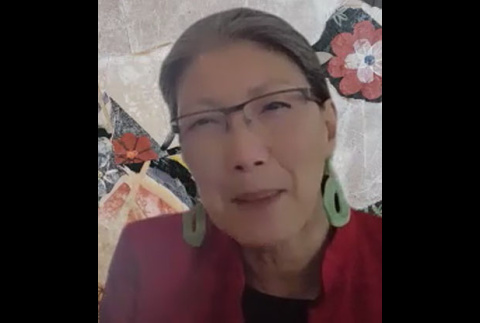
Narrator Rep. Sharon Tomiko Santos
In this session, Ana Tanaka led a panel of Kip Tokuda's friends (Janice Deguchi, Akemi Matsumoto, Rep. Sharon Tomiko Santos, Barbara Lui, and Bill Tashima) in a remembrance of Tokuda. Tokuda was an iconic leader in the Japanese American community who as a Washington State Legislator, Seattle JACL President, and local organizer advocated and established programs …
vh
Karen Yoshitomi Interview Segment 13 (ddr-densho-1000-527-13)
Thinking about Japanese American identity and heritage
vh
Karen Yoshitomi Interview Segment 11 (ddr-densho-1000-527-11)
Getting married and having children
vh
Karen Yoshitomi Interview Segment 6 (ddr-densho-1000-527-6)
First becoming aware of Japanese American identity
vh
Karen Yoshitomi Interview Segment 10 (ddr-densho-1000-527-10)
Executive Director of the Japanese Cultural and Community Center of Washington
vh
Karen Yoshitomi Interview Segment 9 (ddr-densho-1000-527-9)
Becoming regional director for the Japanese American Citizens League
vh
Karen Yoshitomi Interview Segment 12 (ddr-densho-1000-527-12)
Learning about family members' World War II camp experiences
vh
Karen Yoshitomi Interview Segment 2 (ddr-densho-1000-527-2)
Father's family background: born in Canada
vh
Karen Yoshitomi Interview Segment 5 (ddr-densho-1000-527-5)
Growing up in Tacoma: Buddhist temple activities
vh
Karen Yoshitomi Interview Segment 8 (ddr-densho-1000-527-8)
Working at the Center for Career Alternatives
vh
Karen Yoshitomi Interview Segment 4 (ddr-densho-1000-527-4)
The effects of wartime incarceration on mother
vh
David Yano Interview Segment 3 (ddr-densho-1000-519-3)
Parents' lives in Maryland during World War II
vh
David Yano Interview Segment 4 (ddr-densho-1000-519-4)
Growing up in Maryland with very few other Japanese Americans