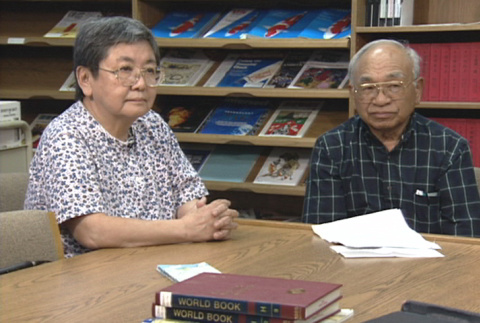
Topics
Facilities
Format
Genre
Usage

Use <Ctrl> or (⌘) keys to select multiple terms

621 items
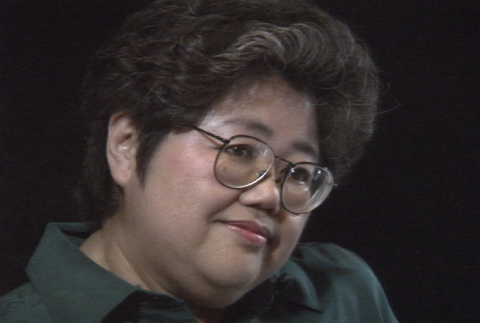
Grace Kubota Ybarra Interview Segment 7 (ddr-densho-122-14-7)
vh Grace Kubota Ybarra Interview Segment 7 (ddr-densho-122-14-7)
Description of father, letters sent from prison

This interview was conducted by filmmaker Frank Abe for his 2000 documentary, Conscience and the Constitution, about the World War II resisters of conscience at the Heart Mountain incarceration camp. As a result, the interviews in this collection are typically not life histories, instead primarily focusing on issues …

Grace Kubota Ybarra Interview Segment 3 (ddr-densho-122-14-3)
vh Grace Kubota Ybarra Interview Segment 3 (ddr-densho-122-14-3)
Memories of being a child in camp: warned away from the barbed wire fence

This interview was conducted by filmmaker Frank Abe for his 2000 documentary, Conscience and the Constitution, about the World War II resisters of conscience at the Heart Mountain incarceration camp. As a result, the interviews in this collection are typically not …

Grace Kubota Ybarra Interview Segment 2 (ddr-densho-122-14-2)
vh Grace Kubota Ybarra Interview Segment 2 (ddr-densho-122-14-2)
Description of father's letters sent from prison

This interview was conducted by filmmaker Frank Abe for his 2000 documentary, Conscience and the Constitution, about the World War II resisters of conscience at the Heart Mountain incarceration camp. As a result, the interviews in this collection are typically not life histories, instead primarily focusing on issues …

Grace Kubota Ybarra Interview Segment 5 (ddr-densho-122-14-5)
vh Grace Kubota Ybarra Interview Segment 5 (ddr-densho-122-14-5)
Father's story of meeting an interesting person in prison

This interview was conducted by filmmaker Frank Abe for his 2000 documentary, Conscience and the Constitution, about the World War II resisters of conscience at the Heart Mountain incarceration camp. As a result, the interviews in this collection are typically not life histories, instead primarily focusing …

Grace Kubota Ybarra Interview Segment 6 (ddr-densho-122-14-6)
vh Grace Kubota Ybarra Interview Segment 6 (ddr-densho-122-14-6)
Father's influence on career choice

This interview was conducted by filmmaker Frank Abe for his 2000 documentary, Conscience and the Constitution, about the World War II resisters of conscience at the Heart Mountain incarceration camp. As a result, the interviews in this collection are typically not life histories, instead primarily focusing on issues surrounding the …

Grace Kubota Ybarra Interview Segment 1 (ddr-densho-122-14-1)
vh Grace Kubota Ybarra Interview Segment 1 (ddr-densho-122-14-1)
Reading of a statement

This interview was conducted by filmmaker Frank Abe for his 2000 documentary, Conscience and the Constitution, about the World War II resisters of conscience at the Heart Mountain incarceration camp. As a result, the interviews in this collection are typically not life histories, instead primarily focusing on issues surrounding the resistance …

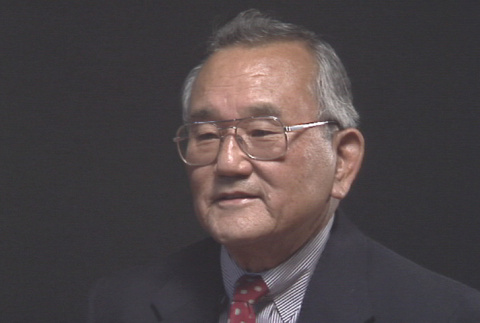
Yosh Kuromiya Interview (ddr-densho-122-8)
vh Yosh Kuromiya Interview (ddr-densho-122-8)
Nisei male. Born April 1923 in Sierra Madre, California. Was pursuing a degree in art at Pasadena Junior College at the time of mass removal. While incarcerated at Heart Mountain, Wyoming, continued his artistic pursuits, drawing sketches and designing posters, etc. for various camp projects. Resisted the draft at age 21, and was indicted in 1944 …
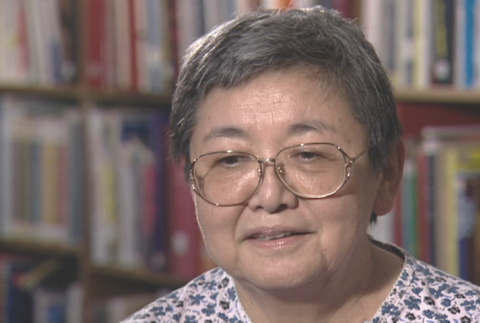
Kats Kunitsugu Interview (ddr-densho-122-16)
vh Kats Kunitsugu Interview (ddr-densho-122-16)
Nisei female, born in 1925. Incarcerated at Heart Mountain concentration camp, Wyoming, during World War II. Was on the staff of the camp's newspaper, the Heart Mountain Sentinel.

(This interview was conducted by filmmaker Frank Abe for his 2000 documentary, Conscience and the Constitution, about the World War II resisters of conscience at the …
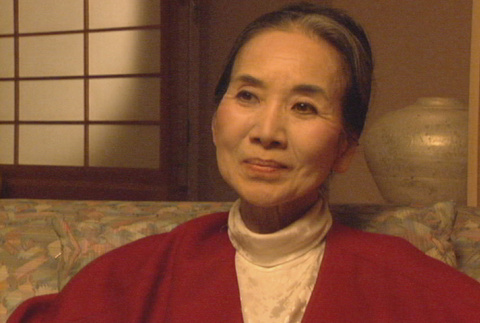
Michi Weglyn Interview (ddr-densho-122-22)
vh Michi Weglyn Interview (ddr-densho-122-22)
Nisei female, born November 29, 1926, in Stockton, California. Raised in Brentwood, California, before being incarcerated at Gila River, Arizona. Graduated from high school in the camp in 1944, and after being released, attended Mount Holyoke College. In the 1950s, worked as costume designer for the Perry Como Show television program. Researched and wrote the groundbreaking …
Ben Kuroki - Shige Kuroki Interview (ddr-densho-122-21)
vh Ben Kuroki - Shige Kuroki Interview (ddr-densho-122-21)
Ben Kuroki, Nisei male. Born May 16, 1917, in Hershey, Nebraska. Admitted to the Army Air Corps and flew thirty missions in Europe in a B-24 as a tailgunner and top turret gunner. Earned two Distinguished Flying Crosses and was acclaimed as the first Nisei war hero. Spoke at Heart Mountain, Wyoming, and two other camps …
Mits Koshiyama Interview (ddr-densho-122-10)
vh Mits Koshiyama Interview (ddr-densho-122-10)
Nisei male. Born August 7, 1924, in Mountain View, California. Grew up in the Santa Clara Valley, California, working on his family's leased strawberry farm. In June of 1942, he was involuntarily "evacuated" to Santa Anita Assembly Center, California, then to Heart Mountain concentration camp, Wyoming. Graduated from high school in camp and at the age …
Dave Kawamoto Interview (ddr-densho-122-9)
vh Dave Kawamoto Interview (ddr-densho-122-9)
Nisei male. Born December 16, 1916, in Cupertino, California. Attended San Jose State College, where he was an NCAA wrestling champion. Immediately after the bombing of Pearl Harbor, tried to enlist in the U.S. Air Corps, but was refused on account of his Japanese ancestry. Was one semester short of earning a business degree when he …
Paul Tsuneishi Interview (ddr-densho-122-24)
vh Paul Tsuneishi Interview (ddr-densho-122-24)
Nisei male, born April 16, 1923. Incarcerated at Heart Mountain concentration camp, Wyoming, and was drafted into the military at age eighteen. After World War II, served as a district governor for the Japanese American Citizens League (JACL) in Southern California. In his position with the JACL, sought to reconcile the Japanese American community with the …
Kats Kunitsugu - Paul Tsuneishi Interview Segment 6 (ddr-densho-122-17-6)
vh Kats Kunitsugu - Paul Tsuneishi Interview Segment 6 (ddr-densho-122-17-6)
Sharing information about camp and the resisters with children

This interview was conducted by filmmaker Frank Abe for his 2000 documentary, Conscience and the Constitution, about the World War II resisters of conscience at the Heart Mountain incarceration camp. As a result, the interviews in this collection are typically not life histories, instead primarily focusing …

Kats Kunitsugu - Paul Tsuneishi Interview Segment 1 (ddr-densho-122-17-1)
vh Kats Kunitsugu - Paul Tsuneishi Interview Segment 1 (ddr-densho-122-17-1)
Reading of an essay written by a student in an concentration camp school

This interview was conducted by filmmaker Frank Abe for his 2000 documentary, Conscience and the Constitution, about the World War II resisters of conscience at the Heart Mountain incarceration camp. As a result, the interviews in this collection are typically not life …

Kats Kunitsugu - Paul Tsuneishi Interview Segment 5 (ddr-densho-122-17-5)
vh Kats Kunitsugu - Paul Tsuneishi Interview Segment 5 (ddr-densho-122-17-5)
Thoughts on the present-day Japanese American community: "we're in transition"

This interview was conducted by filmmaker Frank Abe for his 2000 documentary, Conscience and the Constitution, about the World War II resisters of conscience at the Heart Mountain incarceration camp. As a result, the interviews in this collection are typically not life histories, instead primarily …

Kats Kunitsugu - Paul Tsuneishi Interview Segment 4 (ddr-densho-122-17-4)
vh Kats Kunitsugu - Paul Tsuneishi Interview Segment 4 (ddr-densho-122-17-4)
Description of food in concentration camps

This interview was conducted by filmmaker Frank Abe for his 2000 documentary, Conscience and the Constitution, about the World War II resisters of conscience at the Heart Mountain incarceration camp. As a result, the interviews in this collection are typically not life histories, instead primarily focusing on issues surrounding …

Kats Kunitsugu - Paul Tsuneishi Interview Segment 9 (ddr-densho-122-17-9)
vh Kats Kunitsugu - Paul Tsuneishi Interview Segment 9 (ddr-densho-122-17-9)
Description of physical layout of concentration camp

This interview was conducted by filmmaker Frank Abe for his 2000 documentary, Conscience and the Constitution, about the World War II resisters of conscience at the Heart Mountain incarceration camp. As a result, the interviews in this collection are typically not life histories, instead primarily focusing on issues …

Kats Kunitsugu - Paul Tsuneishi Interview Segment 2 (ddr-densho-122-17-2)
vh Kats Kunitsugu - Paul Tsuneishi Interview Segment 2 (ddr-densho-122-17-2)
The atmosphere in which individuals decided to resist the draft

This interview was conducted by filmmaker Frank Abe for his 2000 documentary, Conscience and the Constitution, about the World War II resisters of conscience at the Heart Mountain incarceration camp. As a result, the interviews in this collection are typically not life histories, instead primarily …

Kats Kunitsugu - Paul Tsuneishi Interview Segment 3 (ddr-densho-122-17-3)
vh Kats Kunitsugu - Paul Tsuneishi Interview Segment 3 (ddr-densho-122-17-3)
Camp inmates' interaction with white communities outside of camp

This interview was conducted by filmmaker Frank Abe for his 2000 documentary, Conscience and the Constitution, about the World War II resisters of conscience at the Heart Mountain incarceration camp. As a result, the interviews in this collection are typically not life histories, instead primarily focusing …

Kats Kunitsugu - Paul Tsuneishi Interview Segment 8 (ddr-densho-122-17-8)
vh Kats Kunitsugu - Paul Tsuneishi Interview Segment 8 (ddr-densho-122-17-8)
Discussion of Japanese American generational differences

This interview was conducted by filmmaker Frank Abe for his 2000 documentary, Conscience and the Constitution, about the World War II resisters of conscience at the Heart Mountain incarceration camp. As a result, the interviews in this collection are typically not life histories, instead primarily focusing on issues surrounding …

Ben Kuroki - Shige Kuroki Interview Segment 15 (ddr-densho-122-21-15)
vh Ben Kuroki - Shige Kuroki Interview Segment 15 (ddr-densho-122-21-15)
Comments to the media after the resisters' trial versus feelings many years later

This interview was conducted by filmmaker Frank Abe for his 2000 documentary, Conscience and the Constitution, about the World War II resisters of conscience at the Heart Mountain incarceration camp. As a result, the interviews in this collection are typically not life …

Ben Kuroki - Shige Kuroki Interview Segment 11 (ddr-densho-122-21-11)
vh Ben Kuroki - Shige Kuroki Interview Segment 11 (ddr-densho-122-21-11)
Being asked to speak at Heart Mountain concentration camp

This interview was conducted by filmmaker Frank Abe for his 2000 documentary, Conscience and the Constitution, about the World War II resisters of conscience at the Heart Mountain incarceration camp. As a result, the interviews in this collection are typically not life histories, instead primarily focusing …

Ben Kuroki - Shige Kuroki Interview Segment 8 (ddr-densho-122-21-8)
vh Ben Kuroki - Shige Kuroki Interview Segment 8 (ddr-densho-122-21-8)
Witnessing the arrest of Mike Masaoka on December 7, 1941

This interview was conducted by filmmaker Frank Abe for his 2000 documentary, Conscience and the Constitution, about the World War II resisters of conscience at the Heart Mountain incarceration camp. As a result, the interviews in this collection are typically not life histories, instead primarily …

Ben Kuroki - Shige Kuroki Interview Segment 14 (ddr-densho-122-21-14)
vh Ben Kuroki - Shige Kuroki Interview Segment 14 (ddr-densho-122-21-14)
Preparing to testify at the resisters' trial: disagreeing, but understanding their point of view

This interview was conducted by filmmaker Frank Abe for his 2000 documentary, Conscience and the Constitution, about the World War II resisters of conscience at the Heart Mountain incarceration camp. As a result, the interviews in this collection are typically not …

API