
10000 items

10000 items
img
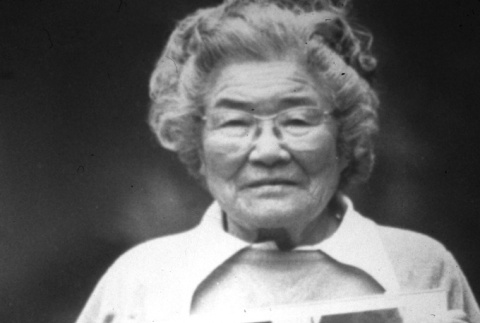
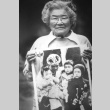
Woman holding historic photo (ddr-densho-34-137)
Fifty years later, Shigeko Kitamoto holds a picture that was taken of her children and herself on March 30, 1942 as they were waiting to board a special ferry to Seattle during the exclusion of Japanese Americans from Bainbridge Island, Washington. The children in the photo are from left to right: Jane, Frances and Frank Kitamoto.

Collection
Migita and Sakahara Collection (ddr-densho-293)
The Migita and Sakahara Collection consists of photographs of Buddhist funerals in Yakima, Washington, Seattle, Washington, and Heart Mountain concentration camp, Wyoming. Photo album with photos from Yakima valley Washington before the war and St. Louis Missouri after the war. One photo album with photos of individuals at home, businesses and social gatherings, sometimes identified as …
vh
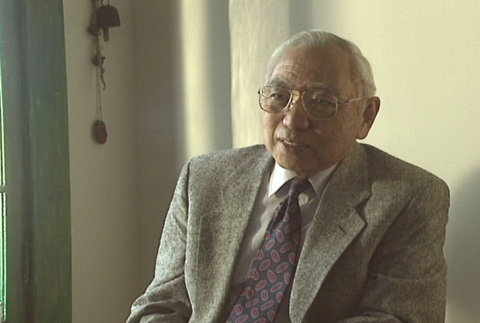
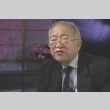
Ben Uyeno Interview (ddr-densho-1000-100)
Nisei male. Born November 30, 1918, in Yakima, Washington. Spent two years of childhood in Japan. Returned to Seattle and became an active participant in Japanese American community life. Was attending the University of Washington when World War II started. Avoided incarceration with the help of the Friends (a Quaker organization), which hid him and helped …
vh
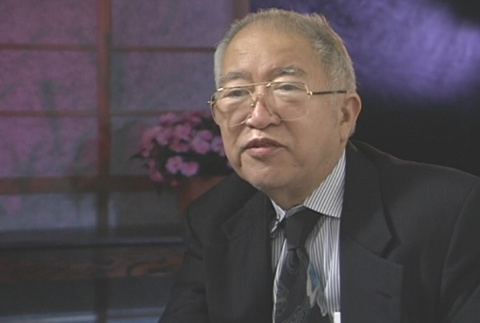
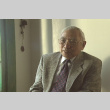
Frank Miyamoto Interview (ddr-densho-1002-1)
Nisei male. Born July 29, 1912, in Seattle, Washington. Wrote 'Social Solidarity Among the Japanese in Seattle' as a Master's thesis, published in 1939 as one of the first academic works on the Japanese immigrant community. Incarcerated in Tule Lake concentration camp, California. Member of the Evacuation and Resettlement Study which studied the incarceration and resettlement …
Collection
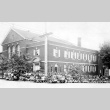
Kunitsugu Collection (ddr-densho-12)
The Kunitsugu collection, circa 1918-1930s, focuses on the business and leisure activities of the Kunitsugu family of Seattle, Washington. Seattle's prewar Nihonmachi area appears in the background of several of the photographs.
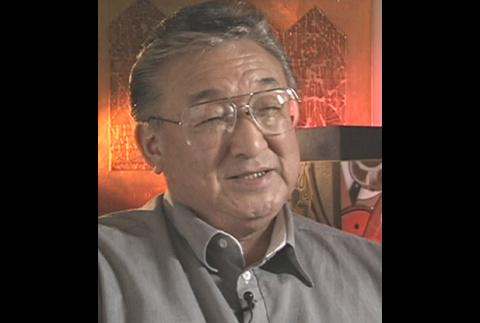
Narrator Frank S. Fujii
Nisei male. Born January 14, 1930, in Seattle, Washington. Grew up in the Jackson Street neighborhood of Seattle, Washington. Incarcerated at Puyallup Assembly Center, Washington, and Tule Lake concentration camp, California. Resettled in Seattle. Former teacher and varsity basketball coach at Seattle's Franklin High School and administrator at Seattle Central Community College.
vh
Robert T. Ohashi Interview Segment 8 (ddr-densho-1000-350-8)
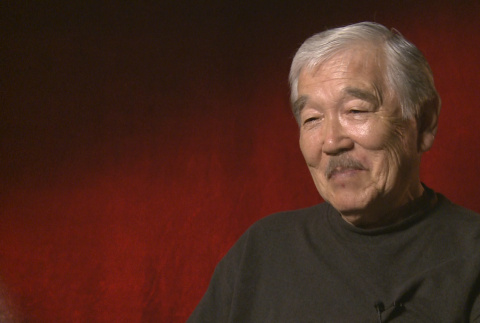
Meeting Japanese Americans from Seattle in the canneries
Nisei male. Born July 24, 1925, in Ketchikan, Alaska. Grew up in Ketchikan, where parents ran a store. During World War II, was removed to the Puyallup Assembly Center, Washington, and the Minidoka incarceration camp, Idaho. After leaving camp, went with family to work for a time in …
Collection
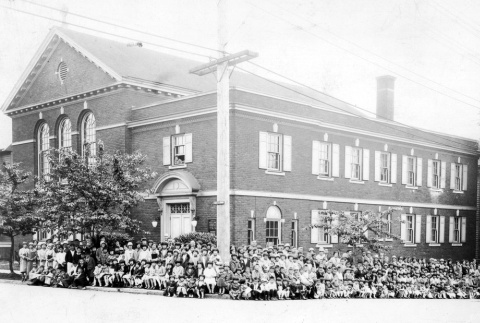
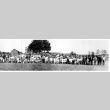
Kanno Collection (ddr-densho-133)
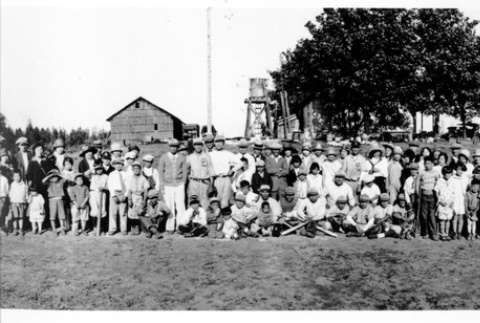
The Kanno collection features three photographs of a Japanese American community gathering in the Green Lake neighborhood of Seattle, Washington. These photographs were also used in the book, The Green Lake Japanese American Community, 1900-1942.
img
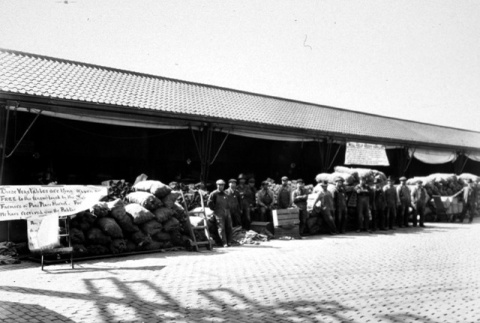
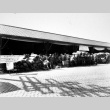
Issei at the Public Market (ddr-densho-36-46)
These Issei farmers are at the Public Market, in Seattle, Washington. By the World War I, Japanese Americans occupied seventy percent of the market's stalls. Here, they are donating vegetables to needy families. The Public Market is also known as the Farmer's Market and Pike Place Market. Original museum description: Japanese farmers had sold fruits and …
doc
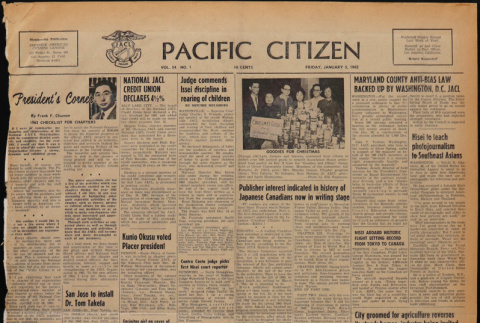
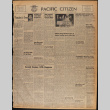
Pacific Citizen, Vol. 54, No. 1 (January 5, 1962) (ddr-pc-34-1)
Selected article titles: "Maryland County Anti-Bias Law Backed Up by Washington, D.C. JACL" (p.1), "Publisher Interest Indicated in History of Japanese Canadians Now in Writing Stage" (p.1), "San Jose Nursery Plant Growers Win" (p.1), "Seattle Anticipates 10 Million Visitors During 184-Day Run of Century 21 World's Fair; Many JACLers Expected July 26-30" (p.4).
img
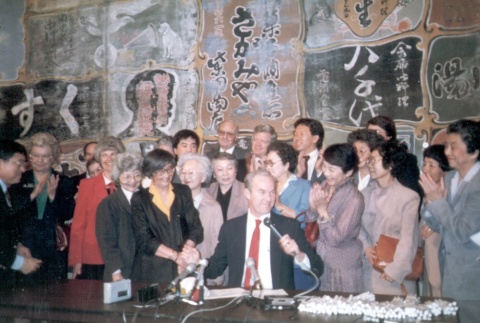
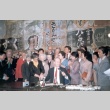
Governor signing redress bill for Seattle school clerks (ddr-densho-10-8)
Governor Booth Gardner of Washington State signs a state bill authorizing redress payments to twenty-seven former Nisei employees of the Seattle School District who lost their jobs during World War II due to their Japanese ancestry. (Information on back of the photograph.) The signing took place at the historic Nippon Kan Theatre in Seattle's International District, …
vh
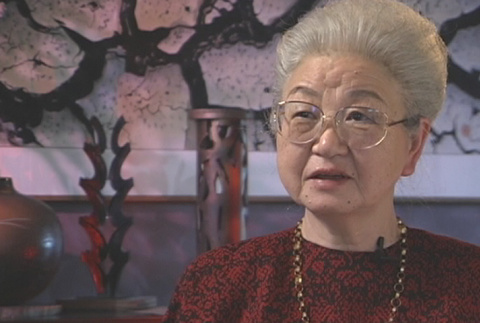
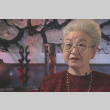
Ayame Tsutakawa Interview II (ddr-densho-1000-95)
Kibei female. Born May 23, 1924, in the Hollywood area of Los Angeles, California. Sent to Japan to live with a relative when thirteen months old. Returned to United States and mother when twelve years old. Incarcerated at Sacramento Assembly Center and Tule Lake concentration camp, both in California. Resettled in Sacramento, California. Married George Tsutakawa, …
vh
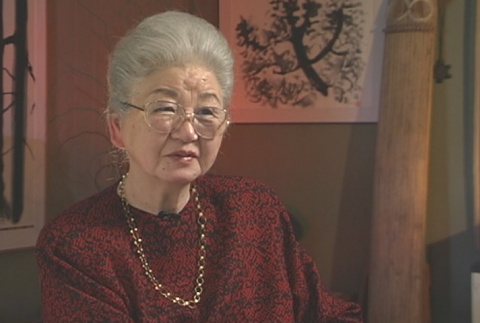
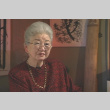
Ayame Tsutakawa Interview I (ddr-densho-1000-94)
Kibei female. Born May 23, 1924, in the Hollywood area of Los Angeles, California. Sent to Japan to live with a relative when thirteen months old. Returned to United States and mother when twelve years old. Incarcerated at Sacramento Assembly Center and Tule Lake concentration camp, both in California. Resettled in Sacramento, California. Married George Tsutakawa, …
img
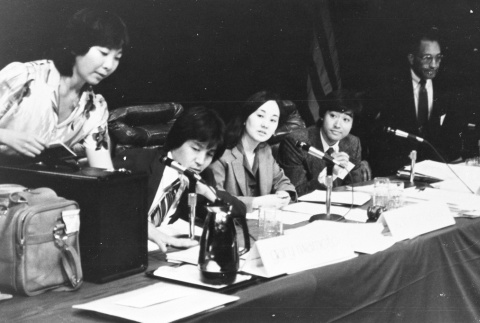
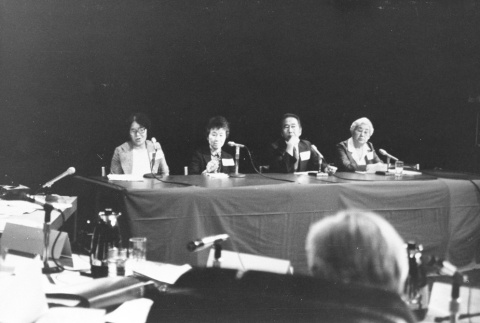
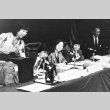
Redress hearings (ddr-densho-37-370)
The Commission on Wartime Relocation and Internment of Civilians (CWRIC) was created by an act of Congress on July 30, 1980. The committee was formed mainly to investigate matters surrounding the World War II incarceration of Japanese Americans and to recommend remedies. The CWRIC had no power to correct grievances. The hearings were conducted in twenty …
img
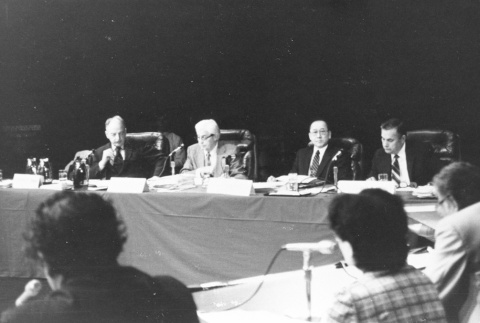
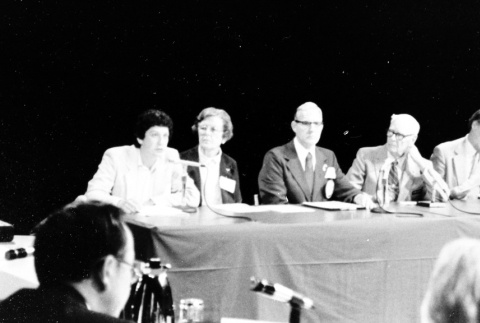
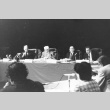
Redress hearings (ddr-densho-37-372)
The Commission on Wartime Relocation and Internment of Civilians (CWRIC) was created by an act of Congress on July 30, 1980. The committee was formed mainly to investigate matters surrounding the World War II incarceration of Japanese Americans and to recommend remedies. The CWRIC had no power to correct grievances. The hearings were conducted in twenty …
img
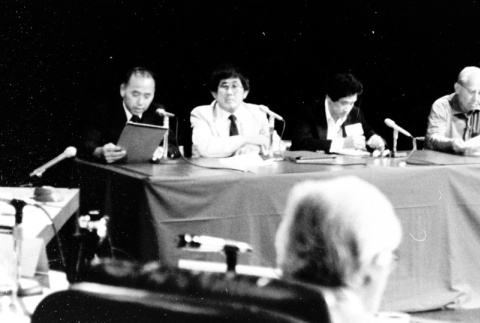
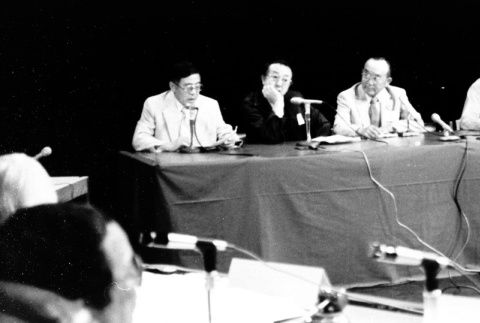
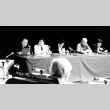
Redress hearings (ddr-densho-37-334)
The Commission on Wartime Relocation and Internment of Civilians (CWRIC) was created by an act of Congress on July 30, 1980. The committee was formed mainly to investigate matters surrounding the World War II internment of Japanese Americans and to recommend remedies. The CWRIC had no power to correct grievances. The hearings were conducted in twenty …
img
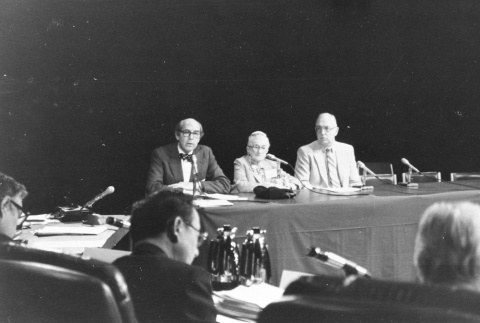
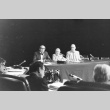
Redress hearings (ddr-densho-37-373)
The Commission on Wartime Relocation and Internment of Civilians (CWRIC) was created by an act of Congress on July 30, 1980. The committee was formed mainly to investigate matters surrounding the World War II incarceration of Japanese Americans and to recommend remedies. The CWRIC had no power to correct grievances. The hearings were conducted in twenty …
img
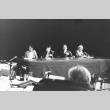
Redress hearings (ddr-densho-37-371)
The Commission on Wartime Relocation and Internment of Civilians (CWRIC) was created by an act of Congress on July 30, 1980. The committee was formed mainly to investigate matters surrounding the World War II incarceration of Japanese Americans and to recommend remedies. The CWRIC had no power to correct grievances. The hearings were conducted in twenty …
img
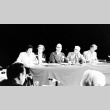
Redress hearings (ddr-densho-37-335)
The Commission on Wartime Relocation and Internment of Civilians (CWRIC) was created by an act of Congress on July 30, 1980. The committee was formed mainly to investigate matters surrounding the World War II internment of Japanese Americans and to recommend remedies. The CWRIC had no power to correct grievances. The hearings were conducted in twenty …
img
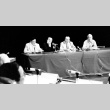
Redress hearings (ddr-densho-37-333)
The Commission on Wartime Relocation and Internment of Civilians (CWRIC) was created by an act of Congress on July 30, 1980. The committee was formed mainly to investigate matters surrounding the World War II internment of Japanese Americans and to recommend remedies. The CWRIC had no power to correct grievances. The hearings were conducted in twenty …
vh
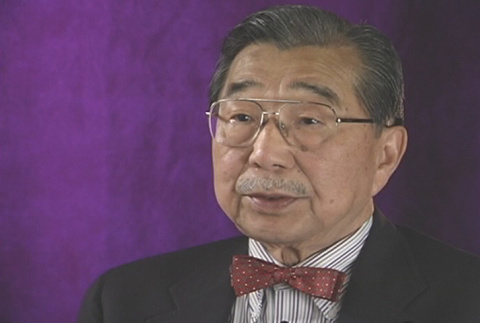
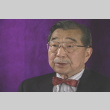
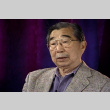
Gordon Hirabayashi Interview III (ddr-densho-1000-19)
Nisei male. Born April 23, 1918, in Seattle, Washington. Spent most of his childhood in Thomas, Washington, where his parents were part of a Christian farming co-op. Attended the University of Washington where he was active in the Young Men's Christian Association (YMCA), the conscientious objector movement, and became a Quaker. At the outbreak of World …
vh
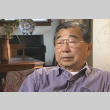
Gordon Hirabayashi Interview IV (ddr-densho-1000-20)
Nisei male. Born April 23, 1918, in Seattle, Washington. Spent most of his childhood in Thomas, Washington, where his parents were part of a Christian farming co-op. Attended the University of Washington where he was active in the Young Men's Christian Association (YMCA), the conscientious objector movement, and became a Quaker. At the outbreak of World …
vh
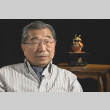
Gordon Hirabayashi Interview I (ddr-densho-1000-17)
Nisei male. Born April 23, 1918, in Seattle, Washington. Spent most of his childhood in Thomas, Washington, where his parents were part of a Christian farming co-op. Attended the University of Washington where he was active in the Young Men's Christian Association (YMCA), the conscientious objector movement, and became a Quaker. At the outbreak of World …
vh
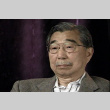
Gordon Hirabayashi Interview II (ddr-densho-1000-18)
Nisei male. Born April 23, 1918, in Seattle, Washington. Spent most of his childhood in Thomas, Washington, where his parents were part of a Christian farming co-op. Attended the University of Washington where he was active in the Young Men's Christian Association (YMCA), the conscientious objector movement, and became a Quaker. At the outbreak of World …
vh
Gordon Hirabayashi Interview V (ddr-densho-1000-115)
Nisei male. Born April 23, 1918, in Seattle, Washington. Spent most of his childhood in Thomas, Washington, where his parents were part of a Christian farming co-op. Attended the University of Washington where he was active in the Young Men's Christian Association (YMCA), the conscientious objector movement, and became a Quaker. At the outbreak of World …