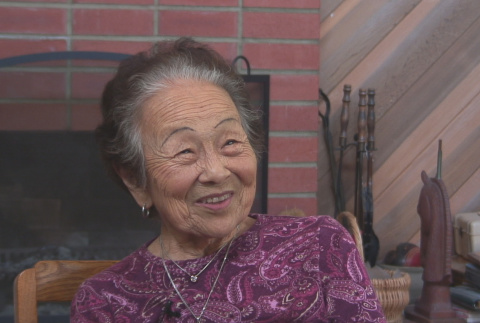
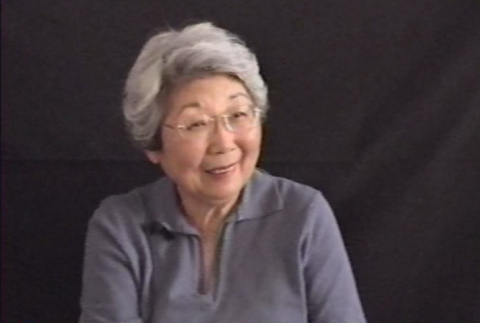
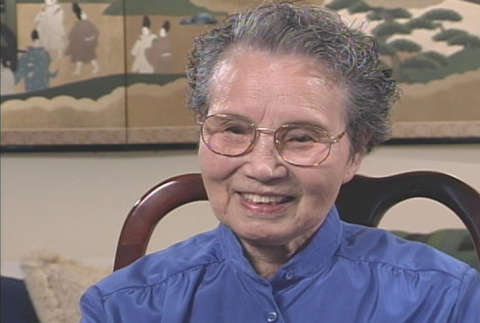
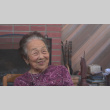
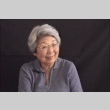
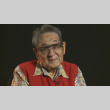
Nisei female. Born September 22, 1916, in Los Angeles, California, and grew up in Venice, California. Married before World War II, and removed during the war to the Manzanar concentration camp, California. Had a child in camp. After leaving Manzanar, lived in Ohio for a number of years before returning to California.
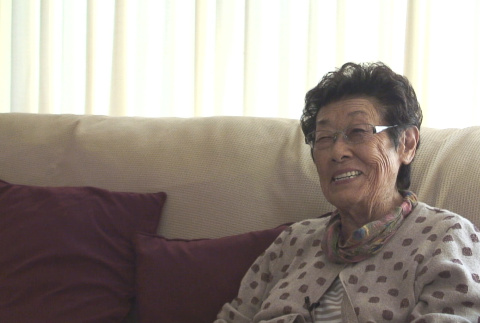
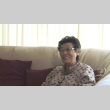
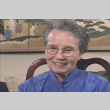
Nisei female. Born 1924 in Venice, California. Grew up in Lawndale, California, where parents farmed. During World War II, removed to the Santa Anita Assembly Center, California, and the Rohwer concentration camp, Arkansas. After leaving camp, married and moved to Bloomington, Minnesota, while husband served in the military. Eventually returned to California.
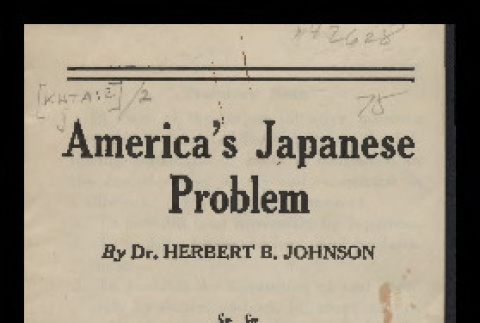
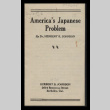
Pamphlet written in response to the proposed revisions to the California Alien Land Law of 1913 (Webb-Haney Act). Includes sections on immigration, California statistics, "picture brides", Japanese-owned land in California, and discrimination in California land laws. See this object in the California State Universities Japanese American Digitization project site: sac_jaac_0358
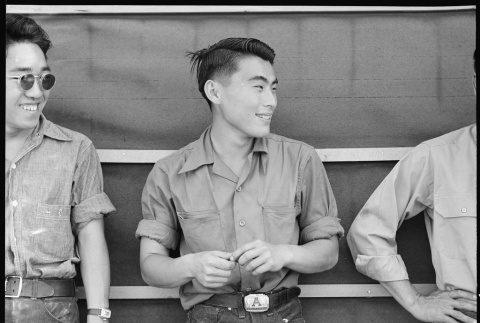
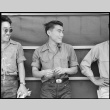
Original WRA caption: Sacramento, California. Former University of California students of Japanese ancestry were evacuated from Sacramento to this Assembly center.
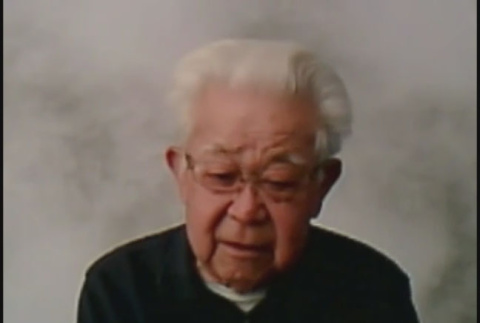
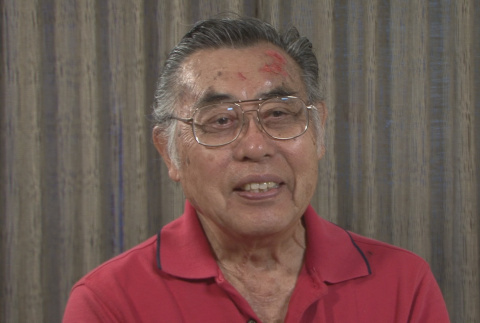
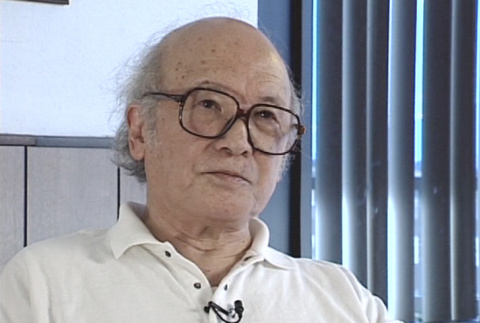
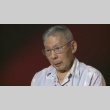
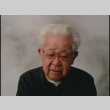
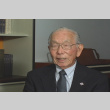
An oral interview with Frank Emi, Art Emi, and James Omura. The interview was conducted for the Japanese American Oral History Project by California State University, Fullerton. Transcript is found in item: csufccop_jaoh_0960. See this object in the California State Universities Japanese American Digitization project site: 2331.2_T01
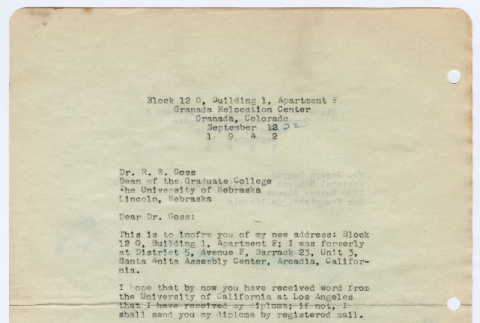
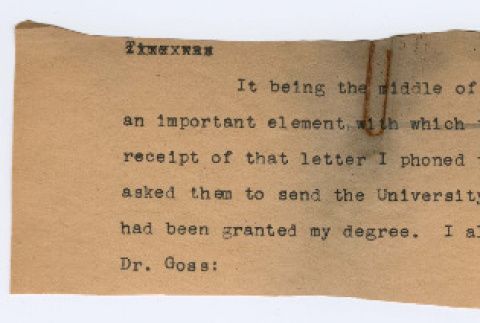
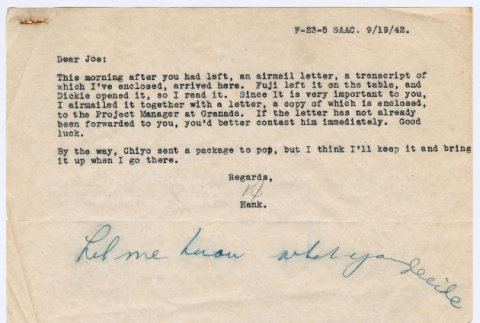
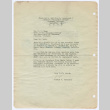
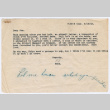
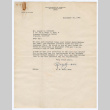
Page one is a brief letter from Hank. Page two is Joseph Ishikawa's letter of acceptance confirming his transfer from UCLA to the University of Nebraska
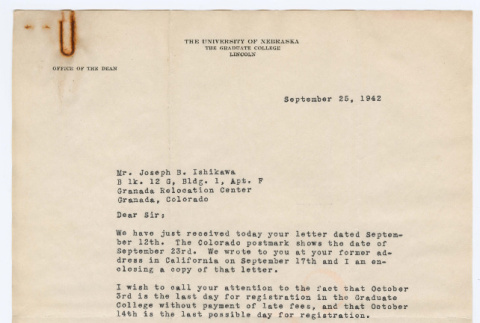
Confirmation of receipt of letter dated Sept. 12 with enclosure of copy of Goss's letter from September 17. Notice that October 3 is last day to register for graduate college.
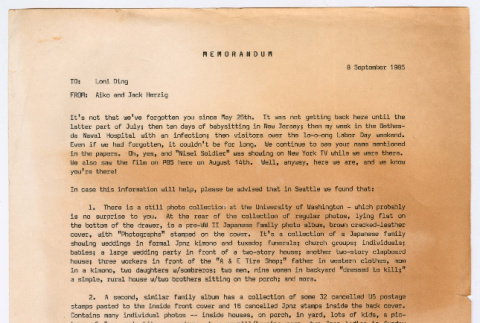
Compilation of archival and other research materials at the University of Washington, University of California, Los Angeles, NARA, and Philadelphia, Pennsylvania related to Japanese American life before the war, incarceration, resistance, and other wartime experience.
Collection of documents and ephemera from Harry Bentley Wells, teacher at Manzanar War Relocation Center High School and Shirley Elizabeth Wells, registered nurse (R.N.) at Manzanar War Relocation Center. This collection includes correspondence, memos, reports, student papers, grade book, commencement program, prom invitation, and other memorabilia from the eleven months H. Bentley Wells was employed at …
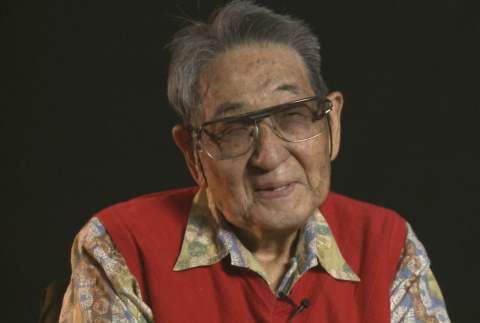
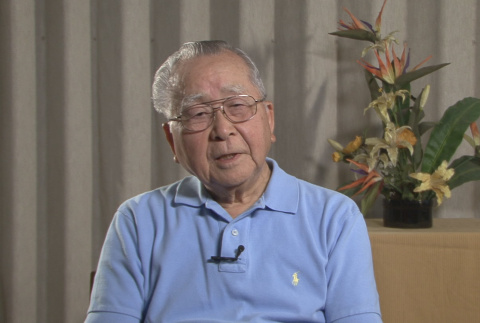
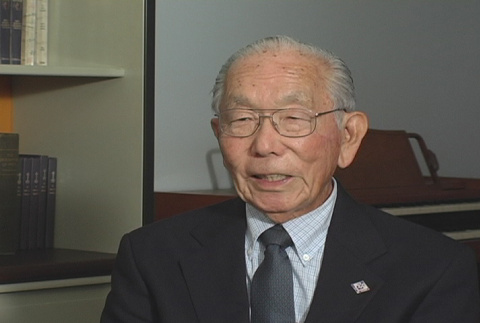
Nisei male. Born April 14, 1923, in Yuba City, California. Grew up in Elk Grove, California. After the bombing of Pearl Harbor, moved with family to Florin, California, and was removed to the Marysville Assembly Center, California, and the Tule Lake concentration camp, California. While in Tule Lake, refused to sign the so-called "loyalty questionnaire," and …
This collection contains short digital stories documenting the experience of Alameda's Japanese Americans and is part of the California of the Past: Digital Storytelling Project. The project was produced by the Alameda Free Library with a grant from the California State Library.
Nisei female. Born September 23, 1925, in San Francisco, California. Grew up in California, where father worked as a bookkeeper. During World War II, removed to the Manzanar concentration camp, California. After leaving camp, moved with the family to a rural community in Maryland, then to Seabrook Farms, New Jersey, before eventually returning to California.
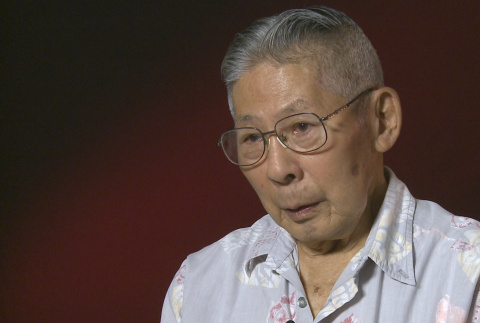
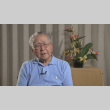
Nisei male. Born April 26, 1929, in Pasadena, California. Grew up on Terminal Island, California. During World War II, removed to the Manzanar concentration camp, California. After leaving camp, family lived for a time in a hostel in Des Moines, Iowa, before returning to California. After the war, became an attorney and longtime community activist.
This material is based upon work assisted by a grant from the Department of the Interior, National Park Service. Any opinions, finding, and conclusions or recommendations expressed in this material are those of the author(s) and do not necessarily reflect the views of the Department of the Interior.
This material is based upon work assisted by a grant from the Department of the Interior, National Park Service. Any opinions, finding, and conclusions or recommendations expressed in this material are those of the author(s) and do not necessarily reflect the views of the Department of the Interior.
Memories of the trip from Tule Lake, California to Heart Mountain concentration camp, Wyoming
During this interview, Mrs. Kurosu alternately speaks in both English and Japanese. As a result, the English translation of the transcript contains [Jpn.] and [Eng.], which indicate whether the original dialogue was spoken in Japanese or English.
Opening a Chinese restaurant in San Jose, California, after World War II
This interview was conducted by the Japanese American Museum of San Jose, and is part of a project entitled "Lasting Stories: The Resettlement of San Jose Japantown," a collaborative project between the Japanese American Museum of San Jose and Densho.
Family background: parents' immigration from Japan, leasing a ranch in California
This interview was conducted by the Japanese American Museum of San Jose, and is part of a project entitled "Lasting Stories: The Resettlement of San Jose Japantown," a collaborative project between the Japanese American Museum of San Jose and Densho.
Moving to Stockton, California, in an attempt to avoid mass removal
This interview was conducted by the Japanese American Museum of San Jose, and is part of a project entitled "Lasting Stories: The Resettlement of San Jose Japantown," a collaborative project between the Japanese American Museum of San Jose and Densho.
This material is based upon work assisted by a grant from the Department of the Interior, National Park Service. Any opinions, finding, and conclusions or recommendations expressed in this material are those of the author(s) and do not necessarily reflect the views of the Department of the Interior.
This interview was conducted at the 1998 Tule Lake Pilgrimage held at Klamath Falls, Oregon and at the site of Tule Lake incarceration camp in California. Given the limited time available during this event, the length and breadth of this interview are shorter than other Densho interviews.